The demand for Industrial Hydraulic Presses continues to rise, driven by advancements in manufacturing processes. According to a recent report by Grand View Research, the global hydraulic press market is projected to reach $8.22 billion by 2025, reflecting a CAGR of 5.3%. This growth highlights the need for businesses to consider critical factors when purchasing these machines.
Industrial Hydraulic Presses are vital in various industries, including automotive, aerospace, and metal forming. These machines offer high efficiency and precision for tasks like metal stamping and molding. However, selecting the right model can be daunting. Buyers must assess several aspects, such as tonnage, stroke length, and design type. Insights from industry experts indicate that improper choice can lead to costly downtime.
Moreover, the evolving technology in hydraulic presses means that older models can quickly become obsolete. A well-informed purchase can improve output and reduce maintenance costs. Yet, navigating through numerous options requires diligence and understanding of technical specifications. As you embark on your buying journey, it’s essential to weigh these variables carefully.
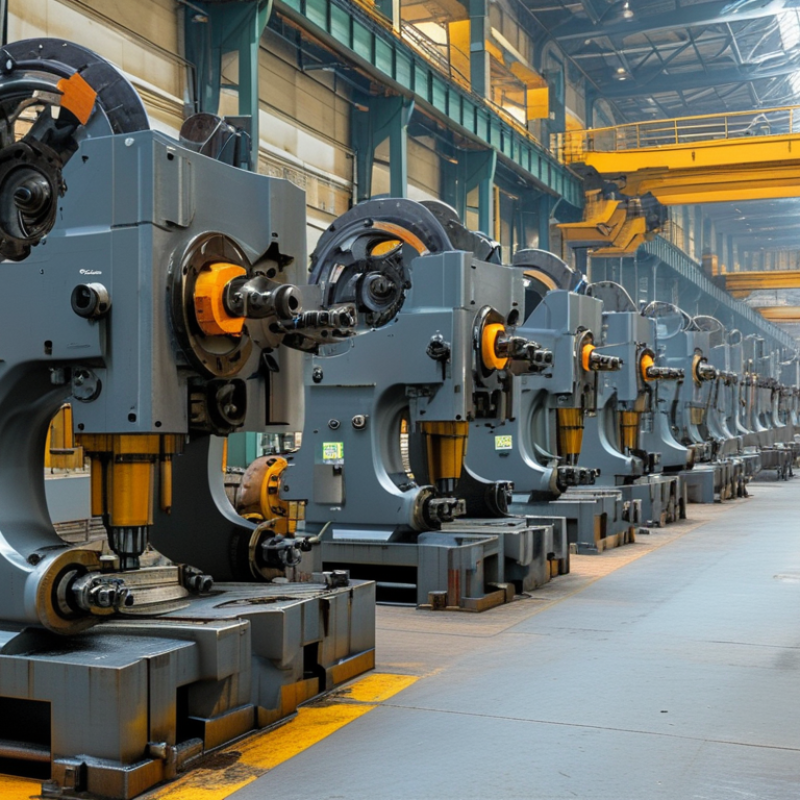
When considering an industrial hydraulic press, focus on its essential features. The press capacity is paramount. It determines the maximum load it can handle. Knowing your specific needs can help you choose an appropriate size. For heavy-duty tasks, opt for a press with higher capacity. This prevents equipment failure and enhances efficiency.
Another crucial aspect is adjustability. A good hydraulic press allows operators to modify pressure settings easily. This adaptability is vital for various applications, from shaping materials to assembly tasks. Ensure the machine has user-friendly controls. Complex interfaces can lead to mistakes and slow down production processes.
Don't overlook maintenance requirements. Some presses are designed for easy accessibility, making routine checks simpler. Reliable machinery reduces downtime and promotes consistent output. However, consider that different models may require varied levels of upkeep. Researching these factors helps in making an informed decision, preventing unexpected challenges down the line.
This chart illustrates the average features of industrial hydraulic presses in 2026, including pressing force, table size, type of hydraulic system, operational speed, and weight.
When selecting an industrial hydraulic press, understanding the different types available is crucial. There are three main categories: C-frame presses, H-frame presses, and platen presses. Each type serves unique purposes in various industries. C-frame presses are compact and versatile, ideal for light to medium tasks. H-frame presses are more robust, suitable for heavy-duty applications. Platen presses provide even pressure across materials, which is perfect for laminating and molding. Knowing the specifics can guide better choices.
Consider your production needs and space limitations. Analyze the force requirements for your intended applications. A press must match or exceed your needs without causing unnecessary wear. Don't overlook ergonomics and ease of use; a user-friendly design can enhance productivity significantly. Ensure safety features are in place for reliable operation.
While researching different models, read customer reviews and seek expert opinions. Stories from other users can highlight potential issues you might face. Pressure capacity, build quality, and maintenance needs should factor into your decision-making. Look closely at operational efficiency—some models may outperform others in specific conditions. Be wary of overselling; what works for one might not for another.
When considering a hydraulic press, key performance metrics are essential. Look at the force capacity. It indicates how much pressure the machine can deliver. For heavy-duty industrial applications, a higher force is critical. However, not all tasks require maximum force. Understand your specific needs to avoid overkill.
Cycle time is another vital metric. It measures how quickly the press can complete a full operation. Fast cycle times can increase productivity, but they may affect precision. If accuracy is paramount, balance speed with the quality of the output. Long cycle times might be acceptable for intricate work but could slow down overall production.
Pay attention to durability and maintenance needs. A hydraulic press requires regular upkeep to operate optimally. Consider the materials used in construction. They contribute to the machine’s lifespan. Budget for potential repairs. Unexpected downtimes can be costly. Assess each aspect critically to make an informed decision.
When considering the purchase of an industrial hydraulic press, cost is a crucial factor. Understanding your budget helps avoid overspending. Hydraulic presses vary widely in price depending on features and capabilities. A basic model may start at a few thousand dollars, while advanced models can soar into tens of thousands. Assess your needs carefully. Think about the materials you will use and the types of jobs you plan to undertake.
Don't overlook additional costs. Installation and maintenance can add to your total expenditure. Train your staff properly to prevent costly mistakes and enhance safety. Factor in the potential need for accessories. These can increase your initial investment but may offer efficiency gains. It's worth examining long-term savings versus upfront costs.
Be aware that price alone shouldn't dictate your decision. Analyze the reliability and durability of the equipment. Inferior products may cost less upfront but can lead to costly repairs and downtime down the line. Research customer reviews and industry insights to gauge quality. This will help ensure your investment is worthwhile in the long run.
When selecting a hydraulic press, understanding the landscape of top brands and models is crucial for making informed decisions. The global hydraulic press market was valued at $11 billion in 2022 and is expected to reach over $15 billion by 2026. This growth signals the importance of selecting high-quality equipment that can handle demanding tasks.
Notable models typically offer features such as adjustable pressure settings and automatic controls. Brands are focusing on efficiency and usability, elements that can set one model apart from another. However, choosing a hydraulic press is not just about brand reputation. Technical specifications must match the intended application. For example, a model with a 50-ton capacity is ideal for automotive manufacturing, while lighter models suit smaller scale tasks.
Consider the warranty and customer support provided. These factors significantly impact the reliability of the equipment. A strong support system reflects a manufacturer's commitment to users. The top brands have recognized the need for continuous innovation. Many are incorporating smart technologies, making presses easier and safer to operate. Yet, reliance on advanced features can sometimes lead to usability issues, necessitating careful evaluation before purchase.
„Thanks to the LUVIR technology, the solder resist process could be switched directly from the previously used mask exposure to direct exposure. As an outstanding digital solution on the market, this technology has been able to demonstrate fast process times and superior quality on our certified conventional ink in production. This allowed us to fully digitize the solder mask process at low cost – without process or ink adjustments. An excellent benefit to our production in Rot am See.“
Ralf Göhringer (Head of Production WE Rot am See)
I would definitely recommend the Limata machine and team for a future company purchase
Michael Greenaway
Compunetics Inc.
“The Limata ldi has been amazing!! Best thing we did was buy this machine”
Richard Brady
GM
Circuitlabs
“Since 2019, we have been running the Limata X1000 LDI system (including LUVIR for solder mask imaging) in daily production as an addition to our current process with film. The machine was capable of properly exposing Taiyo PSR-4000 BN (DI) solder mask types on normal to high-copper boards using a new and unique direct imaging process. The machine operating interface is very user friendly which allowed for a quick technical training curve. The pre-registration processing reduced several seconds of production time at every print. Limata support and service staff is incomparable. They supported our team every step of the way at basically any time of the day or night, with literally, an immediate response time, customizing the software interface to best fit our Operations and needs.
We have exposed more than 8,000 prints since end of October, on various solder mask colors and some resist film panels. Limata, has proven to be very capable and innovative. They are a strong contender in the industry.
We have very much enjoyed this project, and working with the team!
Thank you Limata for the continued support and being a part of our growth.”
Bill Sezate
Vice President, GM
Summit Interconnect
As a replacement to our current contact exposure process with film, the LIMATA X2000 system including LUVIR-Technology was capable of properly exposing non-LDI solder mask types using a direct imaging process. The machine offers cutting edge software with a very intuitive operating interface which allowed for quick technician training curve. The dual drawer system combined with pre-registration processing reduced several seconds of production time at every machine cycle. Limata support and service staff is world class. They added software patches to keep production running at shortest possible response times, customized the software interface to best fit our in-house Operations system, and even wrote a step-by-step machine processing manual. As a result of the project, we have exposed more than 16,000 times on various product types and solder mask brands/colors. Limata, in a very short timeframe as a company, has definitely shown they are truly innovative and will be challenging the industry of direct imaging for the top spot.
Kevin Beattie
Process Engineer
TTM Technologies
Forest Grove Division
