Laser cutting technology has transformed the manufacturing landscape, offering precision and efficiency. However, the quality of cuts heavily relies on the choice of Laser Cutting Consumables. Recent insights from industry expert Dr. Emily Chen highlight this point: “Selecting the right consumables can drastically improve the cutting process and the overall outcome.”
Understanding Laser Cutting Consumables is crucial for achieving optimal performance. These tools—including nozzles, lenses, and gases—affect the speed and quality of cuts. The materials used and their compatibility with the laser type are also vital considerations. It's easy to overlook the impact of these choices in the manufacturing workflow. However, missteps in selecting consumables can lead to increased costs and production delays.
Choosing properly requires expertise and careful evaluation. Many manufacturers struggle to balance cost and quality. In this context, it's essential to seek reliable sources of information and user experiences. Having access to industry knowledge will empower decision-makers to select the best Laser Cutting Consumables for their specific needs. This ultimately leads to better performance and customer satisfaction in the long run.
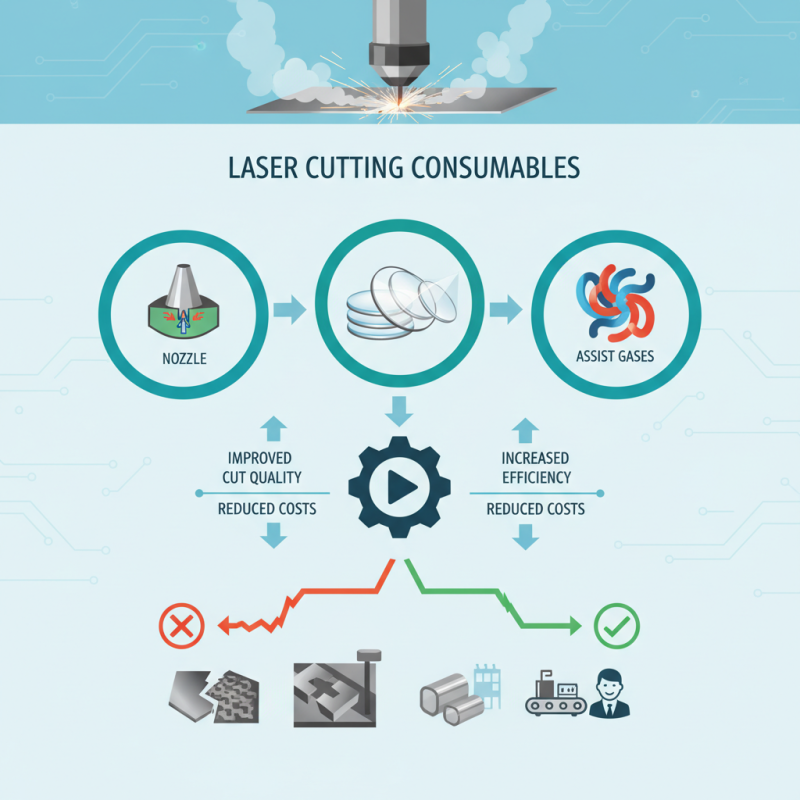
Laser cutting consumables play a crucial role in the precision and efficiency of laser cutting processes. These materials include nozzles, lenses, mirrors, and assist gases. Each component significantly impacts the quality of cuts and overall efficiency. According to a recent report, up to 30% of laser cutting issues arise from poor quality consumables. Understanding these consumables is essential for optimizing production.
The choice of consumables depends on various factors. Material types, thickness, and desired cut quality must be considered. For instance, oxygen can enhance cutting speed but may affect surface quality. In contrast, nitrogen may produce cleaner cuts but requires longer processing times. A 2022 survey indicated that 65% of operators experienced differences in results based on the type of assist gas used. This underlines the need for careful selection.
Investing in high-quality consumables can lead to cost savings in the long run. However, many users overlook this aspect. Poor choices often result in increased wear on machinery, leading to higher maintenance costs. Users should continuously assess their consumables to improve operational efficiency. Balancing cost and quality remains a challenge for many in the industry.
| Consumable Type | Description | Material Compatibility | Life Span (Hours) | Cost Range (USD) |
|---|---|---|---|---|
| Laser Nozzles | Directs the laser beam and protects the lens. | Steel, Acrylic, Wood | 100 - 500 | 10 - 50 |
| Lens | Focuses the beam to achieve precision cutting. | Steel, Aluminum, Plastic | 200 - 1000 | 20 - 80 |
| Protective Windows | Protects the lens from debris and contamination. | All materials | 50 - 300 | 5 - 30 |
| Gas Cylinders | Provides oxygen or nitrogen for cutting. | Metal, Non-metal | Depends on usage | 50 - 200 |
| Focusing Lens | Concentrates laser energy onto the material. | Metals and Plastics | 150 - 800 | 15 - 70 |
When considering laser cutting consumables, nozzles and lenses are paramount. Nozzles direct the cutting gas onto the material, greatly affecting the cut quality. The right nozzle size can improve the efficiency of the laser beam by ensuring optimal flow. Research indicates that improper nozzle selection can lead to a 15% decrease in cutting accuracy and an increase in material wastage.
Lenses play a critical role in focusing the laser beam to achieve precise cuts. The focal length of a lens determines the beam spot size; shorter lenses offer finer cuts on thinner materials. According to industry reports, using the correct lens can enhance the cut speed by up to 20%. However, lenses wear over time, affecting performance. Regular inspection and replacement can mitigate issues, ensuring consistent quality.
Other consumables like mirrors also contribute to laser performance. Dust and debris can accumulate on mirrors, leading to inefficient laser reflection and reduced cutting strength. A study highlighted that maintaining mirror cleanliness can boost energy efficiency by as much as 30%. Each component must be carefully evaluated and maintained for optimal operations. This complexity suggests that continual learning and adjustments are vital for achieving the best cutting results.
When selecting laser cutting consumables, several critical factors come into play. Material type is essential. Each material, be it metal, plastic, or wood, requires specific settings. For instance, stainless steel and aluminum behave differently under laser cutting. Industry reports show that choosing the right nozzle type can improve the quality of the cut significantly.
Gas type is another important consideration. Oxygen or nitrogen can influence the cutting process and outcome. Studies indicate that using compressed nitrogen can yield a cleaner edge compared to oxygen. Additionally, the thickness of the material affects the choice of consumables. Thicker materials may require specialized lenses or more powerful laser sources.
Cost efficiency is also a challenge. While higher-quality consumables can increase precision and speed, they often come at a steep price. Users must reflect on their production scale and budget constraints. Quality assurance is crucial. Not all suppliers meet the same standards, and failings in this area can lead to inconsistencies in production. Always check usability data and performance reports before finalizing your choice.
When selecting laser cutting consumables, industry standards play a crucial role. They ensure compatibility and performance in various applications. Organizations such as the American National Standards Institute (ANSI) and the International Organization for Standardization (ISO) set these benchmarks. For example, ISO 9013 specifies cutting quality requirements for laser cut edges. Adhering to these standards can significantly enhance the quality and efficiency of laser cutting processes.
Understanding material specifications is also important. The thickness of materials can affect the choice of consumables. For instance, reports indicate that high-quality nozzles lead to enhanced cutting speeds and improved edge finishes. Often, users overlook the importance of nozzle sizes. Different applications necessitate varying sizes for optimal outcomes. Small adjustments can yield substantial improvements.
However, selecting the right consumables remains a challenge. Many manufacturers do not provide clear specifications. This can lead to confusion in choosing suitable products. Additionally, operators may wrongly assume all consumables meet industry standards. Continuous evaluation of supplier information is essential. It may require extra effort, but these details can directly impact overall production quality and costs.
Selecting laser cutting consumables can pose various challenges, impacting both efficiency and end quality. One common issue is the compatibility of materials. Different substrates require specific types of lenses and nozzles. For instance, a study found that improper nozzle size can lead to up to 30% material waste during a cutting job.
Another challenge is the wear and tear of consumables. Frequent changes can slow down production times and increase costs. According to industry data, 20% of operational downtime is linked to consumable replacements. Regular maintenance and understanding optimal lifespan can mitigate these setbacks. It’s crucial to monitor consumable performance closely for better outcomes.
Additionally, many operators struggle with selecting the right settings for their materials. Oversights in parameters like pressure and speed can significantly impact cut quality. Research indicates that nearly 40% of laser cutting errors arise from incorrect settings. Educating teams on material specifics is essential for improving quality and reducing mistakes. Adjusting and testing settings, though potentially time-consuming, yields better results over time.
„Thanks to the LUVIR technology, the solder resist process could be switched directly from the previously used mask exposure to direct exposure. As an outstanding digital solution on the market, this technology has been able to demonstrate fast process times and superior quality on our certified conventional ink in production. This allowed us to fully digitize the solder mask process at low cost – without process or ink adjustments. An excellent benefit to our production in Rot am See.“
Ralf Göhringer (Head of Production WE Rot am See)
I would definitely recommend the Limata machine and team for a future company purchase
Michael Greenaway
Compunetics Inc.
“The Limata ldi has been amazing!! Best thing we did was buy this machine”
Richard Brady
GM
Circuitlabs
“Since 2019, we have been running the Limata X1000 LDI system (including LUVIR for solder mask imaging) in daily production as an addition to our current process with film. The machine was capable of properly exposing Taiyo PSR-4000 BN (DI) solder mask types on normal to high-copper boards using a new and unique direct imaging process. The machine operating interface is very user friendly which allowed for a quick technical training curve. The pre-registration processing reduced several seconds of production time at every print. Limata support and service staff is incomparable. They supported our team every step of the way at basically any time of the day or night, with literally, an immediate response time, customizing the software interface to best fit our Operations and needs.
We have exposed more than 8,000 prints since end of October, on various solder mask colors and some resist film panels. Limata, has proven to be very capable and innovative. They are a strong contender in the industry.
We have very much enjoyed this project, and working with the team!
Thank you Limata for the continued support and being a part of our growth.”
Bill Sezate
Vice President, GM
Summit Interconnect
As a replacement to our current contact exposure process with film, the LIMATA X2000 system including LUVIR-Technology was capable of properly exposing non-LDI solder mask types using a direct imaging process. The machine offers cutting edge software with a very intuitive operating interface which allowed for quick technician training curve. The dual drawer system combined with pre-registration processing reduced several seconds of production time at every machine cycle. Limata support and service staff is world class. They added software patches to keep production running at shortest possible response times, customized the software interface to best fit our in-house Operations system, and even wrote a step-by-step machine processing manual. As a result of the project, we have exposed more than 16,000 times on various product types and solder mask brands/colors. Limata, in a very short timeframe as a company, has definitely shown they are truly innovative and will be challenging the industry of direct imaging for the top spot.
Kevin Beattie
Process Engineer
TTM Technologies
Forest Grove Division
