Global buyers comparing Top Prefab House Manufacturers need more than polished renderings and broad delivery promises. They need evidence that a supplier can turn drawings into consistent factory-built components, protect materials during shipping, and coordinate installation at the destination. Small details matter: connection plates, window seals, insulation layers, and clear assembly instructions. So does communication.
Architect Ludwig Mies van der Rohe offered a useful design principle: “Architecture starts when you carefully put two bricks together. There it begins.” His words were not about modern prefab housing, but the idea fits: quality depends on how separate parts meet. A capable manufacturer should explain those junctions, share relevant project records, and identify what its quoted price includes. Ask about engineering support, customization limits, production checks, packaging, and after-sales service. Request references for projects with similar climates and site conditions. A glossy brochure is not enough.
No shortlist is perfect. A supplier with strong factory capacity may offer limited local support; another may communicate well but have little experience with unusual site access. That trade-off deserves attention. This guide compares manufacturers through practical buyer questions, not claims of a universal winner. It focuses on product range, quality processes, delivery experience, customization, and support. Verify current certifications and project references directly, since company capabilities can change. Prefab House purchasing can simplify a complex build, but it does not remove every risk. That is worth remembering.
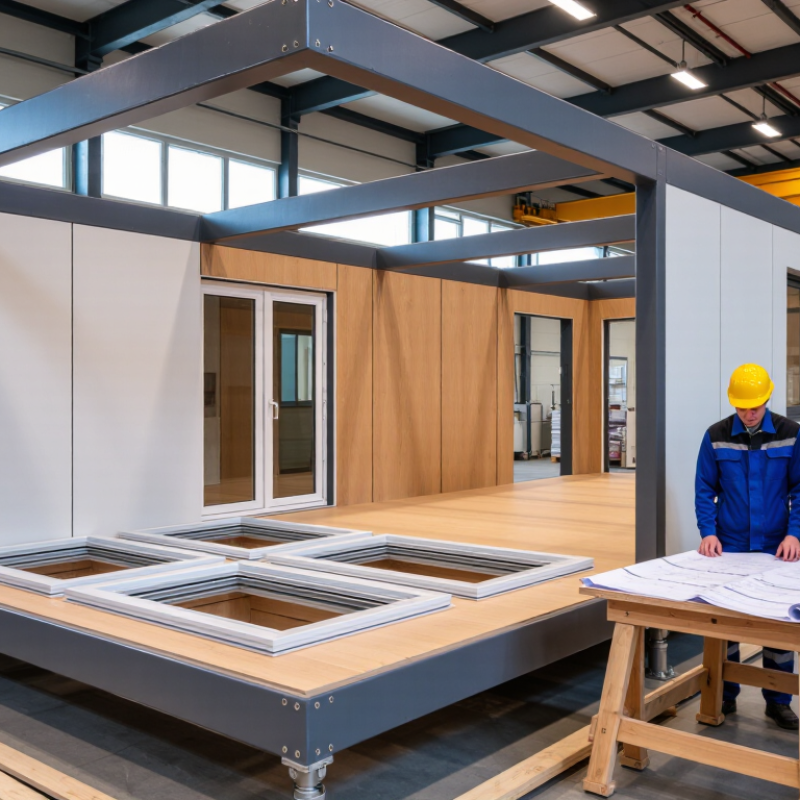
Prefabricated house manufacturers turn building plans into components made partly or fully in a factory. Depending on the system, they may produce wall panels, roof sections, floor cassettes, or complete room modules. Some also provide design coordination, packing, transport planning, and instructions for site assembly. Their exact scope varies, so buyers should confirm what is included before comparing prices.
A typical workflow begins with drawings, dimensions, and material choices. Engineers check connections and service routes, then factory teams cut, assemble, and inspect components. A label on each panel can help crews match parts to the layout.
Still, factory production does not remove every site challenge. Foundations, access for delivery vehicles, and local utility connections may need separate planning. A drawing can look complete and still miss a practical detail.
Tips: Ask for a component list, inspection records, and clear delivery terms. Check how the manufacturer handles design changes and damaged parts. Compare wall build-ups, insulation details, and installation support—not just the quoted price. If a connection detail is unclear, ask for a drawing before production starts. Small gaps in communication can become costly delays.
Prefab systems can look similar in brochures but behave differently on site. Volumetric manufacturers deliver enclosed room-sized modules; panelized systems ship walls and floors for faster local assembly. Hybrid systems combine both. These choices affect crane access, transport limits, weather exposure, and how easily layouts can change. Ask for drawings showing module joints, service routes, and insulation continuity—not just attractive renderings.
Materials and factory controls also vary. Steel frames can support long spans, while timber panels may reduce weight; neither is automatically best for every climate or site. McKinsey’s 2019 report estimated that modular construction can reduce project schedules by 20–50% under suitable conditions. That range is not a promise: design freezes, shipping delays, and foundation errors can erase gains. Small interface details matter. A poorly planned pipe connection can cause expensive rework.
Tips: Compare the same project brief across suppliers. Request verified structural, fire, thermal, and acoustic specifications, plus factory quality records. Check who coordinates foundations and utility connections. Visit a completed installation if possible. One detail buyers sometimes overlook: future repairs may be harder when components are highly customized. We should admit that standardization can limit flexibility, too.
A prefab house quote is useful only when its scope is clear. Compare the same floor area, insulation level, window type, and interior finish across suppliers. Ask for drawings that show wall, roof, and floor assemblies, not just attractive renderings. Details matter. In cold or humid regions, request specifications for insulation, air sealing, moisture control, and ventilation. In windy or seismic areas, ask how the structure is engineered for the project site. Confirm who supplies foundations, utility connections, and local installation work; these items may sit outside the factory price.
Review quality checks and documentation before placing an order. Ask how materials are inspected, how production defects are recorded, and whether you can review a recent project’s inspection records. Ask for evidence. A sample panel or finish board can reveal texture and workmanship, but it cannot prove the full building will match. Clarify packing, shipping responsibilities, delivery timing, and what happens if parts arrive damaged or missing. Compare warranty coverage and response procedures in writing. Installation guidance matters too: request numbered plans, clear lifting instructions, and access to technical support during assembly. A polished brochure may feel reassuring, yet it often leaves practical gaps. Some buyers focus heavily on unit price; that can be a costly blind spot when site work or support is excluded.
Reported potential benefits of modular construction—not guaranteed outcomes for any manufacturer.
Use these figures as context, not promises. When comparing manufacturers, ask for project-specific evidence on schedule and total cost, including transport, installation, local-code compliance, and warranty terms. Source: McKinsey, “Modular construction: From projects to products”.
Prefab house manufacturers compete through production consistency, engineering support, and the ability to adapt designs for different climates. Strong suppliers provide clear drawings, material specifications, and realistic delivery schedules. Their factory processes can reduce cutting waste and keep components more consistent. That matters. Buyers should still verify performance claims with test records and project references.
Some manufacturers specialize in steel-framed units for remote sites, while others focus on timber homes or larger modular buildings. Their market strengths often depend on reliable access to materials, skilled assembly teams, and experience coordinating international freight. A supplier may offer attractive customization, but frequent design changes can affect cost and lead time. Ask for sample wall sections, connection details, and a packing list before production begins.
Good communication is a practical advantage, especially when drawings, site conditions, and local service expectations differ. Request a room-by-room specification and confirm who handles foundation interfaces, installation guidance, and replacement parts. A polished brochure is not enough. One weakness is that some proposals leave insulation values or finish tolerances vague; those details deserve written answers. Compare complete technical packages, not just price per square meter.
Selecting a prefab house supplier requires more than comparing prices and polished catalogues. Ask for evidence. Request current certificates and test reports, then check that they cover the exact building system, materials, and intended use. Standards vary by destination, so confirm local structural, fire, and energy requirements with a qualified professional. A certificate for one panel or model may not apply to another. Details matter. Ask for factory inspection records, quality-control procedures, and references from buyers with similar projects. Speak with those buyers directly when possible.
Delivery capability deserves the same scrutiny as manufacturing quality. Request a realistic production schedule, packing list, shipping dimensions, and loading plan. Confirm who arranges port handling, inland transport, and installation support, and ask what happens if components arrive damaged or late. Check that drawings, labels, and assembly instructions match the delivered units. A supplier may promise a fast shipment, yet weather, port congestion, or missing paperwork can change the timeline. No checklist removes every risk, and even experienced buyers can overlook small assumptions. Keep key commitments in writing, compare answers across suppliers, and leave time to resolve unclear details before placing an order.
„Thanks to the LUVIR technology, the solder resist process could be switched directly from the previously used mask exposure to direct exposure. As an outstanding digital solution on the market, this technology has been able to demonstrate fast process times and superior quality on our certified conventional ink in production. This allowed us to fully digitize the solder mask process at low cost – without process or ink adjustments. An excellent benefit to our production in Rot am See.“
Ralf Göhringer (Head of Production WE Rot am See)
I would definitely recommend the Limata machine and team for a future company purchase
Michael Greenaway
Compunetics Inc.
“The Limata ldi has been amazing!! Best thing we did was buy this machine”
Richard Brady
GM
Circuitlabs
“Since 2019, we have been running the Limata X1000 LDI system (including LUVIR for solder mask imaging) in daily production as an addition to our current process with film. The machine was capable of properly exposing Taiyo PSR-4000 BN (DI) solder mask types on normal to high-copper boards using a new and unique direct imaging process. The machine operating interface is very user friendly which allowed for a quick technical training curve. The pre-registration processing reduced several seconds of production time at every print. Limata support and service staff is incomparable. They supported our team every step of the way at basically any time of the day or night, with literally, an immediate response time, customizing the software interface to best fit our Operations and needs.
We have exposed more than 8,000 prints since end of October, on various solder mask colors and some resist film panels. Limata, has proven to be very capable and innovative. They are a strong contender in the industry.
We have very much enjoyed this project, and working with the team!
Thank you Limata for the continued support and being a part of our growth.”
Bill Sezate
Vice President, GM
Summit Interconnect
As a replacement to our current contact exposure process with film, the LIMATA X2000 system including LUVIR-Technology was capable of properly exposing non-LDI solder mask types using a direct imaging process. The machine offers cutting edge software with a very intuitive operating interface which allowed for quick technician training curve. The dual drawer system combined with pre-registration processing reduced several seconds of production time at every machine cycle. Limata support and service staff is world class. They added software patches to keep production running at shortest possible response times, customized the software interface to best fit our in-house Operations system, and even wrote a step-by-step machine processing manual. As a result of the project, we have exposed more than 16,000 times on various product types and solder mask brands/colors. Limata, in a very short timeframe as a company, has definitely shown they are truly innovative and will be challenging the industry of direct imaging for the top spot.
Kevin Beattie
Process Engineer
TTM Technologies
Forest Grove Division
