When considering electrical installations, understanding the “Medium Voltage Cable Specifications” is crucial. These cables play a vital role in safely transmitting power across industries. However, what exactly do these specifications entail?
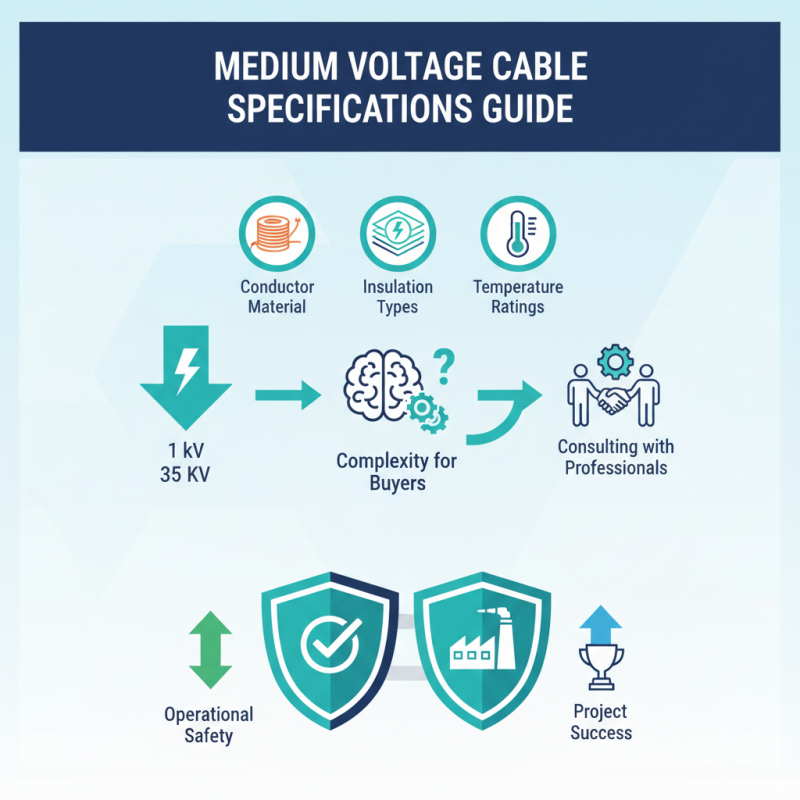
Medium voltage cables are designed to operate in voltages ranging from 1 kV to 35 kV. Buyers need to grasp the various factors that affect performance. This includes conductor material, insulation types, and temperature ratings. Each detail impacts durability and efficiency. It is essential to choose the right specification for your specific application to ensure reliability.
As buyers dive into specifications, the complexity can be overwhelming. Misunderstanding these details can lead to insufficient performance. Consider consulting with professionals who specialize in this area. Their insights can clarify choices and prevent costly mistakes. Remember, the quality and correctness of these specifications can directly affect operational safety and project success.
Medium voltage cables play a crucial role in modern electrical power systems. They are used to transmit electricity between substations and end-users, typically operating in the range of 1 kV to 35 kV. This voltage range allows for efficient distribution in urban and rural areas alike. According to the International Electrotechnical Commission (IEC), medium voltage cables account for about 25% of the global cable market.
These cables are essential in various applications, from powering industrial facilities to supplying energy to commercial buildings. They are often installed underground or overhead. Insulation materials, such as cross-linked polyethylene (XLPE), enhance their performance and longevity. Yet, maintenance remains a challenge. Environmental factors can cause deterioration over time. Studies show that improper installation can reduce the lifespan of medium voltage cables significantly.
Selecting the right medium voltage cable requires understanding specific requirements. The National Electrical Manufacturers Association (NEMA) provides guidelines for cable specifications, including conductor sizes and insulation types. Notably, buyers must consider the operating environment and load requirements. Overlooking such details can lead to serious operational disruptions. The complexity of these specifications can sometimes overwhelm buyers, emphasizing the need for professional guidance.
| Specification | Description |
|---|---|
| Voltage Rating | Typically rated from 1 kV to 35 kV |
| Conductor Material | Copper or Aluminum |
| Insulation Type | Cross-linked Polyethylene (XLPE) or PVC |
| Armoring | Steel wire or tape for mechanical protection |
| Applications | Used in power distribution, industrial settings, and utility applications |
| Standards | IEC 60502, NEC, and other local standards |
| Temperature Rating | -40°C to +90°C for XLPE |
Medium voltage cables are essential for electrical distribution in various industries. Understanding their specifications is crucial. These cables typically operate in the range of 1kV to 35kV. Buyers should pay attention to the insulation material. Common options include XLPE and EPR, which offer excellent thermal performance.
Conductor materials also play a significant role. Copper and aluminum are popular choices. Each has unique attributes. Copper is known for better conductivity, while aluminum is lightweight and cost-effective. A comprehensive check of the cable jacket is also important. Material like PVC or polyurethane can enhance durability in harsh environments.
When purchasing medium voltage cables, consider the temperature rating. Cables need to withstand specific environmental conditions. Regular testing and certification ensure reliability. There might be gaps in specifications that could cause issues. Buyers should ask questions and seek clarity on standards. Investing time in research yields better choices in the long run.
Medium voltage cables are essential for power distribution in various applications. Understanding the materials used in their manufacturing is crucial for buyers. These cables typically consist of several key components, including conductors, insulation, and protective sheath layers.
Copper and aluminum are commonly used for the conductors. Copper offers excellent conductivity and durability, while aluminum is lighter and more cost-effective. Insulation materials often include cross-linked polyethylene (XLPE) or ethylene propylene rubber (EPR), both of which provide high resistance to heat and moisture. The outer protective sheath is usually made from PVC or other weather-resistant materials, ensuring longevity and performance in tough environments.
Buyers should also consider the quality control and testing processes that manufacturers employ. While many products may meet standard specifications, variations can occur. Some cables may demonstrate inferior performance under specific conditions. It’s vital to choose cables that have undergone rigorous testing for efficiency and safety. Awareness of these factors can aid in making informed purchasing decisions, especially when reliability is paramount.
Medium voltage cables are essential components in power distribution systems. Understanding testing and compliance standards for these cables ensures safety and reliability. The International Electrotechnical Commission (IEC) has established IEC 60502 for medium voltage cables. This standard outlines insulation requirements and testing procedures.
Testing is critical. Cables undergo various assessments: dielectric strength tests, thermal stability tests, and long-term aging tests. According to a report by the International Council on Large Electric Systems (CIGRÉ), cables must endure extreme environmental conditions. This includes high humidity and varying temperatures. Cables are tested for their ability to withstand these conditions over time.
Moreover, compliance with regulations safeguards end-users. In 2021, the global medium voltage cable market was valued at approximately $12 billion. This figure reflects the increasing demand for reliable infrastructure. As power distribution networks expand, the focus on quality compliance becomes paramount. Proper testing and adherence to standards influence overall performance and longevity, making it critical for buyers to prioritize these aspects.
Selecting the right medium voltage cable is crucial for safe and efficient operations in electrical systems. Medium voltage cables typically operate in the range of 1 kV to 35 kV, serving various applications in industrial and utility settings. A recent industry report highlighted that improper cable selection could result in failures, costing businesses significant downtime and repair expenses.
When evaluating medium voltage cables, it’s essential to consider factors such as insulation type, conductor material, and environmental conditions. For example, cross-linked polyethylene (XLPE) insulation is preferred for its resistance to heat and moisture. In contrast, ethylene propylene rubber (EPR) offers flexibility in harsh environments. Additionally, cables must meet specific standards, like those set by the Institute of Electrical and Electronics Engineers (IEEE) and the National Electrical Manufacturers Association (NEMA).
Data shows that 30% of electrical failures stem from inadequate cable specifications. This underscores the need for careful assessment. Each project may involve unique challenges, such as extreme temperatures or mechanical stress. Engaging with electrical engineers or industry experts can help ensure appropriate cable selection, preventing future issues. Failing to seek proper guidance can ultimately lead to costly mistakes.
„Thanks to the LUVIR technology, the solder resist process could be switched directly from the previously used mask exposure to direct exposure. As an outstanding digital solution on the market, this technology has been able to demonstrate fast process times and superior quality on our certified conventional ink in production. This allowed us to fully digitize the solder mask process at low cost – without process or ink adjustments. An excellent benefit to our production in Rot am See.“
Ralf Göhringer (Head of Production WE Rot am See)
I would definitely recommend the Limata machine and team for a future company purchase
Michael Greenaway
Compunetics Inc.
“The Limata ldi has been amazing!! Best thing we did was buy this machine”
Richard Brady
GM
Circuitlabs
“Since 2019, we have been running the Limata X1000 LDI system (including LUVIR for solder mask imaging) in daily production as an addition to our current process with film. The machine was capable of properly exposing Taiyo PSR-4000 BN (DI) solder mask types on normal to high-copper boards using a new and unique direct imaging process. The machine operating interface is very user friendly which allowed for a quick technical training curve. The pre-registration processing reduced several seconds of production time at every print. Limata support and service staff is incomparable. They supported our team every step of the way at basically any time of the day or night, with literally, an immediate response time, customizing the software interface to best fit our Operations and needs.
We have exposed more than 8,000 prints since end of October, on various solder mask colors and some resist film panels. Limata, has proven to be very capable and innovative. They are a strong contender in the industry.
We have very much enjoyed this project, and working with the team!
Thank you Limata for the continued support and being a part of our growth.”
Bill Sezate
Vice President, GM
Summit Interconnect
As a replacement to our current contact exposure process with film, the LIMATA X2000 system including LUVIR-Technology was capable of properly exposing non-LDI solder mask types using a direct imaging process. The machine offers cutting edge software with a very intuitive operating interface which allowed for quick technician training curve. The dual drawer system combined with pre-registration processing reduced several seconds of production time at every machine cycle. Limata support and service staff is world class. They added software patches to keep production running at shortest possible response times, customized the software interface to best fit our in-house Operations system, and even wrote a step-by-step machine processing manual. As a result of the project, we have exposed more than 16,000 times on various product types and solder mask brands/colors. Limata, in a very short timeframe as a company, has definitely shown they are truly innovative and will be challenging the industry of direct imaging for the top spot.
Kevin Beattie
Process Engineer
TTM Technologies
Forest Grove Division
