The Optical Dissolved Oxygen Meter is essential for measuring oxygen levels in various environments. It provides accurate and reliable data vital for aquatic ecosystems. According to a report by the Global Water Quality Monitoring Market, the demand for reliable dissolved oxygen measurements is growing. Industries like aquaculture, wastewater treatment, and environmental monitoring rely on this technology.
These meters use light-based technology to determine oxygen levels. Unlike traditional methods, they offer faster response times and reduce the risk of interference from other substances. The accuracy of these meters can significantly impact environmental assessments and management strategies. Nevertheless, some users find this technology complex, causing initial confusion in operation.
Understanding the Optical Dissolved Oxygen Meter's functionality is key to utilizing its advantages fully. As with any technical tool, it requires a learning curve. Emphasizing training for proper use is crucial. Better operation leads to improved data reliability. Aspiring professionals should base their knowledge on current technologies and trends in the dissolved oxygen measurement field.
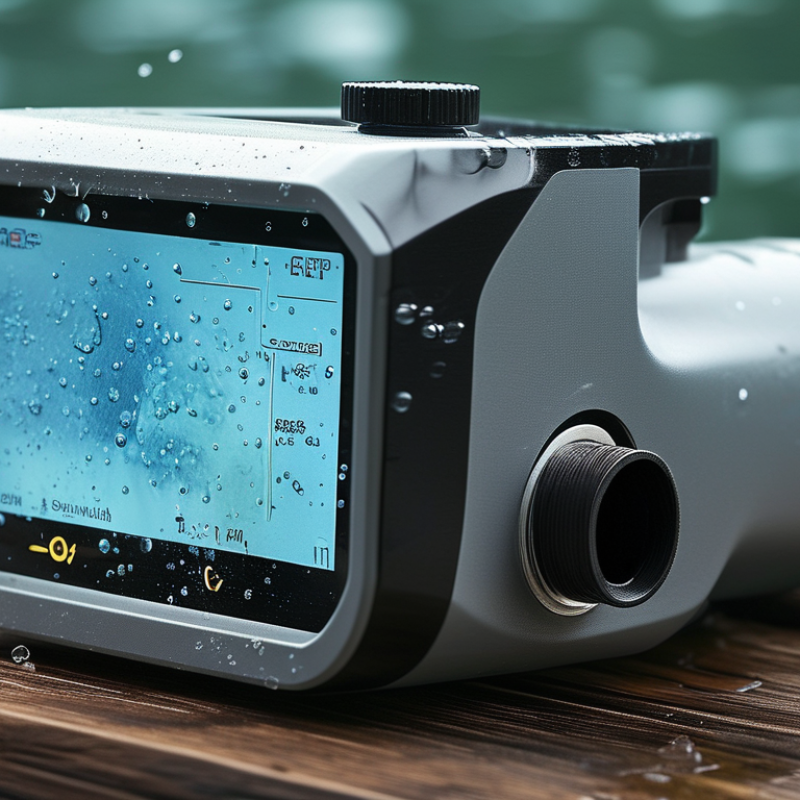
An optical dissolved oxygen meter is a sophisticated device designed to measure the concentration of oxygen in water. Unlike traditional methods, it employs luminescence technology to gauge dissolved oxygen levels. This technique is based on the principle that luminescent dyes emit light when exposed to oxygen. The intensity of this light diminishes as oxygen levels increase. By analyzing this luminescence, accurate readings can be obtained.
These meters come equipped with a sensor that typically features a special dye. When water comes into contact with this dye, a reaction occurs that allows the meter to calculate the exact amount of dissolved oxygen present. The measurement can be displayed in various forms, making it easy for users to interpret the data. Such meters are crucial for aquatic research, environmental monitoring, and wastewater treatment. However, they can be sensitive to certain conditions, like temperature fluctuations and turbidity, which may impact accuracy.
While they offer high precision, there are concerns regarding their calibration and maintenance. Regular checks are vital to ensure reliability. Users must remain vigilant about these factors to avoid misinterpretation of data. In high-demand scenarios, even slight inaccuracies can lead to significant consequences. Understanding the operational nuances of optical dissolved oxygen meters is essential for effective usage and reliable water quality assessments.
Optical dissolved oxygen meters operate on a unique principle that sets them apart from traditional methods. These devices rely on luminescence—the emission of light by a substance after it absorbs photons. A special fluorescent dye is used in these meters. When the dye is illuminated, it emits a specific wavelength of light. The presence of dissolved oxygen affects this luminescence in measurable ways.
The measurement process is relatively straightforward. A light source excites the fluorescent dye, and the emitted light is collected by a detector. The time between excitation and emission is influenced by the presence of oxygen. When oxygen levels rise, the luminescence quenching increases, resulting in a shorter emission time. This relationship allows for precise and quick readings of dissolved oxygen levels in various environments, including aquatic systems.
While this method is highly effective, it is not without challenges. Factors like temperature and pressure can influence measurements. Regular calibration and maintenance are crucial to ensure accuracy. Understanding these nuances helps users appreciate the complexity of optical dissolved oxygen measurement, reinforcing the need for proper training and knowledge when utilizing these devices.
An optical dissolved oxygen meter is a sophisticated device. It measures the concentration of oxygen in liquids by using light-based technologies. Understanding its key components is essential for effective usage.
One important component is the optical sensor. This sensor emits light, which interacts with molecules in the water. When oxygen is present, it causes luminescence. The intensity and duration of this luminescence are then measured, allowing precise oxygen levels to be determined.
Another crucial part is the electronics unit. This houses the microprocessor and displays results. It processes the data from the sensor and converts it into readable forms. Calibration is often necessary to ensure accuracy. Regular checks can prevent potential errors.
**Tip:** Regular calibration can enhance the accuracy of your measurements. It’s simple but vital.
The housing of the meter is also significant. It protects the sensitive components from environmental conditions. Always ensure that this housing is intact to avoid inaccurate readings.
**Tip:** Keep the meter clean and inspect it frequently. Any debris can affect performance.
Moreover, the choice of the liquid sample is critical. Different temperatures and pressures can produce variance in results. Understanding these factors can help you make better assessments.
This chart illustrates the dissolved oxygen levels (in mg/L) in a freshwater environment over a period of one week. The optical dissolved oxygen meter measures the oxygen concentration accurately, which is crucial for aquatic life health.
Optical methods for measuring dissolved oxygen (DO) have gained traction due to their advantages over traditional techniques. According to a report by the Environmental Monitoring Association, optical dissolved oxygen meters can provide faster readings with higher accuracy. These units utilize luminescence technology, offering a non-invasive way to monitor oxygen levels in various environments.
One major benefit of optical methods is their robustness in challenging conditions. Traditional electrochemical sensors can be affected by temperature and pressure fluctuations. In contrast, optical meters maintain reliable performance. Researchers found that optical sensors have a lower drift rate, allowing for longer periods between calibrations—saving time and resources.
Tips: Regular maintenance is crucial. Even optical meters need calibration checks. This ensures continued accuracy over time. Also, consider the application-specific requirements. Not all optical meters perform similarly in every environment.
In environments with varying light levels, optical devices can sometimes struggle. This requires careful consideration for users regarding placement and usage. Yet, despite these potential limitations, the benefits of speed and precision make optical dissolved oxygen meters an invaluable tool in water quality monitoring.
Optical dissolved oxygen meters are essential tools across various industries. Their ability to accurately measure oxygen levels significantly impacts water quality management. In aquaculture, these devices ensure optimal conditions for fish health. Regular monitoring prevents hypoxia, promoting sustainable growth.
In wastewater treatment, optical meters play a critical role. They help operators maintain effective aerobic processes. This ensures the breakdown of organic materials, reducing environmental impact. Their real-time data aids decision-making and process control. However, challenges remain in calibrating these devices, especially in varying temperatures.
Environmental monitoring also benefits from optical dissolved oxygen meters. Water bodies require consistent assessment to protect ecosystems. Industries like pharmaceuticals use these meters to maintain stringent quality controls. While they are reliable, it's important to regularly evaluate their accuracy. Continuous training for personnel enhances the effectiveness of these tools.
| Industry | Key Application | Importance of Optical DO Meters | Typical Measurement Range |
|---|---|---|---|
| Aquaculture | Monitoring oxygen levels in fish farms | Essential for fish health and growth | 0 - 20 mg/L |
| Wastewater Treatment | Optimizing aeration processes | Improves efficiency and reduces costs | 0 - 15 mg/L |
| Brewery | Quality control during fermentation | Enhances product quality and consistency | 0 - 10 mg/L |
| Pharmaceuticals | Process monitoring in bioreactors | Critical for metabolic activity | 0 - 25 mg/L |
| Environmental Monitoring | Water quality assessment | Ensures ecosystem health | 0 - 20 mg/L |
„Thanks to the LUVIR technology, the solder resist process could be switched directly from the previously used mask exposure to direct exposure. As an outstanding digital solution on the market, this technology has been able to demonstrate fast process times and superior quality on our certified conventional ink in production. This allowed us to fully digitize the solder mask process at low cost – without process or ink adjustments. An excellent benefit to our production in Rot am See.“
Ralf Göhringer (Head of Production WE Rot am See)
I would definitely recommend the Limata machine and team for a future company purchase
Michael Greenaway
Compunetics Inc.
“The Limata ldi has been amazing!! Best thing we did was buy this machine”
Richard Brady
GM
Circuitlabs
“Since 2019, we have been running the Limata X1000 LDI system (including LUVIR for solder mask imaging) in daily production as an addition to our current process with film. The machine was capable of properly exposing Taiyo PSR-4000 BN (DI) solder mask types on normal to high-copper boards using a new and unique direct imaging process. The machine operating interface is very user friendly which allowed for a quick technical training curve. The pre-registration processing reduced several seconds of production time at every print. Limata support and service staff is incomparable. They supported our team every step of the way at basically any time of the day or night, with literally, an immediate response time, customizing the software interface to best fit our Operations and needs.
We have exposed more than 8,000 prints since end of October, on various solder mask colors and some resist film panels. Limata, has proven to be very capable and innovative. They are a strong contender in the industry.
We have very much enjoyed this project, and working with the team!
Thank you Limata for the continued support and being a part of our growth.”
Bill Sezate
Vice President, GM
Summit Interconnect
As a replacement to our current contact exposure process with film, the LIMATA X2000 system including LUVIR-Technology was capable of properly exposing non-LDI solder mask types using a direct imaging process. The machine offers cutting edge software with a very intuitive operating interface which allowed for quick technician training curve. The dual drawer system combined with pre-registration processing reduced several seconds of production time at every machine cycle. Limata support and service staff is world class. They added software patches to keep production running at shortest possible response times, customized the software interface to best fit our in-house Operations system, and even wrote a step-by-step machine processing manual. As a result of the project, we have exposed more than 16,000 times on various product types and solder mask brands/colors. Limata, in a very short timeframe as a company, has definitely shown they are truly innovative and will be challenging the industry of direct imaging for the top spot.
Kevin Beattie
Process Engineer
TTM Technologies
Forest Grove Division
