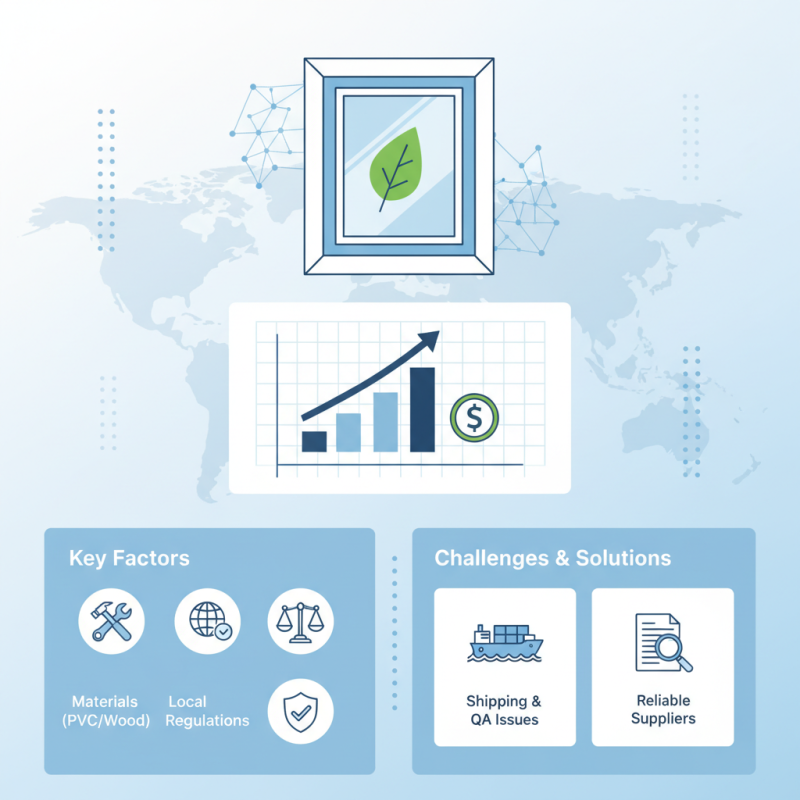
The demand for Outward Casement Windows has seen significant growth in recent years. According to a report by Grand View Research, the global market for these windows is projected to reach $50 billion by 2027. This growth is driven by their aesthetic appeal and energy efficiency. Importers are increasingly seeking high-quality products that meet international standards.
When choosing Outward Casement Windows, several factors come into play. The materials used, such as PVC or wood, can greatly affect durability and cost. Additionally, understanding local regulations is crucial for compliance. Manufacturers often provide varying warranty conditions, which can impact your purchasing decision.
While the market offers numerous options, challenges persist. Importers must navigate issues related to shipping logistics and quality assurance. There can be unexpected delays or defects that arise. A thorough research process is vital in identifying reliable suppliers. This ensures that the final product meets both consumer expectations and regulatory requirements.
Outward casement windows offer several unique features that make them a popular choice among homeowners and importers. Their design allows the windows to open outward, providing better ventilation and unobstructed views. Such windows are highly effective in maximizing natural light, creating a spacious feel in any room. The ability to open completely also makes cleaning easier, especially for hard-to-reach areas.
When considering outward casement windows, keep in mind the quality of materials used. Look for energy-efficient options that can reduce heating and cooling costs. Durable materials ensure longevity while maintaining aesthetic appeal. Opt for windows with multi-point locking systems for enhanced security.
Tip: Always check the local building codes before making a purchase. Regulations may vary concerning window types and installation methods.
Another important aspect is the insulation qualities of the windows. Proper insulation can enhance indoor comfort and minimize noise pollution. Inspect the weather-stripping and sealing details to ensure efficiency.
Tip: Don't neglect the importance of choosing the right installation professionals. A poor installation can lead to many problems, including drafts and water leaks.
When selecting materials for outward casement windows, the choice significantly impacts durability and aesthetics. Common materials used include wood, aluminum, and vinyl. Each material has unique properties that can cater to specific needs and preferences. For instance, wood offers a classic look and good insulation, but requires regular maintenance. Aluminum is lightweight and durable, yet it may not provide the same level of insulation.
Vinyl is another popular option due to its affordability and low maintenance. It resists moisture and doesn’t need painting. Importers must weigh these factors carefully. It’s essential to assess the intended environment. In humid areas, moisture-resisting materials perform better.
Not all materials work equally well in every climate. For instance, wood may warp in very humid conditions. Importers should also consider the environmental impact of their material choices. Ask manufacturers about sustainability practices. A well-informed choice can enhance the product's reputation and marketability.
| Material Type | Properties | Advantages | Disadvantages | Typical Use Cases |
|---|---|---|---|---|
| Wood | Natural insulator, aesthetically pleasing | High thermal performance, customizable finishes | Requires maintenance, susceptible to rot and pests | Residential homes, traditional styles |
| Aluminum | Lightweight, durable, low maintenance | Weather resistant, modern aesthetics | Poor insulation compared to other materials | Commercial buildings, modern architecture |
| Vinyl | Energy-efficient, low weight, versatile | Excellent insulation properties, minimal upkeep | Limited color options, may warp in extreme heat | Residential buildings, budget options |
| Fiberglass | High strength-to-weight ratio, resistant to dents | Long lifespan, energy-efficient performance | Higher upfront cost, limited availability | High-end residential, luxury segments |
The global demand for casement windows has been steadily increasing. According to the Global Industry Analysts report, the casement window market is projected to reach approximately $17 billion by 2025. This reflects an annual growth rate of around 4% from 2020. Rising concerns for energy efficiency and natural ventilation drive this trend.
In Europe and North America, demand has surged due to ongoing residential construction projects. The trend is notable in areas focused on sustainable building practices. For instance, nearly 60% of new homes in urban U.S. areas feature energy-efficient windows. As construction standards tighten, importers must keep their product offerings aligned with these market expectations.
However, challenges remain. Not all countries have the same regulations regarding energy performance. This inconsistency can complicate import logistics. Additionally, the competitive landscape is evolving rapidly with more manufacturers entering the market. Importers need to focus on quality and compliance to succeed in this evolving industry.
When importing outward casement windows, compliance with local and international standards is essential. These windows must meet various performance criteria, including energy efficiency and safety regulations. The International Organization for Standardization (ISO) provides a framework that many countries adopt. According to a 2022 report by the Global Windows and Doors Market, nearly 40% of windows sold in 2021 complied with stringent energy-efficiency standards. Meeting these standards not only ensures compliance but also enhances marketability.
It's crucial to focus on the specific regulations relevant to your target market. For instance, the European Union has stringent guidelines on thermal insulation and air permeability. Failing to comply may result in penalties or product recalls. A survey indicated that 65% of importers faced challenges understanding these standards. Therefore, thoroughly researching local regulations can mitigate risks.
Tips: Always consult local building codes and testing requirements in your importing country. Consider hiring a compliance specialist for guidance. Understand that standards can change, so stay updated regularly. Factoring in these elements promotes smoother transactions and enhances customer trust.
When considering the cost factors for importing outward casement windows, multiple elements come into play. Firstly, the material used impacts pricing significantly. Quality wood, aluminum, or vinyl all have different costs. Understanding material durability is key in making a wise investment. Shipping fees can also inflate overall expenses unexpectedly. Ocean freight costs vary based on location and quantity. Hence, getting accurate shipping quotes is essential.
Importers should also reflect on the sourcing strategy. A reliable supplier often offers better pricing but may require a larger order quantity. This could lead to excess inventory if not planned carefully. Researching suppliers’ reputation and previous client feedback is crucial for ensuring quality.
Tips: Always compare quotes from multiple suppliers. A lower price may indicate lower quality. Attend trade shows to meet potential suppliers and inspect their products firsthand. Consider the long-term benefits of investing in higher-quality windows, even if the initial cost is higher. This can lead to fewer replacements in the future, ultimately saving money.
„Thanks to the LUVIR technology, the solder resist process could be switched directly from the previously used mask exposure to direct exposure. As an outstanding digital solution on the market, this technology has been able to demonstrate fast process times and superior quality on our certified conventional ink in production. This allowed us to fully digitize the solder mask process at low cost – without process or ink adjustments. An excellent benefit to our production in Rot am See.“
Ralf Göhringer (Head of Production WE Rot am See)
I would definitely recommend the Limata machine and team for a future company purchase
Michael Greenaway
Compunetics Inc.
“The Limata ldi has been amazing!! Best thing we did was buy this machine”
Richard Brady
GM
Circuitlabs
“Since 2019, we have been running the Limata X1000 LDI system (including LUVIR for solder mask imaging) in daily production as an addition to our current process with film. The machine was capable of properly exposing Taiyo PSR-4000 BN (DI) solder mask types on normal to high-copper boards using a new and unique direct imaging process. The machine operating interface is very user friendly which allowed for a quick technical training curve. The pre-registration processing reduced several seconds of production time at every print. Limata support and service staff is incomparable. They supported our team every step of the way at basically any time of the day or night, with literally, an immediate response time, customizing the software interface to best fit our Operations and needs.
We have exposed more than 8,000 prints since end of October, on various solder mask colors and some resist film panels. Limata, has proven to be very capable and innovative. They are a strong contender in the industry.
We have very much enjoyed this project, and working with the team!
Thank you Limata for the continued support and being a part of our growth.”
Bill Sezate
Vice President, GM
Summit Interconnect
As a replacement to our current contact exposure process with film, the LIMATA X2000 system including LUVIR-Technology was capable of properly exposing non-LDI solder mask types using a direct imaging process. The machine offers cutting edge software with a very intuitive operating interface which allowed for quick technician training curve. The dual drawer system combined with pre-registration processing reduced several seconds of production time at every machine cycle. Limata support and service staff is world class. They added software patches to keep production running at shortest possible response times, customized the software interface to best fit our in-house Operations system, and even wrote a step-by-step machine processing manual. As a result of the project, we have exposed more than 16,000 times on various product types and solder mask brands/colors. Limata, in a very short timeframe as a company, has definitely shown they are truly innovative and will be challenging the industry of direct imaging for the top spot.
Kevin Beattie
Process Engineer
TTM Technologies
Forest Grove Division
