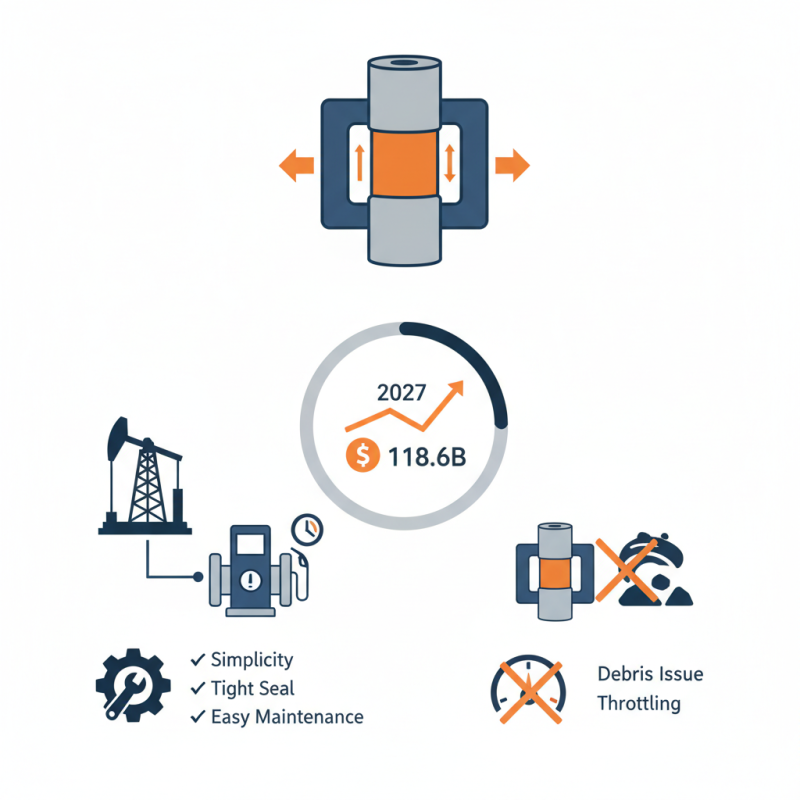
In industrial applications, the Plug Valve plays a vital role in fluid control systems. This valve type is known for its simplicity and effectiveness in regulating flow. According to the Global Valve Market Report by Research and Markets, the valve industry is expected to reach $118.6 billion by 2027. Plug Valves are particularly favored in sectors like oil and gas, owing to their ability to handle high pressures.
Plug Valves operate by rotating a cylindrical plug within the valve body. They provide a tight seal, ensuring minimal leakage. A study by TechSci Research indicates that the rising demand for efficient fluid handling drives plug valve adoption. The ease of maintenance is another advantage, as they often require fewer replacement parts compared to other valve types.
Despite their benefits, Plug Valves are not without shortcomings. Their performance can be affected by debris and sediment, which may hinder smooth operation. Moreover, not all applications suit Plug Valves, especially where throttling is necessary. Understanding these limitations is crucial for selecting the right valve for specific industrial needs.
A plug valve is a type of quarter-turn valve that controls fluid flow through a cylindrical or tapered plug. The plug features one or more holes that align with the pipe when fully opened. This design allows for a smooth, unrestricted flow of liquids or gases. Plug valves are commonly used in various industries, including oil and gas, water treatment, and chemical processing.
One key advantage of plug valves is their simplicity. They are easy to operate and maintain. The straightforward design minimizes the chances of leaks. However, proper installation is crucial. A poorly installed valve can lead to performance issues. Users often overlook the importance of routine checks. This neglect can result in unexpected failures.
Different configurations of plug valves exist, each suited for specific applications. Some variations offer additional features, like sealing options for enhanced leak prevention. While plug valves generally operate effectively, they may not be ideal for all scenarios. It's essential to evaluate the specific needs of your system to determine suitability. Overall, understanding the mechanics of a plug valve can provide better insights for optimal use.
This chart represents the usage of different types of plug valves in various industries. The data showcases how plug valves are distributed across sectors such as oil and gas, water treatment, and chemical processing.
Plug valves are versatile components widely used in various industries. They function primarily as on/off valves, enabling or blocking fluid flow. Different types of plug valves exist, each designed for specific applications.
One common type is the lubrication plug valve. It features a lubricating system to ensure smooth operation. It is often used in chemical processing and oil industries. Another type is the non-lubricated plug valve, which is simpler and more cost-effective. This type is ideal for water and gas applications.
In addition, there are multiport plug valves. These can direct flow in different directions, making them ideal for complex piping systems. They are frequently found in plants where space and efficiency matter. Choosing the right type is crucial, as improper selection can lead to frequent breakdowns or maintenance issues. Understanding each type’s unique strengths can lead to better operational outcomes.
Plug valves are simple yet effective devices used to control fluid flow in pipelines. They consist of a cylindrical or tapered plug that rotates within a bore. The design allows for quick shut-off and regulation of flow, making them ideal for various applications. The mechanism is straightforward: when the plug is rotated, its opening aligns or misaligns with the pipeline, creating a path for the fluid or blocking it completely.
The operation of a plug valve is not without challenges. Over time, wear and tear can affect the performance. Sediments or debris may accumulate around the valve, impacting its ability to seal properly. Users should conduct regular inspections to identify signs of degradation. Understanding how the mechanism works can help in troubleshooting and maintenance. Adjustments or replacements may be necessary to ensure reliable operation.
Despite their many advantages, plug valves are not universally applicable. High-pressure applications may pose risks, as their seals can fail under extreme conditions. It's crucial to consider the specific requirements of a system before opting for a plug valve. Acknowledging both strengths and weaknesses can lead to better decisions in fluid control management.
Plug valves are commonly used for on/off control in various applications. They provide a straightforward mechanism, but their use comes with both advantages and disadvantages. One notable advantage is their ability to provide a tight seal. According to a report by the Engineering Toolbox, plug valves can achieve up to 90% efficiency in preventing leaks, which is critical in industries like oil and gas. Their simple design also allows for easy operation, making them popular in high-pressure situations.
However, plug valves do have certain flaws. They may struggle with flow regulation due to their design, often resulting in limited throttling capabilities. A study published in the Journal of Flow Control noted that plug valves can lead to cavitation in some scenarios, causing potential damage over time. Maintenance can also be a consideration. While they are generally durable, any wear on the sealing surfaces can affect performance and require replacement. Therefore, users must weigh these factors when choosing plug valves for their systems.
Plug valves are essential components in various piping systems, but they require regular maintenance for optimal operation. To ensure longevity, keep a close eye on the valve's condition. Look for signs of wear and tear, especially around the sealing surfaces. This is where leaks often begin.
Routine inspection is crucial. During maintenance, clean the valve to remove buildup. Accumulated debris can impede functionality. If the valve is not opening or closing properly, it may be time to replace seals or the entire unit. Always check for proper alignment within the pipeline. Misalignment can lead to excessive wear and unexpected failures.
Here are some tips: Regular lubrication can enhance the operational ease of plug valves. Don’t wait for symptoms before acting. Schedule preventative maintenance checks. If you notice unusual noises or resistance, investigate immediately. Early detection can save time and money. Remember, a well-maintained plug valve operates efficiently, reducing downtime in your system.
„Thanks to the LUVIR technology, the solder resist process could be switched directly from the previously used mask exposure to direct exposure. As an outstanding digital solution on the market, this technology has been able to demonstrate fast process times and superior quality on our certified conventional ink in production. This allowed us to fully digitize the solder mask process at low cost – without process or ink adjustments. An excellent benefit to our production in Rot am See.“
Ralf Göhringer (Head of Production WE Rot am See)
I would definitely recommend the Limata machine and team for a future company purchase
Michael Greenaway
Compunetics Inc.
“The Limata ldi has been amazing!! Best thing we did was buy this machine”
Richard Brady
GM
Circuitlabs
“Since 2019, we have been running the Limata X1000 LDI system (including LUVIR for solder mask imaging) in daily production as an addition to our current process with film. The machine was capable of properly exposing Taiyo PSR-4000 BN (DI) solder mask types on normal to high-copper boards using a new and unique direct imaging process. The machine operating interface is very user friendly which allowed for a quick technical training curve. The pre-registration processing reduced several seconds of production time at every print. Limata support and service staff is incomparable. They supported our team every step of the way at basically any time of the day or night, with literally, an immediate response time, customizing the software interface to best fit our Operations and needs.
We have exposed more than 8,000 prints since end of October, on various solder mask colors and some resist film panels. Limata, has proven to be very capable and innovative. They are a strong contender in the industry.
We have very much enjoyed this project, and working with the team!
Thank you Limata for the continued support and being a part of our growth.”
Bill Sezate
Vice President, GM
Summit Interconnect
As a replacement to our current contact exposure process with film, the LIMATA X2000 system including LUVIR-Technology was capable of properly exposing non-LDI solder mask types using a direct imaging process. The machine offers cutting edge software with a very intuitive operating interface which allowed for quick technician training curve. The dual drawer system combined with pre-registration processing reduced several seconds of production time at every machine cycle. Limata support and service staff is world class. They added software patches to keep production running at shortest possible response times, customized the software interface to best fit our in-house Operations system, and even wrote a step-by-step machine processing manual. As a result of the project, we have exposed more than 16,000 times on various product types and solder mask brands/colors. Limata, in a very short timeframe as a company, has definitely shown they are truly innovative and will be challenging the industry of direct imaging for the top spot.
Kevin Beattie
Process Engineer
TTM Technologies
Forest Grove Division
