A Ring Main Unit Cabinet is more than a metal enclosure. It helps distribute medium-voltage power and supports safe, dependable network operation. For global buyers, choosing one involves more than comparing prices or checking a product photo. Site conditions, system voltage, switching needs, and maintenance access all matter. Small details matter.
A cabinet installed in a humid coastal substation may need different protection from one inside a clean industrial building. Buyers should also verify ratings, internal configuration, cable entry options, and compatibility with existing equipment. Ask suppliers for current technical drawings, test documentation, and clear explanations of included components. If a specification is unclear, request clarification before placing an order. That simple step can prevent costly misunderstandings.
These seven buying tips offer a practical starting point for comparing products and suppliers. They focus on application fit, safety features, materials, certifications, delivery, and after-sales support. No checklist can replace a qualified engineering review. Still, a structured comparison makes weak proposals easier to spot. Even experienced teams can overlook details when procurement schedules are tight. I have seen product descriptions sound reassuring while leaving key configuration questions unanswered. That is a reminder to check evidence, not just confident wording. The right cabinet depends on the project, not on a universal “best” model. Buyers who confirm requirements early are better positioned to make a reliable choice.
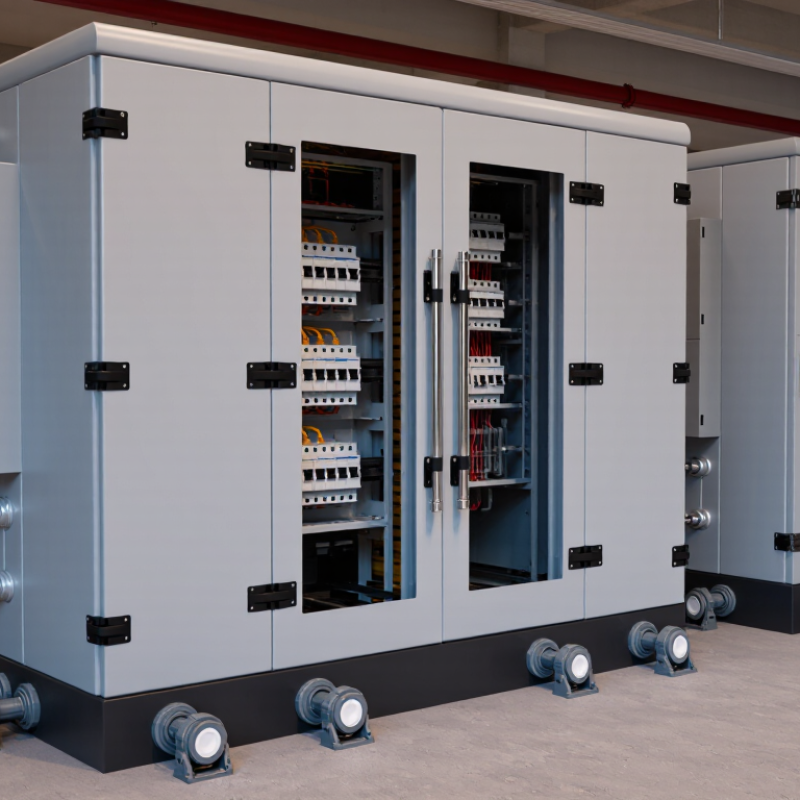
A ring main unit cabinet is compact medium-voltage switchgear used to connect sections of a local power network. In a ring distribution system, electricity can often reach a load from another direction if one cable section needs maintenance or develops a fault. The cabinet typically combines switching, isolation, and protection functions, though its configuration depends on the network design. Space matters. In practice, installers need room for cable bends, safe access, and future maintenance—not just the cabinet footprint.
RMUs are commonly installed in utility substations, commercial buildings, factories, and renewable energy sites. A housing near a coastal road may need stronger protection against moisture and salt than one inside a dry electrical room. Insulation options also vary, including air, gas, and solid-insulated designs; each has different service and environmental considerations. Check the rated voltage, current, fault withstand capability, enclosure protection, and operating conditions against the actual site requirements. Not always obvious. A compact unit may simplify installation, but cable entry direction, operating access, and expansion plans can still create problems. Buyers should confirm local technical requirements with the project engineer, since equipment suitable for one network may not fit another.
A reliable ring main unit selection starts with the actual network voltage, not a nearby project’s specification. Confirm the system’s nominal voltage and the equipment’s highest voltage rating with the utility documents. They are related, but not interchangeable. Check insulation level and power-frequency or impulse withstand requirements where specified. A mismatch may not be obvious on a simple cabinet schedule. It can surface during engineering review.
Current ratings need the same care. Record the expected continuous load for each feeder, then compare it with the unit’s rated current. Also confirm the short-time withstand current and duration against the network fault study. Normal load current is not fault current. A cabinet rated for everyday demand may still be unsuitable for the available fault level. Leave room for credible load growth, but avoid choosing a larger rating without checking cable and protection coordination. Over-specification can complicate the design too.
Configuration depends on how power enters, passes through, and leaves the site. Sketch each cable connection and mark ring feeders, transformer ways, and any spare way needed for expansion. A two-feeder arrangement and a transformer feeder may require different switching functions. Check cable entry direction, operating access, and installation space against the site drawing. Small details matter. I would recheck the one-line diagram with the utility engineer; schedules are sometimes incomplete, and assumptions can become expensive.
7 Ring Main Unit Cabinet Buying Tips for Global Buyers
Evaluating Safety Features, Materials, and Environmental Ratings
A ring main unit may sit outdoors for decades, so cabinet details deserve close inspection. Check that the offered assembly has test documentation for its actual configuration, not just a similar model. IEC 62271-200 covers metal-enclosed switchgear, while internal-arc classification should be verified against the project’s risks and installation conditions. Ask how the earth switch, mechanical interlocks, pressure relief, and cable-compartment access work together. A handle that feels secure is not proof of safe operation. Details matter.
Environmental ratings need context. An IP rating under IEC 60529 describes protection against dust and water ingress; it does not establish resistance to salt corrosion, UV exposure, or internal condensation. For coastal sites, request coating specifications and corrosion-test evidence, then inspect seams, fasteners, hinges, and drain paths.
IEA’s 2023 report, Electricity Grids and Secure Energy Transitions, says annual grid investment must rise to more than USD 600 billion by 2030, roughly double current levels. That is a system-wide estimate, not a cabinet forecast, but it underscores the cost of durable infrastructure.
Compare stated operating temperatures and humidity limits with the real site record. A dry factory test can miss a damp cabinet after a cold night. Some purchase checklists still overlook that.
7 Ring Main Unit Cabinet Buying Tips for Global Buyers
A ring main unit cabinet should be checked against the network where it will operate, not just a sales specification. Confirm rated voltage, frequency, insulation level, and short-time withstand current against the project requirements. Ask which IEC standards and editions apply, then verify local utility or installation requirements separately. Paper matters.
Certificates deserve a close read. Check the issuing body, validity period, tested product configuration, and whether the report covers the supplied cabinet’s ratings. A type-test report for a similar model may not prove that every option is covered. Not just a logo. Review routine test records and request traceable serial numbers, wiring diagrams, and operating instructions in the required language.
Supplier capability is just as important as compliance documents. Ask who performs final assembly and testing, how components are traced, and how design changes are controlled. A factory audit or video walkthrough can reveal practical details, such as test-bench capacity and how cabinets are protected for shipment. Request realistic lead times, spare-parts availability, and a clear process for technical support. One detail is easy to miss: documents may be complete, while response times remain vague. Ask for named responsibilities and written commitments before comparing offers.
A low quotation can hide costs. Compare each ring main unit cabinet against the same voltage rating, fault level, enclosure protection, and switching configuration. Ask for a line-by-line quote covering testing, export packing, spare parts, and commissioning support. Check the promised production slot, not just the headline lead time. Confirm whether routine test records and shipment documents are included.
Shipping schedules need a buffer. UNCTAD’s Review of Maritime Transport 2024 reported that Suez Canal transits had fallen 42% from their peak by early 2024, amid route disruptions. That figure is not a forecast for every shipment, but it shows why port routing and transit estimates can change. Ask suppliers to state the dispatch date, planned route, delivery terms, and who handles delays or damage. Small details matter. A cabinet arriving without suitable lifting points or complete documents can stall installation.
Tips: Compare total landed cost, not unit price. Get lead times in writing, including factory testing and packing. Request photos of the packed cabinet and a clear claims process. For after-sales support, agree on response times, spare-part availability, and remote troubleshooting access before ordering. These checks take effort, and paperwork can still be imperfect; verify critical details against the purchase specification.
„Thanks to the LUVIR technology, the solder resist process could be switched directly from the previously used mask exposure to direct exposure. As an outstanding digital solution on the market, this technology has been able to demonstrate fast process times and superior quality on our certified conventional ink in production. This allowed us to fully digitize the solder mask process at low cost – without process or ink adjustments. An excellent benefit to our production in Rot am See.“
Ralf Göhringer (Head of Production WE Rot am See)
I would definitely recommend the Limata machine and team for a future company purchase
Michael Greenaway
Compunetics Inc.
“The Limata ldi has been amazing!! Best thing we did was buy this machine”
Richard Brady
GM
Circuitlabs
“Since 2019, we have been running the Limata X1000 LDI system (including LUVIR for solder mask imaging) in daily production as an addition to our current process with film. The machine was capable of properly exposing Taiyo PSR-4000 BN (DI) solder mask types on normal to high-copper boards using a new and unique direct imaging process. The machine operating interface is very user friendly which allowed for a quick technical training curve. The pre-registration processing reduced several seconds of production time at every print. Limata support and service staff is incomparable. They supported our team every step of the way at basically any time of the day or night, with literally, an immediate response time, customizing the software interface to best fit our Operations and needs.
We have exposed more than 8,000 prints since end of October, on various solder mask colors and some resist film panels. Limata, has proven to be very capable and innovative. They are a strong contender in the industry.
We have very much enjoyed this project, and working with the team!
Thank you Limata for the continued support and being a part of our growth.”
Bill Sezate
Vice President, GM
Summit Interconnect
As a replacement to our current contact exposure process with film, the LIMATA X2000 system including LUVIR-Technology was capable of properly exposing non-LDI solder mask types using a direct imaging process. The machine offers cutting edge software with a very intuitive operating interface which allowed for quick technician training curve. The dual drawer system combined with pre-registration processing reduced several seconds of production time at every machine cycle. Limata support and service staff is world class. They added software patches to keep production running at shortest possible response times, customized the software interface to best fit our in-house Operations system, and even wrote a step-by-step machine processing manual. As a result of the project, we have exposed more than 16,000 times on various product types and solder mask brands/colors. Limata, in a very short timeframe as a company, has definitely shown they are truly innovative and will be challenging the industry of direct imaging for the top spot.
Kevin Beattie
Process Engineer
TTM Technologies
Forest Grove Division
