A Single-Girder Gantry Crane is a versatile piece of equipment commonly used in industrial settings. Its design consists of a single beam supported by two legs, allowing it to move and lift heavy loads with ease. Many businesses benefit greatly from this crane, as it maximizes space and efficiency.
With a Single-Girder Gantry Crane, operations can become smoother. It can lift materials in tight spaces, which many traditional cranes cannot do. This enhanced maneuverability reduces the risk of accidents and increases productivity. However, it is essential to reflect on project requirements. Choosing this type of crane requires considering load capacity and height restrictions.
In addition to its practicality, the Single-Girder Gantry Crane is often more cost-effective than larger models. The initial investment is lower, while maintenance costs remain manageable. Despite these advantages, operators must be trained to ensure safety. Reflecting on proper usage ultimately leads to better results and fewer mishaps.
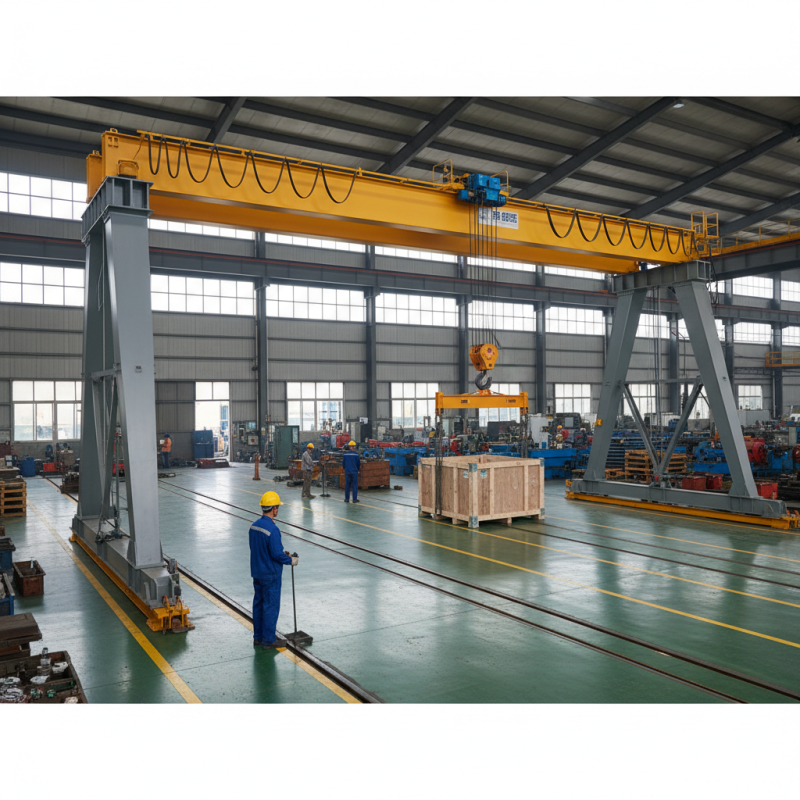
A single-girder gantry crane is a versatile lifting solution designed for various industrial applications. This type of crane consists of a single beam supported by two legs that run on tracks. They are often used in warehouses, manufacturing plants, and construction sites. The simplicity of the design allows for efficient operation and movement of heavy loads.
One key benefit of using a single-girder gantry crane is its cost-effectiveness. They often require less material and can be more affordable than larger gantry cranes. Additionally, their compact size makes them ideal for areas with limited overhead space. This can improve workflow and productivity within your workspace.
**Tip:** Regular maintenance is crucial for maximizing the lifespan of your gantry crane. Inspect welding joints and moving parts for wear. Also, ensure the wheels are in good condition.
Another advantage is their flexibility. These cranes can be moved easily from one location to another. This is important for businesses that require the ability to change layout frequently. However, one must be cautious about the load limit. Overloading a gantry crane can lead to safety hazards and mechanical failures.
**Tip:** Always check weight ratings before lifting heavy items. Ensuring you get it right protects both the equipment and the operators.
A single-girder gantry crane is an essential piece of equipment in various industries. Its design features a single beam supported by two legs, which move along rails. This structure provides excellent lifting capabilities while remaining lightweight compared to double-girder cranes.
Key components of a single-girder gantry crane include the girder, hoist, legs, and wheels. The girder is the main beam, often made from steel. It supports the hoist, which is responsible for lifting and lowering loads. The legs are sturdy and allow the crane to maintain stability while in motion. The wheels rest on the rails, enabling the crane to travel horizontally across a workspace.
While single-girder gantry cranes are versatile, choosing the right one can be challenging. Consider weight limits, lifting heights, and specific applications. Always consult with experts in the field for tailored advice.
A single-girder gantry crane is a versatile piece of equipment widely used in various industries. Its design features a single beam supported by two legs, allowing for efficient movement and lifting of materials. According to a report from the International Journal of Engineering Technology, these cranes can handle loads of up to 10 tons, making them suitable for various applications, from construction to manufacturing.
One major advantage of using a single-girder gantry crane is its cost-effectiveness. These cranes often require less material and lower overhead costs compared to double-girder models. A 2021 study indicated that businesses can save up to 30% on purchasing and maintenance expenses. Moreover, their lighter structure allows for easier installation and relocation. This flexibility is critical in dynamic work environments, where project requirements can change rapidly.
Safety is another critical benefit. Single-girder gantry cranes often come with advanced safety features like overload protection and emergency stop mechanisms. Industry reports emphasize that improved safety reduces workplace injuries and boosts productivity. However, it's important to note that operators must be trained adequately to ensure safety protocols are followed. While these cranes are efficient, poor operator training can lead to accidents, highlighting a need for continuous education in safe operating practices.
Single-girder gantry cranes are popular in many industries. Their design allows for efficient lifting in confined spaces. These cranes are often used in manufacturing plants, construction sites, and warehouses. They can handle various loads, making them versatile tools for lifting tasks.
In the construction sector, single-girder gantry cranes lift heavy materials like steel beams and concrete panels. Their ability to operate outdoors adds to their usefulness. In warehouses, these cranes facilitate the movement of goods. They can load and unload trucks quickly, enhancing productivity.
However, there are challenges in using these cranes. Space constraints can limit their effectiveness. Operators may require training to ensure safety and efficiency. Regular maintenance is vital to avoid breakdowns. Despite these issues, single-girder gantry cranes continue to provide significant benefits in multiple applications. Their strengths often outweigh the limitations when used correctly.
Gantry cranes are vital in various industries, offering reliable lifting solutions. However, ensuring their safety and operational efficiency involves diligent maintenance practices. Regular inspections should become routine. Look for signs of wear, rust, or damage to components. Pay attention to wiring and connection points. Small issues can lead to significant failures if ignored.
Training operators is crucial for maintaining safety. Workers must understand proper lifting techniques and weight limits. Misuse can lead to accidents, resulting in costly downtime or injuries. Encourage open communication about any equipment concerns. This creates a culture of safety awareness and accountability.
Tips for maintenance include keeping a log of all inspections and repairs. Record results and act on any issues promptly. Establishing a maintenance schedule can help prevent unexpected breakdowns. In the long run, investing effort in upkeep enhances the crane’s lifespan and reliability. Proper planning and vigilance can reduce risks significantly.
„Thanks to the LUVIR technology, the solder resist process could be switched directly from the previously used mask exposure to direct exposure. As an outstanding digital solution on the market, this technology has been able to demonstrate fast process times and superior quality on our certified conventional ink in production. This allowed us to fully digitize the solder mask process at low cost – without process or ink adjustments. An excellent benefit to our production in Rot am See.“
Ralf Göhringer (Head of Production WE Rot am See)
I would definitely recommend the Limata machine and team for a future company purchase
Michael Greenaway
Compunetics Inc.
“The Limata ldi has been amazing!! Best thing we did was buy this machine”
Richard Brady
GM
Circuitlabs
“Since 2019, we have been running the Limata X1000 LDI system (including LUVIR for solder mask imaging) in daily production as an addition to our current process with film. The machine was capable of properly exposing Taiyo PSR-4000 BN (DI) solder mask types on normal to high-copper boards using a new and unique direct imaging process. The machine operating interface is very user friendly which allowed for a quick technical training curve. The pre-registration processing reduced several seconds of production time at every print. Limata support and service staff is incomparable. They supported our team every step of the way at basically any time of the day or night, with literally, an immediate response time, customizing the software interface to best fit our Operations and needs.
We have exposed more than 8,000 prints since end of October, on various solder mask colors and some resist film panels. Limata, has proven to be very capable and innovative. They are a strong contender in the industry.
We have very much enjoyed this project, and working with the team!
Thank you Limata for the continued support and being a part of our growth.”
Bill Sezate
Vice President, GM
Summit Interconnect
As a replacement to our current contact exposure process with film, the LIMATA X2000 system including LUVIR-Technology was capable of properly exposing non-LDI solder mask types using a direct imaging process. The machine offers cutting edge software with a very intuitive operating interface which allowed for quick technician training curve. The dual drawer system combined with pre-registration processing reduced several seconds of production time at every machine cycle. Limata support and service staff is world class. They added software patches to keep production running at shortest possible response times, customized the software interface to best fit our in-house Operations system, and even wrote a step-by-step machine processing manual. As a result of the project, we have exposed more than 16,000 times on various product types and solder mask brands/colors. Limata, in a very short timeframe as a company, has definitely shown they are truly innovative and will be challenging the industry of direct imaging for the top spot.
Kevin Beattie
Process Engineer
TTM Technologies
Forest Grove Division
