Stainless Steel Pipe is a crucial component in various industries. Its unique properties make it an ideal choice for many applications. David Smith, an expert in the material sciences field, emphasizes, “Stainless Steel Pipe is essential for maintaining integrity in harsh environments.”
In construction, these pipes offer durability and corrosion resistance. They endure high pressures and temperatures, making them suitable for oil and gas industries. However, not all stainless steel pipes are created equal. Understanding different grades and specifications is necessary for optimal use.
Despite its many advantages, some challenges exist. Fabrication can be complex, requiring skilled labor and precision. Inadequate knowledge of the material can lead to failures in critical applications. Thus, ongoing education and best practices in using Stainless Steel Pipe remain vital.
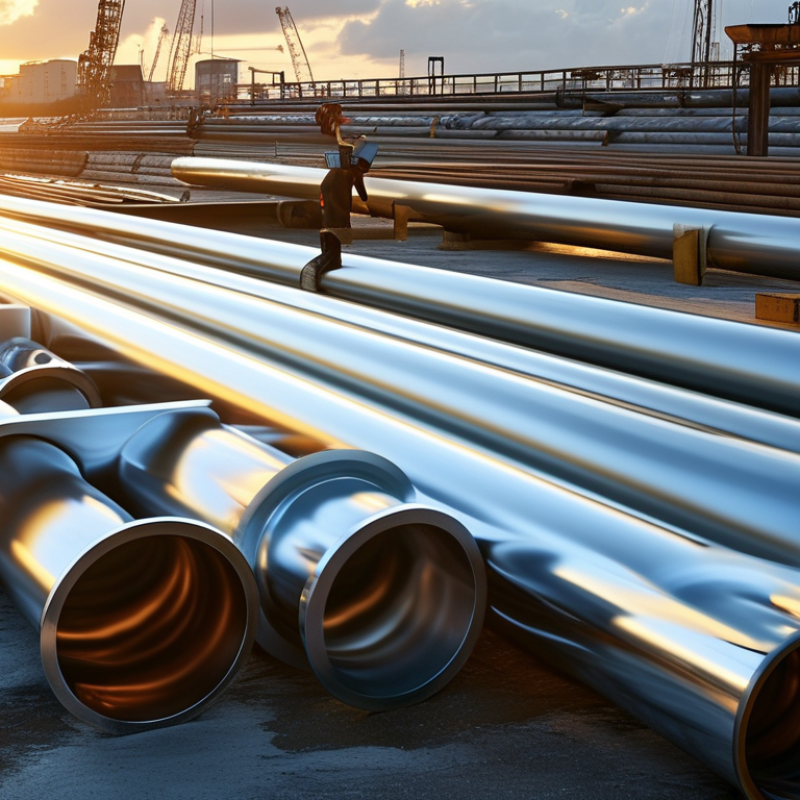
Stainless steel pipe is a crucial component in many industries. It is known for its strength, durability, and resistance to corrosion. These qualities make it ideal for everything from construction to food processing. According to a report by Research and Markets, the global stainless steel pipe market is expected to grow at a CAGR of 5.3% from 2021 to 2027. This growth is driven by increasing investments in infrastructure and a rise in the use of stainless steel in various applications.
In industries like oil and gas, stainless steel pipes handle extreme pressures and temperatures. They are also essential in the pharmaceutical sector, where hygiene is critical. A study by the International Stainless Steel Forum indicates that stainless steel's ability to resist corrosion helps maintain product integrity. This makes it a preferred choice in the manufacturing of medical devices and equipment.
Tip: Always consider the specific grade of stainless steel when selecting pipes for your project. Different grades provide various properties, impacting performance.
Additionally, stainless steel pipes can be recycled, adding to their sustainability appeal. However, not all stainless steel is created equal. Selecting the wrong type can lead to unexpected failures. This highlights the importance of understanding your project's requirements fully.
Tip: Consult with professionals to ensure you choose the right stainless steel pipe for your application.
Stainless steel pipes are widely used in various industries due to their unique properties. The primary component of stainless steel is iron, combined with chromium, nickel, and other elements. This combination gives stainless steel its corrosion-resistant qualities. The chromium content, typically at least 10.5%, forms a protective layer on the surface. This layer drastically reduces oxidation and rust formation.
The mechanical properties of stainless steel pipes are notable. They exhibit high tensile strength and durability. These pipes can withstand extreme temperatures as well. However, not all stainless steel grades are created equal. Each grade has specific applications. For instance, some might be better suited for chemical processing, while others excel in food and beverage industries.
Beyond composition, the handling of stainless steel pipes can present challenges. Improper installation can lead to failures or leaks. Additionally, weld integrity is crucial for maintaining performance. It's essential to regularly inspect these pipes for any signs of wear. This attention to detail can prevent severe issues later on. Understanding these factors contributes to safe and effective industrial use.
Stainless steel pipes are indispensable in many industries. Their unique properties make them suitable for various applications. To create these pipes, several manufacturing processes are used. Each method offers distinct advantages and challenges.
One common technique is seamless pipe manufacturing. This involves heating a solid stainless steel billet until it becomes malleable. Then, it is drilled and formed into a hollow pipe. This method ensures high strength and uniformity. However, it can be costly and requires precise temperature management.
Welded pipe production is another approach. In this process, flat stainless steel sheets are rolled and welded together. This method is generally more affordable than seamless production. Yet, the welded seams may introduce weaknesses. Regular inspections are crucial to ensure quality and safety. Each method has its pros and cons, reflecting the complexity of stainless steel pipe manufacturing.
| Dimension | Description | Common Uses | Manufacturing Process |
|---|---|---|---|
| 1/2 inch | Small diameter stainless steel pipe | Hydraulic systems, gas lines | Seamless and welded process |
| 1 inch | Medium diameter stainless steel pipe | Water supply, plumbing | Drawn over mandrel (DOM) |
| 2 inch | Large diameter stainless steel pipe | Industrial applications, construction | Extrusion and rolling process |
| 3 inch | Extra large diameter stainless steel pipe | Chemical processing, oil and gas | Welded fabrication |
Stainless steel pipes are crucial in diverse industries due to their durability and corrosion resistance. In the food and beverage sector, these pipes transport liquids, ensuring hygiene and preventing contamination. Their smooth surface makes cleaning easier. However, improper installation can lead to leaks, compromising safety.
In the oil and gas industry, stainless steel pipes handle high-pressure fluids. They must withstand extreme temperatures and pressure. Regular inspections are essential. A tiny flaw can have significant consequences. Despite their strength, the choice of grade and thickness affects performance. Not all stainless steel is created equal.
Chemical processing relies on these pipes for transporting reactive substances. Their resistance to chemicals reduces the risk of corrosion. Yet, they can be costly. Many companies weigh maintenance costs against initial savings. Understanding the specific application is vital. Incorrect use can lead to failures and safety hazards.
Maintaining stainless steel pipes is crucial for optimal performance in various industries. Regular inspections are necessary to identify potential issues early. According to the World Corrosion Organization, corrosion can lead to a 20% reduction in the lifespan of pipes if not addressed promptly. Visual inspections help spot surface irregularities, while ultrasonic tests can detect internal flaws that are not visible externally.
The environment plays a significant role in maintenance decisions. For example, pipes in marine environments are subjected to saline conditions, increasing corrosion risk. Implementing a preventive maintenance schedule can mitigate these risks. Recommended practices include cleaning and passivation, which ensures a protective layer against corrosion. However, it’s essential to note that even thorough maintenance may not prevent all corrosion types. Failure to adapt maintenance strategies based on environmental conditions can lead to costly repairs, indicating a need for ongoing evaluation.
„Thanks to the LUVIR technology, the solder resist process could be switched directly from the previously used mask exposure to direct exposure. As an outstanding digital solution on the market, this technology has been able to demonstrate fast process times and superior quality on our certified conventional ink in production. This allowed us to fully digitize the solder mask process at low cost – without process or ink adjustments. An excellent benefit to our production in Rot am See.“
Ralf Göhringer (Head of Production WE Rot am See)
I would definitely recommend the Limata machine and team for a future company purchase
Michael Greenaway
Compunetics Inc.
“The Limata ldi has been amazing!! Best thing we did was buy this machine”
Richard Brady
GM
Circuitlabs
“Since 2019, we have been running the Limata X1000 LDI system (including LUVIR for solder mask imaging) in daily production as an addition to our current process with film. The machine was capable of properly exposing Taiyo PSR-4000 BN (DI) solder mask types on normal to high-copper boards using a new and unique direct imaging process. The machine operating interface is very user friendly which allowed for a quick technical training curve. The pre-registration processing reduced several seconds of production time at every print. Limata support and service staff is incomparable. They supported our team every step of the way at basically any time of the day or night, with literally, an immediate response time, customizing the software interface to best fit our Operations and needs.
We have exposed more than 8,000 prints since end of October, on various solder mask colors and some resist film panels. Limata, has proven to be very capable and innovative. They are a strong contender in the industry.
We have very much enjoyed this project, and working with the team!
Thank you Limata for the continued support and being a part of our growth.”
Bill Sezate
Vice President, GM
Summit Interconnect
As a replacement to our current contact exposure process with film, the LIMATA X2000 system including LUVIR-Technology was capable of properly exposing non-LDI solder mask types using a direct imaging process. The machine offers cutting edge software with a very intuitive operating interface which allowed for quick technician training curve. The dual drawer system combined with pre-registration processing reduced several seconds of production time at every machine cycle. Limata support and service staff is world class. They added software patches to keep production running at shortest possible response times, customized the software interface to best fit our in-house Operations system, and even wrote a step-by-step machine processing manual. As a result of the project, we have exposed more than 16,000 times on various product types and solder mask brands/colors. Limata, in a very short timeframe as a company, has definitely shown they are truly innovative and will be challenging the industry of direct imaging for the top spot.
Kevin Beattie
Process Engineer
TTM Technologies
Forest Grove Division
