A Stainless Steel Plate Manufacturer is more than a company that rolls metal into flat sheets. It controls chemistry, thickness, surface finish, heat treatment, and traceability. The process may begin with electric-arc melting, followed by continuous casting, hot rolling, annealing, pickling, and precision finishing. Each stage leaves evidence in the final plate.
Industry data shows why this work matters. The International Stainless Steel Forum reported global stainless crude steel production of approximately 58.4 million tonnes in 2023, a decline of about 5.2% from the previous year. Its Stainless Steel in Figures report also highlights stainless steel’s wide use in construction, transport, food equipment, energy, and industrial processing. Demand is broad, but quality expectations are not always identical. A plate for a food-processing tank needs different documentation from one used in a high-temperature plant.
Quality expert Philip Crosby wrote, “Quality is conformance to requirements.” That statement remains highly relevant to every Stainless Steel Plate Manufacturer. A reliable producer should provide mill test certificates, chemical analysis, mechanical results, dimensional checks, and clear heat numbers. ASTM A240, EN 10088, and customer specifications may all influence acceptance.
The label alone proves little. Surface appearance can hide internal variation. Even a polished plate may fail if its chemistry or thickness is wrong. Buyers should inspect records, testing capacity, and production experience. Manufacturers should also admit where their controls need improvement. That honesty is imperfect, but it supports stronger decisions, safer applications, and more dependable supply.
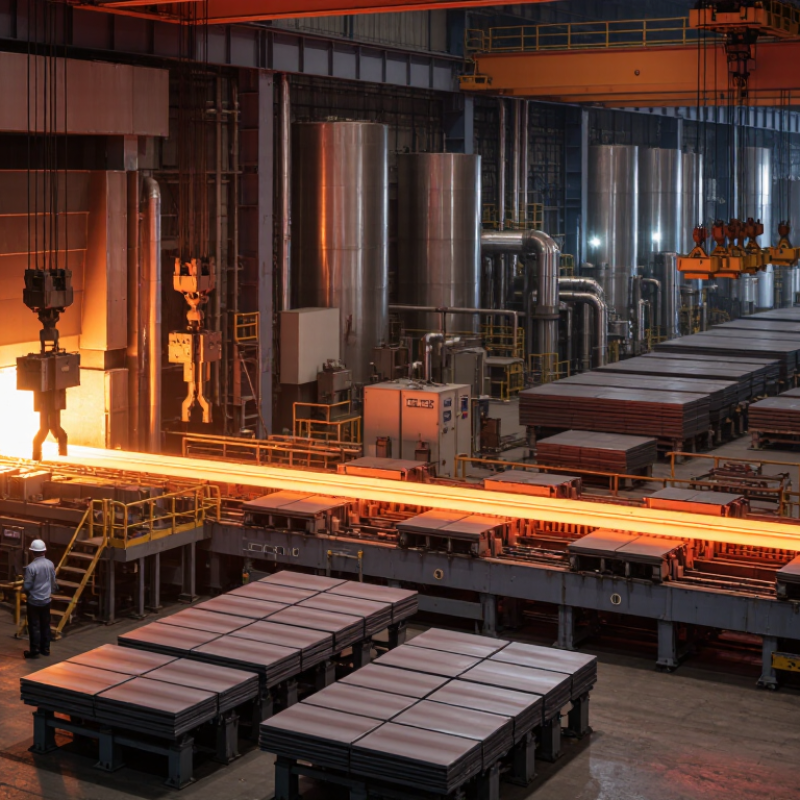
What Is a Stainless Steel Plate Manufacturer?
A stainless steel plate manufacturer produces flat steel products for construction, processing equipment, energy, and transportation. The process often begins with stainless steel slabs or coils. Mills use controlled heat, rolling pressure, annealing, pickling, leveling, and cutting to achieve the required plate size and condition.
The manufacturer’s role extends beyond production. It selects suitable grades for corrosion resistance, strength, temperature, and forming requirements. It also manages thickness tolerances, surface finishes, edge conditions, and mechanical testing. Experienced manufacturers provide mill test certificates, heat numbers, inspection reports, and traceability records. These details help engineers verify whether each plate fits the project specification.
Quality control happens at several points. Operators check surface defects under strong lighting, while instruments measure thickness and flatness. Samples may undergo tensile, hardness, chemical, or corrosion-related tests. A bright surface is not always proof of internal quality. That is easy to overlook.
Reliable manufacturers also offer technical support before shipment. They can discuss welding limits, cutting methods, storage conditions, and packaging protection. Moisture, rough handling, or poor separation can damage plates after production. The supply chain still matters.
No production line is flawless. Even a capable manufacturer must review process data, investigate deviations, and improve controls. Buyers should compare documented performance, inspection practices, delivery consistency, and communication quality rather than relying on appearance alone.
| Dimension | Definition | Key Information |
|---|---|---|
| Definition | A stainless steel plate manufacturer is an industrial producer that converts stainless steel feedstock into flat, finished plate products. | Its activities may include melting, casting, hot rolling, heat treatment, surface processing, cutting, inspection, and order fulfillment. A plate is generally a flat stainless steel product supplied in specified thicknesses, widths, lengths, grades, and surface finishes. |
| Primary Role | To manufacture stainless steel plates that meet defined chemical, mechanical, dimensional, and surface requirements. | The manufacturer controls production variables and verifies that the finished material conforms to the applicable purchase specification, drawing, standard, or project requirement. |
| Raw Materials | Metallic feedstock used to produce stainless steel with corrosion-resistant properties. | Typical inputs include stainless steel slabs, stainless steel scrap, ferroalloys, chromium, nickel, molybdenum, and other alloying materials. The exact composition depends on the required grade. |
| Common Stainless Steel Families | Groups of stainless steels classified by metallurgical structure and performance. | Austenitic Ferritic Martensitic Duplex Austenitic grades are widely used for formability and corrosion resistance. Duplex grades combine austenitic and ferritic structures and are selected for higher strength and resistance to certain corrosive environments. |
| Typical Production Stages | A sequence of controlled operations used to turn steel feedstock into plate. | The process can include steelmaking, continuous casting, reheating, hot rolling, annealing, pickling, leveling, descaling, cutting, marking, inspection, and packaging. Not every product requires every stage. |
| Material Grades | Specific stainless steel compositions selected for particular service conditions. | Common examples include 304/304L for general corrosion resistance and weldability, 316/316L for improved resistance in chloride-containing environments, and 430 for many general-purpose applications where a ferritic stainless steel is suitable. |
| Dimensions and Tolerances | The physical size and permitted variation of the finished plate. | Manufacturers control thickness, width, length, flatness, squareness, edge condition, and dimensional tolerances according to the applicable standard or customer specification. Acceptance limits should always be confirmed against the governing standard. |
| Surface Finishes | The appearance and condition of the plate surface after processing. | Recognized finishes may include hot-rolled and annealed surfaces, pickled surfaces, and cold-rolled finishes such as 2B or bright-annealed finishes. Finish selection depends on appearance, cleanliness, forming, corrosion, and fabrication requirements. |
| Applicable Standards | Technical documents used to define material requirements and testing rules. | Examples include ASTM A240/A240M for chromium and chromium-nickel stainless steel plate, sheet, and strip for pressure vessels and general applications; EN 10088 for stainless steel products; and ASME SA-240 when material is specified for applicable pressure-vessel construction. |
| Quality Control | Inspection and testing activities used to verify product conformity. | Quality control may cover chemical analysis, tensile testing, hardness testing, dimensional measurement, surface inspection, flatness inspection, and non-destructive examination when required. Results are commonly recorded in inspection documents or material test certificates. |
| Documentation | Records that identify the material and demonstrate compliance. | Typical documents include a material test certificate, heat or batch identification, chemical composition, mechanical test results, dimensional information, surface condition, applicable standard, and traceability details. |
| Fabrication Support | Technical assistance that helps customers use the plate correctly. | Support may include guidance on grade selection, welding considerations, forming, cutting, machining, surface protection, storage, packaging, and compliance with project specifications. |
| Typical End-Use Sectors | Industries that use stainless steel plate for corrosion resistance, strength, hygiene, or temperature performance. | Applications include chemical processing equipment, food and beverage equipment, water-treatment systems, architectural structures, energy facilities, transportation equipment, pressure vessels, tanks, and industrial machinery. |
| What Buyers Should Specify | The information required to select and manufacture the correct plate. | Buyers should define the grade, standard, thickness, width, length, quantity, surface finish, edge condition, tolerances, testing requirements, certification needs, packaging method, and intended service environment. |
A stainless steel plate manufacturer converts carefully selected raw materials into flat, corrosion-resistant products. The main alloying element is chromium, usually at least 10.5%, according to ISO 15510. Nickel improves toughness and formability, while molybdenum strengthens resistance to chloride attack. Scrap stainless steel also matters. The International Stainless Steel Forum reported global crude stainless steel production at approximately 59 million tonnes in 2023, showing the scale of this supply chain.
The production process begins with melting scrap, ferroalloys, and primary metals in an electric furnace. Argon-oxygen decarburization then reduces carbon without removing too much chromium. The molten steel is cast into slabs. These slabs pass through hot rolling mills, where thick blocks become long, heated plates. Cold rolling may follow when tighter thickness tolerances and smoother surfaces are required. Heat treatment restores ductility after heavy deformation. Pickling removes oxide scale.
Quality control is continuous. Technicians test chemical composition, thickness, flatness, hardness, and surface condition. Ultrasonic testing can reveal internal defects that visual inspection misses. According to the World Steel Association, steel production remains responsible for roughly 7%–9% of global carbon dioxide emissions, so energy use deserves scrutiny. Electric furnaces can use recycled feedstock, but their environmental performance still depends on the electricity source. The recipe sounds orderly. Real production is less perfect. Small temperature changes can affect grain structure, and even experienced operators must review failed coils and uneven surfaces.
A stainless steel plate manufacturer converts carefully selected raw material into flat, corrosion-resistant plate for construction, processing equipment, energy systems, and transport. The work involves melting, casting, hot rolling, heat treatment, cutting, surface finishing, and inspection. In a reliable facility, technicians check dimensions and test samples before shipment. Small defects matter. A rough edge or uneven thickness can complicate welding.
Stainless Steel Plate Types Stainless steel plates come in several practical types. Hot-rolled plate usually has a thicker section and a slightly textured surface. Cold-rolled material offers tighter thickness control and a smoother appearance, although it is more common in thinner products. Patterned, perforated, and polished plates serve specific architectural or industrial needs. Choosing a type depends on forming, cleaning, strength, and surface requirements.
Grades and Specifications Grades also change performance. Grade 304 provides broad corrosion resistance for general fabrication and food-processing environments. Grade 316L contains molybdenum and performs better near chlorides, saltwater, and many chemical solutions. Grade 430 is magnetic and economical, but it offers less corrosion resistance than 304. Duplex 2205 combines high strength with strong resistance to stress-corrosion cracking. Specifications should state grade, thickness, width, length, surface finish, edge condition, tolerance, and testing standard. For example, a plate marked 316L, 12 mm thick, 1,500 mm wide, and 6,000 mm long gives fabricators useful control. Still, labels can mislead without mill certificates and independent inspection. Real service conditions may expose an unsuitable choice.
A stainless steel plate manufacturer does more than roll and cut metal. It controls chemistry, heat treatment, thickness, surface finish, and traceability from slab to shipment. In practice, technicians check furnace records and measure thickness at several points. They also inspect edges for laminations, cracks, and rough cutting marks.
Small details matter. A plate can look bright yet fail a dimensional requirement.
Quality control usually begins with a material certificate and a defined inspection plan. Chemical composition is verified using spectrometers to confirm elements such as chromium, nickel, and molybdenum. Mechanical testing may include tensile strength, yield strength, and elongation. Impact tests can assess toughness at specified temperatures.
Ultrasonic testing helps locate internal discontinuities, while visual inspection covers scale, pits, and scratches. Test samples must represent the heat and production batch. Otherwise, a perfect sample proves very little.
Some checks remain vulnerable to operator error. That weakness should be recorded and reviewed, rather than hidden.
Reliable manufacturers work against applicable ASTM, EN, ISO, or ASME requirements. The correct standard depends on grade, thickness, service conditions, and destination. Each plate should carry a heat number linked to test reports, inspection records, and processing history.
Calibration dates matter too. An uncalibrated gauge can create false confidence. Third-party inspection may add independent verification for critical applications. Yet documents cannot replace practical judgment.
In real production, paperwork can look complete while a surface defect escapes attention. Audit findings should influence training and the next production batch.
What Is a Stainless Steel Plate Manufacturer?
Applications and Factors for Choosing a Manufacturer
A stainless steel plate manufacturer produces flat metal sheets for demanding industrial and commercial applications. These plates support food-processing equipment, chemical tanks, construction panels, ship components, and heat exchangers. Each application requires different strength, corrosion resistance, thickness, and surface finish.
Choosing a manufacturer should begin with technical suitability. Ask whether the supplier can provide the required grade, plate dimensions, and thickness tolerance. Certificates should identify chemical composition, mechanical performance, heat treatment, and batch traceability. Testing records matter. So does process control.
Look beyond the catalog. Reliable manufacturers explain cutting limits, polishing options, packaging methods, and delivery conditions. Their engineers should discuss weldability and corrosion risks without making vague promises. A clean production area and consistent inspection process can reveal more than attractive photographs. Small details matter.
Price still matters, but it should not lead the decision. A cheaper plate may create extra machining, rejection, or maintenance costs. In practical purchasing work, delivery estimates often seem more precise than they are. That assumption can fail. Confirm production capacity, inspection timing, and shipping protection in writing.
No manufacturer fits every project. A supplier experienced in architectural panels may not understand pressure equipment requirements. Request sample documents and compare actual tolerances before placing a large order. Clear communication, verifiable records, and application-specific experience usually provide stronger evidence than sales language.
„Thanks to the LUVIR technology, the solder resist process could be switched directly from the previously used mask exposure to direct exposure. As an outstanding digital solution on the market, this technology has been able to demonstrate fast process times and superior quality on our certified conventional ink in production. This allowed us to fully digitize the solder mask process at low cost – without process or ink adjustments. An excellent benefit to our production in Rot am See.“
Ralf Göhringer (Head of Production WE Rot am See)
I would definitely recommend the Limata machine and team for a future company purchase
Michael Greenaway
Compunetics Inc.
“The Limata ldi has been amazing!! Best thing we did was buy this machine”
Richard Brady
GM
Circuitlabs
“Since 2019, we have been running the Limata X1000 LDI system (including LUVIR for solder mask imaging) in daily production as an addition to our current process with film. The machine was capable of properly exposing Taiyo PSR-4000 BN (DI) solder mask types on normal to high-copper boards using a new and unique direct imaging process. The machine operating interface is very user friendly which allowed for a quick technical training curve. The pre-registration processing reduced several seconds of production time at every print. Limata support and service staff is incomparable. They supported our team every step of the way at basically any time of the day or night, with literally, an immediate response time, customizing the software interface to best fit our Operations and needs.
We have exposed more than 8,000 prints since end of October, on various solder mask colors and some resist film panels. Limata, has proven to be very capable and innovative. They are a strong contender in the industry.
We have very much enjoyed this project, and working with the team!
Thank you Limata for the continued support and being a part of our growth.”
Bill Sezate
Vice President, GM
Summit Interconnect
As a replacement to our current contact exposure process with film, the LIMATA X2000 system including LUVIR-Technology was capable of properly exposing non-LDI solder mask types using a direct imaging process. The machine offers cutting edge software with a very intuitive operating interface which allowed for quick technician training curve. The dual drawer system combined with pre-registration processing reduced several seconds of production time at every machine cycle. Limata support and service staff is world class. They added software patches to keep production running at shortest possible response times, customized the software interface to best fit our in-house Operations system, and even wrote a step-by-step machine processing manual. As a result of the project, we have exposed more than 16,000 times on various product types and solder mask brands/colors. Limata, in a very short timeframe as a company, has definitely shown they are truly innovative and will be challenging the industry of direct imaging for the top spot.
Kevin Beattie
Process Engineer
TTM Technologies
Forest Grove Division
