China’s steel mesh industry serves buyers across construction, infrastructure, mining, and manufacturing. Scale matters, but it does not guarantee consistent quality. The World Steel Association’s World Steel in Figures 2024 reports that China produced 1,019.1 million tonnes of crude steel in 2023, out of 1,888.2 million tonnes worldwide. These figures describe crude steel, not mesh output. That distinction matters.
For global buyers, comparing Steel Mesh Manufacturers means looking beyond capacity claims. Check wire diameter, aperture tolerance, weld uniformity, surface finish, coating details, and batch traceability. A clean sample can still hide inconsistent production. Ask for current test records and inspect packaging, labels, and shipment documents. Small details count.
Worldsteel Director General Edwin Basson has emphasized the steel industry’s need to make production more sustainable. That concern is relevant to mesh buyers assessing materials, processes, and supplier transparency. The companies in this guide are presented as candidates for closer evaluation, not as a universal ranking. A shortlist is only a start. Supplier capabilities, specifications, and service can change, so verify claims directly before placing an order. Industry statistics establish China’s scale; they do not certify any individual manufacturer.
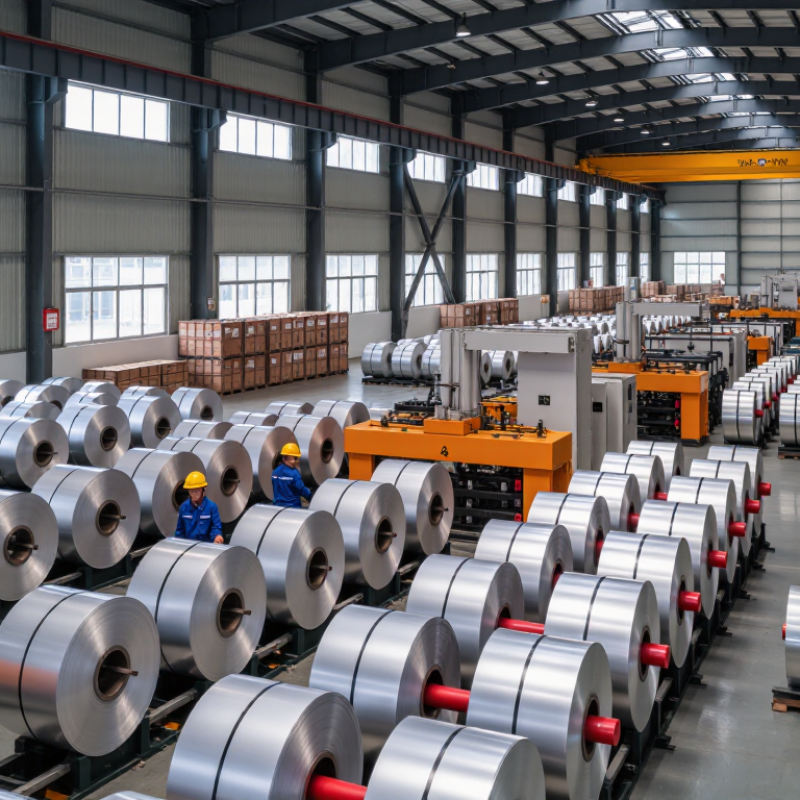
Steel mesh turns separate reinforcing bars into a connected grid that helps concrete resist cracking and carry loads. It appears in floor slabs, retaining walls, road panels, and precast elements. The World Steel Association’s 2023 end-use breakdown attributes about 52% of global steel demand to building and infrastructure. That scale makes mesh selection more than a purchasing detail. Aperture size, wire diameter, coating, and weld quality all affect placement, bond, and long-term performance. Small details matter.
For global construction, factory-welded sheets can speed installation and reduce on-site tying, but only when dimensions match the design and delivery sequence. Poor storage can leave mesh bent or contaminated before it reaches the pour. And mesh is not a cure-all: engineers still need to specify reinforcement for loads, exposure, crack control, and local project conditions. The Global Status Report for Buildings and Construction 2024/25 from the UN Environment Programme and GlobalABC estimates the sector produced 34% of global energy-related CO₂ emissions in 2023. Efficient material use matters, though it should never replace sound structural design.
Tips: Confirm mesh grade, wire spacing, sheet dimensions, tolerances, and test documentation before ordering. Ask how bundles are protected during transport. Check samples against drawings; a small mismatch can complicate placement.
China produced 1,019.1 million tonnes of crude steel in 2023, about 54% of the global total, according to the World Steel Association’s World Steel in Figures 2024. That scale gives buyers many potential suppliers, but it does not prove a factory can make consistent welded mesh. Scale is not proof. Ask for the applicable product standard, steel grade, wire diameter, spacing tolerances, and welding requirements in writing. Then compare those details with a recent test report and a sample from the production line, not just a sales sample.
Check whether each batch can be traced to its material certificate and production records. For galvanized mesh, request coating-thickness results and the test method used. Ask how the factory controls wire straightness, weld integrity, and panel dimensions; inspect a few finished sheets for uneven spacing or sharp, irregular welds. A site audit or independent pre-shipment inspection can verify that records match actual production. Paperwork alone can feel reassuring, but it leaves gaps. I would also confirm packaging and loading details, since bent panels can arrive despite good test results. Compare quotations only after specifications match, and treat unusually low prices as a prompt to investigate material substitutions, inspection frequency, and production capacity.
China’s steel-mesh supply base draws on a large domestic steel industry. World Steel Association’s World Steel in Figures 2025 reports that China produced about 1,005 million tonnes of crude steel in 2024. This is not mesh-production data. China Customs recorded roughly 110.7 million tonnes of steel exports that year, showing the scale of its export network. Scale alone does not confirm a factory’s mesh quality.
These ten profiles describe common capabilities, not a ranked list of named firms. Welded-wire producers make standard panels for construction. Galvanized-mesh specialists serve fencing and outdoor uses. Stainless woven-mesh shops supply corrosion-resistant screens. Reinforcement-mesh lines cut and weld bar grids. Mining-screen makers focus on wear-resistant openings. Gabion suppliers produce wire baskets for erosion control. Architectural fabricators form decorative metal mesh. Filter-mesh workshops work to tighter aperture tolerances. Custom plants cut, bend, and pack made-to-order panels. Export-oriented integrators coordinate several mesh types and shipping documents.
A useful factory check is tangible. Ask to see a recent production record, a mesh sample, and the stated wire diameter. Measure openings in more than one place; edge variation can be easy to miss. Request coating thickness and tensile-test records where relevant. A polished sample is helpful, but it cannot represent every batch. Supplier profiles are only a starting point. Verify the actual production line and inspection method before comparing quotations.
For global buyers, comparing steel mesh manufacturers in China means looking beyond product photos. Common offerings include welded wire mesh, woven wire cloth, expanded metal, and galvanized or stainless-steel panels. A capable factory should explain wire diameter, aperture size, sheet dimensions, coating, and acceptable tolerances in writing. Ask whether production uses automated welding lines, in-house wire drawing, and documented inspection checks. Details matter. A clean sample can still differ from a full production batch, so request batch records and pre-shipment inspection terms.
Tips: Send a drawing with dimensions and application details, not just a product name. Request a sample, material specification, and clear packaging plan. Confirm loading quantity, lead time, and which export documents the supplier can provide. These checks help buyers compare offers for projects across Southeast Asia, Europe, Africa, and the Americas. Shipping routes and import requirements vary, so verify them with your logistics provider.
Production capability is not only machine count. Ask how the factory handles custom openings, edge finishing, corrosion protection, and repeat orders. Review test reports carefully; their scope should match the mesh grade and order. A useful answer names the test method and inspection frequency. Some suppliers may not explain every limitation clearly. That deserves follow-up, not guesswork. Compare communication, consistency, and evidence alongside price.
Global buyers should compare steel mesh by measurable specifications, not price per sheet alone. World Steel Association reported 1,892.2 million tonnes of crude steel production in 2023, in World Steel in Figures 2024. This scale signals a broad supply base, but it does not guarantee consistent mesh quality. Specify wire diameter, aperture size, sheet dimensions, weld strength, and coating requirements. Small details matter.
Ask suppliers for recent test reports tied to the production batch, plus clear tolerances and packaging details. For welded wire reinforcement, ASTM A1064/A1064M may be relevant; confirm the standard fits the intended use. Check samples for uneven openings, loose welds, and coating gaps. A certificate is useful, but it cannot reveal every weak weld. Even experienced buyers can overlook details when comparing quotations too quickly.
Tips: Put the required wire diameter and aperture in millimetres on the purchase order. Request photos of bundled edges and loading protection. If the mesh will face moisture, specify the coating type and inspection method before production.
Use this checklist to compare suppliers. Product specifications, certifications, production capacity, prices, and lead times should be confirmed directly with each supplier; they are not assumed here.
| No. | Evaluation area | What to confirm | Useful evidence or buyer check |
|---|---|---|---|
| 1 | Product fit | Confirm the mesh type and intended application, such as welded wire mesh, woven wire mesh, expanded metal, or reinforcing mesh. | Request product drawings or samples and check that the construction suits the project and installation method. |
| 2 | Dimensions and tolerances | Specify aperture, wire diameter, panel or roll dimensions, edge details, and acceptable dimensional tolerances. | Check a signed specification and inspect samples or pre-shipment measurements against the agreed limits. |
| 3 | Steel grade and properties | Agree on the material designation and required mechanical or chemical properties for the intended use. | Request material test documentation traceable to the supplied batch; confirm the specified test methods and acceptance criteria. |
| 4 | Weld or weave consistency | For welded mesh, define weld integrity requirements. For woven mesh, define weave pattern and construction requirements. | Review the product standard or project specification and agree on inspection and test procedures before production. |
| 5 | Corrosion protection | State whether the mesh is supplied uncoated, galvanized, or with another specified coating, and define the required coating properties. | Identify the applicable product-specific standard or project requirement; verify coating documentation and inspection results. |
| 6 | Quality management | Assess how the supplier controls incoming materials, production, inspection, nonconformities, and traceability. | Review relevant quality-system documentation and request inspection records for a comparable product. Verify certificates with their issuer where appropriate. |
| 7 | Production capability | Check whether the supplier can make the required mesh type, dimensions, finish, packaging, and order quantity. | Ask for a production plan and capacity confirmation for the specific order; distinguish confirmed capacity from general claims. |
| 8 | Sampling and inspection | Agree on sample approval, inspection stages, test scope, defect handling, and who bears inspection costs. | Document the inspection plan and acceptance criteria in the purchase agreement; use an independent inspection service if needed. |
| 9 | Export packaging and documents | Confirm packaging protects the mesh in transit and that shipping and customs documents match the order and destination requirements. | Agree on packing details, document responsibilities, and the correct product classification with the relevant customs broker or authority. |
| 10 | Commercial and delivery terms | Compare quotations on the same specification, quantity, delivery location, payment terms, and agreed Incoterms® rule. | Confirm price validity, production and shipping schedules, allocation of freight and risk, and the process for claims in writing. |
Before placing an order, have the final specification, inspection requirements, packaging, delivery terms, and applicable destination-market requirements confirmed in writing.
„Thanks to the LUVIR technology, the solder resist process could be switched directly from the previously used mask exposure to direct exposure. As an outstanding digital solution on the market, this technology has been able to demonstrate fast process times and superior quality on our certified conventional ink in production. This allowed us to fully digitize the solder mask process at low cost – without process or ink adjustments. An excellent benefit to our production in Rot am See.“
Ralf Göhringer (Head of Production WE Rot am See)
I would definitely recommend the Limata machine and team for a future company purchase
Michael Greenaway
Compunetics Inc.
“The Limata ldi has been amazing!! Best thing we did was buy this machine”
Richard Brady
GM
Circuitlabs
“Since 2019, we have been running the Limata X1000 LDI system (including LUVIR for solder mask imaging) in daily production as an addition to our current process with film. The machine was capable of properly exposing Taiyo PSR-4000 BN (DI) solder mask types on normal to high-copper boards using a new and unique direct imaging process. The machine operating interface is very user friendly which allowed for a quick technical training curve. The pre-registration processing reduced several seconds of production time at every print. Limata support and service staff is incomparable. They supported our team every step of the way at basically any time of the day or night, with literally, an immediate response time, customizing the software interface to best fit our Operations and needs.
We have exposed more than 8,000 prints since end of October, on various solder mask colors and some resist film panels. Limata, has proven to be very capable and innovative. They are a strong contender in the industry.
We have very much enjoyed this project, and working with the team!
Thank you Limata for the continued support and being a part of our growth.”
Bill Sezate
Vice President, GM
Summit Interconnect
As a replacement to our current contact exposure process with film, the LIMATA X2000 system including LUVIR-Technology was capable of properly exposing non-LDI solder mask types using a direct imaging process. The machine offers cutting edge software with a very intuitive operating interface which allowed for quick technician training curve. The dual drawer system combined with pre-registration processing reduced several seconds of production time at every machine cycle. Limata support and service staff is world class. They added software patches to keep production running at shortest possible response times, customized the software interface to best fit our in-house Operations system, and even wrote a step-by-step machine processing manual. As a result of the project, we have exposed more than 16,000 times on various product types and solder mask brands/colors. Limata, in a very short timeframe as a company, has definitely shown they are truly innovative and will be challenging the industry of direct imaging for the top spot.
Kevin Beattie
Process Engineer
TTM Technologies
Forest Grove Division
