Choosing a duct by price alone can lead to fit problems, noisy airflow, or extra installation work. A Self‑Locking Winding Air Duct uses a formed metal strip that locks into a spiral seam. That seam is only one part of the decision. Diameter, material, wall thickness, operating conditions, and connection style all affect whether a duct suits a particular system.
Start with the job it needs to do. A short run in a workshop may have different requirements from a long ventilation line with bends and changing temperatures. Check the stated diameter and material against your project drawings, and confirm the supplier’s technical data before ordering. Look closely at the seam, cut ends, and surface finish. A rough edge or damaged section can complicate handling and fitting. Small details matter.
These seven tips will help you compare products more carefully, ask suppliers specific questions, and avoid relying on vague claims. Consider how the duct will be transported, supported, joined, and maintained—not just how it looks in a product photo. Ask about compatibility with fittings and accessories, and request written specifications when details are unclear. Even careful buyers can miss a simple measurement. It happens. Use the guidance as a checklist, then verify key dimensions and application limits with the manufacturer or a qualified installer. The right choice is the one that matches the actual system, not simply the one with the most impressive description.
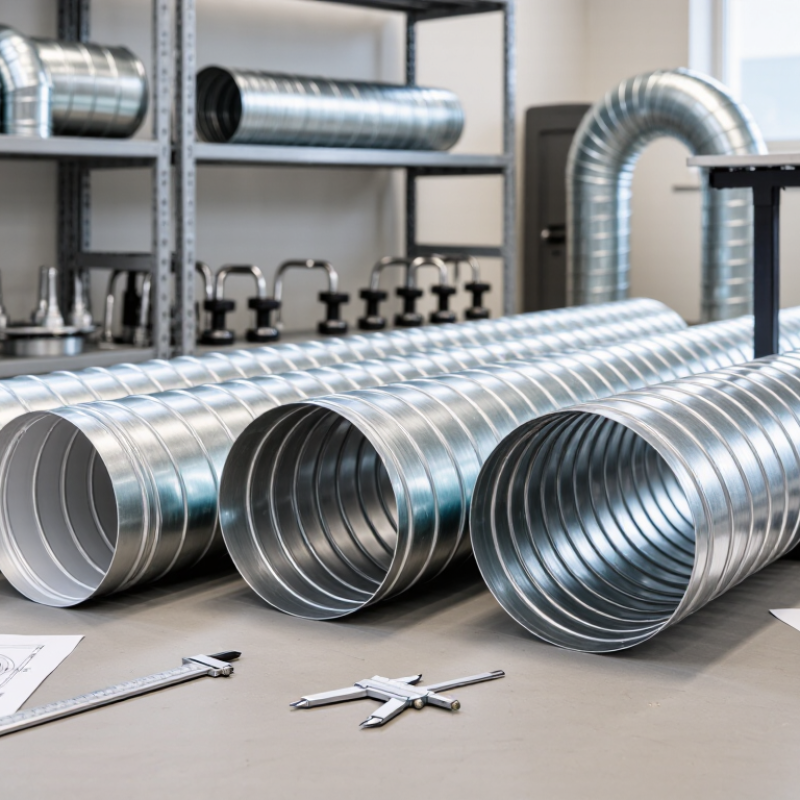
A self-locking winding air duct is made from a continuous metal strip formed into a spiral. Its raised edges fold and interlock, creating a rigid tube without a separate longitudinal seam. Air travels through the duct, while the spiral lock helps the wall hold its shape under normal handling and operating pressure. Connections still matter: installers typically join sections with couplings, clamps, or approved fittings. A tight-looking seam alone does not prove low air leakage.
The U.S. Energy Information Administration’s 2018 Commercial Buildings Energy Consumption Survey attributes about 32% of commercial building energy use to space heating. Duct design is only one part of HVAC performance, but poor sizing or leaky connections can waste conditioned air. Check the required airflow, static pressure, diameter, metal thickness, and operating environment before choosing a duct. A small mismatch can create noise or restrict airflow. It happens.
Tip: Match the duct’s pressure rating and material to the system, then confirm connection and sealing requirements. Ask for product specifications and any applicable leakage-test results. For exposed runs, inspect the spiral seam and joints for dents, gaps, or rough edges; these details are easy to overlook.
Before selecting a self-locking winding air duct, write down the required airflow, operating pressure, and temperature range. Use the equipment’s stated airflow, often listed in CFM or cubic meters per hour, rather than guessing from duct diameter. Diameter affects air speed and resistance. An undersized duct can restrict flow, while a longer route or several bends can add pressure loss. Measure the actual installation path, including turns and connection points. Small details count.
Check that the duct’s pressure rating suits the fan’s expected static pressure and whether the system pushes or draws air. Do not assume a duct rated for positive pressure will perform equally well under suction. For temperature, distinguish normal operating conditions from brief peaks, and confirm the stated limit applies to continuous use. Also consider nearby heat sources and the material being conveyed. A rating that looks sufficient on paper may leave little margin in a real installation. It is easy to overlook temperature changes during startup or seasonal operation, so record those conditions before comparing products. If the airflow or pressure data is unclear, verify it with the equipment supplier or a qualified installer instead of relying on an estimate.
Material, diameter, and construction determine whether a self-locking winding duct suits the job. Galvanized steel can provide a sturdy option for many indoor systems. Aluminum is lighter and resists corrosion, but check its specified thickness and suitability for the environment. For diameter, start with required airflow, duct length, bends, and system pressure—not the size of a nearby fitting. ACCA Manual D provides a recognized method for residential duct sizing. Looks can mislead. I still measure twice; a catalog diameter may seem right but perform poorly in a long run.
Construction quality matters at every connection. The U.S. Department of Energy’s Energy Saver guidance says typical duct systems can lose 20–30% of moving air through leaks and poorly connected sections. That figure is not a prediction for every installation, but it shows why fit and sealing deserve attention. Check that sections lock together evenly, then verify the finished run rather than trusting appearance alone. A small gap is easy to miss.
When buying self-locking winding air duct, test the seam rather than trusting the product description. Press along the spiral lock and check for gaps, lifted edges, or sections that open when gently twisted. A secure seam should stay engaged during handling, but it still needs suitable supports and properly sized connectors. Check the duct’s diameter, length, operating pressure, temperature range, and airflow needs against your system specifications. A snug fit matters. So does the route: tight bends can restrict airflow and place extra strain on joints.
Compatibility affects efficiency as well as installation. ENERGY STAR’s duct-sealing guidance estimates that typical homes may lose 20–30% of conditioned air through leaks, holes, and poorly connected ducts; actual losses vary by system and condition. That estimate concerns duct systems generally, not self-locking seams alone. Still, it shows why connection quality deserves attention. Compare the duct’s stated pressure rating with the fan or air handler requirements, and confirm that collars, clamps, and insulation suit the installation. If the details are unclear, pause and verify them.
A practical check is to assemble a short sample, then inspect the joint under the same handling expected on site. Look for crushed spirals, uneven locking, and sharp changes in diameter. These signs are easy to miss. I would not rely on appearance alone; a neat seam can still be incompatible with the system’s pressure or temperature conditions.
A dependable purchase starts with evidence, not a polished catalog. Ask how long the supplier has produced self-locking winding air duct and whether its team can explain the seam, material, and installation requirements. Request current test reports, material certificates, and a sample coil. Check that documents match the quoted product and dimensions. Small gaps matter.
Confirm the duct’s material thickness, coating, diameter tolerance, and operating pressure against your project drawings. Ask which recognized test methods or product standards apply, and have the supplier identify them in writing. A locking seam should stay closed during handling and installation, not just look neat on a sample. Check that the duct suits the temperature, moisture, and airflow conditions at the site. If the application is unusual, get a qualified engineer to review the specification. It is easy to miss a detail.
Compare total cost, not just the price per meter. Include connectors, elbows, hangers, delivery, cutting waste, and labor. A slightly higher-priced coil may reduce fitting time if its dimensions are consistent. Ask about lead times, replacement availability, and warranty exclusions. These details can change the budget. Keep the quote, drawings, and technical data together, then confirm any changes before ordering. Some estimates still feel uncertain; flag that uncertainty rather than treating the lowest number as final.
„Thanks to the LUVIR technology, the solder resist process could be switched directly from the previously used mask exposure to direct exposure. As an outstanding digital solution on the market, this technology has been able to demonstrate fast process times and superior quality on our certified conventional ink in production. This allowed us to fully digitize the solder mask process at low cost – without process or ink adjustments. An excellent benefit to our production in Rot am See.“
Ralf Göhringer (Head of Production WE Rot am See)
I would definitely recommend the Limata machine and team for a future company purchase
Michael Greenaway
Compunetics Inc.
“The Limata ldi has been amazing!! Best thing we did was buy this machine”
Richard Brady
GM
Circuitlabs
“Since 2019, we have been running the Limata X1000 LDI system (including LUVIR for solder mask imaging) in daily production as an addition to our current process with film. The machine was capable of properly exposing Taiyo PSR-4000 BN (DI) solder mask types on normal to high-copper boards using a new and unique direct imaging process. The machine operating interface is very user friendly which allowed for a quick technical training curve. The pre-registration processing reduced several seconds of production time at every print. Limata support and service staff is incomparable. They supported our team every step of the way at basically any time of the day or night, with literally, an immediate response time, customizing the software interface to best fit our Operations and needs.
We have exposed more than 8,000 prints since end of October, on various solder mask colors and some resist film panels. Limata, has proven to be very capable and innovative. They are a strong contender in the industry.
We have very much enjoyed this project, and working with the team!
Thank you Limata for the continued support and being a part of our growth.”
Bill Sezate
Vice President, GM
Summit Interconnect
As a replacement to our current contact exposure process with film, the LIMATA X2000 system including LUVIR-Technology was capable of properly exposing non-LDI solder mask types using a direct imaging process. The machine offers cutting edge software with a very intuitive operating interface which allowed for quick technician training curve. The dual drawer system combined with pre-registration processing reduced several seconds of production time at every machine cycle. Limata support and service staff is world class. They added software patches to keep production running at shortest possible response times, customized the software interface to best fit our in-house Operations system, and even wrote a step-by-step machine processing manual. As a result of the project, we have exposed more than 16,000 times on various product types and solder mask brands/colors. Limata, in a very short timeframe as a company, has definitely shown they are truly innovative and will be challenging the industry of direct imaging for the top spot.
Kevin Beattie
Process Engineer
TTM Technologies
Forest Grove Division
