Choosing an Intumescent Paint Additive is not just a matter of comparing prices or selecting the highest expansion claim. The right material must suit the coating system, substrate, application method, and required fire-performance target. Small differences matter. A powder that disperses smoothly in one binder may clump in another, while moisture, mixing speed, and film thickness can affect the finished coating.
This guide presents seven practical tips for evaluating an additive before purchase or production. It explains how to review technical data sheets, check binder compatibility, assess particle size and dispersion, and confirm the supplier’s recommended loading range. It also considers processing conditions, storage stability, and the evidence behind fire-test claims. Ask for test reports relevant to the intended coating and substrate; results from a different system may not predict your own. Then run a controlled trial, record the batch proportions, and inspect the dried film for settling, roughness, or uneven coverage. Details like these are easy to overlook.
No single additive is best for every project. A persuasive brochure is not a substitute for verified data, and an early laboratory result may change at production scale. Use these tips as a screening framework, then confirm performance through appropriate testing and the supplier’s written guidance. A little caution helps.
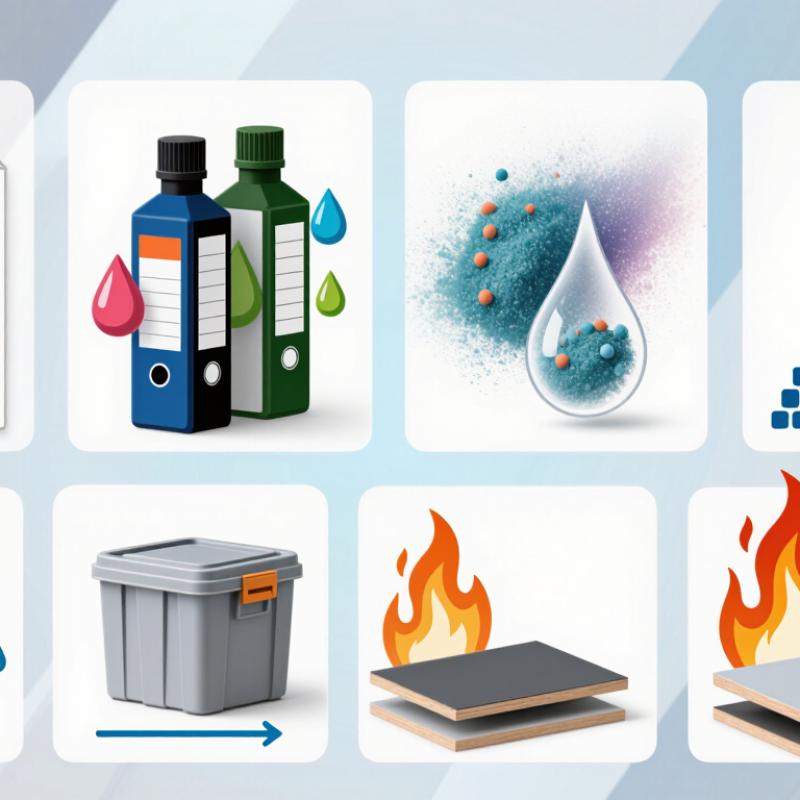
Intumescent paint additives are functional ingredients that help a coating react to heat. In a fire, the coating can soften and expand into a thicker, carbon-rich char. That layer slows heat transfer to the surface beneath it, such as a steel beam or timber panel. The chemistry often combines an acid source, a carbon donor, and a gas-releasing agent. The exact blend matters.
The change is visible. A thin painted film can swell into a rough, dark layer, sometimes several times its original thickness. NFPA’s report Fire Loss in the United States During 2023 estimated 1.39 million fires and $18.1 billion in direct property damage. Those figures describe the wider fire risk; they do not measure coating performance. For protection, check test data for the complete system, including substrate, primer, dry-film thickness, and topcoat. ASTM E119 and UL 263 are examples of fire-resistance test methods.
One practical mistake is treating the additive as a guarantee. It is not. A coating that performs on a laboratory steel section may behave differently on a dusty beam, or when applied too thinly. Check compatibility and application records, then inspect for gaps around edges and fixings. Small details count. I would also admit that visual inspection cannot confirm fire rating; measured film thickness and system documentation are needed.
Choosing an intumescent additive starts with the substrate, not the recipe. Steel, timber, and concrete respond differently to heat and moisture, so one additive package may not bond or char equally well on each. Eurocode 3 (EN 1993-1-2:2005, Table 3.1) gives carbon steel a strength reduction factor of 0.47 at 600°C. That figure makes the required fire rating and steel section geometry important design inputs.
Check compatibility across the full coating stack: prepared substrate, primer, intumescent layer, and topcoat. EN 13381-8:2013 assesses the contribution of reactive protection systems to structural steel members; it does not rate an additive in isolation. On representative panels, record adhesion, dry-film thickness, expansion, and char cracking after fire exposure. Test the full stack. Check binder type, cure conditions, and topcoat permeability, too; a restrictive topcoat can limit expansion.
For timber or masonry, assess moisture movement, alkalinity, and surface porosity before settling on additive particle size and loading. Include edges, welds, and fastener heads in panel tests, since these details can expose weak adhesion. Small gaps matter. A lab match is not always a site match, an inconvenient limitation worth acknowledging. Check that test reports name the exact substrate, primer, coating thickness, conditioning, and fire curve. If project conditions differ, do not assume the reported rating transfers.
A fire-resistance rating belongs to a tested assembly, not to an additive in isolation. Check whether the evidence covers the intended steel section, coating thickness, primer, and topcoat. In North America, ASTM E119 and UL 263 assess fire resistance over time. For structural steel protection in Europe, EN 13381-8 evaluates the contribution of applied fire protection. ISO 834-1 defines a standard time-temperature curve; it does not, by itself, certify a coating. Small details matter.
Tip: Match the test report to the project’s required duration, such as 60 or 120 minutes, and to the actual substrate and section factor. ASTM E84 flame-spread results are not fire-resistance ratings. Don’t confuse them. Ask for the full report, including tested thickness ranges, conditioning, and limitations—not just a rating in a brochure.
The need for careful specification is real: NFPA’s Fire Loss in the United States During 2023 estimated 1.39 million fires and $23.2 billion in direct property damage. Those national figures do not predict a coating’s performance, but they underline why test scope matters. A lab result can still be easy to misapply. I would verify the listed system with the project engineer and confirm whether field conditions match the tested build-up.
7 Tips for Choosing Intumescent Paint Additive?
Choosing an intumescent paint additive is less about buying the highest loading and more about matching the whole coating system. Check compatibility with the binder, pigments, and solvents. A powder that disperses poorly in one formula may behave differently in another. Ask for technical data on recommended use and substrate range, then test a small batch. A smooth mixture in a cup can still adhere poorly to steel or timber. Small details matter.
Dosage affects viscosity, film build, and expansion when exposed to heat. Follow the recommended range rather than guessing, and weigh ingredients accurately. Too little additive may limit char formation; too much can make application rough or weaken the dry film. There is no universal percentage. Record the formulation and compare test panels, including their dry-film thickness. A thick wet coat does not guarantee the required cured layer.
Application conditions matter, too. Prepare the surface as specified, and mix slowly to disperse powder without whipping in excess air. Watch for settling during use. Apply even coats and allow each to dry as directed; cold or damp conditions can affect drying and adhesion. Check edges, welds, corners, and vertical areas for thin spots or sagging. A trial on the actual substrate helps, though it may not mirror site conditions perfectly. Confirm performance through suitable fire testing and qualified technical guidance, not appearance alone.
7 Tips for Choosing Intumescent Paint Additive?
Tip 1: Read the safety data sheet, not just the sales summary. Check handling precautions, storage conditions, and recommended protective equipment. Compare the document with the actual product and intended use. Tip 2: Ask for evidence behind fire-performance claims. An additive’s result depends on the full coating system, including substrate, film thickness, and application. A promising figure alone proves little.
Tip 3: Check durability for the conditions the surface will face. Moisture, temperature changes, cleaning, and abrasion can affect coating performance. Request relevant test information, and confirm whether a compatible topcoat is allowed. Tip 4: Run a small application trial. Note mixing time, settling, brush or spray behavior, and the cured finish. A tidy sample may still hide problems after weeks of storage; that is easy to overlook.
Tip 5: Assess supplier support before ordering. Can technical staff explain compatibility, dosage, and processing limits clearly? Tip 6: Ask for current technical documents and batch traceability. Tip 7: Check how questions and complaints are handled. A useful supplier should give specific answers, not vague assurances. Keep written guidance with project records, and verify that proposed changes do not invalidate the tested coating system.
Compare safety data, durability, and supplier support alongside performance and application requirements.
The 1–5 ratings are a practical checklist emphasis, not measured product results or a universal ranking. Review each additive’s current safety data sheet, test evidence, compatibility and processing guidance, and project-specific requirements; confirm documentation and technical support directly with the supplier.
„Thanks to the LUVIR technology, the solder resist process could be switched directly from the previously used mask exposure to direct exposure. As an outstanding digital solution on the market, this technology has been able to demonstrate fast process times and superior quality on our certified conventional ink in production. This allowed us to fully digitize the solder mask process at low cost – without process or ink adjustments. An excellent benefit to our production in Rot am See.“
Ralf Göhringer (Head of Production WE Rot am See)
I would definitely recommend the Limata machine and team for a future company purchase
Michael Greenaway
Compunetics Inc.
“The Limata ldi has been amazing!! Best thing we did was buy this machine”
Richard Brady
GM
Circuitlabs
“Since 2019, we have been running the Limata X1000 LDI system (including LUVIR for solder mask imaging) in daily production as an addition to our current process with film. The machine was capable of properly exposing Taiyo PSR-4000 BN (DI) solder mask types on normal to high-copper boards using a new and unique direct imaging process. The machine operating interface is very user friendly which allowed for a quick technical training curve. The pre-registration processing reduced several seconds of production time at every print. Limata support and service staff is incomparable. They supported our team every step of the way at basically any time of the day or night, with literally, an immediate response time, customizing the software interface to best fit our Operations and needs.
We have exposed more than 8,000 prints since end of October, on various solder mask colors and some resist film panels. Limata, has proven to be very capable and innovative. They are a strong contender in the industry.
We have very much enjoyed this project, and working with the team!
Thank you Limata for the continued support and being a part of our growth.”
Bill Sezate
Vice President, GM
Summit Interconnect
As a replacement to our current contact exposure process with film, the LIMATA X2000 system including LUVIR-Technology was capable of properly exposing non-LDI solder mask types using a direct imaging process. The machine offers cutting edge software with a very intuitive operating interface which allowed for quick technician training curve. The dual drawer system combined with pre-registration processing reduced several seconds of production time at every machine cycle. Limata support and service staff is world class. They added software patches to keep production running at shortest possible response times, customized the software interface to best fit our in-house Operations system, and even wrote a step-by-step machine processing manual. As a result of the project, we have exposed more than 16,000 times on various product types and solder mask brands/colors. Limata, in a very short timeframe as a company, has definitely shown they are truly innovative and will be challenging the industry of direct imaging for the top spot.
Kevin Beattie
Process Engineer
TTM Technologies
Forest Grove Division
