Choosing the right potato chips machine is crucial for success in the snack industry. The global potato chips market is expected to reach $31.5 billion by 2027, according to industry analysts. With this growth, the demand for efficient and high-quality machines also rises.
Expert John Smith, who has over 15 years in snack production, highlights, “A reliable potato chips machine can make or break your product line.” This emphasizes the need for careful consideration when selecting the equipment. Efficiency, quality, and technology should be factored into the decision-making process.
Yet, many entrepreneurs overlook essential features like energy efficiency and maintenance ease. It’s vital to research these aspects to avoid costly mistakes. The wrong choice may lead to increased operational costs or lower product quality. Making informed decisions can help secure a position in this competitive market.
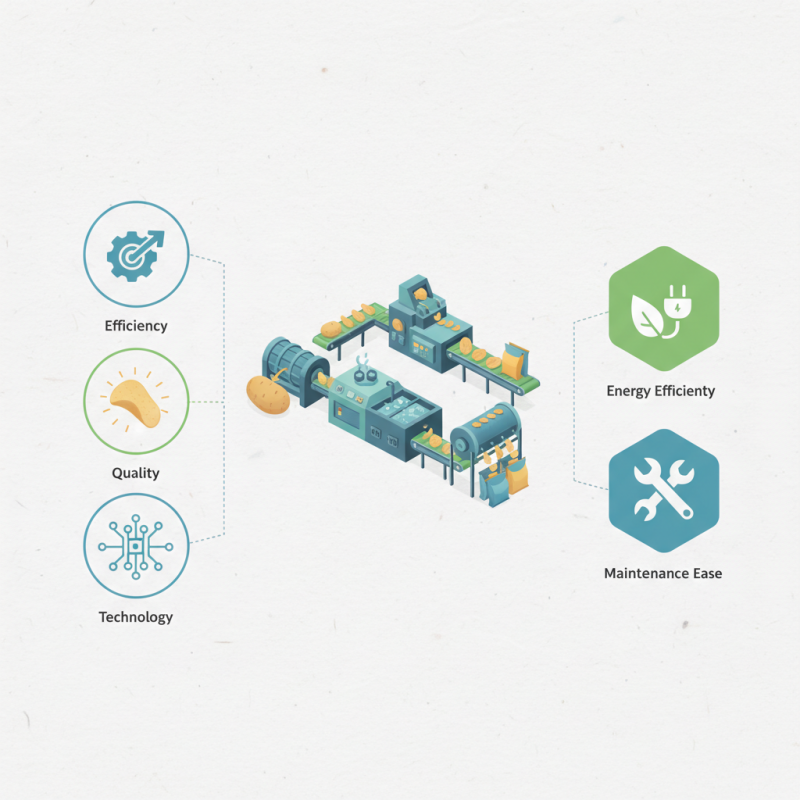
When selecting a potato chips machine, multiple factors play a significant role. Start with the production capacity. Machines vary, with some handling 200 kg per hour while others reach over 500 kg. Understanding your target market helps determine the best fit. Small-scale operations might only need a lower-capacity model. Larger enterprises, however, require high-efficiency machines to meet demand.
Energy efficiency is another crucial consideration. According to industry reports, energy costs account for up to 15% of production expenses. Opting for machines designed with energy-saving features can significantly lower operating costs. Moreover, consider the machine's footprint. Some units are compact, ideal for smaller facilities. Others may require more space, affecting your facility's overall layout.
Maintenance needs should not be overlooked. Frequent breakdowns can disrupt production and incur high repair costs. Look for machines with accessible parts and good service support. Reports indicate that downtime in food processing can cost businesses up to $1,000 per hour. Reflect on these factors carefully. The right machine can lead to enhanced productivity, while the wrong choice may lead to inefficiencies and added stress.
When starting a potato chips business, understanding the different types of machines is crucial. Several options exist, each with unique features. Some machines focus on frying, while others specialize in baking. Frying machines typically create crispy textures, while baking machines offer a healthier alternative. Assess your target market before deciding.
Consider the production scale. Small machines work well for local shops or home operations. Larger machines suit high-volume production needs. Don't overlook maintenance requirements; some machines demand more effort than others. Attributes such as energy consumption can also affect long-term costs.
Finally, reflect on the type of chips you want to produce. Some machines support thick-cut chips, while others cater to thinner varieties. This choice impacts both flavor and texture. Trial and error might be necessary to find the right fit. Investing time in understanding the options available ultimately leads to better decision-making.
When selecting a potato chips machine, production capacity and efficiency are key factors. Understanding your target output per hour is essential. If you anticipate high demand, consider machines that can handle larger volumes. A machine with a capacity of at least 200 kg per hour is often a good starting point for medium-sized operations.
Efficiency goes hand-in-hand with capacity. Look for machines with advanced technology that optimize energy and oil usage. A machine that wastes less oil not only saves money but also produces a better quality product. Efficiency also affects your workflow. A machine that requires frequent maintenance can disrupt production.
Here’s a tip: Before purchasing, analyze your production needs closely. Measure your peak demand and then choose a machine that can exceed that requirement. Sometimes, aiming for maximum capacity leads to unexpected issues, such as energy shortages or overheating. Test different models if possible. Ensure they fit your operational space and workflow. It's easy to overlook these details, but they can significantly impact your output and efficiency.
Investing in a potato chips machine can be a game changer for your business. It can boost production and efficiency. However, understanding the cost-effectiveness of this investment is crucial. The initial cost may seem high, but the potential return can outweigh it. Consider the cost of raw materials, labor, and energy. Each of these factors can impact your bottom line.
When evaluating a machine's effectiveness, think about its performance and durability. A machine that breaks down often can lead to downtime. This downtime can result in lost profits. Think about maintenance and repair costs too; they can add up quickly. Make sure that the machine is easy to clean and operate. Simple machines often have lower operational expenses.
It's also essential to consider market demand. Are there enough customers willing to buy your chips? This question requires market research. Sometimes, machines produce more than the market can handle. It’s a risky gamble. Always keep your target audience in mind and align production with their preferences. A thoughtful approach can make a significant difference in whether investing in a potato chips machine is truly cost-effective.
When selecting a potato chips machine, long-term performance hinges on solid maintenance and support services. Understanding the importance of regular upkeep can greatly extend the life of the equipment. Research shows that over 30% of machinery failures result from poor maintenance. Regular checks can keep the machine running smoothly and reduce unexpected breakdowns.
Key maintenance tasks include cleaning assorted parts, checking oil levels, and ensuring all components function efficiently. For instance, worn-out blades can affect chip quality. A study found that cleaning machines regularly can enhance production efficiency by up to 25%.
Support services play a crucial role, too. Having access to expert technicians can quickly resolve any issues that arise. A company that offers comprehensive training programs can significantly minimize operating errors. Inconsistent training can lead to costly mistakes. Investing in ongoing support ensures that operators remain skilled and the machine stays in top shape over time.
„Thanks to the LUVIR technology, the solder resist process could be switched directly from the previously used mask exposure to direct exposure. As an outstanding digital solution on the market, this technology has been able to demonstrate fast process times and superior quality on our certified conventional ink in production. This allowed us to fully digitize the solder mask process at low cost – without process or ink adjustments. An excellent benefit to our production in Rot am See.“
Ralf Göhringer (Head of Production WE Rot am See)
I would definitely recommend the Limata machine and team for a future company purchase
Michael Greenaway
Compunetics Inc.
“The Limata ldi has been amazing!! Best thing we did was buy this machine”
Richard Brady
GM
Circuitlabs
“Since 2019, we have been running the Limata X1000 LDI system (including LUVIR for solder mask imaging) in daily production as an addition to our current process with film. The machine was capable of properly exposing Taiyo PSR-4000 BN (DI) solder mask types on normal to high-copper boards using a new and unique direct imaging process. The machine operating interface is very user friendly which allowed for a quick technical training curve. The pre-registration processing reduced several seconds of production time at every print. Limata support and service staff is incomparable. They supported our team every step of the way at basically any time of the day or night, with literally, an immediate response time, customizing the software interface to best fit our Operations and needs.
We have exposed more than 8,000 prints since end of October, on various solder mask colors and some resist film panels. Limata, has proven to be very capable and innovative. They are a strong contender in the industry.
We have very much enjoyed this project, and working with the team!
Thank you Limata for the continued support and being a part of our growth.”
Bill Sezate
Vice President, GM
Summit Interconnect
As a replacement to our current contact exposure process with film, the LIMATA X2000 system including LUVIR-Technology was capable of properly exposing non-LDI solder mask types using a direct imaging process. The machine offers cutting edge software with a very intuitive operating interface which allowed for quick technician training curve. The dual drawer system combined with pre-registration processing reduced several seconds of production time at every machine cycle. Limata support and service staff is world class. They added software patches to keep production running at shortest possible response times, customized the software interface to best fit our in-house Operations system, and even wrote a step-by-step machine processing manual. As a result of the project, we have exposed more than 16,000 times on various product types and solder mask brands/colors. Limata, in a very short timeframe as a company, has definitely shown they are truly innovative and will be challenging the industry of direct imaging for the top spot.
Kevin Beattie
Process Engineer
TTM Technologies
Forest Grove Division
