Choosing the right Construction Digging Machine is crucial for any construction project. With various types available, the decision can feel overwhelming. It’s not just about picking the biggest or latest model. Consider factors like project size and soil conditions.
Many machines have different capabilities. A small excavator may work best in tight spaces, while larger models handle bigger tasks. Understanding this helps avoid costly mistakes. Reflecting on past experiences can guide you to the right choice.
Reliable information and professional insights are essential. Consult manufacturers and operators for their input. Be aware of the maintenance aspects too. Sometimes, overlooked details can impact performance significantly. In the end, a thoughtful approach ensures successful outcomes with your Construction Digging Machine.
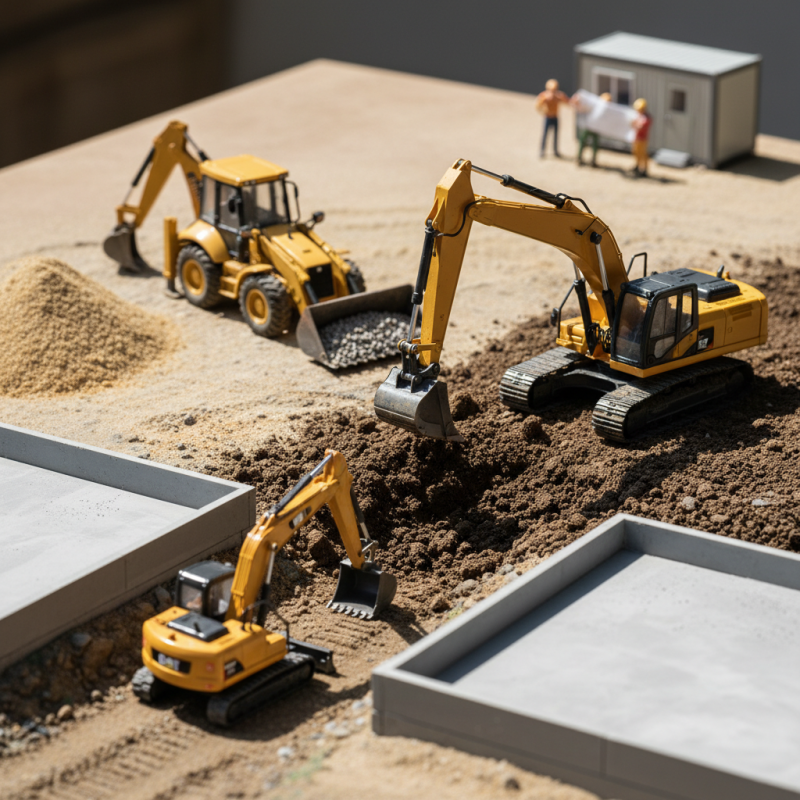
When selecting a construction digging machine, understanding the various types available is crucial. Excavators dominate the market, accounting for about 45% of total equipment sales in 2022, according to recent industry reports. These versatile machines excel in various tasks, from digging deep trenches to lifting heavy materials. Their hydraulic systems provide superior force, making them ideal for tough projects.
Another key type is the backhoe loader. This machine combines a front shovel and a rear digger, offering flexibility on job sites. They are particularly useful for smaller projects or locations with limited space. Statistics indicate that backhoe loaders represent about 25% of the construction equipment market. They can be operated by one person, which may reduce labor costs but could lead to project delays if operators lack experience.
While larger machines can handle extensive projects, smaller equipment like mini excavators is also worth considering. These machines are designed for tight spaces, allowing greater maneuverability. However, their capacity is limited, and they may not be suitable for every job. It's essential to assess project requirements and operator capabilities before making a decision. Investing in the appropriate digging machine can significantly influence the efficiency and safety of construction operations.
When selecting a digging machine, key specifications can significantly impact efficiency and performance. Operators should consider the digging depth and reach. Most excavators can reach depths ranging from 5 to 20 feet. Choosing the right depth depends on project requirements. For example, deep foundations require more extensive reach, while landscaping may need less. Understanding your project's scope is essential for making the right choice.
Another critical specification is the machine's operating weight. According to the Equipment Data Association, a heavier machine generally provides more stability and power but may be less maneuverable. For example, light machines (under 10 tons) are ideal for small, tight spaces. Heavier excavators (over 20 tons) excel in larger, open sites. Evaluate your site conditions to ensure the machine can perform effectively without damage.
Finally, consider the hydraulic system. A robust hydraulic system ensures better lifting and digging capabilities. For instance, a machine with a flow rate above 20 gallons per minute usually offers better performance. However, high flow rates may also lead to increased fuel consumption. Striking the right balance between power and efficiency is vital. These specifications require thoughtful reflection to avoid costly missteps in your equipment choices.
| Specification | Details |
|---|---|
| Operating Weight | 10,000 - 40,000 lbs |
| Engine Power | 50 - 300 HP |
| Digging Depth | 5 - 25 feet |
| Bucket Capacity | 0.5 - 5.0 cubic yards |
| Hydraulic System | Closed-loop, Variable displacement |
| Transport Dimensions | Width: 7 - 10 ft, Height: < 10 ft |
| Additional Attachments | Hydraulic thumb, Auger, Breaker |
| Warranty Period | 1 - 3 years |
When it comes to selecting a construction digging machine, size and weight play a crucial role in ensuring optimal digging efficiency. According to a report from the American Society of Civil Engineers, the efficiency of a digging machine can vary significantly with its weight. Machines that are too light may struggle to penetrate hard ground, while overly heavy models can lead to increased fuel consumption and potential site damage.
Choosing a machine that strikes the right balance is vital. A machine's weight impacts its stability and digging power. For instance, a mid-sized excavator weighing between 12,000 to 18,000 pounds offers a sweet spot for many projects, enabling effective digging without sacrificing mobility. A comprehensive study by the Machinery Institute noted that machines in this weight class could reduce cycle times by up to 20% on average.
Moreover, the dimensions of the digging machine should match the project requirements. For tight urban sites, compact models with reduced length and width are essential. They facilitate maneuverability, even in constrained spaces. However, larger projects may require bigger machines for deeper digging. Not matching the size properly can lead to inefficiencies and delays, which are costly in construction. Understanding these nuances ensures that the chosen machine not only meets the project demands but also maximizes operational efficiency across various job sites.
When selecting a construction digging machine, engine power and fuel efficiency are critical factors. A powerful engine ensures that the machine can perform demanding tasks without frequent downtime. For instance, heavy digging in tough soil conditions requires robust engine performance. Insufficient power may lead to delays in project completion.
Fuel efficiency also plays a significant role. Machines that consume less fuel reduce overall operational costs. They have a positive impact on the environment too. If the engine is efficient, it can operate longer hours without frequent refueling. This feature is crucial for extended projects. However, digging machines with high power and fuel efficiency might be more expensive initially.
It's worth noting that higher power doesn't always mean better performance. Operators need to consider the type of tasks they will undertake. Sometimes, a moderately powered machine can be sufficient. Additionally, a machine that is not well-maintained can fail to deliver the promised efficiency.
Prospective buyers should weigh their options carefully and consider both current and future projects. Choosing the right machine is a process that requires thorough research and thoughtful reflection.
When purchasing a construction digging machine, assessing the manufacturer's reputation is crucial. Industry reports show that 70% of buyers prioritize brand credibility. A reputable manufacturer often indicates higher reliability. Online reviews and customer testimonials are good indicators. Gathering feedback from professionals already using the machines can illuminate common issues.
After-sales support is equally important. A survey from the Construction Equipment Association found that 65% of machine failures result from lack of service. Having access to trained technicians can minimize downtime. Consider the availability of spare parts and maintenance programs. Some companies offer extended warranties, which can be beneficial for long-term investments.
It's essential to reflect on past experiences. Many buyers have faced challenges due to inadequate support. A comprehensive evaluation of a manufacturer’s history and service offerings can help prevent future problems. Remember, investing in machinery is not just about the initial purchase.
„Thanks to the LUVIR technology, the solder resist process could be switched directly from the previously used mask exposure to direct exposure. As an outstanding digital solution on the market, this technology has been able to demonstrate fast process times and superior quality on our certified conventional ink in production. This allowed us to fully digitize the solder mask process at low cost – without process or ink adjustments. An excellent benefit to our production in Rot am See.“
Ralf Göhringer (Head of Production WE Rot am See)
I would definitely recommend the Limata machine and team for a future company purchase
Michael Greenaway
Compunetics Inc.
“The Limata ldi has been amazing!! Best thing we did was buy this machine”
Richard Brady
GM
Circuitlabs
“Since 2019, we have been running the Limata X1000 LDI system (including LUVIR for solder mask imaging) in daily production as an addition to our current process with film. The machine was capable of properly exposing Taiyo PSR-4000 BN (DI) solder mask types on normal to high-copper boards using a new and unique direct imaging process. The machine operating interface is very user friendly which allowed for a quick technical training curve. The pre-registration processing reduced several seconds of production time at every print. Limata support and service staff is incomparable. They supported our team every step of the way at basically any time of the day or night, with literally, an immediate response time, customizing the software interface to best fit our Operations and needs.
We have exposed more than 8,000 prints since end of October, on various solder mask colors and some resist film panels. Limata, has proven to be very capable and innovative. They are a strong contender in the industry.
We have very much enjoyed this project, and working with the team!
Thank you Limata for the continued support and being a part of our growth.”
Bill Sezate
Vice President, GM
Summit Interconnect
As a replacement to our current contact exposure process with film, the LIMATA X2000 system including LUVIR-Technology was capable of properly exposing non-LDI solder mask types using a direct imaging process. The machine offers cutting edge software with a very intuitive operating interface which allowed for quick technician training curve. The dual drawer system combined with pre-registration processing reduced several seconds of production time at every machine cycle. Limata support and service staff is world class. They added software patches to keep production running at shortest possible response times, customized the software interface to best fit our in-house Operations system, and even wrote a step-by-step machine processing manual. As a result of the project, we have exposed more than 16,000 times on various product types and solder mask brands/colors. Limata, in a very short timeframe as a company, has definitely shown they are truly innovative and will be challenging the industry of direct imaging for the top spot.
Kevin Beattie
Process Engineer
TTM Technologies
Forest Grove Division
