Choosing Glass Machinery is not just a matter of comparing prices or selecting the fastest model. The right equipment must suit your glass types, production volume, available floor space, and team’s experience. A machine built for thick architectural panels may be poorly matched to a small workshop producing cabinet doors. The difference often appears in daily details: loading height, control layout, changeover time, and the space needed to handle a finished sheet safely.
Before comparing suppliers, write down the jobs the machine must perform. Note typical glass dimensions and thicknesses, required edge quality, expected output per shift, and any limits on power or compressed air. Then check the specifications against your actual workflow. Ask for cycle-time assumptions, installation requirements, operator training, maintenance schedules, and the availability of replacement parts. A polished brochure is useful, but it cannot answer every question. Request a demonstration using material similar to yours, and clarify what the quoted price includes.
Reliability deserves more attention than headline speed. A short service delay can interrupt several steps of production, while an awkward control panel can slow every shift. Talk with current users when possible, and ask specific questions about downtime and support response. Keep a written comparison. Small details count. Not every buyer will value the same features, and a higher-capacity machine is not automatically the better choice. These seven tips will help you assess practical fit, verify supplier claims, and make a decision your operation can support over time.
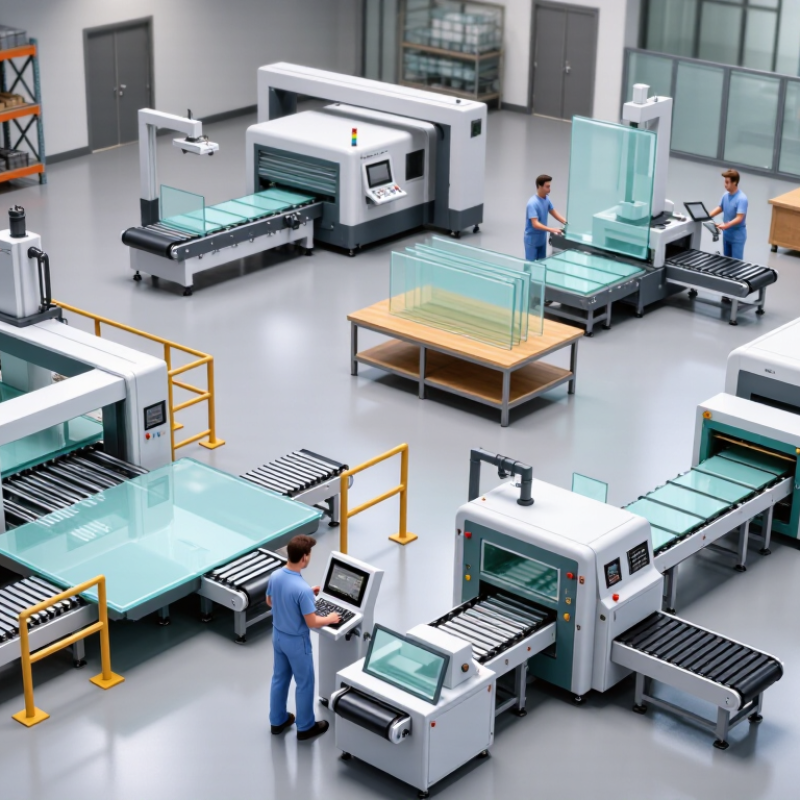
Glass machinery turns fragile sheets into measured, finished components. Cutting tables score glass along programmed paths, while edging machines grind sharp borders smooth. Furnaces soften panes for bending or tempering, and washing units remove fine dust before inspection. Each stage affects the next. A small cutting deviation can become a visible gap during installation.
These machines do more than increase output. They help operators repeat dimensions, control surface quality, and limit manual handling of heavy panes. Sensors and safety guards can improve consistency, but they cannot replace skilled checks. Operators still need to spot chipped corners, uneven edges, or moisture left after washing. Details matter.
Production lines vary with glass thickness, shape, coating, and order volume. A workshop making shower panels has different needs from one producing insulated glazing. Matching equipment to the actual workflow is more useful than choosing the largest machine available. Space, power, maintenance access, and operator training also affect performance. Even good equipment can disappoint when setup is rushed. Automation helps. Not always. Before blaming a machine, it is worth checking worn tools, calibration, and material handling.
Start by defining the glass you actually process, not just the glass you hope to handle later. Record material types, thickness ranges, sheet sizes, and whether surfaces are coated, laminated, patterned, or intended for insulating units. A line suitable for thin decorative panels may struggle with thick architectural sheets. Details matter.
Next, describe the finished products and the steps needed to make them. Note required dimensions, edge profiles, holes, cut-outs, and acceptable tolerances. A small workshop producing shower doors has different needs from a plant making large façade panels. Map each operation—cutting, edging, drilling, washing, and tempering—to the product specification. Confirm that proposed equipment can handle your largest sheet and your most demanding edge finish.
Production requirements matter just as much. Estimate daily output, shifts, changeovers, available floor space, and operator experience. Frequent changes between glass types can make setup time more important than headline speed. Ask suppliers to demonstrate representative workpieces, and compare results against your own quality criteria. Specifications are useful, but real samples can reveal handling marks or edge defects that a brochure may not show. Plans can be imperfect; revisit them after reviewing actual orders and production data.
Compare each machine’s capabilities with the glass you actually process. Check its thickness range, sheet size, edge quality, hole accuracy, and repeatability. Ask for a trial using your own glass, including coated or laminated types when relevant. A polished demonstration is not enough. Inspect finished edges under consistent lighting and record cycle times.
Rated output often assumes ideal loading, steady staffing, and few changeovers. Estimate usable capacity across a full shift, including loading, cleaning, tool changes, and routine stops. Compare that figure with current orders and realistic growth, not a best-case forecast. Leave some room. Automation can reduce handling and improve consistency, but only when machines communicate reliably. Review infeed and outfeed systems, software compatibility, safety interlocks, and fault alerts. Ask how quickly an operator can clear a jam or restart a stopped cycle.
More automation is not automatically better. Consider staffing, maintenance skills, spare parts, and the floor space around the line. Watch a realistic production run, not just a short demonstration. Track operator interventions and rejected pieces. Even careful comparisons can miss a learning curve or a difficult glass batch, so keep those uncertainties in view when estimating output.
Compare machine capabilities, capacity, and automation. Start by checking the glass thickness each machine can process.
The chart shows typical commercial glass-thickness ranges, not guaranteed machine limits. Actual ranges vary by model, configuration, and glass type. Before choosing equipment, also confirm maximum sheet dimensions, production throughput, and the level of automation that fits your workflow.
Evaluate Precision, Safety, Energy Efficiency, and Maintenance
Choosing glass machinery starts with the work it must perform every day. Check cut accuracy, edge quality, and repeatability using sample sheets similar to your usual glass. Ask for measurements from several cycles, not just one polished demonstration. A few millimeters can matter when panels must fit tightly. Precision is proven on the shop floor.
Safety features need a close, practical inspection. Check guards, emergency stops, interlocks, and clear access around moving parts. Watch how operators load heavy sheets and remove finished pieces. Good procedures matter, but awkward layouts can invite rushed handling. No shortcuts. Ask how dust and water are contained, and whether routine cleaning is straightforward.
Compare energy use under realistic workloads, including idle periods and warm-up time. A low headline figure may not reflect a full production shift. Maintenance deserves the same scrutiny: inspect access to filters, belts, blades, and lubrication points. Ask how often these parts need attention, and what ordinary servicing requires. A maintenance task that looks simple on paper may be awkward beside a production line. Check for clear manuals, available replacement parts, and realistic service intervals before committing.
Supplier support matters most when a glass line stops at 6 a.m., not during a polished sales call. Ask who answers technical questions, how quickly parts ship, and whether remote troubleshooting is included. Request a sample service schedule, spare-parts list, and operator-training plan. Small details matter. Check that manuals explain calibration and routine cleaning in language your operators can use.
Compare the full operating cost, not just the purchase price. Include installation, tooling, energy use, maintenance, consumables, software fees, and likely downtime. Ask for written estimates for common replacement parts, such as seals, belts, and cutting wheels. Test those assumptions against your production hours and glass mix. Estimates miss things. A simple spreadsheet can still expose a low quote that hides costly service visits. One blind spot is setup time; shops often underestimate the first weeks.
Future capacity deserves equal attention. Check whether the machine can accept additional stations, larger sheets, or upgraded controls later. Leave room for material racks and safe access; a machine may fit on paper but crowd the aisle. Discuss software compatibility and available utilities before signing, since retrofits can disrupt production. Forecasts change, and buying too much capacity can burden cash flow.
„Thanks to the LUVIR technology, the solder resist process could be switched directly from the previously used mask exposure to direct exposure. As an outstanding digital solution on the market, this technology has been able to demonstrate fast process times and superior quality on our certified conventional ink in production. This allowed us to fully digitize the solder mask process at low cost – without process or ink adjustments. An excellent benefit to our production in Rot am See.“
Ralf Göhringer (Head of Production WE Rot am See)
I would definitely recommend the Limata machine and team for a future company purchase
Michael Greenaway
Compunetics Inc.
“The Limata ldi has been amazing!! Best thing we did was buy this machine”
Richard Brady
GM
Circuitlabs
“Since 2019, we have been running the Limata X1000 LDI system (including LUVIR for solder mask imaging) in daily production as an addition to our current process with film. The machine was capable of properly exposing Taiyo PSR-4000 BN (DI) solder mask types on normal to high-copper boards using a new and unique direct imaging process. The machine operating interface is very user friendly which allowed for a quick technical training curve. The pre-registration processing reduced several seconds of production time at every print. Limata support and service staff is incomparable. They supported our team every step of the way at basically any time of the day or night, with literally, an immediate response time, customizing the software interface to best fit our Operations and needs.
We have exposed more than 8,000 prints since end of October, on various solder mask colors and some resist film panels. Limata, has proven to be very capable and innovative. They are a strong contender in the industry.
We have very much enjoyed this project, and working with the team!
Thank you Limata for the continued support and being a part of our growth.”
Bill Sezate
Vice President, GM
Summit Interconnect
As a replacement to our current contact exposure process with film, the LIMATA X2000 system including LUVIR-Technology was capable of properly exposing non-LDI solder mask types using a direct imaging process. The machine offers cutting edge software with a very intuitive operating interface which allowed for quick technician training curve. The dual drawer system combined with pre-registration processing reduced several seconds of production time at every machine cycle. Limata support and service staff is world class. They added software patches to keep production running at shortest possible response times, customized the software interface to best fit our in-house Operations system, and even wrote a step-by-step machine processing manual. As a result of the project, we have exposed more than 16,000 times on various product types and solder mask brands/colors. Limata, in a very short timeframe as a company, has definitely shown they are truly innovative and will be challenging the industry of direct imaging for the top spot.
Kevin Beattie
Process Engineer
TTM Technologies
Forest Grove Division