Choosing the right Portable Awning can significantly enhance your outdoor experience. It offers shelter from the sun and rain. But with so many options available, the task can feel overwhelming.
Your needs directly influence the type of Portable Awning that suits you best. Consider factors like size, material, and ease of installation. A lightweight design is ideal for travel but may not withstand strong winds. Each choice comes with its pros and cons.
Understanding the features of Portable Awnings is key to making an informed decision. Seek products with good reviews and trusted brands. Reliable awnings should balance portability with durability. Make sure to think critically about your specific needs, as what works for one person might not work for another.
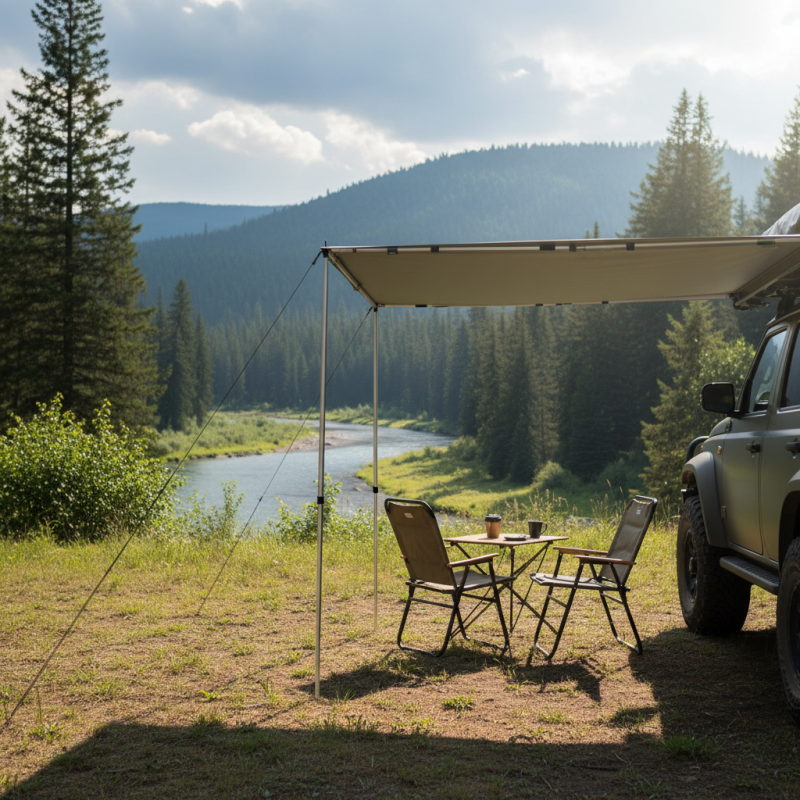
When shopping for a portable awning, it’s essential to explore the different types available. There are many options, each catering to various needs. Most awnings can be categorized into retractable, pop-up, and freestanding models. Retractable awnings are versatile and can be easily adjusted. They offer flexibility, allowing you to extend or retract them based on the weather. However, they can be somewhat complex to install.
Pop-up awnings are another popular choice. They are quick to set up and ideal for camping or outdoor events. These awnings are lightweight and can often be packed into small bags, making them convenient for travel. On the downside, they may not provide as much coverage as larger options. Freestanding Awnings are stable structures that do not require any additional support. They are perfect for backyard gatherings but can be bulky to transport.
Understanding these variations helps you make an informed decision. Each type has its unique benefits and drawbacks. Evaluating your specific needs, such as space, portability, and weather conditions, will ensure you choose wisely. Don't overlook the importance of quality materials and proper construction. Investing time in research can prevent future regrets.
| Awning Type | Material | Weight | Setup Time | UV Protection |
|---|---|---|---|---|
| Pop-Up Awning | Polyester | 15 lbs | 5 minutes | Yes |
| Roll-up Awning | Vinyl | 20 lbs | 10 minutes | Yes |
| Retractable Awning | Acrylic | 25 lbs | 15 minutes | Yes |
| Carport Awning | Polyethylene | 30 lbs | 20 minutes | Yes |
| Canopy Awning | Canvas | 18 lbs | 8 minutes | Yes |
Choosing the right portable awning involves various important factors. First, evaluate the size. It should be large enough to provide shade but manageable for your transport needs. A compact design often proves more practical for camping or picnics. Don’t overlook the weight; lightweight models are easier to set up and take down.
Material quality is another crucial aspect. Look for durable fabrics that withstand wind and rain. A strong frame also adds stability. Consider weather resistance as a priority. This ensures longevity and reliability in different environments. Users often report issues with flimsy materials that warp over time.
Ease of setup is essential. Many portable awnings on the market today come with intuitive designs. Some even feature pop-up mechanisms. It might seem simple, but it can save time, especially in unpredictable weather. Don't forget to assess the accessories that come with the awning. Useful additions, such as stakes or sandbags, enhance stability during use.
When choosing a portable awning, size and dimensions are crucial factors to consider. The right width can provide optimal coverage, while the height should accommodate your needs without obstructing views or airflow. According to a recent survey, 70% of consumers reported dissatisfaction with their awning’s size after purchase. This highlights the importance of thorough measurement.
Measure the area you want to cover. A common mistake is not accounting for space around tables or seating arrangements. If an awning is too small, it can leave areas exposed. Ideally, an awning should extend at least 12 inches beyond the edge of your furniture. This extra space enhances comfort.
Additionally, consider the height of the awning. Industry standards suggest a height of around 8 feet for walking clearance. However, personal preferences vary. Some may prefer a lower setup for intimate gatherings. Reviewing consumer reports shows that many users underestimated headroom, leading to frequent adjustments. Assessing your environment carefully can prevent frustration down the line. Optimize your choice by analyzing specific dimension needs.
When choosing a portable awning, material durability and weather resistance are crucial. Select fabrics that can withstand rain, UV rays, and strong winds. Options like polyester and vinyl are popular for their longevity. However, some cheaper materials may wear out quickly. Consider if the awning will be exposed to harsh conditions.
Tips for ensuring durability include checking the stitching. Reinforced seams add strength. Look for UV-resistant coatings that prevent fading. Weatherproofing is also vital; some may claim to be resistant but fail in heavy rains. Always opt for thicker materials if you expect exposure to the elements.
Reflect on the frequency of use. An awning meant for occasional camping trips may not need the same durability as one for a permanent setup. Be wary of overly lightweight options. They may be easier to transport but often lack the strength needed. Ultimately, making an informed choice about material can enhance your outdoor experience significantly.
When it comes to selecting a portable awning, budgeting plays a crucial role. Begin by determining how much you're willing to spend. Portable awnings can vary widely in price, influenced by size, material, and features. Some options may seem appealing but could strain your finances. Consider what you really need versus what you want. Identify the essential features that will enhance your outdoor experience.
Next, research your options before making a decision. Look for customer reviews and ratings. This can help you understand which products offer the best value. Pay attention to reports of durability and ease of setup. Often, a slightly higher investment can lead to better long-term savings. Weigh the cost against the awning’s lifetime and the joy it will bring during camping trips or backyard gatherings.
Lastly, reflect on how often you'll use the awning. If you plan to use it frequently, investing more may be wise. However, if it's for occasional outings, a budget-friendly option may suffice. Assess your specific needs. Spending a little more now can mean avoiding frustration later. Remember, a well-planned budget not only saves money but also ensures satisfaction with your choice.
„Thanks to the LUVIR technology, the solder resist process could be switched directly from the previously used mask exposure to direct exposure. As an outstanding digital solution on the market, this technology has been able to demonstrate fast process times and superior quality on our certified conventional ink in production. This allowed us to fully digitize the solder mask process at low cost – without process or ink adjustments. An excellent benefit to our production in Rot am See.“
Ralf Göhringer (Head of Production WE Rot am See)
I would definitely recommend the Limata machine and team for a future company purchase
Michael Greenaway
Compunetics Inc.
“The Limata ldi has been amazing!! Best thing we did was buy this machine”
Richard Brady
GM
Circuitlabs
“Since 2019, we have been running the Limata X1000 LDI system (including LUVIR for solder mask imaging) in daily production as an addition to our current process with film. The machine was capable of properly exposing Taiyo PSR-4000 BN (DI) solder mask types on normal to high-copper boards using a new and unique direct imaging process. The machine operating interface is very user friendly which allowed for a quick technical training curve. The pre-registration processing reduced several seconds of production time at every print. Limata support and service staff is incomparable. They supported our team every step of the way at basically any time of the day or night, with literally, an immediate response time, customizing the software interface to best fit our Operations and needs.
We have exposed more than 8,000 prints since end of October, on various solder mask colors and some resist film panels. Limata, has proven to be very capable and innovative. They are a strong contender in the industry.
We have very much enjoyed this project, and working with the team!
Thank you Limata for the continued support and being a part of our growth.”
Bill Sezate
Vice President, GM
Summit Interconnect
As a replacement to our current contact exposure process with film, the LIMATA X2000 system including LUVIR-Technology was capable of properly exposing non-LDI solder mask types using a direct imaging process. The machine offers cutting edge software with a very intuitive operating interface which allowed for quick technician training curve. The dual drawer system combined with pre-registration processing reduced several seconds of production time at every machine cycle. Limata support and service staff is world class. They added software patches to keep production running at shortest possible response times, customized the software interface to best fit our in-house Operations system, and even wrote a step-by-step machine processing manual. As a result of the project, we have exposed more than 16,000 times on various product types and solder mask brands/colors. Limata, in a very short timeframe as a company, has definitely shown they are truly innovative and will be challenging the industry of direct imaging for the top spot.
Kevin Beattie
Process Engineer
TTM Technologies
Forest Grove Division
