Selecting a Coating Agent is not just a matter of comparing prices or choosing a familiar product. The right option depends on the material, the surface condition, and the environment the finished item will face. A coating used on a sunlit metal railing may need different properties from one applied to a frequently cleaned indoor panel. Details matter.
Before comparing products, define the job. Consider the substrate, application method, expected wear, appearance, and maintenance needs. Check technical data sheets for coverage, cure time, recommended film thickness, and preparation requirements. If possible, test the coating on a small sample first. A smooth finish on a sample board can reveal problems that a product description will not, such as poor adhesion or an unexpected color shift. Follow the manufacturer’s application guidance, and ask a qualified supplier or coatings professional when specifications are unclear.
The seven tips in this guide offer a practical way to narrow your choices, compare performance, and avoid preventable rework. They are a starting point, not a guarantee. Conditions vary, and even a well-reviewed product may disappoint when the surface is poorly prepared or the application environment is unsuitable. Nothing is automatic. Use the criteria that match your project, document what you test, and revisit your assumptions when results differ from expectations.
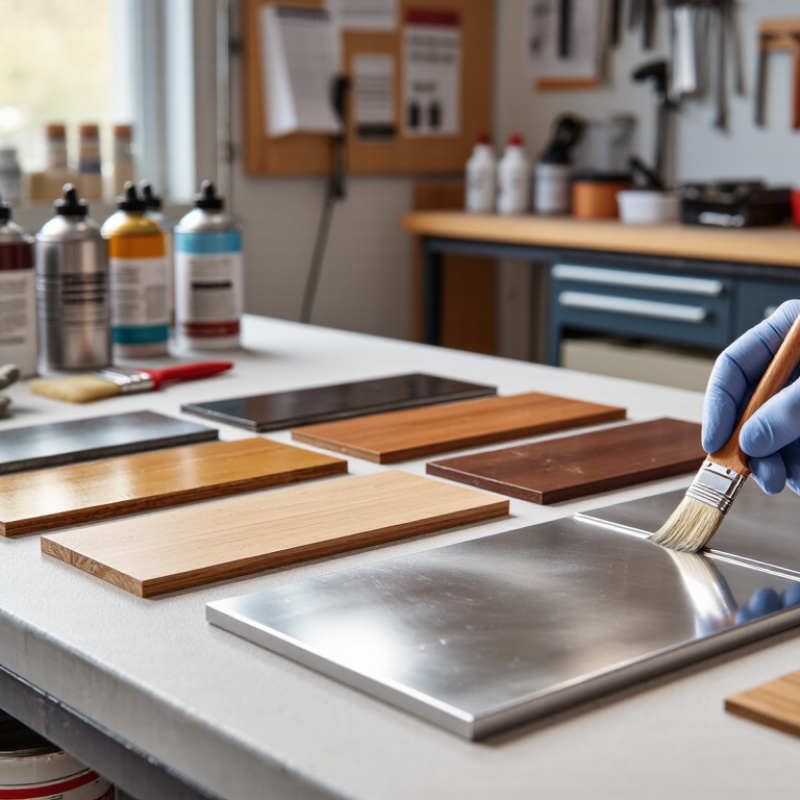
Choosing the right coating agent starts with its purpose, not its product label. Is it meant to improve adhesion, control flow, resist moisture, or protect against abrasion? The answer depends on the substrate, application method, drying conditions, and service environment. A metal panel exposed to salt spray needs different performance from a paper package handled indoors. The American Coatings Association’s 2023 Industry Market Analysis Report estimated U.S. paint and coatings sales at about $31.5 billion in 2022. That scale reflects many different uses; it does not mean one formulation suits them all.
Tip: Write a short use-case brief. Name the substrate, expected exposure, application temperature, and required finish. Include practical limits, such as drying time or allowable film thickness. Small details matter.
Tip: Turn each need into a test. For adhesion, consider a recognized method such as ASTM D3359; for abrasion, ASTM D4060 may be relevant. Ask suppliers for test conditions, not just headline results. A strong number without context can mislead. Then trial the agent on the actual substrate and application line. Lab samples help, but they do not reproduce every surface irregularity or operator adjustment. I would question any choice based only on price or a single performance claim.
| Tip | Purpose and Requirement | What to Check | Practical Evaluation |
|---|---|---|---|
| 1. Identify the substrate | Choose an agent that is compatible with the material being coated, such as metal, wood, plastic, paper, or masonry. | Substrate type, surface energy or porosity, existing finishes, and any cleaning or pretreatment requirements. | Apply the proposed coating system to a representative prepared sample and assess wetting, adhesion, and appearance after curing. |
| 2. Define the end-use conditions | Match the coating’s function to the product’s service environment, such as protection, appearance, release, or barrier performance. | Exposure to moisture, chemicals, sunlight, abrasion, temperature changes, food contact, or outdoor conditions, as applicable. | List the expected exposures and select relevant performance tests rather than relying on a general-purpose description. |
| 3. Check formulation compatibility | Ensure the coating agent can be incorporated into the full formulation without unwanted instability or defects. | Compatibility with the binder, solvent or water phase, pigments, fillers, additives, and the formulation’s pH or ionic conditions. | Make a small-scale blend and monitor for separation, precipitation, viscosity changes, foaming, or other changes during storage. |
| 4. Match the application process | Select an agent that works with the available coating and drying or curing equipment. | Application method, target film thickness, viscosity range, drying time, cure conditions, and line speed. | Run a process trial at representative settings and check coverage, leveling, defects, and whether the coating reaches its required cure. |
| 5. Review safety and regulatory needs | Confirm that the ingredients and finished coating are suitable for the intended market and use. | Safety data, applicable regional restrictions, workplace exposure controls, VOC requirements, and any end-use-specific rules. | Review current supplier documentation and verify applicable requirements for the product, location, and intended application. |
| 6. Consider durability and maintenance | Balance initial performance with the coating’s expected service life and maintenance needs. | Resistance to wear, weathering, cleaning, corrosion, discoloration, or other degradation relevant to the application. | Use accelerated or field testing appropriate to the exposure, and compare results with defined acceptance criteria. |
| 7. Validate total cost and supply fit | Assess the coating agent as part of the overall production and lifecycle cost, not only its purchase price. | Use level, coverage, process yield, rework, handling requirements, shelf life, availability, and storage conditions. | Compare candidate systems in a production-relevant trial and calculate cost per acceptable coated unit. |
A coating succeeds only when its chemistry suits the substrate. Steel, aluminum, concrete, and plastics differ in surface energy, porosity, and thermal movement. On steel, remove rust and salts; on aluminum, confirm oxide and pretreatment compatibility. Concrete needs moisture and alkalinity checks, while low-energy plastics may need abrasion or a primer. Don’t choose by finish alone. A glossy panel can still peel at a sharp edge.
The NACE International IMPACT study (2016) estimated corrosion costs at US$2.5 trillion annually, about 3.4% of global GDP. It also reported that existing corrosion-control practices could save 15–35% of those costs. This is not a coating-selection rule, but it shows why substrate preparation and compatibility deserve budget and inspection. Check the technical data sheet for surface profile, moisture limits, cure temperature, and adhesion-test method. Then verify the system on a small site sample. Conditions vary. A test patch can still miss aging or chemical exposure.
Tips: Match the primer to the substrate, not just the topcoat. For porous concrete, assess absorption and moisture using the coating supplier’s specified methods. For plastics, test adhesion after cleaning and any required surface treatment. Record batch, temperature, and cure time. Small details matter.
7 Tips for Choosing the Right Coating Agent
Comparing coating types starts with the job each layer must do. A water-based film coating can dry quickly and add color, but humidity may affect its finish. Wax coatings can improve moisture resistance and gloss, though they may soften in warm storage. For tablets or other products needing delayed release, specialized polymer coatings offer targeted performance, but require careful formulation and testing.
Tip 1: Match the coating to the product’s exposure. Tip 2: Check adhesion on the actual surface, not just a sample card. Tip 3: Compare moisture resistance, abrasion resistance, flexibility, and appearance separately. Tip 4: Record drying time and application temperature; small changes can alter the final film. Tip 5: Ask whether the coating suits existing equipment. Tip 6: Test cleaning and storage conditions. Tip 7: Review supplier data, then verify key claims in your own process.
A practical comparison uses identical substrates and application conditions. Measure coating weight, drying time, color consistency, and wear after handling. A glossy panel may look impressive under bright lights, yet show scratches quickly in routine use. I would not rely on one successful trial. Batch variation, surface preparation, and operator technique can shift results, so leave room for repeat testing before settling on a coating.
Typical comparative ratings for common coating types. Scores are indicative (1 = lower, 5 = higher), not standardized test results; actual performance depends on formulation, substrate, and application conditions.
Compare the exposure conditions, chemical contact, flexibility needs, and intended service life before selecting a coating. Check product data sheets and validate performance under your specific conditions.
Choosing a coating agent starts with the people who will handle it. Review its safety data sheet, paying attention to inhalation, skin contact, and curing hazards. A product used in a small workshop may need different ventilation controls from one applied on a production line. Check that gloves and other protective equipment suit the actual ingredients, not just the product’s general description. Test a small batch under real working conditions.
Environmental impact extends beyond what is printed on the container. Ask about volatile organic compounds, cleaning solvents, waste handling, and packaging. Low odor does not automatically mean low impact. Look for test data or documentation that supports environmental claims, and consider how leftover coating or rinse water will be managed at your site. Details can vary with application method.
Compliance depends on where and how the coating is used. Confirm that current product documents address the requirements relevant to your facility and end use, and keep records of revisions. If a coating touches food-contact surfaces or is used in a regulated industry, seek qualified compliance advice before purchasing. Paperwork can feel tedious. I have found that missing documents often create more delays than the evaluation itself, though a complete file still cannot replace careful testing.
A coating agent can look suitable on paper and still fail on a real surface. Check its compatibility with the substrate, binder, and other formulation ingredients. A small test panel can reveal separation, poor adhesion, or unexpected color changes before full production. Then confirm application conditions: temperature, humidity, film thickness, and cure time. A coating that sprays smoothly but cures poorly is not a good fit. Small tests matter.
Tips: Compare technical data sheets, then test the actual mix on a representative surface. Check adhesion after curing and inspect for cracking, blistering, or uneven gloss. Repeat under realistic temperature and humidity conditions. A compatibility chart is a starting point, not a guarantee; aged or contaminated substrates can behave differently.
Long-term durability deserves equal attention. NACE International’s 2016 IMPACT study estimated corrosion costs at US$2.5 trillion annually, or 3.4% of global GDP, and reported that corrosion-control practices could save 15–35% of those costs. That estimate covers corrosion control broadly, not coatings alone, but it shows why protection choices matter. Ask for weathering, chemical-resistance, and adhesion-test results that match the intended exposure. Salt spray data may help, yet it cannot fully predict years of field performance. I would treat any single test result cautiously and compare it with service conditions.
„Thanks to the LUVIR technology, the solder resist process could be switched directly from the previously used mask exposure to direct exposure. As an outstanding digital solution on the market, this technology has been able to demonstrate fast process times and superior quality on our certified conventional ink in production. This allowed us to fully digitize the solder mask process at low cost – without process or ink adjustments. An excellent benefit to our production in Rot am See.“
Ralf Göhringer (Head of Production WE Rot am See)
I would definitely recommend the Limata machine and team for a future company purchase
Michael Greenaway
Compunetics Inc.
“The Limata ldi has been amazing!! Best thing we did was buy this machine”
Richard Brady
GM
Circuitlabs
“Since 2019, we have been running the Limata X1000 LDI system (including LUVIR for solder mask imaging) in daily production as an addition to our current process with film. The machine was capable of properly exposing Taiyo PSR-4000 BN (DI) solder mask types on normal to high-copper boards using a new and unique direct imaging process. The machine operating interface is very user friendly which allowed for a quick technical training curve. The pre-registration processing reduced several seconds of production time at every print. Limata support and service staff is incomparable. They supported our team every step of the way at basically any time of the day or night, with literally, an immediate response time, customizing the software interface to best fit our Operations and needs.
We have exposed more than 8,000 prints since end of October, on various solder mask colors and some resist film panels. Limata, has proven to be very capable and innovative. They are a strong contender in the industry.
We have very much enjoyed this project, and working with the team!
Thank you Limata for the continued support and being a part of our growth.”
Bill Sezate
Vice President, GM
Summit Interconnect
As a replacement to our current contact exposure process with film, the LIMATA X2000 system including LUVIR-Technology was capable of properly exposing non-LDI solder mask types using a direct imaging process. The machine offers cutting edge software with a very intuitive operating interface which allowed for quick technician training curve. The dual drawer system combined with pre-registration processing reduced several seconds of production time at every machine cycle. Limata support and service staff is world class. They added software patches to keep production running at shortest possible response times, customized the software interface to best fit our in-house Operations system, and even wrote a step-by-step machine processing manual. As a result of the project, we have exposed more than 16,000 times on various product types and solder mask brands/colors. Limata, in a very short timeframe as a company, has definitely shown they are truly innovative and will be challenging the industry of direct imaging for the top spot.
Kevin Beattie
Process Engineer
TTM Technologies
Forest Grove Division
