Toasted Garlic is moving from a familiar kitchen garnish into a globally traded ingredient. Its appeal is practical: toasted pieces offer a deeper aroma, crisp texture, and faster preparation than fresh cloves. Buyers still need more than flavor claims. They must examine moisture, particle size, color uniformity, packaging, shelf life, and microbial controls.
Market research points to strong category momentum. Grand View Research reported that the global garlic market was valued at approximately USD 15.7 billion in 2022, with continued growth expected through the decade. Mordor Intelligence also identifies rising demand for processed and dehydrated garlic in convenience foods, sauces, snacks, and foodservice. These figures describe garlic broadly, not Toasted Garlic alone. That distinction matters.
Harold McGee, the respected food science writer, explains, “Garlic’s characteristic aroma comes from sulfur compounds.” Heat changes those compounds. Controlled toasting can create nutty notes and a golden surface, while excessive heat produces bitterness and dark particles. Small differences become visible in a buyer’s sample tray.
The commercial lesson is simple. Taste the product after storage, not only after opening. Check whether the crunch survives humid conditions. Ask for recent laboratory reports and traceable batch information. Experienced importers also compare whole pieces, granules, and powder because each format behaves differently in production.
There is no universal best specification. A pizza manufacturer may prefer small, fast-hydrating granules. A premium snack brand may require larger, visibly toasted pieces. Some buyers still overlook oxidation risks in opened cartons. That weakness deserves attention. Reliable sourcing depends on verified processing details, transparent documentation, and repeated sensory checks, not attractive color alone.
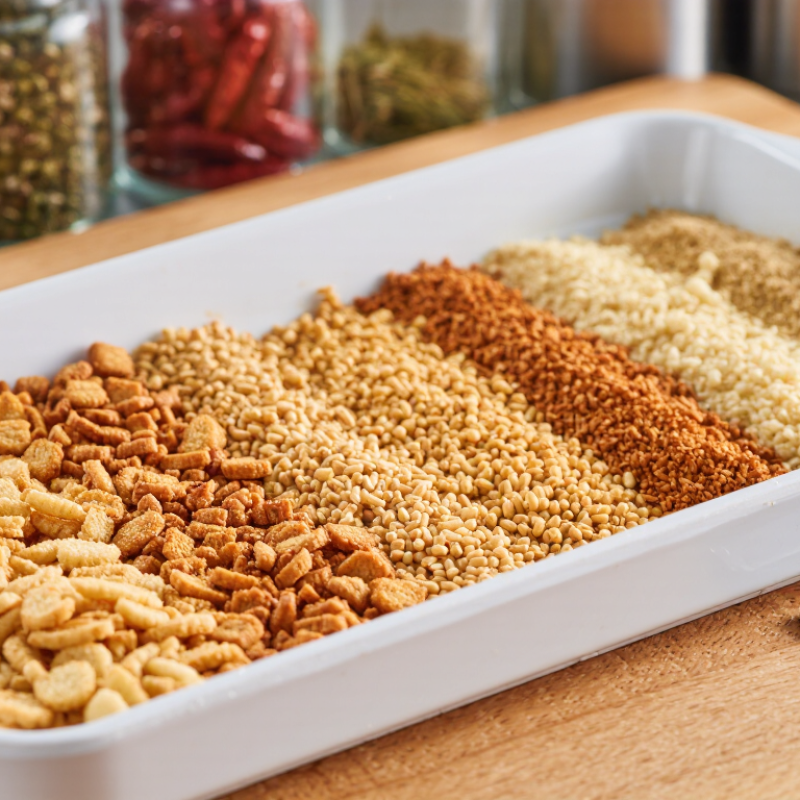
Toasted garlic is garlic heated until its moisture falls and its flavor deepens. It may appear as flakes, granules, or powder. The heat creates a warm aroma, crisp texture, and mild brown color. Fresh garlic remains moist, firm, and sharply pungent. Its raw flavor can feel hot, grassy, and slightly sweet after cooking. Toasted garlic tastes rounder, nuttier, and less aggressive. Small detail matters.
For global buyers, the difference affects storage, handling, and recipe performance. Fresh garlic usually needs ventilation, temperature control, and careful inspection for sprouting or mold. Toasted garlic is easier to transport, but it is not automatically shelf-stable. Buyers should request moisture, water activity, microbiological, allergen, and packaging information. The product form also matters. Flakes may deliver visible texture, while powder disperses quickly in sauces and seasonings. Ask how the garlic was heated, because “toasted” can describe different processes.
In practical sourcing, I check color, aroma, breakability, and particle size before approving a lot. A clean toasted smell is useful. A burnt or smoky note signals excessive heat. Color can mislead. Darker pieces may taste bitter, while pale pieces may lack depth. I once trusted appearance too much and found uneven flavor after hydration. That mistake still matters. Buyers should test the product in the intended recipe, not only in a sample bag. Fresh garlic offers stronger immediate character; toasted garlic offers convenience and a more controlled, roasted profile.
What Is Toasted Garlic for Global Buyers?
Toasted garlic is produced by gently heating cleaned garlic pieces until their color, aroma, and flavor develop. The process usually begins with fresh bulbs that are sorted, peeled, washed, and inspected. Operators then slice, dice, or granulate the cloves according to the buyer’s specification. Controlled heat removes moisture and creates a warm, roasted note. Temperature and time require careful adjustment. Excessive heat can create bitterness, dark patches, or a burnt aftertaste.
Tips: Ask for the cut size, moisture level, processing temperature, and shelf-life data. Request a representative sample before approving a large order. Check the ingredient statement and allergen controls. A low moisture level supports stability, but extreme drying may weaken the garlic aroma. Color alone is not enough.
After toasting, the garlic is cooled quickly to limit further browning. It may then pass through sieves, metal detection, and foreign-material inspection. Reliable processors record batch details, sanitation checks, and packaging conditions. Foil-lined or moisture-resistant packaging helps protect the product during transport. Buyers should compare aroma, texture, color uniformity, and microbial test results. In practice, one sample may look excellent while another feels too hard or tastes flat. That variation deserves investigation. Storage trials under warm and humid conditions can reveal weaknesses before distribution.
Typical processing temperatures used to convert fresh garlic into a stable toasted garlic ingredient.
Garlic is commonly cleaned, peeled, sliced, and dried before toasting. Drying is generally performed at a lower temperature to reduce moisture, while toasting uses higher heat to develop a golden color, roasted aroma, and deeper flavor. Actual settings vary according to slice thickness, moisture content, equipment, and the buyer’s desired specification.
Toasted garlic is garlic gently heated until its moisture falls and its flavor becomes deeper. Buyers commonly find it as flakes, granules, powder, minced pieces, or crisp fried bits. Each form behaves differently during transport and production. Flakes add visible texture to seasoning blends and snack coatings. Granules disperse well in soups, sauces, marinades, and instant meals. Powder offers fast mixing but can form clumps when exposed to humidity. Fried garlic pieces provide crunch for noodles, rice dishes, salads, and savory bakery products.
Global applications depend on particle size, toast level, oil content, and packaging protection. A soup manufacturer may prefer uniform granules for consistent dosing. A snack producer may choose a stronger toasted profile with low moisture. In my product evaluations, small differences in color often changed the final taste. Darker garlic is not always more flavorful. It may taste bitter instead. This is easy to overlook.
Reliable purchasing requires clear technical documents and repeatable samples. Buyers should review moisture, microbiological limits, foreign-material controls, packaging format, shelf life, and storage instructions. Origin and processing conditions can also affect aroma and color. During a trial, compare the ingredient before and after cooking. Some toasted notes disappear in long simmering. Others become harsh. A small pilot batch is useful. It reveals problems that a specification sheet cannot.
Flavor, Aroma, Texture, and Nutritional Characteristics
Toasted garlic is garlic heated until its cloves turn pale gold or deeper brown. The process softens its sharp bite and creates a warmer, sweeter flavor. Light toasting may bring notes of butter, nuts, and roasted vegetables. Darker pieces can taste bitter. Color alone is not enough. Buyers should smell the sample and check for burnt edges, uneven pieces, or stale oil.
Aroma is often the first quality signal. Fresh toasted garlic should smell savory, clean, and gently sweet. It should not smell smoky, rancid, or chemical-like. Texture depends on the format and moisture level. Dry flakes can be crisp and fragile, while granules should remain free-flowing. Paste may feel smooth, but excessive oil can hide quality problems.
A small sample test in warm water or broth reveals clumping and flavor release.
Nutritionally, garlic contributes small amounts of fiber, minerals, and sulfur-containing compounds. Heat may reduce some heat-sensitive compounds, so toasted garlic is not nutritionally identical to fresh garlic. Added oil and salt can also change its dietary profile. This detail is easy to overlook. Buyers should review ingredient lists, moisture data, allergen controls, and storage conditions. In practice, no single toast level suits every market. Mild toast may fit delicate sauces, while darker toast works better in savory snacks and hearty foods.
What Is Toasted Garlic for Global Buyers?
Toasted garlic is dehydrated garlic heated until it develops a golden color and nutty aroma. It is not simply dried garlic with darker color. Excessive heat can create bitterness, weak aroma, and uneven pieces. Buyers should request product samples, a specification sheet, and a recent certificate of analysis before approval.
FAOSTAT’s 2022 production data places global fresh garlic output above 28 million tonnes. This large supply does not guarantee consistent toasted garlic quality. Cultivar, harvest maturity, drying conditions, and slicing thickness strongly affect performance. The CBI market study on dried garlic highlights food safety, traceability, and reliable specifications as important buyer requirements. Practical checks should include moisture, water activity, microbial limits, foreign material, color, and particle-size distribution. Not glamorous, but decisive.
Packaging must protect the product from oxygen, light, and humidity. High-barrier laminated bags inside strong export cartons are commonly considered for this purpose. Nitrogen flushing may help preserve aroma, but buyers should verify its actual value through shelf-life testing. Each carton should show the lot number, production date, net weight, origin, storage instructions, and allergen information where applicable. A supplier’s audit history also matters, especially when shipments cross several climates. I would not approve a large order from appearance alone. Color can mislead, and toasted garlic may lose aroma before visible deterioration appears. More buyer trials are still needed for different climates and cooking applications.
| Evaluation Dimension | Typical Buyer Specification or Reference Range | Why It Matters | Recommended Buyer Verification |
|---|---|---|---|
| Product definition | Toasted garlic is garlic that has been thermally processed to develop a roasted aroma, deeper color, and mild sweet-savory flavor. It may be supplied as flakes, minced pieces, granules, powder, or whole dried cloves. | The processing method and particle form affect flavor intensity, appearance, application performance, and cost. | Request a product specification identifying raw material, heat treatment, particle form, and intended application. |
| Raw garlic condition | Sound, mature bulbs or cloves; free from visible mold, insect damage, abnormal fermentation, excessive sprouting, and foreign plant material. | Poor raw material can create bitter notes, dark spots, off-odors, and elevated microbial risk after processing. | Review incoming-material controls, supplier approval procedures, and representative pre-shipment samples. |
| Color and appearance | Uniform light golden to medium brown appearance, depending on the toast profile; minimal blackened particles, clumping, or excessive fines. | Color is a practical indicator of roasting consistency and strongly influences the visual quality of finished foods. | Approve a color reference sample and define acceptable limits for dark particles, fines, and agglomerates. |
| Aroma and flavor | Clean roasted-garlic aroma with characteristic garlic notes; no sour, musty, rancid, smoky-burnt, chemical, or foreign odors. | Flavor defects may indicate over-roasting, oxidation, moisture exposure, contamination, or unsuitable storage. | Use a documented sensory panel or approved reference sample for every production lot. |
| Particle size | Common commercial forms include powder below approximately 500 micrometres, granules around 0.5–2 mm, minced pieces around 2–5 mm, and flakes or slices above 5 mm. Actual limits should be agreed by sieve specification. | Particle size controls dosage accuracy, hydration, distribution, texture, and production-line performance. | Request sieve-analysis results and test retained samples using the agreed mesh sizes. |
| Moisture content | A common commercial target for dried garlic ingredients is approximately 5–8% moisture, subject to product form, water activity, and buyer specification. | Excess moisture promotes caking, mold growth, flavor deterioration, and reduced shelf stability. | Specify the test method, test basis, and maximum limit; compare the certificate of analysis with independent testing. |
| Water activity | For a shelf-stable dried ingredient, buyers commonly seek low water activity, often below 0.60, with the final limit confirmed by product risk assessment. | Water activity is more directly related to microbial growth potential than moisture percentage alone. | Require water-activity results from an annually verified instrument and test finished packed product. |
| Microbiological quality | Typical specifications address total plate count, yeast and mold, coliforms, and absence or limits for pathogens such as Salmonella and E. coli. Limits vary by destination and end use. | Garlic is an agricultural product and can be exposed to soil, dust, water, equipment, and handling contamination. | Use an accredited laboratory and confirm sampling plans, lot traceability, and pathogen requirements in the destination market. |
| Foreign-material control | Product should be free from stones, metal, glass, hard plastic, insects, and other extraneous matter. | Foreign material creates food-safety, customer-complaint, and equipment-damage risks. | Check documented use of sieves, magnets, metal detection, visual sorting, and corrective-action records. |
| Pesticide residues | Residues should comply with the maximum residue limits of the importing country and the buyer's restricted-substance list. | Different markets may apply different limits, analytical scopes, and enforcement policies. | Obtain a current multi-residue report from an accredited laboratory and verify the regulatory basis used. |
| Contaminant controls | Depending on origin and destination, testing may include heavy metals, mycotoxins, sulfites, allergens, and other contaminants required by the risk assessment. | Contaminant requirements are influenced by agricultural conditions, processing aids, packaging, and intended use. | Build a destination-specific testing plan rather than relying on a generic certificate. |
| Ingredient declaration | For a single-ingredient product, the declaration is generally dried/toasted garlic. Any oil, salt, anti-caking agent, preservative, or processing aid must be disclosed where applicable. | Undeclared additives can create labeling, allergen, regulatory, and formulation problems. | Request the full formulation, additive statement, allergen statement, and non-GMO or organic documentation when relevant. |
| Primary packaging | Use food-contact packaging with strong moisture and oxygen barriers, such as sealed multilayer bags, liners, or high-barrier pouches appropriate for dry ingredients. | Barrier performance helps preserve crispness, aroma, color, and microbiological stability. | Confirm food-contact compliance, seal integrity, material structure, and packaging performance under expected transport conditions. |
| Pack sizes | Industrial packs commonly range from approximately 5–25 kg; retail or food-service packs may be smaller and should match the buyer's handling and dosing needs. | Pack size affects warehouse handling, resealing frequency, waste, labor, and landed cost. | Confirm net weight tolerance, inner and outer packaging configuration, pallet pattern, and maximum stack height. |
| Outer packaging and palletization | Use clean, strong cartons or woven bags with suitable liners, stretch wrapping, corner protection, and dry pallets where required. | Proper palletization reduces crushing, punctures, moisture exposure, and warehouse handling damage. | Approve a packing diagram and verify carton strength, pallet stability, and container loading photographs. |
| Label and traceability | Labels should normally include product name, ingredient declaration, net weight, lot or batch number, production date, best-before date, storage conditions, country of origin, and responsible food-business details as required. | Complete traceability supports recall readiness, customs clearance, inventory rotation, and regulatory compliance. | Review artwork before production and ensure the lot code links to raw materials, processing records, test results, and shipment documents. |
| Shelf life and storage | A commercially dried and properly packed garlic product may commonly carry a shelf life of about 12–24 months, subject to validated stability data and packaging performance. | Heat, humidity, oxygen, light, and repeated opening can accelerate browning, flavor loss, caking, and rancidity. | Request shelf-life evidence and specify storage in a cool, dry, clean area away from direct sunlight and strong odors. |
| Food-safety system | The processor should operate documented prerequisite programs, sanitation controls, hazard analysis, corrective actions, and batch-release procedures. | A food-safety system provides more confidence than a single test report or product sample. | Review a valid third-party certification or audit report, scope, expiration date, and major nonconformities. |
| Origin and harvest planning | Origin should be declared accurately, with harvest period and crop-year information available when requested by the buyer. | Origin and crop timing can influence flavor, size, moisture, pesticide profile, price, and supply continuity. | Ask for origin documentation, seasonal availability, supply-capacity estimates, and a contingency plan for crop variation. |
| Processing consistency | Each lot should meet the agreed ranges for toast color, flavor, moisture, water activity, particle size, and microbiology. | Inconsistent toast intensity can change the flavor profile and color of finished products from one shipment to another. | Use a written product specification, approved golden sample, lot-release checklist, and periodic independent inspection. |
| Shipping and logistics | Ship in clean, dry, odor-free containers. Protect cargo from rain, condensation, excessive heat, direct sunlight, and incompatible neighboring goods. | Dry garlic readily absorbs moisture and strong odors during international transport. | Define Incoterms, container requirements, desiccant use where appropriate, loading controls, and arrival inspection procedures. |
| Commercial documents | Common documents include commercial invoice, packing list, transport document, certificate of origin, specification sheet, certificate of analysis, and any health or phytosanitary documents required by the destination. | Missing or inconsistent documents can delay customs clearance and create avoidable compliance costs. | Align product name, lot number, quantity, origin, dates, tariff classification, and document data before dispatch. |
| Sampling and acceptance | Use a documented sampling plan covering multiple cartons and locations within the lot; define acceptance criteria before purchase. | A single sample may not represent variation in moisture, color, particle size, or contamination across a shipment. | Agree inspection timing, retained samples, laboratory responsibility, claim period, and remedy for nonconforming goods. |
Note: Numerical ranges are common commercial reference points rather than universal legal limits. Final specifications should follow the importing country's regulations, the product's intended use, and a mutually approved quality agreement.
„Thanks to the LUVIR technology, the solder resist process could be switched directly from the previously used mask exposure to direct exposure. As an outstanding digital solution on the market, this technology has been able to demonstrate fast process times and superior quality on our certified conventional ink in production. This allowed us to fully digitize the solder mask process at low cost – without process or ink adjustments. An excellent benefit to our production in Rot am See.“
Ralf Göhringer (Head of Production WE Rot am See)
I would definitely recommend the Limata machine and team for a future company purchase
Michael Greenaway
Compunetics Inc.
“The Limata ldi has been amazing!! Best thing we did was buy this machine”
Richard Brady
GM
Circuitlabs
“Since 2019, we have been running the Limata X1000 LDI system (including LUVIR for solder mask imaging) in daily production as an addition to our current process with film. The machine was capable of properly exposing Taiyo PSR-4000 BN (DI) solder mask types on normal to high-copper boards using a new and unique direct imaging process. The machine operating interface is very user friendly which allowed for a quick technical training curve. The pre-registration processing reduced several seconds of production time at every print. Limata support and service staff is incomparable. They supported our team every step of the way at basically any time of the day or night, with literally, an immediate response time, customizing the software interface to best fit our Operations and needs.
We have exposed more than 8,000 prints since end of October, on various solder mask colors and some resist film panels. Limata, has proven to be very capable and innovative. They are a strong contender in the industry.
We have very much enjoyed this project, and working with the team!
Thank you Limata for the continued support and being a part of our growth.”
Bill Sezate
Vice President, GM
Summit Interconnect
As a replacement to our current contact exposure process with film, the LIMATA X2000 system including LUVIR-Technology was capable of properly exposing non-LDI solder mask types using a direct imaging process. The machine offers cutting edge software with a very intuitive operating interface which allowed for quick technician training curve. The dual drawer system combined with pre-registration processing reduced several seconds of production time at every machine cycle. Limata support and service staff is world class. They added software patches to keep production running at shortest possible response times, customized the software interface to best fit our in-house Operations system, and even wrote a step-by-step machine processing manual. As a result of the project, we have exposed more than 16,000 times on various product types and solder mask brands/colors. Limata, in a very short timeframe as a company, has definitely shown they are truly innovative and will be challenging the industry of direct imaging for the top spot.
Kevin Beattie
Process Engineer
TTM Technologies
Forest Grove Division
