Global buyers are looking beyond simple bonding claims. They need reliable Adhesive Gum for cartons, labels, envelopes, tapes, bookbinding, and specialty packaging. Each application exposes different demands, including tack, drying speed, humidity resistance, surface compatibility, and storage stability.
The opportunity is substantial. Grand View Research valued the global adhesives market at approximately USD 73.3 billion in 2023. Its report projects continued expansion through 2030, supported by packaging, construction, automotive, and electronics demand. Smithers also identifies packaging as a major growth area, especially as brands seek lighter materials and efficient converting processes. These figures do not describe Adhesive Gum alone. They provide useful market context, not a perfect measurement.
Adhesion expert Dr. Carl A. Dahlquist is widely associated with this practical explanation: “Adhesion is the attraction between two unlike materials; cohesion is the attraction between like materials.” That distinction matters when comparing dextrin, starch, cellulose, synthetic polymer, and blended gum systems. A low-cost product may look attractive beside a premium grade. It may fail under cold storage, dusty surfaces, or high-speed machinery. Small details matter.
This guide examines the top 10 types of Adhesive Gum for global buyers. It considers chemistry, application performance, processing conditions, packaging formats, and sourcing risks. The ranking is not absolute. Every factory has different equipment, substrates, climate, and quality controls. That is the uncomfortable part. A product praised in one plant may disappoint in another. Buyers should validate samples, request technical data, and run production trials before committing to volume.
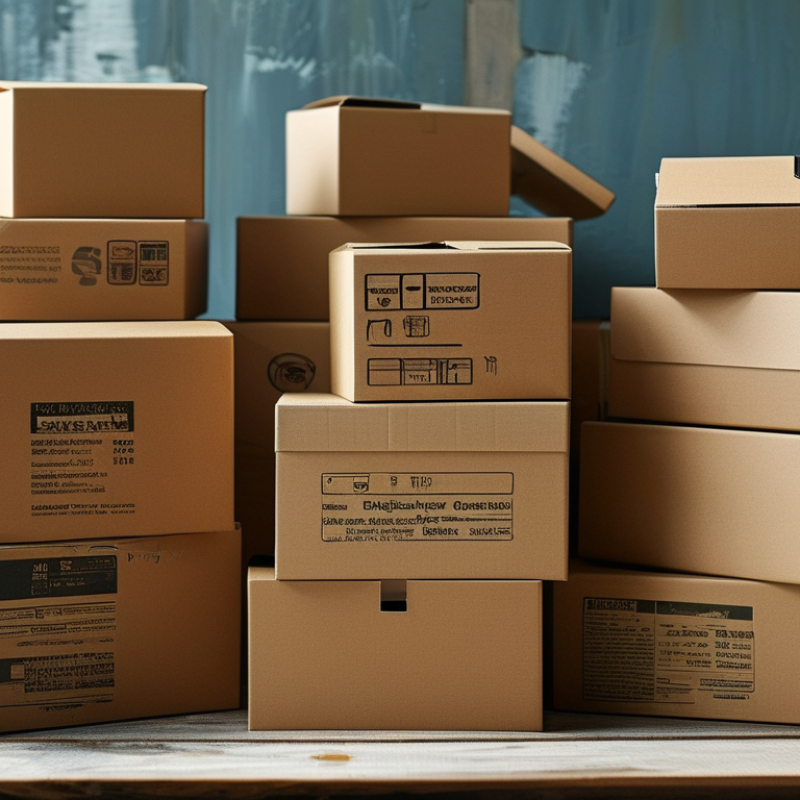
Adhesive gum is a bonding material that joins surfaces through wetting, pressure, drying, cooling, or chemical curing. Buyers often classify it by origin, chemistry, physical form, and end-use performance. This matters when selecting materials for cartons, labels, envelopes, textiles, or light assembly.
Natural adhesive gums include gum arabic, starch, dextrin, and plant-based cellulose derivatives. They are often water-based, low-odor, and suitable for paper applications. Their performance can change with humidity, storage time, and surface porosity.
Synthetic types include acrylic, rubber-based, silicone, and hot-melt adhesives. These usually offer stronger resistance to moisture, temperature, or repeated handling. Some products combine natural and synthetic components.
Form also creates a practical classification. Liquid gum spreads easily with rollers or brushes. Powdered gum requires controlled mixing. Solid sticks or pellets simplify transport and reduce leakage. Pressure-sensitive gum bonds when pressed, while heat-activated gum needs controlled temperature. Water-activated gum depends on moisture before application.
In procurement work, I check viscosity, open time, tack, peel strength, and curing conditions. A carton adhesive may need quick setting, while a label adhesive needs smooth coating and clean release. Testing on the actual substrate is essential. Laboratory data helps, but it cannot replace production trials. The boundaries are not always clean. A “natural” formula may still contain performance additives, and a strong adhesive may fail on dusty surfaces. Safety data, batch consistency, storage temperature, and applicable regulations also deserve careful review. Shamefully, these details are sometimes checked too late.
Global buyers use “adhesive gum” to describe several bonding materials, not one chemistry. Gum arabic offers clean film formation for paper and labels. Dextrin works well on corrugated cartons. Starch adhesive suits high-volume packaging lines. Cellulose ether supports smooth application and water control. Rosin ester improves tack in pressure-sensitive formulas. Natural rubber latex provides elastic bonding. Gelatin helps temporary paper adhesion. Casein performs well on glass bottle labels. Polyvinyl acetate supports wood and craft applications. Hot-melt gum delivers fast setting without drying ovens.
Market evidence supports this broad demand. Grand View Research valued the global adhesives market at approximately USD 72.6 billion in 2023, with packaging remaining a major application. IMARC Group also reports continued growth in the gum arabic market, driven by food, pharmaceutical, and industrial uses. These reports measure different categories, so direct comparisons can mislead buyers. That point is often overlooked.
Procurement teams should test viscosity, solids content, open time, peel strength, and storage stability. Humid ports can expose weak formulations quickly. A dextrin adhesive may run smoothly in a dry warehouse but lose performance after moisture exposure. Gum arabic can provide excellent clarity, yet its cost and supply consistency deserve review. Buyers should request batch records, allergen statements, technical data sheets, and origin documentation. One practical lesson remains uncomfortable: the cheapest drum rarely delivers the lowest total cost. Small pilot trials are still necessary.
This chart compares indicative working-concentration ranges commonly used in water-based adhesive formulations. Starch and dextrin are often selected for higher-solids bonding, while xanthan gum, CMC, HPMC, alginate, carrageenan, guar gum, and tragacanth are typically used at lower levels for thickening, film formation, or rheology control. Actual dosage depends on grade, viscosity, moisture, substrate, and processing conditions.
Gum arabic forms a clear, flexible film and performs well on paper labels, envelopes, and light packaging. Guar gum offers strong water binding and thickening, but excessive moisture can reduce drying speed. Xanthan gum provides stable viscosity across temperature changes, making it useful in adhesive blends and coating formulas. Locust bean gum gives body and smooth texture, though it often needs heat for full hydration. These differences matter during production.
Tragacanth gum creates a firm, elastic film for specialty paper and controlled-release applications. Karaya gum absorbs water quickly and produces a soft, tacky texture, so formulators must control dosage carefully. Ghatti gum supports emulsion stability and can improve the consistency of water-based adhesives. Dextrin dries rapidly and bonds porous surfaces, including corrugated board and paper tubes. Starch adhesive remains economical and biodegradable, but its bond strength can vary with humidity and cooking conditions. Cellulose gum improves viscosity, film formation, and storage stability in many water-based systems.
The best choice depends on surface porosity, drying time, shear strength, and storage climate. I normally test peel strength after both dry and humid aging. Small changes matter. A gum that works on kraft paper may fail on coated stock. Buyers should request viscosity data, moisture content, particle size, traceability records, and batch samples. Compatibility testing is essential, because two individually reliable gums can behave poorly together. Results also depend on mixing order and water quality, an easily overlooked detail. Local packaging rules and application standards should be checked before commercial production.
Choosing adhesive gum starts with the substrate, not the product name. Paper labels often need dextrin or starch gums for porous surfaces. Gum arabic supports light bonding and smooth film formation. Cellulose-based gums help when viscosity must remain stable during storage. Cartons may require stronger moisture resistance than initial tack. Check solids, pH, viscosity, open time, and storage temperature. Small details affect production.
Different applications need different testing. Food-contact packaging requires documented compliance, purity data, and migration information. Textile finishing may benefit from a flexible cellulose gum. Wood assembly usually needs stronger wet bonding than paper work. Water-soluble gums suit temporary labels and envelopes. Modified starch can work well on corrugated board, but excessive humidity may weaken the bond. Humidity changes everything.
Run a small trial before placing a large order. Apply the gum at the intended coating weight. Test peel strength after drying, aging, and temperature changes. A bond that succeeds on a clean sample may fail on dusty material. I once underestimated drying time during a fast line trial. The result looked acceptable, but the rolls blocked later. That mistake still matters. Ask suppliers for batch consistency records and technical data, then compare real samples under your working conditions. Perfect figures on paper can mislead.
Global buyers commonly assess gum arabic, guar gum, xanthan gum, starch, dextrin, cellulose, pectin, alginate, gelatin, and pullulan. Each offers different tack, viscosity, drying speed, and moisture response. Quality should begin with a current specification, batch sample, certificate of analysis, and traceability record. ISO’s 2022 Survey recorded over 1.26 million ISO 9001 certificates worldwide, showing how widely documented quality systems are used. Certification helps, but it does not replace testing.
Compliance requires more than a familiar product name. Buyers should verify origin, allergen statements, microbiological limits, heavy-metal results, safety data, and applicable food-contact or chemical requirements. Requirements can change by destination. Request recent test reports, not recycled files. Packaging also affects performance. Moisture-sensitive powders need sealed liners, strong outer bags, clear batch coding, and dry-pallet protection. One weak liner can spoil an otherwise suitable shipment.
Supply reliability depends on lead time, minimum order quantity, production capacity, and backup sourcing. The World Bank’s 2023 Logistics Performance Index highlights customs, infrastructure, and shipment timeliness as major logistics factors. These details matter when importing adhesive gums across several borders. A written supply agreement should define inspection rules, shelf life, replacement procedures, and Incoterms. A perfect checklist is unrealistic. Still, buyers should challenge vague claims, especially “food grade” or “high purity,” until measurable limits are provided.
„Thanks to the LUVIR technology, the solder resist process could be switched directly from the previously used mask exposure to direct exposure. As an outstanding digital solution on the market, this technology has been able to demonstrate fast process times and superior quality on our certified conventional ink in production. This allowed us to fully digitize the solder mask process at low cost – without process or ink adjustments. An excellent benefit to our production in Rot am See.“
Ralf Göhringer (Head of Production WE Rot am See)
I would definitely recommend the Limata machine and team for a future company purchase
Michael Greenaway
Compunetics Inc.
“The Limata ldi has been amazing!! Best thing we did was buy this machine”
Richard Brady
GM
Circuitlabs
“Since 2019, we have been running the Limata X1000 LDI system (including LUVIR for solder mask imaging) in daily production as an addition to our current process with film. The machine was capable of properly exposing Taiyo PSR-4000 BN (DI) solder mask types on normal to high-copper boards using a new and unique direct imaging process. The machine operating interface is very user friendly which allowed for a quick technical training curve. The pre-registration processing reduced several seconds of production time at every print. Limata support and service staff is incomparable. They supported our team every step of the way at basically any time of the day or night, with literally, an immediate response time, customizing the software interface to best fit our Operations and needs.
We have exposed more than 8,000 prints since end of October, on various solder mask colors and some resist film panels. Limata, has proven to be very capable and innovative. They are a strong contender in the industry.
We have very much enjoyed this project, and working with the team!
Thank you Limata for the continued support and being a part of our growth.”
Bill Sezate
Vice President, GM
Summit Interconnect
As a replacement to our current contact exposure process with film, the LIMATA X2000 system including LUVIR-Technology was capable of properly exposing non-LDI solder mask types using a direct imaging process. The machine offers cutting edge software with a very intuitive operating interface which allowed for quick technician training curve. The dual drawer system combined with pre-registration processing reduced several seconds of production time at every machine cycle. Limata support and service staff is world class. They added software patches to keep production running at shortest possible response times, customized the software interface to best fit our in-house Operations system, and even wrote a step-by-step machine processing manual. As a result of the project, we have exposed more than 16,000 times on various product types and solder mask brands/colors. Limata, in a very short timeframe as a company, has definitely shown they are truly innovative and will be challenging the industry of direct imaging for the top spot.
Kevin Beattie
Process Engineer
TTM Technologies
Forest Grove Division
