Choosing the right advanced pcb begins with understanding real production needs, not chasing impressive specifications. Global buyers now compare HDI, rigid-flex, flexible, metal-core, high-frequency, high-speed, embedded-component, ceramic, multilayer, and package-substrate boards. Each type solves a different engineering problem. Some improve signal integrity. Others reduce weight, manage heat, or fit into narrow medical and industrial devices.
Happy Holden, a respected PCB industry authority and author of The HDI Handbook, wrote, “The printed circuit board is the foundation of every electronic product.” That foundation must support more than electrical performance. Buyers should examine layer construction, material traceability, impedance control, thermal behavior, testing methods, and factory experience. A board may look advanced on a quotation sheet, yet fail during assembly or field use. Details matter. Copper thickness matters. So does the connector area after repeated insertion.
This outline introduces ten advanced pcb types commonly evaluated by international purchasers. It connects each category with practical applications, manufacturing strengths, limitations, and sourcing considerations. The discussion also considers certification, documentation, communication, and after-sales reliability. Those factors can determine whether a promising prototype reaches stable mass production.
No ranking is perfect. Categories sometimes overlap. A rigid-flex board may also use HDI technology, for example. That overlap deserves careful review. Buyers should not select a design merely because it is newer or more expensive. They should match board structure with operating conditions, production volume, budget, and repair expectations. The strongest choice is often the least dramatic one. It simply works consistently.
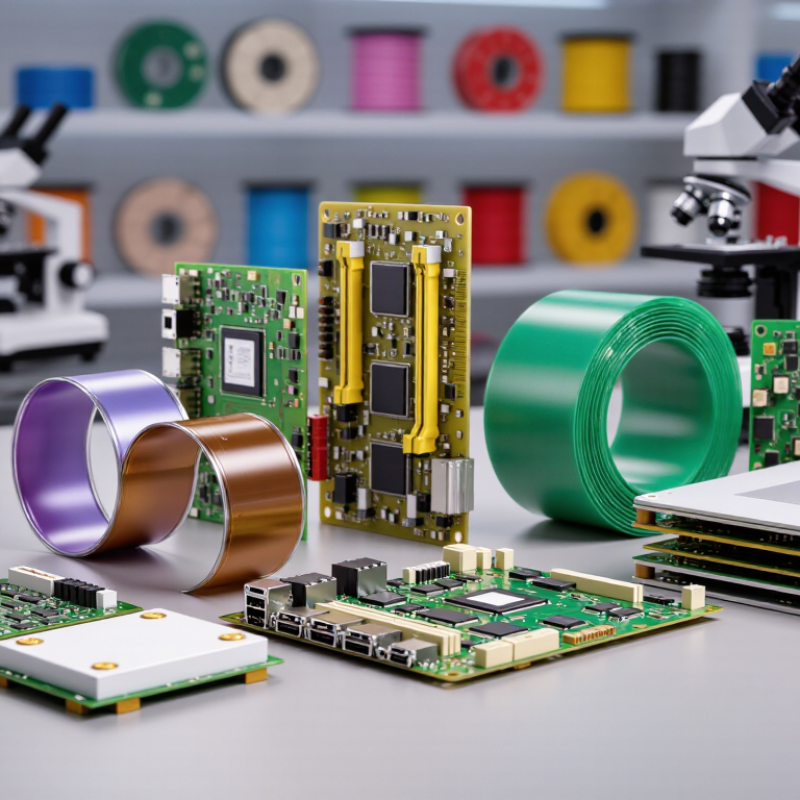
A perfect ranking is difficult because “advanced” depends on the application. Global buyers commonly evaluate ten PCB categories: HDI, rigid-flex, flexible, high-layer multilayer, high-speed digital, RF and microwave, metal-core, ceramic, embedded-component, and via-in-pad boards. Each type solves a different engineering problem. HDI supports compact products through microvias and fine lines. Rigid-flex reduces connectors in moving assemblies. Ceramic and metal-core boards improve heat management, but they may increase cost and manufacturing complexity.
Selection should begin with operating conditions, not appearance. Check signal frequency, current load, thermal output, bending cycles, layer count, impedance control, and available assembly space. Material stability matters in humid or high-temperature environments. For high-speed designs, review dielectric loss, trace geometry, and controlled impedance data. For thermal products, compare thermal resistance and copper thickness. Manufacturing capability is equally important. Ask for process tolerances, inspection methods, test records, and traceability. A cheaper board can become expensive after redesigns. I have seen specifications that looked complete but ignored connector stress and repair access. That mistake is easy to repeat.
Global PCB demand is becoming more specialized. Prismark’s 2024 market review estimated global PCB sales at about US$74 billion. IPC’s 2024 Technology Roadmap also points toward 25–50 μm line-and-space geometries in advanced designs.
HDI PCBs support smartphones, compact modules, and medical instruments. Their microvias shorten electrical paths and save board area. Flexible PCBs fit cameras, wearables, and foldable equipment. They bend around tight spaces. Rigid-flex PCBs combine mechanical strength with dynamic routing. Aerospace controls and surgical devices often use them. High-speed multilayer PCBs serve servers, switches, and automotive radar. Low-loss laminates help protect signal quality.
RF and microwave PCBs handle antennas, satellite links, and wireless sensors. Metal-core PCBs move heat from LEDs and power converters. Ceramic PCBs suit high-temperature modules and demanding power electronics. Embedded-component PCBs place resistors or capacitors inside inner layers. This approach reduces package size, but inspection becomes harder. IC substrates connect advanced chips with extremely fine circuitry. They appear in processors, memory modules, and networking hardware. Heavy-copper PCBs support batteries, inverters, and industrial power systems. A single board may use several of these approaches.
No type wins every design. Cost, thermal cycling, repair access, and supplier capability still matter. In practice, “advanced” sometimes means better reliability, not finer geometry. That distinction is easy to miss.
Prismark’s 2024 PCB Industry Results and Forecast valued the global market at about US$73.6 billion. Buyers now compare more than board price. They assess thermal control, signal loss, flexibility, and production yield. The leading advanced types include HDI, high-layer-count multilayer, flexible, rigid-flex, and embedded-component PCBs. HDI uses microvias and fine copper traces. It saves space but requires laser drilling and strict registration control. Multilayer boards increase routing capacity, yet lamination cycles raise warpage risks. Flexible boards use polyimide films. They bend well, but their copper can fatigue under repeated motion.
High-frequency and high-speed PCBs use low-loss laminates, controlled resin content, and smoother copper. They support radar, networking, and fast processors.
Metal-core boards use aluminum or copper bases for heat spreading. Ceramic PCBs tolerate high temperatures and stable electrical conditions. They cost more and need specialized sintering or bonding.
Rigid-flex combines mechanical strength with dynamic routing. It reduces connectors, but assembly inspection becomes harder.
The final three are IC substrate PCBs, copper-inlay boards, and embedded-resistor or capacitor boards. IC substrates demand extremely fine lines and advanced build-up processes. Copper-inlay designs place thick copper inside selected areas. They improve current handling and local cooling. Embedded passives shorten electrical paths and save surface area.
Manufacturing differences matter. Material availability, impedance testing, via filling, and automated optical inspection affect delivery reliability. IPC’s technology roadmaps repeatedly identify miniaturization, thermal management, and higher-speed signaling as major industry pressures.
No type wins every design. A cheaper board may create higher assembly risk, and even experienced teams sometimes underestimate that trade-off.
Choosing among the top ten advanced PCB types starts with the product’s real operating conditions. HDI boards suit compact medical devices, smartphones, and aerospace controls requiring dense routing. Flexible PCBs fit cameras, wearables, and moving assemblies. Rigid-flex designs reduce connectors in aircraft instruments and portable equipment. They cost more, though.
High-frequency PCBs support radar, wireless modules, and test equipment with controlled signal loss. Metal-core boards help LED lighting and power converters remove heat from crowded enclosures. Thick-copper PCBs handle high current in energy storage systems and industrial drives. Ceramic PCBs perform well in severe heat, high-frequency circuits, and demanding thermal environments.
Multilayer boards remain practical for computing and automation because they combine power and signal layers efficiently. IC substrates serve advanced chip packaging, while embedded-component boards save space in specialized electronics. Material selection should follow frequency, temperature, current, flexibility, and expected service life. Fabricators also need clear impedance targets, via structures, copper weight, and inspection standards. Small design changes matter.
In production reviews, I have seen teams choose HDI when a simpler multilayer board would work. That mistake increases cost without improving performance. Another weak assumption is treating thermal testing as optional. It is not. Prototype results can also mislead when laboratory airflow differs from field conditions. Engineers should compare stackups, assembly limits, repair needs, and compliance documentation before approving a PCB type. There is no universal winner.
Global buyers now source more than conventional multilayer PCBs. Advanced options include HDI, rigid-flex, flexible, high-frequency, high-speed, ceramic, metal-core, embedded-component, ultra-thin, and IC-substrate boards. Each type serves a different design pressure. HDI supports compact products with microvias and fine traces. Metal-core boards help transfer heat from power components. High-frequency boards require controlled dielectric properties and stable impedance.
Quality must be verified beyond a supplier’s capability statement. Request cross-section reports, solder-mask inspection records, impedance results, and microvia reliability data. For rigid-flex boards, examine bend-radius testing and copper fatigue evidence. For high-speed designs, review insertion loss and signal-integrity measurements.
Compliance also matters. Confirm material declarations, restricted-substance controls, fire ratings, and traceability records. Local market requirements may differ, so a generic certificate is rarely enough.
Cost comparisons should include tooling, engineering changes, testing, packaging, and yield losses. A low unit price can become expensive when a second supplier cannot reproduce the stack-up. Supply stability depends on approved materials, alternative factories, safety stock, and realistic lead times. I have seen sourcing teams focus too heavily on price and overlook resin availability. That mistake delayed production by weeks. My own early reviews also underestimated documentation quality. A technically strong board with unclear records creates avoidable approval risk. Ask for sample lots, audit evidence, change-notification procedures, and failure-analysis support before committing to volume.



„Thanks to the LUVIR technology, the solder resist process could be switched directly from the previously used mask exposure to direct exposure. As an outstanding digital solution on the market, this technology has been able to demonstrate fast process times and superior quality on our certified conventional ink in production. This allowed us to fully digitize the solder mask process at low cost – without process or ink adjustments. An excellent benefit to our production in Rot am See.“
Ralf Göhringer (Head of Production WE Rot am See)
I would definitely recommend the Limata machine and team for a future company purchase
Michael Greenaway
Compunetics Inc.
“The Limata ldi has been amazing!! Best thing we did was buy this machine”
Richard Brady
GM
Circuitlabs
“Since 2019, we have been running the Limata X1000 LDI system (including LUVIR for solder mask imaging) in daily production as an addition to our current process with film. The machine was capable of properly exposing Taiyo PSR-4000 BN (DI) solder mask types on normal to high-copper boards using a new and unique direct imaging process. The machine operating interface is very user friendly which allowed for a quick technical training curve. The pre-registration processing reduced several seconds of production time at every print. Limata support and service staff is incomparable. They supported our team every step of the way at basically any time of the day or night, with literally, an immediate response time, customizing the software interface to best fit our Operations and needs.
We have exposed more than 8,000 prints since end of October, on various solder mask colors and some resist film panels. Limata, has proven to be very capable and innovative. They are a strong contender in the industry.
We have very much enjoyed this project, and working with the team!
Thank you Limata for the continued support and being a part of our growth.”
Bill Sezate
Vice President, GM
Summit Interconnect
As a replacement to our current contact exposure process with film, the LIMATA X2000 system including LUVIR-Technology was capable of properly exposing non-LDI solder mask types using a direct imaging process. The machine offers cutting edge software with a very intuitive operating interface which allowed for quick technician training curve. The dual drawer system combined with pre-registration processing reduced several seconds of production time at every machine cycle. Limata support and service staff is world class. They added software patches to keep production running at shortest possible response times, customized the software interface to best fit our in-house Operations system, and even wrote a step-by-step machine processing manual. As a result of the project, we have exposed more than 16,000 times on various product types and solder mask brands/colors. Limata, in a very short timeframe as a company, has definitely shown they are truly innovative and will be challenging the industry of direct imaging for the top spot.
Kevin Beattie
Process Engineer
TTM Technologies
Forest Grove Division
