Chemical defoamers rarely attract attention until foam slows a production line. A stable foam layer can disrupt mixing, coating, fermentation, or wastewater treatment. The right product helps control bubbles without undermining process quality. That balance matters to global buyers.
Market research helps frame the opportunity, but it cannot replace supplier checks. Grand View Research’s Defoamers Market Size, Share & Trends Analysis examines demand across applications such as pulp and paper, paints and coatings, and water treatment. Cefic’s Facts & Figures 2024 also illustrates the scale and geographic concentration of the broader chemical industry. These reports provide useful context, not a guarantee that any supplier or formulation will suit a specific plant.
China’s manufacturing base makes it an important sourcing destination for Chemicals Defoamer products. Yet product labels alone reveal little about performance. Buyers should compare silicone and non-silicone options, dosage guidance, compatibility, technical documentation, and consistency between batches. Ask for samples and test them under actual operating conditions. Check carefully. This guide introduces ten Chinese manufacturers for global buyers, with attention to product focus, export experience, and technical support. It is a practical shortlist, not a certified ranking; evidence can vary, and buyers should verify current capabilities directly.
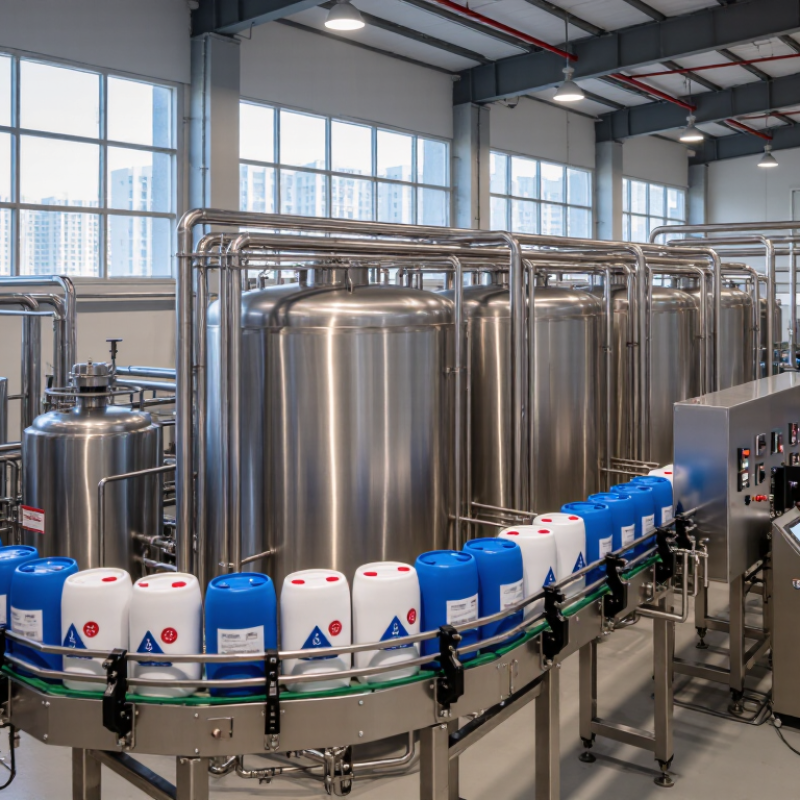
Chemical defoamers control foam that slows mixing, fills tanks, or disrupts product quality. They work by spreading across foam films and weakening the thin liquid walls between bubbles. Some formulations also help release trapped air before foam builds. Small bubbles matter.
Common types include silicone-based, mineral-oil-based, polyether, and water-based defoamers. Silicone products can act quickly at low doses, while water-based options may suit processes sensitive to oily residues. Selection depends on temperature, pH, shear, and the materials being processed. A treatment that works in a cool rinse tank may behave differently in a hot coating line.
In wastewater treatment, defoamers help keep aeration basins from overflowing with persistent foam. In paper production, they can reduce air pockets that affect sheet formation. Coatings and adhesives use them to limit craters and pinholes on finished surfaces. Application matters. Operators often add small measured doses, then observe foam height and product quality over time. Too much can cause defects or interfere with later processing. Still, it is easy to overcorrect. A simple jar test can reveal compatibility issues, but it cannot fully reproduce plant conditions. Real production trials remain important.
China’s manufacturing scale offers buyers a wide supplier base, but scale alone does not prove product consistency. UNIDO’s Industrial Development Report 2024 describes China as generating about one-third of global manufacturing value added. Treat this as context, not a quality guarantee. Ask manufacturers for recent batch certificates, technical data sheets, safety data sheets, and clear explanations of test conditions. Paperwork matters.
Test the defoamer in your actual process. Foam behavior can change with pH, temperature, water hardness, surfactants, and mixing speed. Send representative samples and record dosage, foam collapse time, and any impact on the final product. ASTM methods can guide controlled foam testing, but a standard test cannot fully reproduce a customer’s production line. Small differences matter.
Check whether the supplier can repeat results across batches and explain how it manages raw-material changes. Request a factory audit or a live quality-control walkthrough, including checks on viscosity, appearance, and storage stability. Ask for references from similar applications, not just a broad export list. A tidy laboratory is encouraging. Still, I would not rely on one successful sample; that is where evaluations sometimes go wrong.
A useful profile of ten Chinese defoamer manufacturers should explain more than product names. It should show where each supplier has practical experience: silicone-based formulations for coatings, polyether types for fermentation, or mineral-oil options for wastewater treatment. Some manufacturers serve several industries; others focus on a narrower process. Small details matter. Buyers can look for disclosed production capabilities, quality-control practices, technical support, and clear product documentation.
The profiles should also explain how products behave in real operating conditions. A defoamer that works in a cool water sample may perform differently in a hot tank, under strong mixing, or at a changed pH. Ask suppliers about dosage guidance, dilution, compatibility, and trial support. Request test results relevant to your own process, rather than relying on a broad performance claim. A neat comparison still has limits: product fit depends on the process, and public information may not reveal every manufacturing detail. That is worth remembering. Careful sampling and direct technical questions can make these ten manufacturer profiles more useful to global buyers.
Note: Company names and company-specific claims are intentionally omitted. The entries below summarize common defoamer product and application segments; they are not a verified ranking or profiles of particular manufacturers.
| No. | Supplier Capability Profile | Common Defoamer Chemistry | Typical Application Areas | Key Buyer Considerations |
|---|---|---|---|---|
| 1 | Silicone-emulsion product supplier | Silicone-based aqueous emulsion | Wastewater treatment, textile processing, and selected industrial processes | Check emulsion stability, compatibility with the process, and any effect on downstream coatings or finishing. |
| 2 | Silicone compound product supplier | Silicone compounds or dispersions | Industrial liquids and processes requiring foam control at low addition levels | Request application-specific trials; silicone can cause surface defects in some coating and printing operations. |
| 3 | Polyether-based product supplier | Polyether and EO/PO copolymer chemistries | Aqueous industrial processes, fermentation, and cleaning formulations | Compare solubility, cloud-point behavior, temperature tolerance, and persistence in the process liquid. |
| 4 | Mineral-oil-based product supplier | Mineral-oil carriers with hydrophobic particles or other active components | Pulp and paper, wastewater, and selected process-fluid applications | Assess dispersibility, oil separation risk, temperature performance, and compatibility with the end product. |
| 5 | Fatty-alcohol-based product supplier | Fatty alcohols and related hydrophobic materials | Pulp and paper processes and selected aqueous industrial systems | Confirm the product’s operating temperature range and suitability for the specific furnish or process conditions. |
| 6 | Polyacrylate-based product supplier | Polyacrylate or related polymer formulations | Waterborne coatings, inks, and other formulated products | Check for craters, pinholes, gloss changes, and other surface effects in the finished film. |
| 7 | Detergent-compatible product supplier | Silicone-based or non-silicone surfactant-compatible formulations | Industrial cleaning and detergent formulations | Test foam control alongside cleaning performance, dilution stability, and compatibility with surfactants. |
| 8 | Fermentation-process product supplier | Process-specific silicone or polyether formulations | Fermentation and bioprocess operations | Review process compatibility, product-contact requirements, and applicable regulatory or quality documentation. |
| 9 | Food-process application supplier | Formulations specifically documented for the intended food-processing use | Food processing, only where the product and use are permitted by applicable rules | Verify ingredient and use compliance for the destination market; do not assume a general industrial grade is suitable. |
| 10 | Custom-formulation product supplier | Blended silicone, mineral-oil, polyether, or other application-selected chemistry | Paper, coatings, wastewater, textiles, and other customer-defined processes | Ask for a technical data sheet, safety data sheet, representative samples, and test results under operating conditions. |
When comparing China’s top 10 chemicals defoamer manufacturers, buyers should look beyond product names. Formulations may use silicone, mineral oil, polyether, or water-based chemistry. Each behaves differently in a process. A fast knockdown is useful, but persistent foam control matters more.
Industries served offer another practical comparison. Paper mills need foam control under high flow and shear. Wastewater treatment plants often prioritize dispersion and low residue. Coatings, textiles, and fermentation processes may require different compatibility and temperature performance. Ask manufacturers for recommended dosage ranges, active content, and test conditions. Small details matter.
Technical capability shows up in how suppliers support trials and adjust formulations. Request samples tested against your actual process water, pH, temperature, and equipment. Check batch records and product specifications, too. A catalog can make selection seem simple. It isn’t always. Lab results may not match a full production line, so confirm performance during a controlled plant trial before choosing a long-term supplier.
For global buyers comparing China’s top 10 defoamer manufacturers, sourcing should start with the application, not the quoted price. UNCTAD’s Review of Maritime Transport 2024 reported 2.4% growth in seaborne trade in 2023 and projected 2% growth for 2024. Freight conditions can shift, so request a delivered-cost breakdown and confirm lead times before approving a supplier.
Ask for a recent certificate of analysis, safety data sheet, and batch traceability records. Then test samples in the actual process: match the dosage, temperature, pH, water hardness, and substrate. A quick foam-column test can reveal differences, but it may not reproduce a production line. Small details matter. Record foam height and collapse time, and keep a retained sample for comparison.
Before export, confirm product name, composition, packaging, storage limits, and HS classification with the supplier and customs broker. Check that labels and shipping documents match the shipment, and ask how the product tolerates temperature swings during transit. A 200-kilogram drum can arrive intact yet perform poorly after improper storage. Buyers sometimes overvalue a polished factory audit; I would also verify one commercial batch and its paperwork. That extra check takes time, but prevents avoidable surprises at receiving.
„Thanks to the LUVIR technology, the solder resist process could be switched directly from the previously used mask exposure to direct exposure. As an outstanding digital solution on the market, this technology has been able to demonstrate fast process times and superior quality on our certified conventional ink in production. This allowed us to fully digitize the solder mask process at low cost – without process or ink adjustments. An excellent benefit to our production in Rot am See.“
Ralf Göhringer (Head of Production WE Rot am See)
I would definitely recommend the Limata machine and team for a future company purchase
Michael Greenaway
Compunetics Inc.
“The Limata ldi has been amazing!! Best thing we did was buy this machine”
Richard Brady
GM
Circuitlabs
“Since 2019, we have been running the Limata X1000 LDI system (including LUVIR for solder mask imaging) in daily production as an addition to our current process with film. The machine was capable of properly exposing Taiyo PSR-4000 BN (DI) solder mask types on normal to high-copper boards using a new and unique direct imaging process. The machine operating interface is very user friendly which allowed for a quick technical training curve. The pre-registration processing reduced several seconds of production time at every print. Limata support and service staff is incomparable. They supported our team every step of the way at basically any time of the day or night, with literally, an immediate response time, customizing the software interface to best fit our Operations and needs.
We have exposed more than 8,000 prints since end of October, on various solder mask colors and some resist film panels. Limata, has proven to be very capable and innovative. They are a strong contender in the industry.
We have very much enjoyed this project, and working with the team!
Thank you Limata for the continued support and being a part of our growth.”
Bill Sezate
Vice President, GM
Summit Interconnect
As a replacement to our current contact exposure process with film, the LIMATA X2000 system including LUVIR-Technology was capable of properly exposing non-LDI solder mask types using a direct imaging process. The machine offers cutting edge software with a very intuitive operating interface which allowed for quick technician training curve. The dual drawer system combined with pre-registration processing reduced several seconds of production time at every machine cycle. Limata support and service staff is world class. They added software patches to keep production running at shortest possible response times, customized the software interface to best fit our in-house Operations system, and even wrote a step-by-step machine processing manual. As a result of the project, we have exposed more than 16,000 times on various product types and solder mask brands/colors. Limata, in a very short timeframe as a company, has definitely shown they are truly innovative and will be challenging the industry of direct imaging for the top spot.
Kevin Beattie
Process Engineer
TTM Technologies
Forest Grove Division
