China’s CNC manufacturing sector is moving toward tighter process control, faster cycle times, and less manual inspection. That shift makes a reliable Renishaw Contact Tool Setter increasingly important for machining centers, especially in automotive, aerospace, medical, and precision mold production.
Industry data supports this direction. The International Federation of Robotics reported 276,288 industrial robots installed in China during 2023, representing more than half of global installations. This level of automation increases the need for repeatable tool measurement and dependable machine integration. The Renishaw Annual Report 2024 also highlights continuing demand for industrial metrology and manufacturing solutions across international markets. Its product documentation emphasizes accurate tool length measurement, breakage detection, and automatic offset updates.
Accuracy matters. But supplier selection involves more than product specifications.
This guide examines China’s leading suppliers of Renishaw Contact Tool Setter systems and related integration services. It considers product authenticity, technical support, installation experience, compatibility with CNC controls, calibration practices, lead times, and after-sales response. ISO 230-2 provides a useful reference for evaluating machine-tool positioning accuracy, although it does not replace practical testing on the production floor.
The ranking is not perfectly objective. Supplier capabilities can change by region, project size, and engineering team. A company with strong export experience may not provide the fastest local service. Conversely, a smaller integrator may offer better customization for a specific Fanuc, Siemens, or Mitsubishi control system. Buyers should verify certificates, test reports, distributor authorization, and customer references before placing an order. This review aims to provide a practical starting point, not a substitute for technical due diligence.
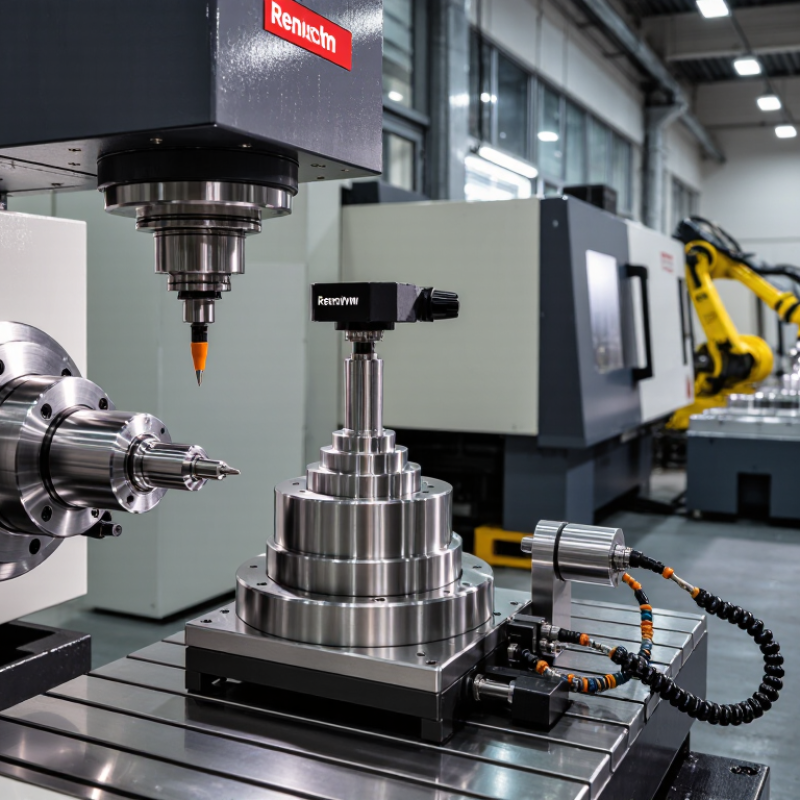
A contact tool setter is a fixed measuring device installed inside a CNC machine. Its stylus touches the cutting tool and sends an electrical signal when contact occurs. The control then records tool length, diameter, or breakage status. A machine macro converts that signal into offset values, which helps maintain consistent cutting positions.
The cycle is simple but sensitive. The tool approaches slowly, touches the stylus, retracts, and repeats the measurement when required. Coolant, chips, vibration, and a bent stylus can create false readings. Operators should clean the contact surface and verify calibration with a known reference tool. ISO 230-2:2014 highlights the importance of repeatability and positioning accuracy during machine-tool testing. These principles directly affect setter reliability.
The wider automation trend is significant. The International Federation of Robotics reported 541,302 industrial robot installations worldwide in 2022. More automated cells need dependable in-process measurement. Yet a tool setter does not remove every machining risk. Thermal growth, spindle runout, and poor probing macros still influence results. I would avoid judging suppliers by sensor resolution alone. Response time, sealing, service support, calibration records, and compatibility with the CNC control deserve equal attention. Small details matter.
Selecting China’s top 10 contact tool setter suppliers requires more than counting export listings. A credible comparison should combine factory audits, technical documents, sample testing, and customer evidence. The International Federation of Robotics reported 276,288 industrial robot installations in China during 2023. This signals strong automation demand, but it does not prove every supplier offers reliable measurement equipment.
Our evaluation uses weighted criteria: repeatability, triggering stability, mounting accuracy, machine compatibility, sealing, calibration records, and response time. We also check production capacity and failure-handling procedures. Supplier scores come from verified certificates, inspection videos, test reports, and traceable order histories. A practical test measures tool detection across repeated cycles, temperature changes, and coolant exposure. ISO 230-2 measurement principles can support machine accuracy checks, although tool setter performance needs additional application testing. The method is useful, but not perfect. Public information can be incomplete.
Tips: Request a three-month quality record, not one impressive sample. Ask for repeatability data at your actual spindle speed. Confirm replacement parts, calibration intervals, and technical support before comparing prices. The best supplier may not be the cheapest. That sounds obvious, yet many purchasing teams still overlook downtime costs. Our ranking therefore favors evidence, stable process control, and transparent communication over promotional claims. Industry reports help define market context, while hands-on validation decides practical suitability.
China’s top 10 contact tool setter suppliers are best assessed through evidence, not slogans. Their profiles should compare measurement repeatability, probe life, signal stability, installation support, and compatibility with CNC controls.
The International Federation of Robotics reported 276,288 industrial robots installed in China during 2023, representing about 51% of global installations. This scale shows why reliable in-process measurement matters on busy production lines.
The leading suppliers typically serve automotive, aerospace, mold, and precision-machining customers. A strong profile should identify calibration methods, stated accuracy, operating temperature, protection rating, and documented test conditions. It should also examine field experience, including setup time and replacement-part availability.
MarketsandMarkets estimates the smart manufacturing market could grow from about 108.9 billion US dollars in 2024 to 241.0 billion by 2029.
That growth increases demand for connected tool-setting systems, but catalog figures can be incomplete. Real workshop results may differ.
Tips: Request inspection records, sample probing cycles, and customer references before ranking a supplier. Check whether the supplier can reduce tool-change errors without slowing the machining cycle. A short trial on aluminum and hardened steel is useful. Do not trust one accuracy number. Vibration, coolant, operator habits, and spindle condition can change performance. The final ranking should balance technical results, service response, pricing transparency, and long-term reliability. Even experienced buyers sometimes overlook software integration. That deserves a second review.
China’s top ten contact tool setter suppliers should be judged by performance, compatibility, and documented quality. A reliable unit needs stable repeatability, controlled trigger force, and sufficient overtravel protection. Its sensing surface should resist coolant, chips, and repeated mechanical contact. Fit matters. Mounting dimensions, probe orientation, cable routing, and signal type must match the machine and controller. Some suppliers offer wired and wireless versions, but compatibility should be tested rather than assumed. Small errors accumulate during tool-length measurement, especially on high-speed machining centers.
Quality evidence deserves close attention. Ask for calibration records, inspection data, and clear repeatability limits. Suppliers following ISO 9001-based procedures usually provide stronger process control, though certification alone cannot prove field performance. Check sealing grades, connector protection, material durability, and operating temperature ranges. A practical trial should include repeated tool changes, coolant exposure, and emergency stops. I have found that attractive specifications sometimes omit recovery time or trigger-force tolerance. That omission deserves a direct question.
Tips: Request a sample before bulk purchasing. Compare measured results with the supplier’s published figures. Confirm controller wiring and mounting drawings in writing. Keep spare styluses and seals available. Do not choose only by price; a cheaper setter may increase downtime and rechecking work. One more review is worthwhile.
Key product features, compatibility, and quality-standard reference benchmarks
The index reflects commonly specified industrial requirements for compatible contact tool setters. Higher values indicate stronger alignment with the stated benchmark.
Choosing a Chinese supplier for a contact tool setter requires more than comparing prices. Confirm the sensing method, repeatability, measuring range, response time, and machine interface. Ask for calibration records linked to national or international standards. ISO Survey 2023 reported China as the largest holder of ISO 9001 certificates, but certification alone proves limited process depth. Inspect the actual production line.
Request a sample before signing a volume contract. Test it beside your machine, under coolant spray, vibration, and repeated tool changes. A useful acceptance plan should define repeatability, trigger force, sealing performance, and replacement-part availability. Require dimensional reports, electrical diagrams, and a clear warranty process. Keep the details measurable. “Works well” is not a specification.
The World Bank’s 2023 Logistics Performance Index ranked China 19th globally, supporting strong export infrastructure. Still, delivery performance varies between regions and factories. Audit incoming inspection, probe assembly, and final testing records. Check whether the supplier controls calibration equipment internally or outsources it. That difference matters. A polished factory tour can still miss weak traceability. I would also request two reference installations with similar spindle speed and coolant conditions. Some suppliers may resist this request, and that resistance is useful evidence. Leave room for a pilot order, because the cheapest quotation can become expensive after installation.
„Thanks to the LUVIR technology, the solder resist process could be switched directly from the previously used mask exposure to direct exposure. As an outstanding digital solution on the market, this technology has been able to demonstrate fast process times and superior quality on our certified conventional ink in production. This allowed us to fully digitize the solder mask process at low cost – without process or ink adjustments. An excellent benefit to our production in Rot am See.“
Ralf Göhringer (Head of Production WE Rot am See)
I would definitely recommend the Limata machine and team for a future company purchase
Michael Greenaway
Compunetics Inc.
“The Limata ldi has been amazing!! Best thing we did was buy this machine”
Richard Brady
GM
Circuitlabs
“Since 2019, we have been running the Limata X1000 LDI system (including LUVIR for solder mask imaging) in daily production as an addition to our current process with film. The machine was capable of properly exposing Taiyo PSR-4000 BN (DI) solder mask types on normal to high-copper boards using a new and unique direct imaging process. The machine operating interface is very user friendly which allowed for a quick technical training curve. The pre-registration processing reduced several seconds of production time at every print. Limata support and service staff is incomparable. They supported our team every step of the way at basically any time of the day or night, with literally, an immediate response time, customizing the software interface to best fit our Operations and needs.
We have exposed more than 8,000 prints since end of October, on various solder mask colors and some resist film panels. Limata, has proven to be very capable and innovative. They are a strong contender in the industry.
We have very much enjoyed this project, and working with the team!
Thank you Limata for the continued support and being a part of our growth.”
Bill Sezate
Vice President, GM
Summit Interconnect
As a replacement to our current contact exposure process with film, the LIMATA X2000 system including LUVIR-Technology was capable of properly exposing non-LDI solder mask types using a direct imaging process. The machine offers cutting edge software with a very intuitive operating interface which allowed for quick technician training curve. The dual drawer system combined with pre-registration processing reduced several seconds of production time at every machine cycle. Limata support and service staff is world class. They added software patches to keep production running at shortest possible response times, customized the software interface to best fit our in-house Operations system, and even wrote a step-by-step machine processing manual. As a result of the project, we have exposed more than 16,000 times on various product types and solder mask brands/colors. Limata, in a very short timeframe as a company, has definitely shown they are truly innovative and will be challenging the industry of direct imaging for the top spot.
Kevin Beattie
Process Engineer
TTM Technologies
Forest Grove Division
