Choosing a cutting-tool supplier can shape cycle time, surface finish, and the number of tool changes on a busy production line. China’s manufacturing sector includes established toolmakers and specialized producers serving different budgets and applications. This guide examines ten notable CNC cutting tool manufacturers, focusing on practical selection factors rather than treating a ranking as a guarantee of quality.
Cnc Cutting Tools must match the material, machine, and operation. A carbide end mill used on aluminum may not suit hardened steel, while the wrong coating can shorten tool life. We consider product range, material expertise, manufacturing consistency, customization, technical support, and export experience. Details such as available shank sizes, coating options, and clear cutting recommendations can matter more than a polished catalog. Small things count.
Company information and product lines can change. Buyers should confirm current specifications, quality documentation, lead times, and after-sales support directly with each manufacturer. Published claims are useful starting points, not substitutes for sample testing under real machining conditions. Even a capable supplier may not fit every workshop. This overview is intended to help engineers, procurement teams, and distributors build a shortlist, ask sharper questions, and compare options with care. A perfect ranking is unlikely; the right choice depends on the job.
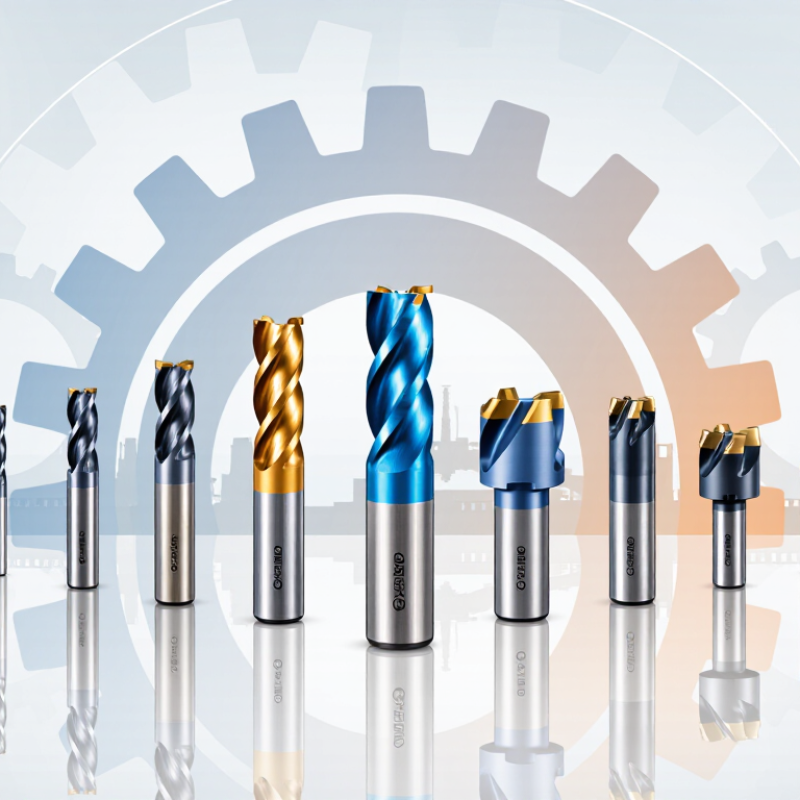
China’s CNC cutting-tool industry is not one uniform market. It is organized around materials, production scale, and customer needs. Some manufacturers specialize in carbide inserts for turning and milling; others make solid-carbide end mills, drills, or high-speed-steel tools. A few suppliers cover several product groups, while smaller workshops focus on custom geometries or short production runs. The boundaries are not always neat.
Around these product lines, the supply chain includes blank makers, tool grinders, coating providers, inspection labs, and distributors. Their work affects dimensional accuracy, heat resistance, and consistency between batches. For example, a machine shop might compare edge wear after cutting the same alloy at a fixed speed and feed. Coatings matter, but so do tool runout, clamping, and coolant delivery. Small details count. Manufacturers also vary in automation, export experience, and technical support. A “top ten” list depends on the measure used: output, precision, application range, or service. Buyers should check specifications, sample results, and quality records for the exact operation. That judgment takes time, and the first choice is not always the best one.
A leading CNC tool manufacturer combines precise production with dependable technical support. Its tools should meet stated dimensions, edge geometry, and material specifications consistently. Small details matter. For example, runout can affect surface finish and tool life, especially during high-speed machining. Buyers should look for inspection records, clear product data, and traceable quality checks rather than relying on broad performance claims.
Manufacturing capability also matters. A supplier should understand carbide grades, coating options, flute design, and how these choices respond to different workpiece materials. Useful evidence includes controlled testing, documented tolerances, and samples that can be evaluated under real shop conditions. Compare tools using the same machine, material, cutting speed, and feed rate. That makes results more meaningful, though no test perfectly predicts every production environment.
Experience shows in the support provided after a tool is selected. Strong technical teams can help diagnose chipping, vibration, or uneven wear, then suggest adjustments based on the application. Check whether the manufacturer can provide consistent batches, realistic lead times, and responsive communication. Price still matters, but the lowest quote may not reflect tool life or downtime. A fair comparison takes effort—and sometimes the results are less tidy than expected.
China’s ten market-shaping CNC cutting-tool manufacturers are better compared by capability than by a single sales ranking. Their strengths span carbide inserts, solid-carbide end mills, drills, taps, and precision tooling systems. Some focus on high-volume automotive production; others serve aerospace, mold-making, or general machining. The distinction shows on the shop floor: stable tool life, clean chip evacuation, and predictable dimensions matter more than a polished catalogue. Small details count.
Demand has a strong industrial base. World Steel Association data put China’s crude-steel output at 1,019.1 million tonnes in 2023, about 54% of global production. Grand View Research estimated the global cutting-tools market at USD 23.8 billion in 2023, with continued growth projected. These figures do not prove which Chinese makers lead, but they help explain the scale of the opportunity. A fair comparison should also examine coating technology, material consistency, application support, and delivery reliability. One caveat: published market estimates use different definitions, so rankings can shift. Even capable suppliers may perform unevenly across materials or cutting conditions. Judge the tool in the actual operation.
China’s leading CNC cutting tool manufacturers differ less by catalog size than by engineering focus. Some concentrate on carbide grades for hard, abrasive materials. Others refine tool geometry for aluminum, where chip evacuation and heat control matter. These choices affect cutting speed, surface finish, and tool life on the shop floor.
Technology also separates suppliers. Look for consistent coating thickness, precise edge preparation, and documented inspection methods. A well-designed end mill may reduce vibration in a deep pocket, while a sturdy insert can tolerate interrupted cuts. Digital tool-selection support and application testing are useful, but results still depend on the machine, workpiece, and setup. A polished catalog is not proof of performance. Real machining trials matter.
Tips: Compare tools on the same machine and material. Record cycle time, wear, and finish. Ask how recommendations change for coolant, spindle speed, and workholding. Small tests help; rushed comparisons can mislead. Some results may also vary between batches, so verify consistency before standardizing a tool.
A material-level view of one factor that distinguishes cutting-tool technologies.
Bars show approximate midpoints of typical Vickers hardness ranges: high-speed steel 8–10 GPa, cemented carbide 15–22 GPa, cutting-tool ceramics 15–25 GPa, cubic boron nitride 30–45 GPa, and polycrystalline diamond 50–100 GPa. Actual values vary by grade and test method; hardness alone does not determine tool performance. This is a material comparison, not a manufacturer ranking.
When comparing China’s CNC cutting tool manufacturers, start with the job, not the catalogue. A carbide end mill cutting stainless steel needs different geometry, coating, and edge preparation from one used on aluminum. Ask suppliers to state recommended speeds, feeds, and tool life under defined conditions. A sample test on your own machine is more useful than a broad performance claim. Keep the setup consistent.
Compare dimensional consistency across batches, not just one polished sample. Request inspection data for runout, diameter, and coating thickness, plus clear tolerances and measurement methods. Check whether the supplier can trace production lots and respond quickly when a tool chips or wears early. Lead time matters, but so do replacement availability and technical support in your time zone. Price alone misleads. Calculate cost per acceptable part, including tool changes, scrap, and downtime. Cutting conditions vary, so a test result may not transfer perfectly to another machine. Record trial results, then revisit the choice after several production batches.
This is a supplier-comparison framework, not a ranked list of companies. Product specifications and performance vary by tool design and application; request comparable documentation and verify claims with samples or controlled cutting trials.
| No. | Comparison Dimension | What to Compare | Evidence to Request | Buyer’s Evaluation |
|---|---|---|---|---|
| 1 | Product Range | Check whether the supplier makes the tool types your process needs, such as solid-carbide end mills, drills, reamers, or indexable cutting tools. | Current catalogue, product drawings, available sizes, and clearly identified part numbers. | Record which required tool types and sizes are available; distinguish standard products from made-to-order items. |
| 2 | Tool Substrate and Grade | Compare the stated substrate and grade for each application. Carbide grades and other tool materials are not interchangeable across every workpiece and cutting condition. | Grade designation, technical data sheet, and guidance on intended workpiece materials and operations. | Check that recommendations match your material, machine, tool geometry, and cutting conditions. |
| 3 | Geometry and Dimensions | Compare cutting diameter, flute count, helix or point geometry, shank, overall length, and usable cutting length. | Dimensioned drawings, tolerances, and product specifications for the exact part number. | Confirm that dimensions and geometry suit the holder, tool path, workpiece features, and required reach. |
| 4 | Coating and Surface Treatment | Compare coating type and the applications for which it is recommended. A coating’s suitability depends on the tool, workpiece, and cutting conditions. | Coating description, applicable product range, and technical recommendations for use. | Assess coating options against the specific material and operation; do not compare coating names alone. |
| 5 | Cutting Data and Performance | Compare recommended cutting speed, feed, depth of cut, coolant conditions, and stated application limits for equivalent operations. | Application charts or technical guidance specifying the workpiece material and operating conditions. | Validate claims using a controlled trial with the same machine, workpiece, setup, and success criteria. |
| 6 | Dimensional Accuracy and Runout | Compare the tolerances and runout limits relevant to your application. Results depend on the tool, measurement method, gauge length, and setup. | Inspection results that state the measured feature, method, and acceptance limit. | Set acceptance limits before ordering and ensure suppliers use comparable measurement conditions. |
| 7 | Quality Management and Inspection | Review how incoming materials, production processes, and finished tools are inspected and controlled. | Quality-system certificate, its scope and validity, inspection plan, and sample inspection records. | Verify certificates with the issuing body where appropriate; confirm that the certified scope covers the relevant operation. |
| 8 | Batch Traceability | Check whether finished tools can be linked to production and inspection records by lot or batch. | Sample labels, lot identification, and an example of the records available for a shipped batch. | Confirm that the traceability information supports your quality, investigation, and documentation requirements. |
| 9 | Customization and Engineering Support | Compare capabilities for non-standard dimensions, special geometries, drawing review, and application troubleshooting. | Customization process, drawing-review procedure, sample approval steps, and change-control arrangements. | Clarify design ownership, approval responsibilities, prototype timing, and how revisions are documented. |
| 10 | Supply, Service, and Commercial Terms | Compare quoted lead times, minimum order quantities, packaging, after-sales response, and claim or replacement procedures. | Written quotation, delivery schedule, packaging details, warranty or claim terms, and service contact process. | Compare like-for-like quotations and confirm delivery, payment, shipping, and documentation requirements for your destination. |
„Thanks to the LUVIR technology, the solder resist process could be switched directly from the previously used mask exposure to direct exposure. As an outstanding digital solution on the market, this technology has been able to demonstrate fast process times and superior quality on our certified conventional ink in production. This allowed us to fully digitize the solder mask process at low cost – without process or ink adjustments. An excellent benefit to our production in Rot am See.“
Ralf Göhringer (Head of Production WE Rot am See)
I would definitely recommend the Limata machine and team for a future company purchase
Michael Greenaway
Compunetics Inc.
“The Limata ldi has been amazing!! Best thing we did was buy this machine”
Richard Brady
GM
Circuitlabs
“Since 2019, we have been running the Limata X1000 LDI system (including LUVIR for solder mask imaging) in daily production as an addition to our current process with film. The machine was capable of properly exposing Taiyo PSR-4000 BN (DI) solder mask types on normal to high-copper boards using a new and unique direct imaging process. The machine operating interface is very user friendly which allowed for a quick technical training curve. The pre-registration processing reduced several seconds of production time at every print. Limata support and service staff is incomparable. They supported our team every step of the way at basically any time of the day or night, with literally, an immediate response time, customizing the software interface to best fit our Operations and needs.
We have exposed more than 8,000 prints since end of October, on various solder mask colors and some resist film panels. Limata, has proven to be very capable and innovative. They are a strong contender in the industry.
We have very much enjoyed this project, and working with the team!
Thank you Limata for the continued support and being a part of our growth.”
Bill Sezate
Vice President, GM
Summit Interconnect
As a replacement to our current contact exposure process with film, the LIMATA X2000 system including LUVIR-Technology was capable of properly exposing non-LDI solder mask types using a direct imaging process. The machine offers cutting edge software with a very intuitive operating interface which allowed for quick technician training curve. The dual drawer system combined with pre-registration processing reduced several seconds of production time at every machine cycle. Limata support and service staff is world class. They added software patches to keep production running at shortest possible response times, customized the software interface to best fit our in-house Operations system, and even wrote a step-by-step machine processing manual. As a result of the project, we have exposed more than 16,000 times on various product types and solder mask brands/colors. Limata, in a very short timeframe as a company, has definitely shown they are truly innovative and will be challenging the industry of direct imaging for the top spot.
Kevin Beattie
Process Engineer
TTM Technologies
Forest Grove Division