Injection molding transforms heated plastic pellets into repeatable parts, from thin packaging lids to durable automotive housings. The machine influences part quality, production speed, energy use, and tooling requirements. These decisions matter on the factory floor.
Fortune Business Insights valued the global injection molding machine market at USD 10.79 billion in 2023 and projected it could reach USD 16.37 billion by 2032. Grand View Research estimated the global injection-molded plastics market at USD 330.63 billion in 2023. That second figure describes molded products, not equipment. The distinction matters. Market forecasts also depend on changing assumptions, so they should guide research rather than replace supplier data or production trials.
Choosing Injection Molding Equipment means matching a machine’s design to the part and process. Hydraulic, all-electric, and hybrid machines differ in drive systems and operating characteristics. Vertical, two-platen, multi-shot, and micro-molding configurations address different layouts and product demands. Real factories are messier. Categories can overlap, and a machine’s label alone cannot confirm its suitability. This guide compares ten common types, highlighting how clamping force, shot capacity, precision, footprint, and cycle time affect practical selection. It also flags trade-offs worth checking with manufacturers, including material compatibility, tooling needs, maintenance access, and actual energy consumption. A careful comparison is a better starting point than assuming one machine type fits every application.
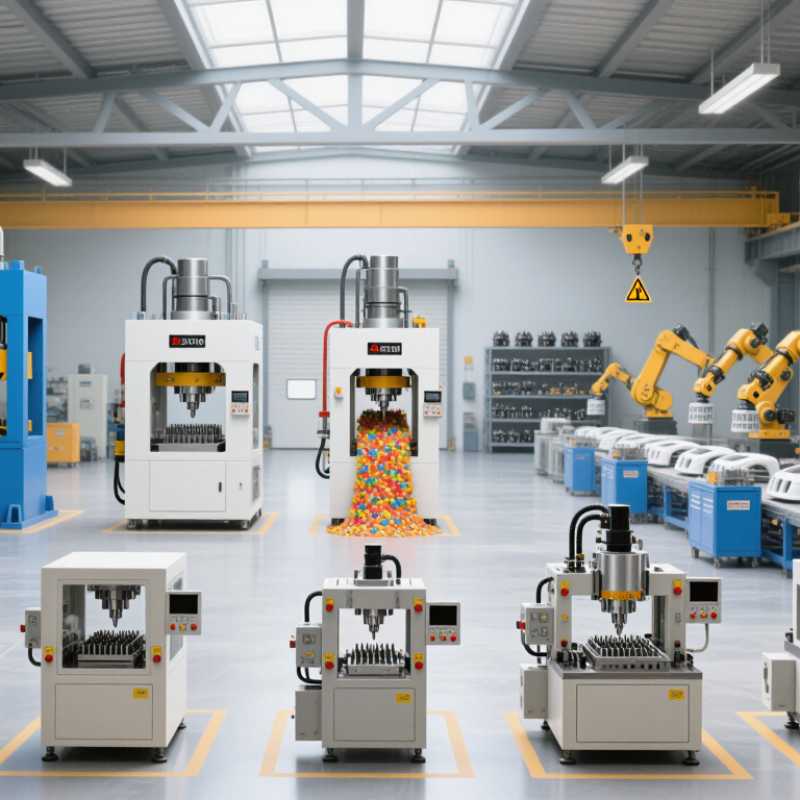
Injection molding equipment is best classified along several design axes, rather than placed in one exclusive list. Clamping systems include toggle, direct-hydraulic, and hybrid designs. Drive systems are commonly hydraulic, all-electric, or hybrid, affecting energy use, motion control, and maintenance. Machines may also be grouped by orientation: horizontal presses are common, while vertical presses suit insert loading and certain compact cells. These labels can overlap. A vertical all-electric press belongs to two categories at once. On the shop floor, clamp force, shot capacity, tie-bar spacing, and mold-opening stroke must match the tool and part.
Equipment can also be classified by machine architecture and process: two-platen presses, multi-component systems, micro-molding machines, and rotary-table configurations serve different production needs. PlasticsEurope’s Plastics—the Fast Facts 2023 reports global plastics production of 400.3 million tonnes in 2022, illustrating the scale of the material-processing industry. Grand View Research estimated the global injection molding machine market at USD 10.89 billion in 2023 and forecast a 4.8% compound annual growth rate through 2030. These figures describe the wider market, not the popularity of each machine category. Data needs context. In practice, a label alone cannot determine suitability; part geometry, resin behavior, cycle targets, and available floor space all matter. Even common classifications leave gray areas.
Hydraulic, electric, and hybrid machines are the main drive types. Hydraulic models use pressurized fluid to clamp the mold and inject plastic. They handle high clamping forces well, but pumps can generate heat and noise. Electric machines use servo motors for movement and metering. They often offer precise shot control and lower idle energy use. Hybrid machines combine electric injection with hydraulic clamping, or the reverse. That balance can suit factories with mixed production needs. There is no universal winner.
Machine layout matters too. Horizontal machines are common for general-purpose molding and automated part removal. Vertical machines can hold inserts in place during overmolding, though loading may take more operator attention. Grand View Research’s Injection Molding Machine Market report estimated the global market at USD 10.4 billion in 2022 and forecast a 4.8% compound annual growth rate through 2030. The report groups machines by drive type, reflecting how buyers compare these systems. In practice, cycle time, resin behavior, mold size, and maintenance capacity should guide selection. A fast machine is not always the best fit. Small details matter: a stable mold temperature, a clean hopper, and repeatable injection pressure can prevent costly variation. One caveat: published market estimates differ by scope. Check the report’s definitions before comparing figures.
Specialized Machines for Materials and Product Designs
Injection molding equipment is not one-size-fits-all. The right press depends on the resin, part geometry, and production needs. All-electric machines support precise, repeatable dosing for small technical components. Hydraulic presses provide high clamping force for larger molds, while hybrid machines combine force with controlled movement. Vertical presses can hold inserts in position, and multi-component machines can mold different materials into one part. Small details matter. Grand View Research’s 2024 Injection Molding Machine Market report estimates the market at USD 10.8 billion in 2023, with projected growth through 2030. That estimate describes the market, not the best machine for any individual factory.
Specialized processes need more than the right clamp force. Micro-molding calls for accurate shot control; gas-assisted molding needs carefully managed gas delivery; and foam molding relies on controlled material expansion. Screw design, barrel temperature, and mold venting also affect results. PlasticsEurope’s Plastics—the Fast Facts 2024 reports global plastics production of 413.8 million tonnes in 2023. That figure is not an injection-molding total, but it illustrates the scale and variety of materials processors may encounter. Resin data sheets help, yet trial runs still reveal surprises. A setup that works for one resin grade may not transfer cleanly to another.
Top 10 Types of Injection Molding Equipment
Auxiliary Equipment Used in the Molding Process
Auxiliary equipment keeps material, molds, and finished parts moving through a molding cell. A resin dryer removes moisture that could cause bubbles or weak surfaces. A hopper loader transfers pellets to the machine, reducing manual handling. For example, damp nylon may need careful drying before it enters the barrel. A temperature controller circulates heated fluid through the mold, while a chiller removes excess heat. These systems help maintain repeatable cycle conditions, though settings still depend on the resin and mold design.
Grinders reclaim suitable runners and rejected parts for controlled reuse. Conveyors move molded pieces away from the press, and robotic takeout units can reduce repetitive handling. Mold-protection sensors and process monitors also help operators spot problems, such as an incomplete close or drifting temperature. Equipment should be sized for the press and production volume. A large loader on a small cell may add cost without improving output. Real setups can be less tidy than a diagram suggests; hoses, cleaning, and maintenance need space too.
Tips: Check dryer airflow and dew point against the resin supplier’s guidance. Keep chiller lines clear, and inspect filters regularly. Record mold temperature and cycle changes between runs. Small checks matter. When adding equipment, confirm that operators can reach controls safely and clean around the machine. A useful setup is not always the most automated one.
Auxiliary equipment supports material preparation, temperature control, and part handling during the molding process.
The chart counts the equipment types listed below by their primary process function. In practice, equipment roles can overlap depending on the production setup.
Selecting equipment for a production line starts with the part, not the machine catalog. Record resin type, shot weight, projected area, wall thickness, and expected cycle time. Then check clamp force, tie-bar spacing, platen size, and mold opening stroke against the actual tool. Fit matters. A press with excess tonnage may still be wrong if the mold cannot fit or the shot size is poorly matched.
PlasticsEurope’s Plastics – the Fast Facts 2023 report estimated global plastics production at 400.3 million tonnes in 2022. That scale signals varied demand, not one standard machine configuration.
Choose hydraulic, all-electric, or hybrid equipment by weighing process needs against energy use, precision, maintenance, and purchase cost. Grand View Research valued the global injection molding machine market at about USD 10.4 billion in 2023, and projected 4.8% annual growth from 2024 to 2030. Those figures describe market expansion; they do not prove that a larger press will improve your line.
Review the full cell too: dryer capacity, material delivery, temperature control, robot reach, and operator access can limit output. A spreadsheet can hide awkward changeovers. Ask operators to run a representative mold trial, record cycle variation and scrap, and check service access before signing off.
Leave room for uncertainty; real production rarely behaves exactly like a quotation.
„Thanks to the LUVIR technology, the solder resist process could be switched directly from the previously used mask exposure to direct exposure. As an outstanding digital solution on the market, this technology has been able to demonstrate fast process times and superior quality on our certified conventional ink in production. This allowed us to fully digitize the solder mask process at low cost – without process or ink adjustments. An excellent benefit to our production in Rot am See.“
Ralf Göhringer (Head of Production WE Rot am See)
I would definitely recommend the Limata machine and team for a future company purchase
Michael Greenaway
Compunetics Inc.
“The Limata ldi has been amazing!! Best thing we did was buy this machine”
Richard Brady
GM
Circuitlabs
“Since 2019, we have been running the Limata X1000 LDI system (including LUVIR for solder mask imaging) in daily production as an addition to our current process with film. The machine was capable of properly exposing Taiyo PSR-4000 BN (DI) solder mask types on normal to high-copper boards using a new and unique direct imaging process. The machine operating interface is very user friendly which allowed for a quick technical training curve. The pre-registration processing reduced several seconds of production time at every print. Limata support and service staff is incomparable. They supported our team every step of the way at basically any time of the day or night, with literally, an immediate response time, customizing the software interface to best fit our Operations and needs.
We have exposed more than 8,000 prints since end of October, on various solder mask colors and some resist film panels. Limata, has proven to be very capable and innovative. They are a strong contender in the industry.
We have very much enjoyed this project, and working with the team!
Thank you Limata for the continued support and being a part of our growth.”
Bill Sezate
Vice President, GM
Summit Interconnect
As a replacement to our current contact exposure process with film, the LIMATA X2000 system including LUVIR-Technology was capable of properly exposing non-LDI solder mask types using a direct imaging process. The machine offers cutting edge software with a very intuitive operating interface which allowed for quick technician training curve. The dual drawer system combined with pre-registration processing reduced several seconds of production time at every machine cycle. Limata support and service staff is world class. They added software patches to keep production running at shortest possible response times, customized the software interface to best fit our in-house Operations system, and even wrote a step-by-step machine processing manual. As a result of the project, we have exposed more than 16,000 times on various product types and solder mask brands/colors. Limata, in a very short timeframe as a company, has definitely shown they are truly innovative and will be challenging the industry of direct imaging for the top spot.
Kevin Beattie
Process Engineer
TTM Technologies
Forest Grove Division
