China’s metal finishing industry serves automotive, aerospace, electronics, machinery, and construction supply chains. Its manufacturers work with processes such as electroplating, anodizing, polishing, and protective coating. Each process changes how a component handles corrosion, wear, appearance, or electrical contact. A plated connector may need uniform coverage inside narrow recesses. A visible aluminum panel may require an even anodized finish. Details matter.
Grand View Research estimated the global metal finishing market at USD 104.7 billion in 2023, with projected growth of 4.6% annually from 2024 to 2030. These figures provide useful context, not a guarantee of individual suppliers’ performance. Buyers should also review process capabilities, quality controls, material experience, and consistency between production batches. The report’s broad market scope may not match every company’s definition of “metal finishing.” That distinction deserves attention.
This China Top 10 Metal Surface Finishing Manufacturers guide is intended as a starting point for comparing suppliers, not a substitute for technical audits or sample testing. AESF Fellow Frank Altmayer is a recognized finishing-industry educator; his practical guidance can be summarized as choosing a finish for its service conditions, not appearance alone. Ask how a supplier controls coating thickness, adhesion, and surface defects. Request evidence. A polished sample can look convincing, while long-term performance remains unproven.
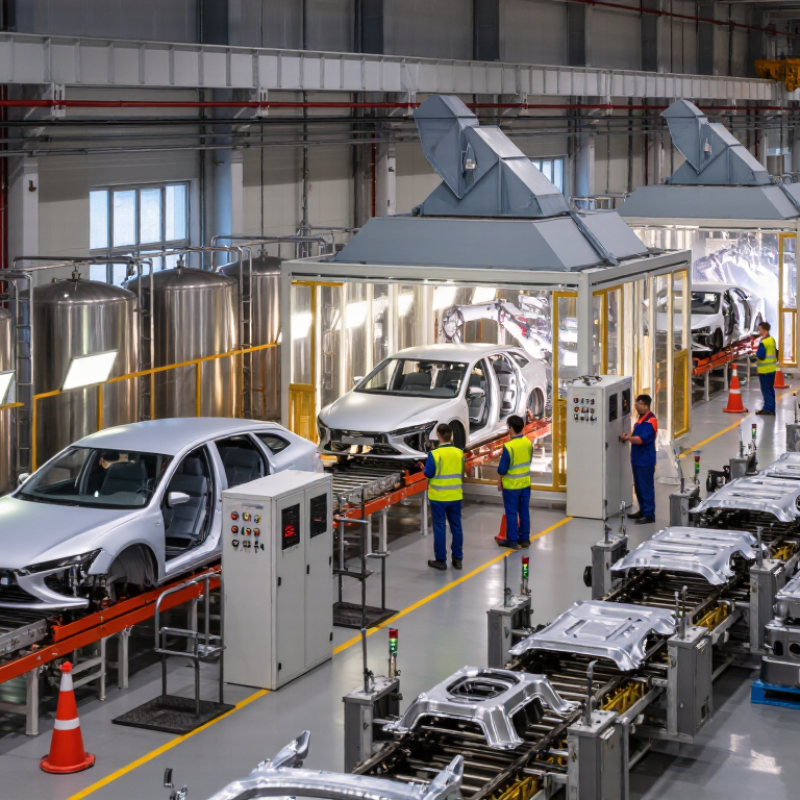
China’s metal surface finishing industry supports machinery, construction, electronics, transport, and household hardware production. Its services range from cleaning and polishing to electroplating, anodizing, powder coating, and thermal spraying. The right process depends on the base metal, part geometry, exposure conditions, and required appearance. A small bracket and a large hydraulic component rarely need identical preparation. Details matter.
In practice, shops typically remove oil, scale, and residues before applying a finish. Operators monitor bath chemistry, temperature, coating thickness, and rinse quality, since small variations can affect adhesion and corrosion resistance. For powder coating, grounded parts and controlled curing help create an even film across edges and recesses. Inspection may include visual checks, thickness readings, adhesion tests, and salt-spray testing when specifications require it. Results vary.
The market includes large integrated plants and smaller specialist workshops, serving both high-volume orders and custom batches. Capacity, process consistency, documentation, and communication can differ substantially between suppliers. Buyers should clarify substrate grades, finish standards, inspection methods, packaging needs, and acceptable defect limits before sampling. Environmental management also shapes operations, particularly where wet chemical processes require wastewater treatment and careful handling. That part is not always visible. A realistic assessment should examine sample parts and production records, rather than rely on a polished catalogue alone. Even a good sample cannot guarantee every later batch; ongoing checks remain necessary.
Metal finishing protects parts and gives them the surface behavior their job requires. Anodizing suits aluminum housings, panels, and outdoor components; its oxide layer improves wear and corrosion resistance. Electroplating adds a thin metal layer to electrical contacts, fasteners, and precision parts. Powder coating is common on steel frames and equipment enclosures, where a durable colored film is useful. Electropolishing smooths stainless steel surfaces used in food, medical, and laboratory equipment.
The right process depends on the base metal, geometry, environment, and required finish. NACE International’s 2016 IMPACT study estimated global corrosion costs at US$2.5 trillion annually, or about 3.4% of global GDP. Good surface preparation and suitable coatings can help reduce corrosion-related losses, but no finish is universal. A coating may look sound on a flat face and still fail at a sharp edge.
Tips: Confirm coating thickness and adhesion on a sample part. Check edges, holes, and masked areas closely. Fit matters. Record the substrate and cleaning steps; small preparation differences can change the result.
For a credible China Top 10 list, judge evidence, not polished claims. The NACE International IMPACT study estimated corrosion costs at US$2.5 trillion annually, or 3.4% of global GDP. It also found that applying corrosion-control practices could save 15–35% of those costs. These figures make coating durability and process control practical selection criteria, not decorative extras.
Ask manufacturers for recent test reports, coating-thickness records, and traceable batch data. Compare sample parts under the same specification, including edges, holes, and recessed areas where coverage can fail. Salt-spray results under ISO 9227 help compare samples, but they do not predict exact service life. Look for evidence that testing matches the intended environment. A neat certificate alone is not enough.
Production capacity matters, but so does repeatability. Review inspection frequency, rework rates, lead-time records, and how defects are documented. Visit the line if possible: check pretreatment cleanliness, bath monitoring, and finished-part handling. Environmental controls and worker training also indicate process maturity. One limitation remains: published data can be selective, and smaller suppliers may keep useful records internally. Ask for verifiable examples, then note what cannot be independently confirmed.
China’s metal surface-finishing manufacturers vary in process range, production scale, and testing practices. These ten profiles highlight capability types buyers may encounter; they are not rankings or verified company listings.
One manufacturer may specialize in electroplating, controlling coating thickness and appearance across repeated batches. Another may focus on aluminum anodizing, where color consistency depends on alloy and pretreatment. A powder-coating specialist typically handles durable finishes for fabricated parts and checks coverage around edges.
A liquid-spray shop may suit complex shapes that need carefully matched color. Some suppliers center their work on physical vapor deposition for thin, decorative coatings. Details matter. A thermal-spray manufacturer may serve larger components requiring wear-resistant surfaces.
Other profiles include a polishing workshop that prepares mirror-like stainless steel, and a passivation specialist that treats stainless parts after machining. An integrated factory may combine cleaning, coating, and inspection under one roof, reducing handoffs. A job shop may accept varied materials and smaller orders, though lead times can fluctuate. A tenth manufacturer might concentrate on automotive or appliance components, with fixtures designed for repeat production. Ask each supplier about substrate compatibility, sample approval, coating-thickness records, and adhesion tests. Not every line is equally consistent. Even a polished sample cannot guarantee that every production batch will match; process records and clear acceptance criteria deserve close review.
A comparison of China’s top metal surface finishing manufacturers should look beyond equipment lists. The real question is how each supplier handles your part, tolerance, and production volume. Ask whether its processes suit aluminum, stainless steel, or plated components. Confirm how it controls coating thickness, color variation, and surface defects. Request sample parts, not just photographs. A finish can look even under showroom lighting and still vary around edges or recessed holes. Small details matter.
Service options can separate otherwise similar factories. Some suppliers offer design-for-finishing advice, prototype runs, and inspection reports; others focus on production after specifications are fixed. Check who manages pretreatment, masking, packing, and transport coordination. Ask for typical lead times and how delays are communicated. A clear answer is useful. A promise without a measurable checkpoint is less so. During evaluation, compare inspection methods, sample approval steps, and the records provided with each order.
The comparison is not perfectly tidy: process names can sound similar while producing different texture or durability. Ask manufacturers to explain the practical trade-offs in plain terms. Share drawings, material details, and expected use conditions, then compare their questions as well as their quotes. I would not judge service quality from one fast reply alone. See how carefully the supplier handles a small technical change before committing to a larger run.
„Thanks to the LUVIR technology, the solder resist process could be switched directly from the previously used mask exposure to direct exposure. As an outstanding digital solution on the market, this technology has been able to demonstrate fast process times and superior quality on our certified conventional ink in production. This allowed us to fully digitize the solder mask process at low cost – without process or ink adjustments. An excellent benefit to our production in Rot am See.“
Ralf Göhringer (Head of Production WE Rot am See)
I would definitely recommend the Limata machine and team for a future company purchase
Michael Greenaway
Compunetics Inc.
“The Limata ldi has been amazing!! Best thing we did was buy this machine”
Richard Brady
GM
Circuitlabs
“Since 2019, we have been running the Limata X1000 LDI system (including LUVIR for solder mask imaging) in daily production as an addition to our current process with film. The machine was capable of properly exposing Taiyo PSR-4000 BN (DI) solder mask types on normal to high-copper boards using a new and unique direct imaging process. The machine operating interface is very user friendly which allowed for a quick technical training curve. The pre-registration processing reduced several seconds of production time at every print. Limata support and service staff is incomparable. They supported our team every step of the way at basically any time of the day or night, with literally, an immediate response time, customizing the software interface to best fit our Operations and needs.
We have exposed more than 8,000 prints since end of October, on various solder mask colors and some resist film panels. Limata, has proven to be very capable and innovative. They are a strong contender in the industry.
We have very much enjoyed this project, and working with the team!
Thank you Limata for the continued support and being a part of our growth.”
Bill Sezate
Vice President, GM
Summit Interconnect
As a replacement to our current contact exposure process with film, the LIMATA X2000 system including LUVIR-Technology was capable of properly exposing non-LDI solder mask types using a direct imaging process. The machine offers cutting edge software with a very intuitive operating interface which allowed for quick technician training curve. The dual drawer system combined with pre-registration processing reduced several seconds of production time at every machine cycle. Limata support and service staff is world class. They added software patches to keep production running at shortest possible response times, customized the software interface to best fit our in-house Operations system, and even wrote a step-by-step machine processing manual. As a result of the project, we have exposed more than 16,000 times on various product types and solder mask brands/colors. Limata, in a very short timeframe as a company, has definitely shown they are truly innovative and will be challenging the industry of direct imaging for the top spot.
Kevin Beattie
Process Engineer
TTM Technologies
Forest Grove Division
