Pvc Hoses serve many industrial tasks, from moving water across a workshop floor to transferring air or light-duty chemicals. Yet “PVC hose” describes a broad family, not one universal product. Wall thickness, reinforcement, diameter, fittings, and operating conditions can change how a hose performs.
This guide introduces ten common PVC hose types and the work each is designed to support. You will see options such as braided hose for added pressure resistance, suction hose for drawing fluids, and lay-flat hose for compact storage. Details matter. A clear hose can help operators monitor flow, while a ribbed exterior may improve flexibility or abrasion resistance. These features are useful only when they match the actual task.
Selection should start with the conveyed material, working pressure, temperature range, bend radius, and connection requirements. Check manufacturer specifications rather than relying on appearance or a general product label. A hose that looks suitable may still kink, wear quickly, or be incompatible with a fluid. That part is easy to overlook. Even careful comparisons have limits, since real service conditions can differ from a clean test setup. The following overview offers a practical starting point for comparing PVC hose designs and identifying questions to ask before purchase.
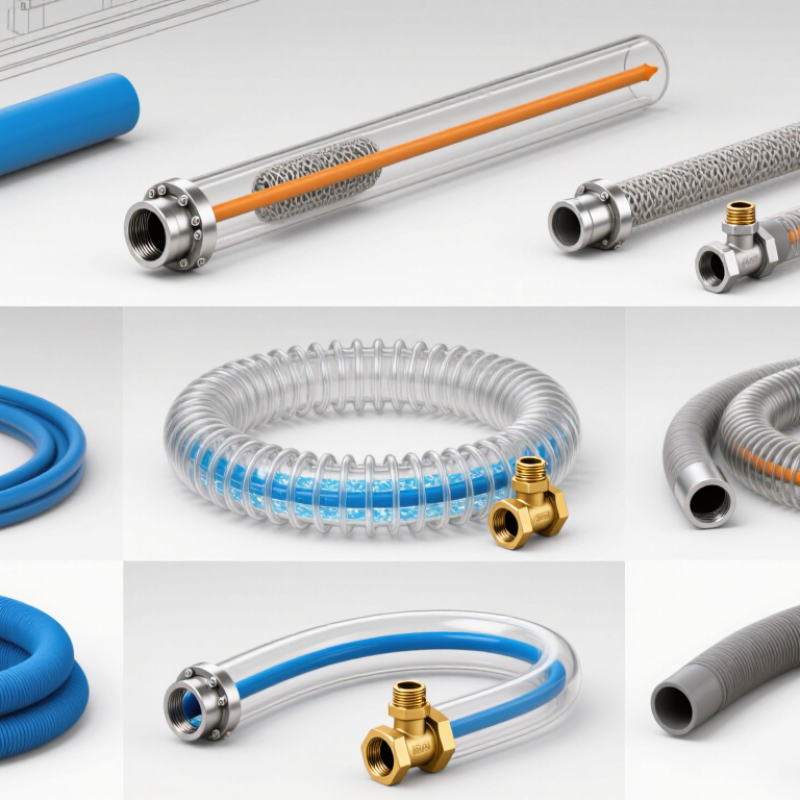
PVC hose performance starts with its construction. A flexible, unreinforced wall suits light-duty transfer, while textile braiding helps resist pressure during water or air delivery. Some suction hoses include a rigid spiral helix to reduce collapse under vacuum. The visible spiral is useful. It is not decoration.
PVC compounds balance flexibility, weight, and resistance to moisture, oils, or mild chemicals, but compatibility depends on the exact formulation. Clear walls let operators observe flow and spot trapped air or sediment. Yet clarity alone does not prove suitability for a process. Temperature, pressure, bend radius, and chemical exposure all affect service life. A detail that is often missed.
These designs support distinct industrial tasks: reinforced hoses move compressed air or water, helix-reinforced types handle suction and slurry, and flat lay-flat hoses are easier to store for temporary discharge. Smooth interiors can reduce buildup and make cleaning simpler, though they do not eliminate it. For food or drinking-water contact, verify the hose’s documented material approval and operating limits. PVC may stiffen in cold conditions, so a hose that bends easily indoors can behave differently on a winter loading area. Check the actual working conditions, not just the label.
Industrial PVC hoses are classified by how they are built and what they carry. Ten common types include general-purpose water hose, air hose, braided pressure hose, spiral-reinforced suction hose, steel-wire suction hose, and lay-flat discharge hose. Clear inspection hose, oil-resistant hose, chemical-transfer hose, and food-contact hose serve more specific needs. These labels describe different features, so a hose may fit more than one category.
Design affects flexibility, pressure handling, and resistance to collapse. Plain-wall hoses bend easily but may suit lower-pressure duties. Textile braiding strengthens many pressure hoses, while rigid spiral ribs help suction hoses stay open under vacuum. Steel-wire reinforcement can add support and, in some designs, help with grounding. Lay-flat hose stores compactly and opens during discharge. Clear PVC makes flow visible. Useful, but not a pressure rating.
Service classification starts with the conveyed material, then considers temperature, pressure, and exposure time. Oil and chemical compatibility varies with the exact fluid and PVC compound; check the manufacturer’s compatibility data before use. Food-contact service also requires suitable materials and documented approval for the intended application. An air hose is not automatically safe for every gas, and a water hose may not tolerate hot water. Details matter. A small mismatch can shorten service life, even when the hose looks sound.
Top 10 Types of PVC Hose for Industrial Applications
Ten Common PVC Hose Types for Industrial Applications
PVC hoses serve many industrial tasks, but their construction determines what they can safely handle. Common types include general-purpose, braided-reinforced, spiral-suction, steel-wire-reinforced, layflat, transparent, food-contact, chemical-resistant, high-temperature, and antistatic hoses. Each addresses different needs: a clear hose helps workers inspect flow, while a spiral-reinforced hose resists collapse during suction. PlasticsEurope’s Plastics – the Fast Facts 2024 reports global plastics production of 413.8 million tonnes in 2023, with PVC accounting for about 12%. This is useful material context, not a measure of hose demand.
Details matter. Braided hoses suit pressurized transfer; layflat hoses save storage space when drained. Chemical resistance depends on the specific fluid, concentration, temperature, and exposure time—not simply the word “PVC.” Pressure ratings also change with temperature and hose diameter. A familiar mistake is choosing by appearance alone. A shiny, flexible wall does not prove suitability for a pump or process line.
Tips: Check the hose’s working-pressure and temperature ratings, then verify chemical compatibility against the fluid supplier’s data. Inspect fittings and clamps for leaks, especially where hoses bend near machinery. If operating conditions vary, leave a safety margin; real installations are rarely as tidy as a catalogue diagram.
Top 10 Types of PVC Hose for Industrial Applications
In agriculture, flexible PVC layflat hose moves irrigation water across fields and packs away quickly after use. Spiral-reinforced suction hose suits pumps drawing water from tanks or shallow sources. It resists collapse better than a simple delivery hose. For dusty workshops, PVC ducting carries light fumes and airborne particles to extraction systems.
Manufacturing plants use braided PVC hose for compressed air and general fluid lines, where visibility and flexibility help with routine checks. Clear hose makes liquid flow easier to inspect, though cloudy deposits can still hide inside bends. Food-processing operations need hose made for the intended contact and cleaning conditions. Chemical-transfer PVC hose may work for selected liquids, but compatibility should be checked against concentration and temperature. One size does not fit all.
Tips: Match the hose’s pressure rating to the full operating range, including pump surges. Check fittings, bend radius, and abrasion points before installation. In the field, a hose that looks sturdy can kink when routed around a tight frame. Recheck it after a few shifts; small leaks often start at connections.
Typical working-pressure ranges for common hose constructions, alongside their industrial uses.
These ranges are indicative examples, not universal ratings. Actual working pressure depends on hose diameter, reinforcement, temperature, and product specification. Check the hose manufacturer’s rating before selecting a hose for an application.
Selecting a PVC hose begins with the material it will carry. Oils, solvents, and cleaning chemicals can affect PVC differently, so check a compatibility chart before installation. Match the hose’s working-pressure rating to the system’s pressure, including possible surges. Also confirm the operating-temperature range; heat can soften PVC, while cold can make it stiff and less flexible. Reinforcement, inside diameter, and bend radius matter too. A hose forced around a sharp corner may kink, restrict flow, or wear through at the contact point. A color stripe helps, but it can create false confidence.
Maintenance needs regular, close inspection. Look for cracks, bulges, flattening, abrasion, loose fittings, and leaks, especially near clamps and machine connections. Check it cold. Never treat a temporary patch as proof that a pressure hose is safe to reuse. The U.S. Department of Energy’s Improving Compressed Air System Performance sourcebook reports that leaks can waste 20–30% of compressor output in some systems. That figure covers compressed-air leaks broadly, not PVC hoses alone, but damaged hose assemblies can contribute. Record inspection dates and replace hoses when damage, age, or service conditions make their condition uncertain. I would not rely on appearance alone; internal wear can be harder to spot.
„Thanks to the LUVIR technology, the solder resist process could be switched directly from the previously used mask exposure to direct exposure. As an outstanding digital solution on the market, this technology has been able to demonstrate fast process times and superior quality on our certified conventional ink in production. This allowed us to fully digitize the solder mask process at low cost – without process or ink adjustments. An excellent benefit to our production in Rot am See.“
Ralf Göhringer (Head of Production WE Rot am See)
I would definitely recommend the Limata machine and team for a future company purchase
Michael Greenaway
Compunetics Inc.
“The Limata ldi has been amazing!! Best thing we did was buy this machine”
Richard Brady
GM
Circuitlabs
“Since 2019, we have been running the Limata X1000 LDI system (including LUVIR for solder mask imaging) in daily production as an addition to our current process with film. The machine was capable of properly exposing Taiyo PSR-4000 BN (DI) solder mask types on normal to high-copper boards using a new and unique direct imaging process. The machine operating interface is very user friendly which allowed for a quick technical training curve. The pre-registration processing reduced several seconds of production time at every print. Limata support and service staff is incomparable. They supported our team every step of the way at basically any time of the day or night, with literally, an immediate response time, customizing the software interface to best fit our Operations and needs.
We have exposed more than 8,000 prints since end of October, on various solder mask colors and some resist film panels. Limata, has proven to be very capable and innovative. They are a strong contender in the industry.
We have very much enjoyed this project, and working with the team!
Thank you Limata for the continued support and being a part of our growth.”
Bill Sezate
Vice President, GM
Summit Interconnect
As a replacement to our current contact exposure process with film, the LIMATA X2000 system including LUVIR-Technology was capable of properly exposing non-LDI solder mask types using a direct imaging process. The machine offers cutting edge software with a very intuitive operating interface which allowed for quick technician training curve. The dual drawer system combined with pre-registration processing reduced several seconds of production time at every machine cycle. Limata support and service staff is world class. They added software patches to keep production running at shortest possible response times, customized the software interface to best fit our in-house Operations system, and even wrote a step-by-step machine processing manual. As a result of the project, we have exposed more than 16,000 times on various product types and solder mask brands/colors. Limata, in a very short timeframe as a company, has definitely shown they are truly innovative and will be challenging the industry of direct imaging for the top spot.
Kevin Beattie
Process Engineer
TTM Technologies
Forest Grove Division
