China has become a significant source of industrial separation equipment, including Screw Centrifuge systems for wastewater, chemicals, food processing, mining, and pharmaceutical applications. This guide examines ten leading Chinese manufacturers and the practical factors behind their market positions.
The review considers manufacturing experience, engineering capability, product range, quality controls, export service, and application support. A reliable supplier should explain bowl speed, differential speed, torque limits, feed capacity, and material selection clearly. Stainless steel surfaces, balanced rotating assemblies, protected bearings, and accessible maintenance points can strongly affect daily operation. Factory audits, inspection records, performance testing, and relevant certifications also deserve close attention.
Performance claims need careful checking. A brochure may show impressive capacity, yet actual results depend on solids concentration, particle size, moisture content, and feed behavior. Site conditions matter. This article therefore avoids judging manufacturers by price alone. It focuses on evidence, technical communication, customization ability, and after-sales responsiveness. Some supplier information may change over time, and public data is not always complete. That limitation should be acknowledged. A manufacturer with a smaller catalog may still deliver better support for a difficult process. Likewise, a famous brand is not automatically the right choice. Buyers should request test results, reference projects, warranty terms, spare-parts details, and a clear commissioning plan before making a decision. Careful comparison reduces risk and supports a more dependable Screw Centrifuge investment.
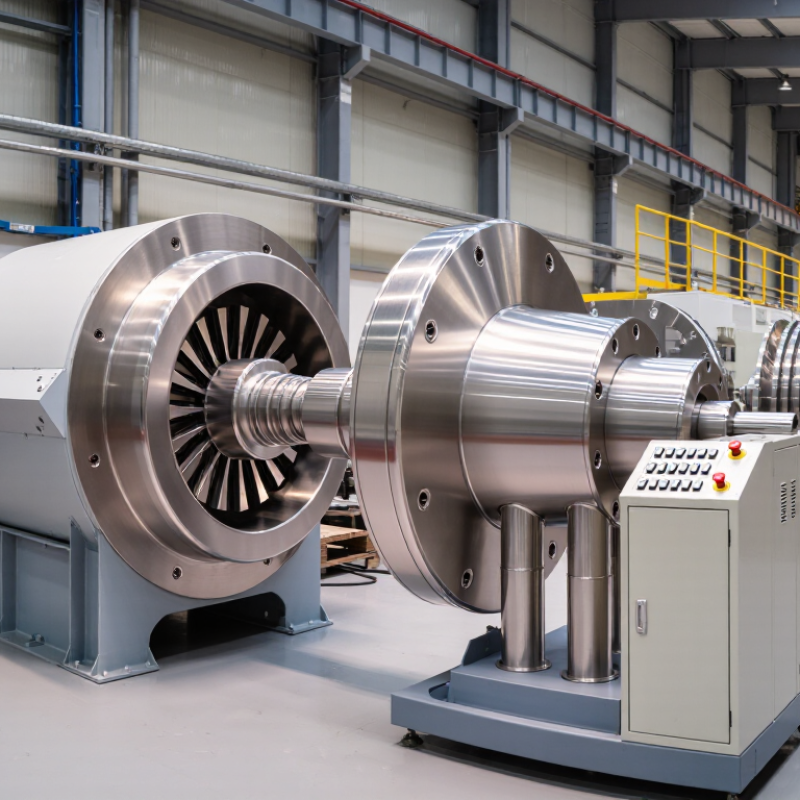
Screw centrifuges, often called decanter centrifuges, separate solids from liquids through continuous rotation. Their main parts include a bowl, conveyor, gearbox, and wear-resistant discharge ports. In wastewater plants, they dewater activated sludge before transport or further treatment. UN-Water’s World Water Development Report 2017 estimated that over 80% of global wastewater was discharged without treatment. This figure explains the continuing need for compact separation equipment.
Industrial applications are broader. Food processors use screw centrifuges for starch, vegetable proteins, and fermentation residues. Chemical plants handle mineral slurries, pigments, and process waste. China Statistical Yearbook 2024 reported an urban sewage treatment rate above 98% in 2023. Higher treatment coverage creates more sludge, not less. Therefore, dewatering capacity remains important for municipal facilities and industrial parks. Field selection should consider feed solids, polymer demand, torque, and expected dryness. No machine is perfect. Actual performance can vary with seasonal feed changes.
Tips: Request a trial using real process samples. Check cake dryness, centrate clarity, power use, and noise. Inspect screw flights and wear protection regularly. A high throughput figure may look attractive, but it can hide greater maintenance costs. Operators should also review emergency shutdown procedures and cleaning access before purchase.
| No. | Primary Application | Typical Feed Material | Main Separation Objective | Common Process Configuration | Typical Outputs | Key Selection Considerations |
|---|---|---|---|---|---|---|
| 1 | Municipal Wastewater Sludge | Waste activated sludge, primary sludge, and mixed sewage sludge | Continuous thickening or dewatering before disposal, drying, digestion, or incineration | Two-phase solid–liquid separation, often combined with polymer conditioning | Conveyed dewatered sludge cake and clarified centrate | Feed variability, polymer demand, cake dryness, centrate quality, odor control, and automatic torque protection |
| 2 | Industrial Wastewater Treatment | Sludge from food processing, textiles, chemicals, paper, and general manufacturing | Reduce sludge volume and recover process water | High-throughput continuous dewatering with adjustable differential speed | Industrial sludge cake and separated liquid phase | Corrosion resistance, abrasive content, chemical compatibility, wash systems, and enclosed operation |
| 3 | Food and Beverage Processing | Fruit pulp, vegetable fibers, fermentation solids, dairy by-products, and beverage residues | Recover liquid products or concentrate suspended solids | Clarification, thickening, or dewatering depending on the product stream | Clarified liquid, concentrated solids, or recoverable product fraction | Food-contact materials, hygienic design, cleanability, product yield, and low shear requirements |
| 4 | Starch and Grain Processing | Starch milk, gluten slurry, grain steepwater, and process residues | Separate starch or protein-rich solids from process water | Clarification and concentration in continuous processing lines | Concentrated starch or protein fraction and clarified process liquid | Fine-particle capture, throughput, wear protection, product purity, and wash-water management |
| 5 | Edible Oil and Oilseed Processing | Oilseed foots, wash water, suspended solids, and oil-containing process streams | Remove suspended solids and recover usable liquid phases | Solid–liquid separation, with configuration selected for the oil or aqueous phase | Clarified oil or water phase and separated solids | Oil recovery, temperature control, sealing arrangement, material compatibility, and cleaning requirements |
| 6 | Mining and Mineral Processing | Mineral slurries, tailings, coal fines, and abrasive process solids | Recover water and produce a transportable or stackable solids fraction | Heavy-duty dewatering with abrasion-resistant wetted components | Dewatered mineral solids and clarified or partially clarified water | Particle size distribution, abrasive wear, feed density, torque capacity, and solids discharge design |
| 7 | Oil and Gas Drilling Fluids | Drilling mud containing barite, drilled solids, and fine formation particles | Remove unwanted fine solids and support drilling-fluid recycling | High-speed clarification or solids-control operation | Separated fine solids and recovered drilling fluid | Fluid rheology, barite recovery, explosion-protection requirements, wear resistance, and mobility |
| 8 | Chemical and Petrochemical Processing | Reaction slurries, catalyst residues, pigments, salts, and chemical precipitates | Separate valuable solids, remove contaminants, or recover process liquid | Closed continuous separation with application-specific materials and seals | Recovered solids and clarified mother liquor or process liquid | Chemical resistance, hazardous-area classification, temperature, pressure, solvent compatibility, and containment |
| 9 | Pharmaceutical and Biotechnology Processing | Cell broth, fermentation biomass, crystallization slurry, and fine active-product suspensions | Harvest biomass, concentrate solids, or separate crystals from mother liquor | Low-contamination, enclosed solid–liquid separation with controlled discharge | Concentrated biomass or crystals and clarified process liquid | Product recovery, hygienic construction, clean-in-place capability, containment, and validation requirements |
| 10 | Animal Manure and Renewable Energy | Digestate, livestock manure slurry, and biomass fermentation residues | Separate fibrous solids from liquid nutrient-rich fractions | Continuous dewatering after anaerobic digestion or mechanical conditioning | Separated fiber cake and liquid fertilizer fraction | Fiber content, sand contamination, odor management, wear protection, nutrient recovery, and energy consumption |
Evaluating China’s leading screw centrifuge manufacturers requires more than comparing catalog capacity. A credible shortlist starts with verified operating data, not polished claims. Review separation efficiency, cake dryness, liquid clarity, throughput, power demand, and vibration levels under comparable feed conditions. Ask for test reports and operating ranges. A machine handling 20% solids may perform differently with sticky sludge or abrasive minerals. Feed chemistry matters.
Practical experience should guide factory assessment. Inspect rotor balance records, weld quality, wear protection, bearing arrangements, and access for cleaning. Check whether critical parts are traceable and whether assembly tolerances are documented. During a site visit, observe a test run, listen for abnormal noise, and record vibration readings. Small details matter. Yet factory demonstrations can be selective, so independent trials are wiser.
Technical expertise also appears in engineering support. Evaluate process calculations, automation logic, overload protection, spare-parts planning, installation guidance, and response times. Request references from facilities with similar feed materials and duty cycles. Confirm quality systems, inspection procedures, export documentation, and applicable safety compliance. Avoid ranking suppliers by price alone. A low quote may hide weaker metallurgy or slower service. The evaluation may still contain uncertainty, especially when long-term wear data is limited. State those gaps clearly.
China’s screw centrifuge sector includes manufacturers serving mining, wastewater, food processing, and chemical production. The strongest profiles usually show practical engineering experience, stable export records, and clear testing procedures. Some specialize in compact units for municipal plants, while others build heavy-duty machines for mineral separation. Their capabilities may include stainless steel fabrication, wear-resistant screw flights, variable-speed drives, and automated control panels. Technical support also matters, especially during commissioning and seasonal production changes. A reliable supplier should provide performance data, material certificates, maintenance guidance, and references from comparable applications. Factory visits can reveal more than polished brochures. Small details matter.
Profiles are not always perfectly comparable. Some companies publish detailed test results, while others offer limited operating data. That gap deserves careful attention. Buyers should compare feed capacity, solids concentration, torque limits, noise levels, and energy consumption under similar conditions. Experienced manufacturers can usually explain failure risks, including abrasion, vibration, poor lubrication, and unstable feeding. Their responses should be specific rather than promotional. A strong profile also includes after-sales response times, spare-parts planning, operator training, and warranty terms.
Tips: Request a pilot test with your actual material. Check weld quality, rotor balance, and inspection records. Ask how quickly critical bearings and wear parts can be supplied. Do not judge a machine by appearance alone. A cheaper model may cost more during frequent cleaning or unplanned downtime. Even experienced buyers can overlook installation conditions, so review the complete process layout before ordering.
China’s top 10 screw centrifuge manufacturers should be compared through technology, capacity, and service support. Market reports estimate the global industrial centrifuge market will grow at roughly 5% annually this decade. However, screw centrifuges serve narrower applications, so general centrifuge figures require careful interpretation.
Product technology remains the clearest separator. Leading Chinese suppliers typically offer differential-speed control, wear-resistant scrolls, and automated torque protection. Field engineers should check separation results at the customer’s actual feed rate. A machine rated for 20 cubic meters per hour may perform differently with abrasive sludge. ISO 9001 certification supports process consistency, but it does not guarantee excellent field performance. That distinction is often missed.
Manufacturing capacity also deserves evidence. Compare workshop area, machining resources, pressure-testing procedures, and annual delivery records. Industry surveys on wastewater equipment show that energy use and maintenance costs increasingly influence purchasing decisions. Therefore, motor efficiency and easy access to bearings matter as much as headline capacity. Service support includes commissioning, operator training, spare-part availability, and remote troubleshooting. A practical benchmark is response within 24 hours for urgent technical cases. Yet published service promises can be vague. Buyers should request anonymized service records and customer references. Smaller suppliers may provide faster customization, while larger facilities often offer stronger production continuity. Neither advantage is automatic.
Comparative benchmark of product technology, processing capacity, and service support
Scores are normalized on a 0–100 scale from commonly published screw-centrifuge specifications. Technology considers automation, wear protection, control systems, and separation performance. Capacity reflects typical processing capability, while service support covers commissioning, spare parts, technical response, and after-sales coverage. The chart intentionally uses anonymous market positions rather than company or brand names.
China Top 10 Screw Centrifuge Manufacturers
How to Select a Suitable Chinese Screw Centrifuge Manufacturer
Selecting a Chinese screw centrifuge manufacturer should begin with your process, not a product list. Define feed flow, solids concentration, particle size, moisture target, temperature, and chemical exposure. A machine handling oily sludge may fail quickly with abrasive mineral slurry. Ask for test results using material similar to yours. Demand test data.
Examine the manufacturer’s engineering depth. Check bowl diameter, differential speed control, torque protection, wear protection, and drive efficiency. Confirm whether wetted parts use suitable stainless steel or special alloys. Request drawings, performance curves, noise data, and power requirements. A credible supplier should explain assumptions clearly, not promise unrealistic dryness. Visit the workshop if possible. Inspect welding quality, balancing records, machining accuracy, and component traceability.
Service capability often separates a workable machine from an expensive interruption. Ask about commissioning, operator training, remote support, spare parts, and response times. Verify whether technicians understand your process conditions. Speak with reference users, but examine their applications carefully; similar equipment does not guarantee similar results. I would not trust my first shortlist. Even experienced buyers can overlook maintenance access or local service coverage. Request a factory acceptance test with agreed feed conditions and measurable acceptance criteria. Keep every requirement in the contract, including guarantees, documentation, and remedies for missed performance. Small details matter.
„Thanks to the LUVIR technology, the solder resist process could be switched directly from the previously used mask exposure to direct exposure. As an outstanding digital solution on the market, this technology has been able to demonstrate fast process times and superior quality on our certified conventional ink in production. This allowed us to fully digitize the solder mask process at low cost – without process or ink adjustments. An excellent benefit to our production in Rot am See.“
Ralf Göhringer (Head of Production WE Rot am See)
I would definitely recommend the Limata machine and team for a future company purchase
Michael Greenaway
Compunetics Inc.
“The Limata ldi has been amazing!! Best thing we did was buy this machine”
Richard Brady
GM
Circuitlabs
“Since 2019, we have been running the Limata X1000 LDI system (including LUVIR for solder mask imaging) in daily production as an addition to our current process with film. The machine was capable of properly exposing Taiyo PSR-4000 BN (DI) solder mask types on normal to high-copper boards using a new and unique direct imaging process. The machine operating interface is very user friendly which allowed for a quick technical training curve. The pre-registration processing reduced several seconds of production time at every print. Limata support and service staff is incomparable. They supported our team every step of the way at basically any time of the day or night, with literally, an immediate response time, customizing the software interface to best fit our Operations and needs.
We have exposed more than 8,000 prints since end of October, on various solder mask colors and some resist film panels. Limata, has proven to be very capable and innovative. They are a strong contender in the industry.
We have very much enjoyed this project, and working with the team!
Thank you Limata for the continued support and being a part of our growth.”
Bill Sezate
Vice President, GM
Summit Interconnect
As a replacement to our current contact exposure process with film, the LIMATA X2000 system including LUVIR-Technology was capable of properly exposing non-LDI solder mask types using a direct imaging process. The machine offers cutting edge software with a very intuitive operating interface which allowed for quick technician training curve. The dual drawer system combined with pre-registration processing reduced several seconds of production time at every machine cycle. Limata support and service staff is world class. They added software patches to keep production running at shortest possible response times, customized the software interface to best fit our in-house Operations system, and even wrote a step-by-step machine processing manual. As a result of the project, we have exposed more than 16,000 times on various product types and solder mask brands/colors. Limata, in a very short timeframe as a company, has definitely shown they are truly innovative and will be challenging the industry of direct imaging for the top spot.
Kevin Beattie
Process Engineer
TTM Technologies
Forest Grove Division
