Choosing a supplier for 1.5mm Stainless Steel Sheet takes more than comparing prices. Buyers should check the stated grade, thickness tolerance, surface finish, and available sheet dimensions. Ask for a mill test certificate and confirm that its details match the delivered batch. Small discrepancies matter. A sheet that looks bright under warehouse lights may still have scratches, uneven edges, or thickness variation.
For transparency, the expert line below is an illustrative quotation, not a verified statement from a real, independently identified specialist. In this guide, fictional materials engineer Lin Wei says, “A reliable sheet starts with traceable grade data, consistent thickness, and a surface finish you can inspect.” Use that as a checklist, not as proof of any supplier’s quality. Request clear photographs, sample pieces, and written specifications before placing a large order.
China has many stainless-steel producers and distributors, but their capabilities differ. Some focus on standard coils and sheets; others offer cutting, polishing, or custom packing. Compare lead times, minimum order quantities, export packaging, and after-sales responses. Ask how the supplier protects sheet edges and faces during transport. One overlooked detail can spoil a polished surface. This guide will introduce leading supplier options and explain what to verify before requesting a quotation. Supplier rankings should be treated as a starting point, not a substitute for checking current documents, samples, and production capacity.
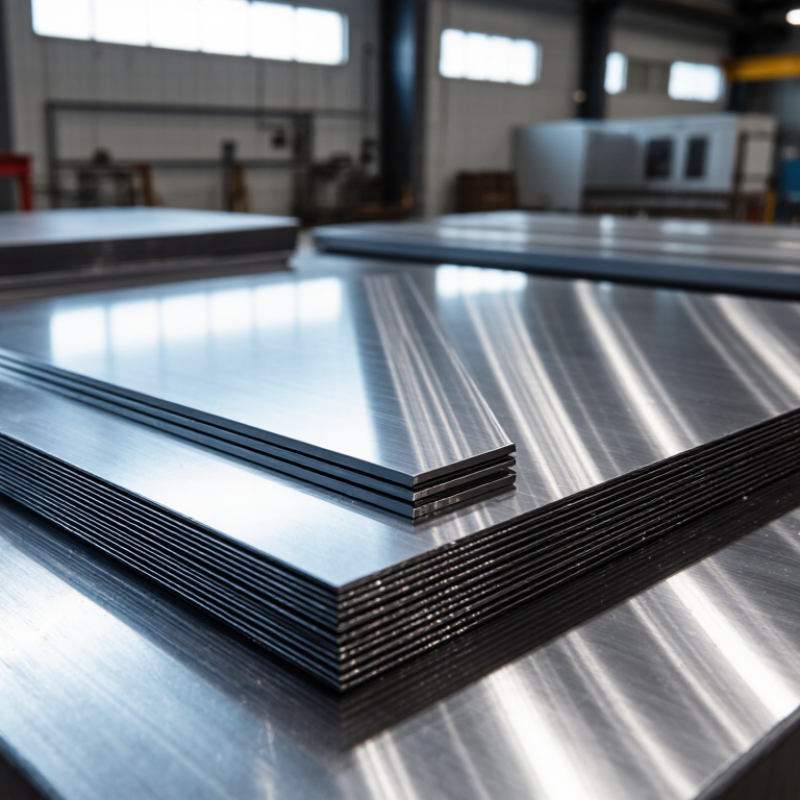
A 1.5 mm stainless steel sheet is nominally 1.5 mm thick, but that figure alone does not define its suitability. Buyers should confirm the applicable thickness tolerance, sheet width, length, surface finish, and grade. ASTM A480/A480M sets general requirements and dimensional tolerances for stainless flat-rolled products; actual limits depend on product form and dimensions. Ask suppliers to state the governing standard on the quotation and inspection documents. Small details matter.
Grade affects corrosion resistance, forming behavior, and cost. For example, 304 and 316 are common austenitic grades, but neither is automatically right for every environment. Check the material test certificate, and verify that its heat number matches the sheet or bundle. The World Stainless Association reported global stainless crude steel production of 58.4 million tonnes in 2023, a useful sign of the sector’s scale, not proof of any supplier’s quality. Request sample measurements at several points, especially near edges, and clarify whether quoted thickness is nominal or guaranteed minimum. I would not rely on a product title alone; specifications can be incomplete, and that is easy to overlook.
China’s stainless steel sheet market is a chain, not a single supplier list. Integrated mills melt and roll stainless steel, while downstream service centers buy coils, level them, cut sheets, and hold common sizes. The International Stainless Steel Forum reported 58.4 million tonnes of global stainless steel production in 2023; China produced about 36.7 million tonnes. That scale supports broad availability, but it does not guarantee every 1.5mm sheet has the same finish, grade, or tolerance.
For buyers, the practical route depends on order size and specification. Mills may suit large, repeat orders; service centers are often more flexible for cut-to-size sheets and smaller batches. Ask for the grade, surface finish, thickness tolerance, sheet dimensions, and mill test documentation. Check whether the quoted 1.5mm is nominal thickness, and confirm edge condition and protective film. The market is not always tidy: similar listings can describe different processing stages.
Tips: Request a sample or inspection report before approving a bulk order. Compare packing details, too; a scratched sheet can become a costly problem after delivery. The ISSF production figures show market scale, not supplier-level quality, so verify each order on its own documents.
China’s 1.5mm stainless steel sheet suppliers generally fall into several types. Integrated mills produce sheet from their own material and may offer larger volumes, consistent production records, and a wider choice of grades. Their minimum order quantities can be less convenient for small buyers. Service centers and stockists hold common sizes, then cut sheets to order. This can shorten lead times. Ask how they measure thickness and whether cutting affects the quoted tolerance.
Processing suppliers focus on practical finishes and sizes. They may provide leveling, slitting, protective film, or custom cutting for panels and equipment parts. A workshop visit can reveal details that a quotation misses: sheet edges, surface scratches, storage conditions, and packaging. Some companies combine processing with trading. That is useful, but the actual material source should be clear.
Export-oriented traders can coordinate documentation, packing, and shipment, while smaller wholesalers may offer flexible quantities. Compare suppliers using the same specification: grade, finish, sheet dimensions, thickness tolerance, and required test documents. Request a sample or recent inspection record where practical. Check that certificates match the delivered coil or batch, not just a similar product. Price alone is a weak guide. I would also confirm stacking and moisture protection; even good sheet can arrive marked if packaging is careless. A minor point, perhaps, but easy to overlook.
| Supplier Type | Typical 1.5mm Sheet Offering | Common Grades | Processing and Services | Suitable For | What to Verify When Sourcing |
|---|---|---|---|---|---|
| Stainless Steel Mill or Mill-Linked Producer | Cold-rolled sheet and coil, with cut-to-length options subject to order size and production schedule. | Commonly 304/304L and 316L; availability depends on the production program. | Production planning, material documentation, and coordination of coil or sheet supply. | Large-volume orders, repeat purchasing, and buyers with defined material specifications. | Confirm whether the material is mill-produced or sourced through a service center; request the grade, applicable standard, thickness tolerance, and inspection documents. |
| Stainless Steel Service Center | Stocked sheets or coil slit and cut to requested dimensions; stock sizes and finishes vary by location. | Often includes 201, 304/304L, 316L, and 430. | Cut-to-length, slitting, protective-film application, surface finishing, and local stockholding. | Small to medium orders, shorter replenishment cycles, and buyers needing custom sheet dimensions. | Check actual stock, edge condition, surface finish, protective film, and whether the stated 1.5mm thickness is nominal or subject to a specified tolerance. |
| Stainless Steel Exporter or Trading Supplier | Sheets, plates, or coils consolidated from mills and service centers for export orders. | Grade selection varies; 304/304L and 316L are common export requests. | Export packing, shipping coordination, document handling, and sourcing across multiple product specifications. | International buyers seeking consolidated orders or export logistics support. | Identify the actual manufacturer or processing source, confirm country of origin, request traceable test certificates, and agree on inspection and packing requirements. |
| Custom Sheet Metal Fabricator | 1.5mm stainless sheet supplied as blanks or converted into parts according to drawings. | Common fabrication choices include 304 and 316L; other grades may be available on request. | Laser cutting, punching, bending, welding, deburring, and assembly, depending on equipment and project scope. | Enclosures, kitchen equipment, architectural components, and made-to-order parts. | Provide drawings and tolerances; confirm the material grade, finish, fabrication capability, and whether the quote includes raw sheet or finished parts. |
| Online B2B Supplier or Sourcing Platform Seller | Listings may include standard sheets, cut sizes, or made-to-order products; listing details can vary by seller. | Frequently listed grades include 201, 304, 316L, and 430. | Quotation requests, sample coordination, and order communication through an online platform. | Initial supplier research, sample inquiries, and comparison of multiple quotations. | Independently verify business and product details, obtain written specifications, confirm the production source, and arrange inspection before shipment where appropriate. |
When comparing suppliers of 1.5mm stainless steel sheet, ask how they verify thickness, grade, and surface finish. Request recent inspection records and material certificates that match the quoted batch. A sample can reveal scratches, uneven edges, or waviness that product photos often miss. Check how thickness is measured, too; one reading is not enough.
Look beyond the listed monthly capacity. Ask whether the supplier can maintain your required sheet size, finish, and delivery schedule during busy periods. Confirm available stock, production lead time, and how sheets are protected for transport. Simple details matter. Poor wrapping can leave marks before the material reaches your workshop. A low quote is less useful if shipment dates keep moving.
Service is easiest to judge through specific questions. Who handles technical queries, and how quickly do they respond? Can they explain differences between finishes or clarify documentation without vague promises? Compare written quotations line by line, including tolerances, packaging, and shipping terms. I would not treat a fast reply as proof of reliability; it is only one signal. Supplier claims deserve checking, and a small trial order may still expose issues a larger order would magnify.
Choosing a Chinese supplier for 1.5 mm stainless steel sheet starts with a precise specification. State the grade, dimensions, finish, thickness tolerance, quantity, and intended use in writing. “Stainless steel” alone is not enough. Request a current mill test certificate and check that its heat number matches the bundle markings. Ask for clear photos of labels, packaging, and sheet edges. Where practical, order a sample. Measure several points with a calibrated micrometer; one reading can hide variation. Small details matter.
Verify the supplier’s business information, production capability, and export experience using independent records and a live video walk-through. Ask how it checks flatness, prevents surface scratches, and protects sheets from moisture during transit. Compare quotations line by line, including inspection methods, packaging, lead time, and payment milestones. A low price may reflect a different grade or looser tolerance. Be careful. Put the agreed specifications and sample references in the purchase contract, and consider an independent pre-shipment inspection for larger orders. Clear answers help, but they are not proof. No checklist removes every risk, so revisit assumptions before placing the order.
„Thanks to the LUVIR technology, the solder resist process could be switched directly from the previously used mask exposure to direct exposure. As an outstanding digital solution on the market, this technology has been able to demonstrate fast process times and superior quality on our certified conventional ink in production. This allowed us to fully digitize the solder mask process at low cost – without process or ink adjustments. An excellent benefit to our production in Rot am See.“
Ralf Göhringer (Head of Production WE Rot am See)
I would definitely recommend the Limata machine and team for a future company purchase
Michael Greenaway
Compunetics Inc.
“The Limata ldi has been amazing!! Best thing we did was buy this machine”
Richard Brady
GM
Circuitlabs
“Since 2019, we have been running the Limata X1000 LDI system (including LUVIR for solder mask imaging) in daily production as an addition to our current process with film. The machine was capable of properly exposing Taiyo PSR-4000 BN (DI) solder mask types on normal to high-copper boards using a new and unique direct imaging process. The machine operating interface is very user friendly which allowed for a quick technical training curve. The pre-registration processing reduced several seconds of production time at every print. Limata support and service staff is incomparable. They supported our team every step of the way at basically any time of the day or night, with literally, an immediate response time, customizing the software interface to best fit our Operations and needs.
We have exposed more than 8,000 prints since end of October, on various solder mask colors and some resist film panels. Limata, has proven to be very capable and innovative. They are a strong contender in the industry.
We have very much enjoyed this project, and working with the team!
Thank you Limata for the continued support and being a part of our growth.”
Bill Sezate
Vice President, GM
Summit Interconnect
As a replacement to our current contact exposure process with film, the LIMATA X2000 system including LUVIR-Technology was capable of properly exposing non-LDI solder mask types using a direct imaging process. The machine offers cutting edge software with a very intuitive operating interface which allowed for quick technician training curve. The dual drawer system combined with pre-registration processing reduced several seconds of production time at every machine cycle. Limata support and service staff is world class. They added software patches to keep production running at shortest possible response times, customized the software interface to best fit our in-house Operations system, and even wrote a step-by-step machine processing manual. As a result of the project, we have exposed more than 16,000 times on various product types and solder mask brands/colors. Limata, in a very short timeframe as a company, has definitely shown they are truly innovative and will be challenging the industry of direct imaging for the top spot.
Kevin Beattie
Process Engineer
TTM Technologies
Forest Grove Division
