In today’s digital age, the demand for high-quality visuals is ever-increasing, particularly in outdoor settings. The Outdoor Fine Pixel Pitch LED Screen has emerged as a key player in delivering stunning imagery and vibrant colors. These screens are known for their exceptional resolution, making them ideal for events, advertisements, and public displays.
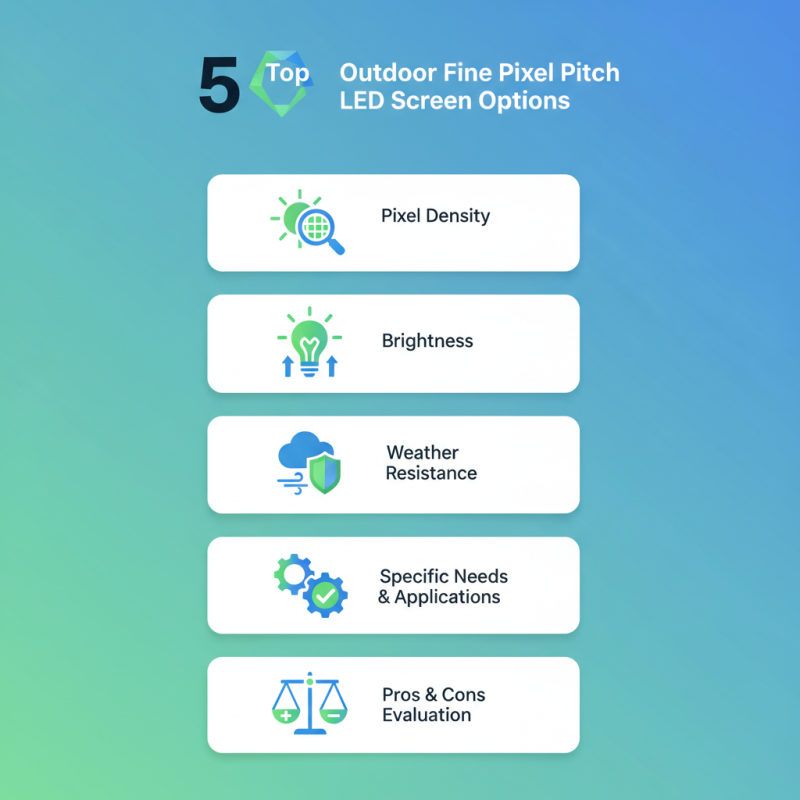
Choosing the right Outdoor Fine Pixel Pitch LED Screen can feel overwhelming. Many options are available, each with its unique features and specifications. Potential buyers should focus on factors like pixel density, brightness, and weather resistance. These components significantly impact performance under different environmental conditions.
Despite the plethora of choices, buyers must reflect on their specific needs. Not all screens are created equal, and what fits one application may not suit another. It’s essential to weigh pros and cons carefully. Making the wrong choice might lead to disappointing results. The right information and considerations can lead to well-informed decisions.
Fine pixel pitch LED screens are gaining traction in outdoor settings due to their superior image quality. These screens can display vibrant colors and sharp details, capturing viewers' attention effectively. Their small pixel pitch allows for closer viewing distances, making them ideal for crowded events. However, achieving the right balance between resolution and brightness proves challenging for many buyers.
Durability is another vital factor. Outdoor environments expose screens to harsh weather. Rain, snow, and intense sunlight can impact performance. Ensuring that LED screens are weatherproof and resistant to fading is non-negotiable. Regular maintenance is essential, as dust and debris can accumulate, affecting visibility. Moreover, potential buyers must also consider energy efficiency to minimize operational costs.
Selecting the right outdoor fine pixel pitch LED screen might be complex. The market is diverse, and options vary significantly. Not every screen will meet every need. Some may excel in brightness but lack resolution. Alternatively, others may offer outstanding image clarity but require more power. It's crucial to evaluate specific usage scenarios and long-term goals when making a decision.
| Model | Pixel Pitch (mm) | Brightness (nits) | Resolution (pixels) | Viewing Angle (degrees) | Weight (kg) | IP Rating |
|---|---|---|---|---|---|---|
| Model A | 3.91 | 5000 | 1920 x 1080 | 160 | 18 | IP65 |
| Model B | 2.97 | 6000 | 2560 x 1440 | 140 | 16 | IP66 |
| Model C | 4.81 | 5500 | 1280 x 720 | 160 | 20 | IP65 |
| Model D | 2.5 | 7000 | 3840 x 2160 | 160 | 15 | IP67 |
| Model E | 3.91 | 5500 | 1920 x 1080 | 140 | 17 | IP65 |
When selecting outdoor fine pixel pitch LED screens, several key considerations shape decision-making. Clarity is essential. The pixel pitch directly influences image quality and viewing distance. A smaller pitch provides sharper images, ideal for close-viewing scenarios. According to industry reports, screens with a pixel pitch of 2.5mm or less are recommended for outdoor environments, delivering high-resolution content.
Durability matters. Outdoor screens must withstand various weather conditions. Check IP ratings to ensure the screen is water and dust resistant. A rating of IP65 or higher is advisable. Additionally, consider brightness levels. Outdoor screens should have at least 5,500 nits brightness for clear visibility in sunlight. Reports suggest higher brightness levels enhance viewer experiences significantly.
Tips for buyers: Assess the installation environment early. Ambient light impacts screen performance. Also, verify scaling capabilities and color accuracy. These factors ensure consistency across different content types. Be mindful that some screens may require calibration to maintain optimal performance. Lastly, user experience is crucial. Choose options that have proven reliability in long-term outdoor applications. Balancing quality and cost may be challenging, yet it’s essential for lasting satisfaction.
When considering outdoor fine pixel pitch LED screens, several factors come into play. Buyers need to focus on resolution, brightness, and durability. High pixel density ensures clear images, even from a distance. Brightness is crucial for visibility in varied lighting conditions. On the other hand, the build quality should withstand outdoor elements.
For example, models with IP65 ratings are ideal for rain and dust. Keep an eye on the viewing angles too. Wide angles enhance audience reach, making the experience more immersive. Using common industry standards can sometimes limit the choices. It might feel overwhelming when looking at numerous options.
Tips: Always inspect warranty terms. A solid warranty indicates manufacturer confidence. It also provides peace of mind for buyers. Compare specifications rigorously. Some models may list impressive features but lack in practical performance.
Research user reviews prior to making a purchase. Real-world experiences can reveal hidden drawbacks. It’s important to balance your specifications with user feedback before deciding. Don’t rush. Invest the time to find a model that fits your vision and budget.
This chart displays the brightness levels of the top 5 recommended outdoor fine pixel pitch LED screen models. Brightness is measured in nits, and higher values indicate better visibility in outdoor settings.
When considering outdoor fine pixel pitch LED screens, it’s essential to analyze features and pricing critically. Many models promise high brightness and wide viewing angles. Industry reports reveal that pixel pitches ranging from 2.0mm to 4.0mm are optimal for most applications. Such specifications usually enhance image clarity and detail at a distance. High refresh rates should also be a priority. A refresh rate of at least 1920Hz offers seamless visuals without flickering.
Pricing varies significantly across different models. A study by the Display Industry Association indicates that fine pixel pitch screens typically range between $1,200 and $3,500 per square meter. This price difference stems from build quality and additional features like weather resistance. Buyers should factor in installation costs as well. In some cases, installation can add another 20% to 30% to the total project budget.
Understanding warranty and service options is crucial. Screens with shorter warranty periods often indicate lower reliability. A robust service plan can mitigate future costs. Buyers must reflect on their specific needs, as overspending on features that may be unnecessary for their application can lead to financial strain. Thus, a balanced approach to purchasing is essential for maximizing investment.
When considering outdoor fine pixel pitch LED screens, maintenance and installation are key factors. Proper setup ensures durability and performance. Attention to detail during installation can prevent future issues.
One crucial tip is to review the weatherproofing features. Make sure the screen is properly sealed against moisture and UV damage. Check connections for secure fits. A loose connection can lead to significant problems. Regularly inspect the weather seals as part of routine maintenance.
Cleaning the screens frequently is essential. Dust and debris can accumulate and affect visibility. Use a soft cloth and appropriate cleaning solution. Avoid harsh chemicals that may damage the screen. Scheduling cleaning before significant events can ensure optimal appearance and functionality.
Lastly, document any installation steps and maintenance performed. This record can help identify recurring issues. It provides insight into what works and what doesn’t. Reflection on past experiences can guide future actions.
„Thanks to the LUVIR technology, the solder resist process could be switched directly from the previously used mask exposure to direct exposure. As an outstanding digital solution on the market, this technology has been able to demonstrate fast process times and superior quality on our certified conventional ink in production. This allowed us to fully digitize the solder mask process at low cost – without process or ink adjustments. An excellent benefit to our production in Rot am See.“
Ralf Göhringer (Head of Production WE Rot am See)
I would definitely recommend the Limata machine and team for a future company purchase
Michael Greenaway
Compunetics Inc.
“The Limata ldi has been amazing!! Best thing we did was buy this machine”
Richard Brady
GM
Circuitlabs
“Since 2019, we have been running the Limata X1000 LDI system (including LUVIR for solder mask imaging) in daily production as an addition to our current process with film. The machine was capable of properly exposing Taiyo PSR-4000 BN (DI) solder mask types on normal to high-copper boards using a new and unique direct imaging process. The machine operating interface is very user friendly which allowed for a quick technical training curve. The pre-registration processing reduced several seconds of production time at every print. Limata support and service staff is incomparable. They supported our team every step of the way at basically any time of the day or night, with literally, an immediate response time, customizing the software interface to best fit our Operations and needs.
We have exposed more than 8,000 prints since end of October, on various solder mask colors and some resist film panels. Limata, has proven to be very capable and innovative. They are a strong contender in the industry.
We have very much enjoyed this project, and working with the team!
Thank you Limata for the continued support and being a part of our growth.”
Bill Sezate
Vice President, GM
Summit Interconnect
As a replacement to our current contact exposure process with film, the LIMATA X2000 system including LUVIR-Technology was capable of properly exposing non-LDI solder mask types using a direct imaging process. The machine offers cutting edge software with a very intuitive operating interface which allowed for quick technician training curve. The dual drawer system combined with pre-registration processing reduced several seconds of production time at every machine cycle. Limata support and service staff is world class. They added software patches to keep production running at shortest possible response times, customized the software interface to best fit our in-house Operations system, and even wrote a step-by-step machine processing manual. As a result of the project, we have exposed more than 16,000 times on various product types and solder mask brands/colors. Limata, in a very short timeframe as a company, has definitely shown they are truly innovative and will be challenging the industry of direct imaging for the top spot.
Kevin Beattie
Process Engineer
TTM Technologies
Forest Grove Division
