Choosing the right Abrasive Metal Cutting Disc is rarely as simple as selecting the lowest price. In a workshop, a disc that cuts stainless steel cleanly may struggle against thick carbon steel. A wheel that performs well on a 115 mm grinder may be unsuitable for a larger machine. Heat, vibration, burrs, cutting speed, and disc wear all reveal whether the choice was genuinely suitable.
Dr. W. Brian Rowe, a respected specialist in abrasive machining, has stated, “Tool selection must match the work material, machine, and process conditions.” This principle guides the ten disc types examined in this article. Each type has a practical purpose, from fast general-purpose cutting to controlled work on stainless steel, cast iron, aluminum, and hardened alloys. The discussion considers abrasive grain, grit size, bond strength, disc thickness, reinforcement, and maximum RPM. These details matter when a disc meets a steel tube and produces a sharp shower of sparks.
Real purchasing decisions are less perfect. Product labels can appear similar. Supplier descriptions may omit important performance data. Even experienced buyers can misjudge disc hardness or cutting pressure. That is why reliable selection requires more than brand recognition. Check the machine rating, material specification, disc dimensions, and approved operating speed. Confirm current safety guidance as well.
This guide offers a practical comparison, not an absolute ranking. A disc that excels in production work may disappoint during delicate fabrication. The best choice depends on the job, the operator, and the machine working together.
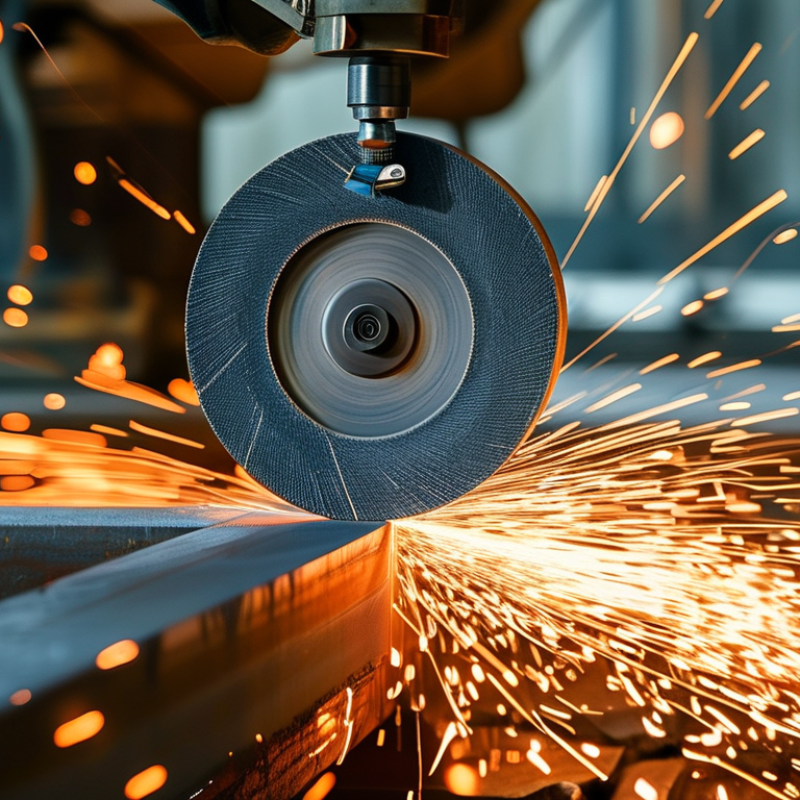
Abrasive metal cutting discs are classified by more than diameter. Buyers should examine the abrasive grain, bond, reinforcement, thickness, and cutting purpose. This approach reduces mismatched purchases in workshops and fabrication areas.
The ten common types include aluminum oxide discs for general steel, zirconia alumina discs for tougher alloys, ceramic alumina discs for demanding production, and silicon carbide discs for selected nonferrous metals. Other types include thin precision discs, heavy-duty reinforced discs, stainless-steel discs, cast-iron discs, high-speed cutting discs, and compact discs for portable grinders. These categories can overlap, so the label needs careful reading.
Bond classification also matters. Resin-bonded discs cut aggressively and remain relatively flexible, while reinforced resin bonds improve side-load resistance. Fiberglass layers add strength, but they do not make a disc indestructible. Disc shape provides another clue: Type 1 or Type 41 discs have a flat profile for straight cuts, while Type 27 or Type 42 discs use a depressed center for improved tool clearance. Thickness affects speed, heat, and control. Thin discs usually cut faster, but they may wear sooner. I have found that buyers often focus on grit and ignore hardness. That is a costly oversight. Check the material, grinder speed, disc dimensions, and required cut quality before choosing. The safest choice is not always the fastest one.
Top 10 Abrasive Metal Cutting Disc Types for Buyers?
The Ten Main Types of Abrasive Metal Cutting Discs
The ten main types include aluminum oxide, zirconia alumina, ceramic alumina, silicon carbide, diamond, cubic boron nitride, reinforced resin-bond, thin cut-off, stainless-steel, and segmented diamond discs. Each type removes metal differently. Aluminum oxide suits mild steel and general fabrication. Zirconia alumina handles tougher steel with stronger grain support. Ceramic alumina cuts aggressively and stays sharp longer. Silicon carbide works better on cast iron and non-ferrous metals. Diamond discs suit masonry or carbide materials, but ordinary steel can damage them quickly. CBN discs manage hardened steel with excellent heat resistance. Reinforced resin-bond discs provide safer strength during handheld cutting. Thin cut-off discs reduce kerf loss. Stainless-steel discs limit contamination. Segmented diamond discs improve cooling and debris removal. The categories overlap, which can confuse buyers.
Grand View Research valued the global abrasives market at about USD 46 billion in 2023. That scale reflects demand from metalworking, construction, and machinery repair. Yet market growth does not make every disc suitable. A 1.0-millimeter disc cuts quickly, but it may bend under side pressure. A thicker disc feels stable, though it removes more material. I still check the workpiece, machine speed, disc diameter, and reinforcement before buying. One shortcut can fail.
Tips: Match the abrasive to the metal, not only the price. Check the disc’s maximum RPM against the grinder. Keep cutting pressure straight and light. For stainless steel, choose contamination-controlled products. Stop using any disc with cracks, chips, or moisture damage. Safety data sheets and recognized technical standards deserve a careful reading.
When buyers compare the top ten abrasive metal cutting disc types, material choice should lead the review. Aluminum oxide suits common carbon steel and offers predictable cutting at moderate cost. Zirconia alumina cuts harder alloys with a sharper, more durable grain. Silicon carbide performs well on cast iron and nonferrous metals, but it may wear quickly on tough steel. Ceramic grain removes material aggressively and stays sharp under demanding pressure. Diamond-edged discs belong to specialized applications and require careful material matching.
Reinforcement affects safety, stiffness, and cutting control. Most discs use fiberglass layers embedded inside a resin bond. A single layer can feel flexible during light work. Multiple layers improve resistance to bending and accidental side pressure. However, extra reinforcement may increase drag. Thin resin-bonded discs usually cut faster, while thicker discs tolerate heavier work but remove more material. Hard bonds can last longer on soft metals. Softer bonds often release worn grains more effectively on hardened steel.
In workshop checks, I inspect the grit, disc hardness, thickness, arbor size, and stated operating speed. The disc must match the tool’s rated speed. I also look for cracks, edge damage, and moisture exposure before mounting. A disc that cuts quickly is not always the best choice. Excessive pressure can glaze the abrasive and overheat the workpiece. I have seen experienced operators choose a thin disc, then regret it when alignment becomes difficult. That imperfect decision is useful feedback: construction and reinforcement deserve equal attention as abrasive type.
Typical disc thickness by abrasive material, reinforcement, and construction. Values are indicative midpoints of commonly available industrial specifications.
Thin discs generally provide faster, lower-force cuts, while thicker reinforced constructions offer greater rigidity and durability. Aluminum oxide is widely used for carbon steel, silicon carbide for non-ferrous metals and cast iron, zirconia and ceramic abrasives for high-performance cutting, and diamond or cBN for specialized applications.
Choosing the right abrasive metal cutting disc depends on the metal, thickness, grinder speed, and required finish. The main options include aluminum oxide, zirconia alumina, ceramic alumina, silicon carbide, diamond-coated, thin cut-off, heavy-duty reinforced, stainless-steel, multi-material, and low-spark discs. Aluminum oxide suits ordinary carbon steel and light fabrication. Zirconia handles harder steel with stronger edge retention. Ceramic alumina cuts demanding alloys faster, but usually costs more. Silicon carbide works better on cast iron and non-ferrous materials than ordinary steel.
Match disc thickness to the task. A 0.8–1.0 mm thin disc makes quick, clean cuts in sheet metal and tubing. A 1.6–2.5 mm reinforced disc tolerates thicker sections and less controlled handling. Stainless-steel work needs a low-iron disc, especially where surface contamination could cause rust spots. Diamond-coated discs can serve specialized metal applications, but they are not a universal replacement for bonded abrasives.
Check the disc’s maximum RPM before mounting it. According to the 2023 Grand View Research abrasives report, the global abrasives market reached approximately 47 billion dollars in 2022, reflecting broad demand across fabrication and maintenance. However, market growth does not guarantee better cutting results. A 2024 occupational safety review from the U.S. Bureau of Labor Statistics continues to associate hand-tool work with significant injury exposure, making guards, eye protection, and controlled pressure essential. One label is never enough. In practice, I test one cut on scrap metal first. Disc choice can still be wrong, especially when heat buildup, burrs, or vibration are ignored.
Choosing among abrasive metal cutting discs starts with the job, not the package. Thin discs, often 0.8–1.2 mm, cut quickly and leave a narrow kerf. Standard discs around 1.6–2.5 mm offer greater durability for steel sections and repeated workshop use. Reinforced types suit demanding cuts, while stainless-steel formulations help reduce contamination. Aluminum needs a disc designed for soft, clog-prone metals. A general steel disc can load quickly. Disc diameter must match the tool guard and rated spindle speed. A 115 mm disc cannot safely replace a 125 mm disc. Size matters.
Check the disc’s maximum RPM before mounting. Never exceed it. Inspect for cracks, warping, moisture damage, or a missing label. Use the correct guard, eye protection, gloves, hearing protection, and stable work support. Let the disc cut at its own pace. Forcing it creates heat, vibration, and premature wear. In practical workshop use, a thicker disc sometimes lasts longer, but it also removes more material. That trade-off is easy to overlook. Performance depends on abrasive grain, bond hardness, reinforcement, metal thickness, and operator pressure. Wet storage can quietly weaken abrasive products.
Tips: Compare cost per cut, not price per disc. Track clean cuts on the same material. A cheaper disc may cost more if it burns edges, slows production, or needs frequent replacement. Buy small quantities when changing thickness or metal type. Record cutting speed and disc life. Real results may differ from catalog claims. Measurement beats assumption.
„Thanks to the LUVIR technology, the solder resist process could be switched directly from the previously used mask exposure to direct exposure. As an outstanding digital solution on the market, this technology has been able to demonstrate fast process times and superior quality on our certified conventional ink in production. This allowed us to fully digitize the solder mask process at low cost – without process or ink adjustments. An excellent benefit to our production in Rot am See.“
Ralf Göhringer (Head of Production WE Rot am See)
I would definitely recommend the Limata machine and team for a future company purchase
Michael Greenaway
Compunetics Inc.
“The Limata ldi has been amazing!! Best thing we did was buy this machine”
Richard Brady
GM
Circuitlabs
“Since 2019, we have been running the Limata X1000 LDI system (including LUVIR for solder mask imaging) in daily production as an addition to our current process with film. The machine was capable of properly exposing Taiyo PSR-4000 BN (DI) solder mask types on normal to high-copper boards using a new and unique direct imaging process. The machine operating interface is very user friendly which allowed for a quick technical training curve. The pre-registration processing reduced several seconds of production time at every print. Limata support and service staff is incomparable. They supported our team every step of the way at basically any time of the day or night, with literally, an immediate response time, customizing the software interface to best fit our Operations and needs.
We have exposed more than 8,000 prints since end of October, on various solder mask colors and some resist film panels. Limata, has proven to be very capable and innovative. They are a strong contender in the industry.
We have very much enjoyed this project, and working with the team!
Thank you Limata for the continued support and being a part of our growth.”
Bill Sezate
Vice President, GM
Summit Interconnect
As a replacement to our current contact exposure process with film, the LIMATA X2000 system including LUVIR-Technology was capable of properly exposing non-LDI solder mask types using a direct imaging process. The machine offers cutting edge software with a very intuitive operating interface which allowed for quick technician training curve. The dual drawer system combined with pre-registration processing reduced several seconds of production time at every machine cycle. Limata support and service staff is world class. They added software patches to keep production running at shortest possible response times, customized the software interface to best fit our in-house Operations system, and even wrote a step-by-step machine processing manual. As a result of the project, we have exposed more than 16,000 times on various product types and solder mask brands/colors. Limata, in a very short timeframe as a company, has definitely shown they are truly innovative and will be challenging the industry of direct imaging for the top spot.
Kevin Beattie
Process Engineer
TTM Technologies
Forest Grove Division
