In today's fast-paced manufacturing landscape, the PLC CNC machine has become an essential tool for businesses. This advanced technology streamlines processes and enhances productivity. Companies that adopt PLC CNC machines can ensure greater precision and consistency in their operations.
The integration of a PLC CNC machine in production can significantly reduce operational costs. Its automation capabilities minimize human error and improve efficiency. As a result, businesses can achieve higher output levels with less waste. Moreover, this technology is flexible, adapting to various designs and materials.
Yet, transitioning to a PLC CNC machine does come with challenges. Training employees may take time and resources. Additionally, initial investments can be daunting for small enterprises. However, the long-term benefits often outweigh these obstacles, making it a worthwhile consideration for forward-thinking businesses. Embracing this technology can redefine operational capabilities and drive success in competitive markets.
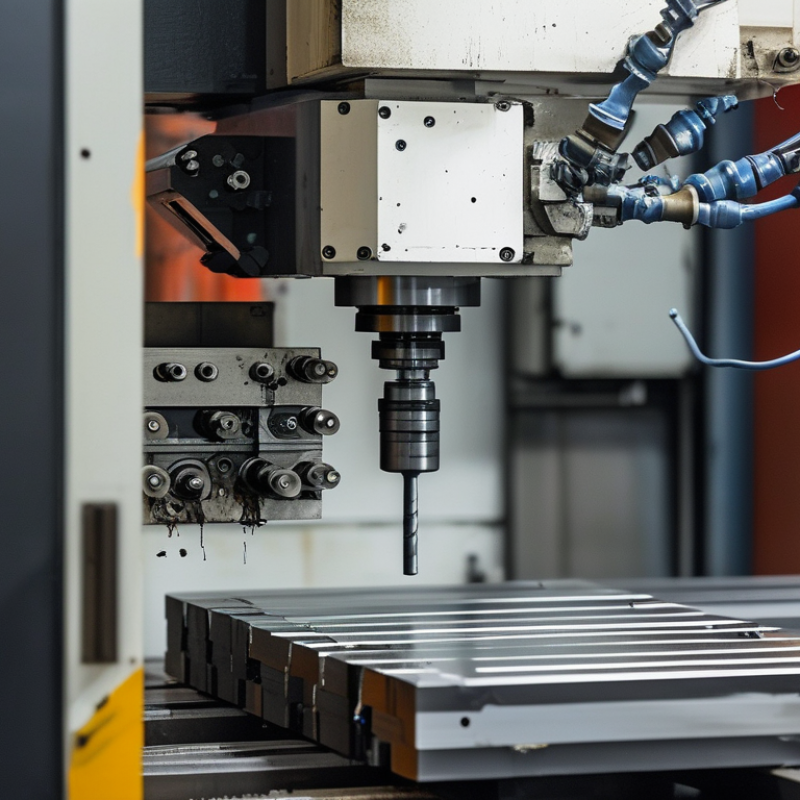
Precision and accuracy are crucial in manufacturing. PLC CNC machines excel in these aspects. They automate processes, reduce human error, and increase production efficiency. This technology ensures that every cut and shape is consistent, leading to higher-quality products. Businesses that adopt these machines often see a significant boost in their output and customer satisfaction.
When integrating PLC CNC machines, consider staff training. Operators should be familiar with both the software and hardware. This ensures smooth operational flow and minimizes downtime. Create a culture that values continuous learning. It can dramatically improve a team's ability to troubleshoot equipment and processes.
Incorporating regular maintenance is wise. Check for wear and tear on parts frequently. This proactive approach can prevent costly breakdowns. Sometimes, companies neglect this aspect, focusing solely on production. A balanced focus on both production and maintenance is necessary for sustainable growth. Always be open to refining your processes, as technology and competencies evolve.
Automation has transformed manufacturing. PLC CNC machines are at the forefront of this change. They optimize processes, reduce waste, and boost productivity. By integrating these machines, businesses can significantly decrease operational costs.
Increased efficiency is key. With precise programming, PLC CNC machines streamline production workflows. They minimize manual errors and enhance accuracy. This shift leads to consistent quality in products. Additionally, fewer resources are wasted during production, contributing to cost savings.
However, there are challenges. The initial investment can be substantial, making budget planning crucial. Companies must also invest in training personnel to operate these systems. Balancing these costs against long-term benefits requires careful analysis. It is essential to ensure that automation aligns with business goals for optimal results.
The integration of PLC CNC machines can dramatically enhance production speed. These machines utilize programmable logic controllers to automate tasks. This technology streamlines workflows and reduces human error. As a result, cycle times improve significantly. Fast, precise operations lead to more units produced in less time.
Moreover, the adaptability of PLC CNC machines is crucial. They can handle complex designs without rewiring or extensive setup. This flexibility allows businesses to pivot quickly to customer demands. However, transitioning to this technology requires investment in training. Staff must adapt to new systems. Not every employee will find this easy.
Incorporating PLC CNC machines can also raise quality consistency. With automation, processes remain uniform. Yet, over-reliance on machines poses risks too. Regular maintenance is essential to prevent long downtime. This technology offers great benefits, but careful planning is vital to maximize efficiency.
The integration of PLC CNC machines has transformed manufacturing quality control. These machines consistently deliver precise outcomes. According to a report by the International Society of Automation, manufacturers using CNC technology see a 30% reduction in production defects. This notable improvement enhances overall product reliability.
With PLC CNC machines, automation ensures uniformity in production processes. The exactness of each cut or weld reduces the variance in product quality. A study by Technavio stated that automated processes could boost efficiency by up to 25%. This means better adherence to quality standards and minimized waste.
However, the implementation of such advanced machinery can bring challenges. Not all operators are familiar with programming and operation. Training programs can be time-consuming, and the initial investment is considerable. Reflecting on these hurdles allows businesses to strategize better, tapping into the full potential of technology while addressing operational gaps.
This bar chart illustrates the impact score of the top 10 benefits of using PLC CNC machines in business operations. The scores reflect the significance of each benefit on a scale from 1 to 10, showcasing how these machines can enhance manufacturing processes.
Using a PLC CNC machine offers significant flexibility in design adjustments and customization, especially for diverse projects. Many manufacturers today report a 30% increase in efficiency when utilizing CNC technology. This is largely due to the ability to quickly modify designs. If a blueprint requires changes, the machine can be reprogrammed swiftly. This adaptability means businesses can respond to client feedback immediately.
The importance of customization cannot be overstated. A recent survey indicated that 72% of customers prefer products tailored to their needs. With PLC CNC machines, crafting unique components becomes seamless. They can handle intricate designs that manual methods cannot achieve. However, some operators may still struggle with the learning curve involved with programming these machines. Training is essential. Without it, the potential benefits may not be fully realized.
In addition to design flexibility, PLC CNC machines reduce material waste. A case study from the National Institute of Standards and Technology showed that CNC operations can minimize waste by approximately 15%. Nonetheless, not all companies implement these systems efficiently. Some organizations face challenges in integrating the technology into existing workflows. A careful analysis of operations is crucial to understand the best approach.
| Benefit | Description | Impact on Business |
|---|---|---|
| Flexibility in Design | Ability to modify designs quickly to meet customer requirements. | Improved customer satisfaction due to personalized solutions. |
| Increased Productivity | Automation speeds up the manufacturing process. | Higher output means better profitability. |
| Precision and Accuracy | CNC machines deliver consistent and accurate cuts. | Reduction in waste and rework costs. |
| Cost-Effectiveness | Reduced labor costs and material waste. | Improved overall profit margins. |
| Scalability | Easily scale up production to meet demand. | Ability to grow business without significant new investment. |
| Integration with CAD/CAM | Seamless integration improves design to production flow. | Faster time to market for products. |
| Improved Safety | Reduces manual handling and dangerous operations. | Lower risk of workplace accidents. |
| Remote Monitoring | Allow operators to monitor machines from anywhere. | Enhanced maintenance and downtime management. |
| Better Resource Management | Optimizes the use of materials and labor. | Increases efficiency across all operations. |
| Enhanced Quality Control | In-process monitoring ensures product quality. | Higher-quality products lead to better market reputation. |
„Thanks to the LUVIR technology, the solder resist process could be switched directly from the previously used mask exposure to direct exposure. As an outstanding digital solution on the market, this technology has been able to demonstrate fast process times and superior quality on our certified conventional ink in production. This allowed us to fully digitize the solder mask process at low cost – without process or ink adjustments. An excellent benefit to our production in Rot am See.“
Ralf Göhringer (Head of Production WE Rot am See)
I would definitely recommend the Limata machine and team for a future company purchase
Michael Greenaway
Compunetics Inc.
“The Limata ldi has been amazing!! Best thing we did was buy this machine”
Richard Brady
GM
Circuitlabs
“Since 2019, we have been running the Limata X1000 LDI system (including LUVIR for solder mask imaging) in daily production as an addition to our current process with film. The machine was capable of properly exposing Taiyo PSR-4000 BN (DI) solder mask types on normal to high-copper boards using a new and unique direct imaging process. The machine operating interface is very user friendly which allowed for a quick technical training curve. The pre-registration processing reduced several seconds of production time at every print. Limata support and service staff is incomparable. They supported our team every step of the way at basically any time of the day or night, with literally, an immediate response time, customizing the software interface to best fit our Operations and needs.
We have exposed more than 8,000 prints since end of October, on various solder mask colors and some resist film panels. Limata, has proven to be very capable and innovative. They are a strong contender in the industry.
We have very much enjoyed this project, and working with the team!
Thank you Limata for the continued support and being a part of our growth.”
Bill Sezate
Vice President, GM
Summit Interconnect
As a replacement to our current contact exposure process with film, the LIMATA X2000 system including LUVIR-Technology was capable of properly exposing non-LDI solder mask types using a direct imaging process. The machine offers cutting edge software with a very intuitive operating interface which allowed for quick technician training curve. The dual drawer system combined with pre-registration processing reduced several seconds of production time at every machine cycle. Limata support and service staff is world class. They added software patches to keep production running at shortest possible response times, customized the software interface to best fit our in-house Operations system, and even wrote a step-by-step machine processing manual. As a result of the project, we have exposed more than 16,000 times on various product types and solder mask brands/colors. Limata, in a very short timeframe as a company, has definitely shown they are truly innovative and will be challenging the industry of direct imaging for the top spot.
Kevin Beattie
Process Engineer
TTM Technologies
Forest Grove Division
