In the textile industry, the demand for innovative machinery is ever-growing. A Blend Fancy Yarn Raising Machine stands out for its unique capabilities. This machine combines various fibers to create fancy yarns with intricate textures. Business owners need to understand its importance in boosting production and enhancing product quality.
Investing in the right Blend Fancy Yarn Raising Machine can be a challenge. Each machine comes with different features and specifications. Some machines are designed for large-scale production, while others cater to small businesses. It's essential to choose a machine that fits your specific requirements. Researching and comparing models can save time and resources.
As the industry evolves, staying informed about the latest technologies is crucial. Quality machines can significantly impact your production process. However, reliability may vary across different brands. Therefore, careful consideration is needed. Reflecting on your business goals will guide your decision-making. The right Blend Fancy Yarn Raising Machine can take your business to new heights, ensuring that you remain competitive in a dynamic market.
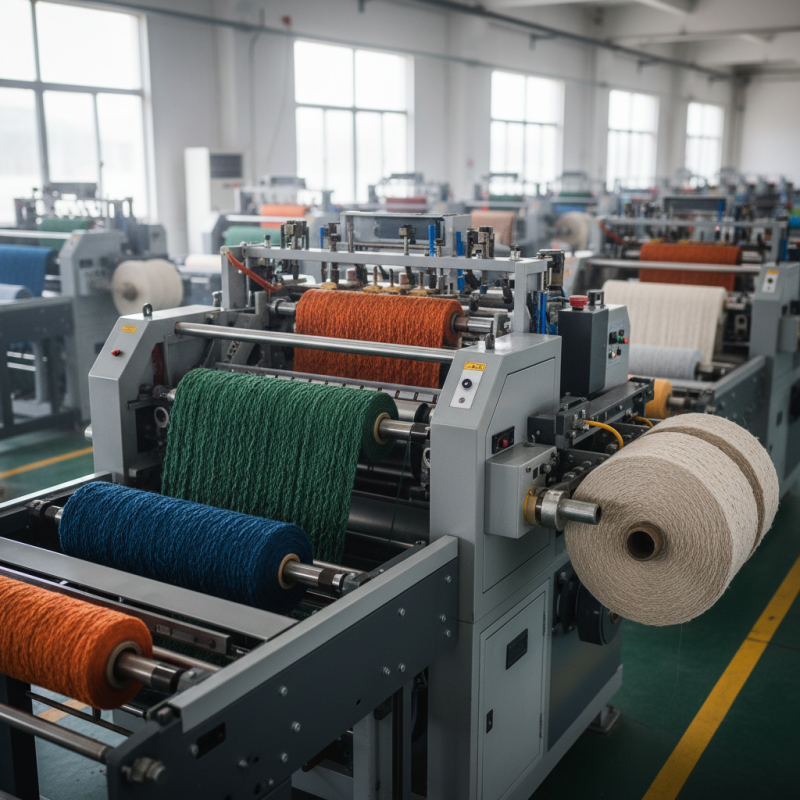
When exploring blend fancy yarn raising machines, understanding their features is essential. These machines transform raw fibers into unique yarns by blending various materials. This process allows for creativity in textile design, catering to diverse business needs. The outcome is fabric that is not only visually appealing but also durable.
Different machines offer varying capabilities. Some focus on fine blending while others emphasize thickness. Choosing the right machine requires careful consideration. It’s important to assess your production requirements. Some machines might have limitations that could impact your efficiency. Inconsistent quality can also be an issue worth noting.
Efficiency and reliability are crucial. However, not all machines perform equally in every aspect. Some may require more downtime for maintenance. This can disrupt production schedules. Balancing machine reliability with output quality is a challenge. Understanding these dynamics will help you make a more informed decision.
When selecting yarn raising machines, it's crucial to focus on essential features. The right machine can significantly impact production quality. For instance, a machine's ability to adjust yarn tension is vital for achieving desired textures. Reports indicate that proper tension control reduces defects by up to 30%. Flexibility in material handling is also key, as businesses need to work with various fiber types. A machine that swiftly accommodates different yarns enhances operational efficiency.
Energy efficiency is another critical aspect to evaluate. According to industry studies, energy-efficient machines can lower operational costs by approximately 15-25%. This is particularly relevant given the rising energy prices globally. Additionally, user-friendly interfaces streamline the training process for staff. Accessibility to maintenance and support is often a deciding factor too. Some machines may have complex setups which could lead to extended downtime.
Moreover, consider the machine's production capacity. Some systems can produce up to 500 kg of yarn daily, catering to high-demand environments. Yet, higher capacity does not always guarantee superior quality. It's important to balance speed with craftsmanship. Investing in technology that allows for customization in yarn production may offer long-term benefits. Regularly reviewing equipment performance with industry benchmarks can lead to smarter purchasing decisions.
In the realm of textile manufacturing, blend fancy yarn raising machines play a crucial role. Businesses seek reliable machines for quality production, as these devices significantly influence the final product. Recent data shows the global yarn market is projected to reach $325 billion by 2027. This growth underscores the importance of investing in advanced machinery.
One notable trend is the rise of eco-friendly materials in yarn production. The textile industry is gradually shifting towards sustainability. Reports indicate that 45% of manufacturers prioritize sustainable practices. This has led to an increased demand for machines that accommodate organic fibers. Advanced technology is essential for creating complex yarn blends efficiently.
While identifying the top brands, it's vital to recognize the variations in quality and performance. Some machines may produce inconsistent results, leaving manufacturers to reconsider their options. Additionally, maintenance issues can arise, impacting overall efficiency. Investing in high-quality machinery can prevent these setbacks, ultimately enhancing production capabilities.
When selecting blend fancy yarn raising machines, understanding their efficiency and output is essential. Efficiency can drastically affect production timelines. An efficient machine minimizes downtime. This directly enhances overall productivity in manufacturing environments. The speed of operation plays a critical role. Machines that function at higher speeds often yield a greater volume of yarn in less time. Proper maintenance is necessary for optimal performance.
Output quality is equally vital. Some machines produce yarn with inconsistencies. This can lead to higher rejection rates during quality control. Operators must regularly calibrate their machines. It ensures they meet the desired standards of blend ratios. In addition, a machine that offers versatility can adapt to various yarn types. This may increase overall output effectiveness and customer satisfaction.
However, not every machine excels in all areas. Some may perform well in terms of speed but compromise on quality. This trade-off can be frustrating. Understanding these compromises is crucial for informed decision-making. Investing in training operators can also improve machine efficiency. Continuous assessment of machine performance fosters reliability and helps pinpoint areas needing improvement.
Investing in yarn raising technology is a significant decision for any business. When selecting machines, consider your production capacity and the types of blends you aim to create. A blend fancy yarn raising machine can increase your output. Talk to experienced manufacturers about the latest technologies. Analyze their features and see how they align with your goals.
Moreover, consider the long-term costs associated with these machines. Maintenance, repair, and operational expenses can vary. A lower initial price may lead to higher costs in the future. Reflect on the reliability of the machinery too. Machines with a solid track record often provide better value through their lifespan. Gathering feedback from other businesses can guide your choice.
Lastly, don’t overlook the learning curve for your staff. Implementing new technology often requires training. This investment can impact productivity in the short term. Think about how willing your team is to adapt. Sometimes, introducing advanced machinery means rethinking your workflow. Be prepared for challenges as you modernize your operations.
„Thanks to the LUVIR technology, the solder resist process could be switched directly from the previously used mask exposure to direct exposure. As an outstanding digital solution on the market, this technology has been able to demonstrate fast process times and superior quality on our certified conventional ink in production. This allowed us to fully digitize the solder mask process at low cost – without process or ink adjustments. An excellent benefit to our production in Rot am See.“
Ralf Göhringer (Head of Production WE Rot am See)
I would definitely recommend the Limata machine and team for a future company purchase
Michael Greenaway
Compunetics Inc.
“The Limata ldi has been amazing!! Best thing we did was buy this machine”
Richard Brady
GM
Circuitlabs
“Since 2019, we have been running the Limata X1000 LDI system (including LUVIR for solder mask imaging) in daily production as an addition to our current process with film. The machine was capable of properly exposing Taiyo PSR-4000 BN (DI) solder mask types on normal to high-copper boards using a new and unique direct imaging process. The machine operating interface is very user friendly which allowed for a quick technical training curve. The pre-registration processing reduced several seconds of production time at every print. Limata support and service staff is incomparable. They supported our team every step of the way at basically any time of the day or night, with literally, an immediate response time, customizing the software interface to best fit our Operations and needs.
We have exposed more than 8,000 prints since end of October, on various solder mask colors and some resist film panels. Limata, has proven to be very capable and innovative. They are a strong contender in the industry.
We have very much enjoyed this project, and working with the team!
Thank you Limata for the continued support and being a part of our growth.”
Bill Sezate
Vice President, GM
Summit Interconnect
As a replacement to our current contact exposure process with film, the LIMATA X2000 system including LUVIR-Technology was capable of properly exposing non-LDI solder mask types using a direct imaging process. The machine offers cutting edge software with a very intuitive operating interface which allowed for quick technician training curve. The dual drawer system combined with pre-registration processing reduced several seconds of production time at every machine cycle. Limata support and service staff is world class. They added software patches to keep production running at shortest possible response times, customized the software interface to best fit our in-house Operations system, and even wrote a step-by-step machine processing manual. As a result of the project, we have exposed more than 16,000 times on various product types and solder mask brands/colors. Limata, in a very short timeframe as a company, has definitely shown they are truly innovative and will be challenging the industry of direct imaging for the top spot.
Kevin Beattie
Process Engineer
TTM Technologies
Forest Grove Division
