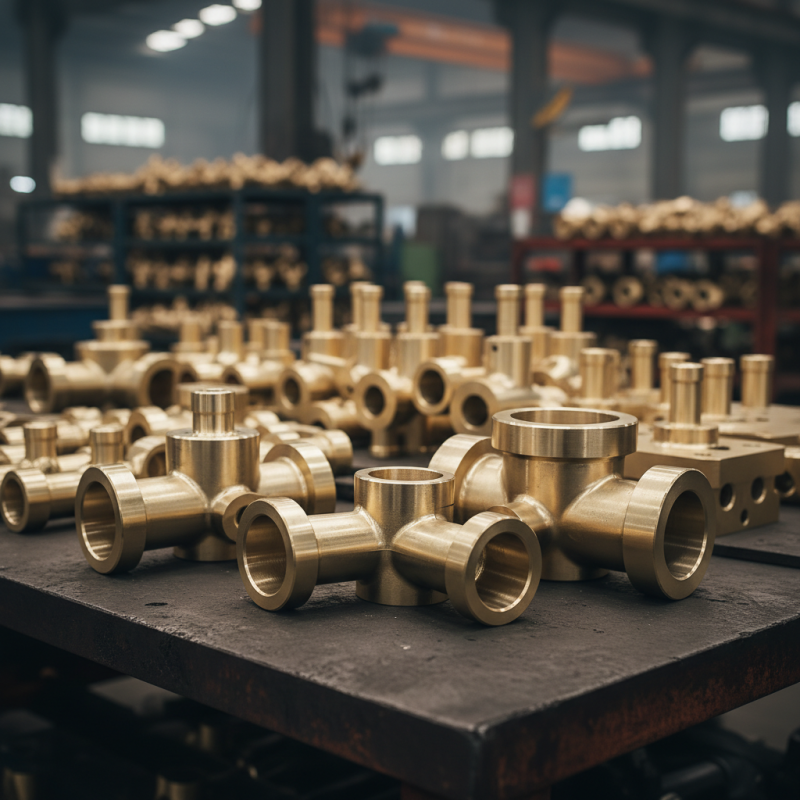
In recent years, Brass Die Casting has gained significant attention in manufacturing industries. Its strength, durability, and corrosion resistance make it an ideal choice for various applications. Many global buyers are in search of reliable suppliers to meet their demands. China, recognized for its robust manufacturing sector, has become a key player in this market.
Finding the right supplier can often be a challenge. While many companies claim to offer quality Brass Die Casting products, not all can guarantee excellence. Buyers need to consider factors such as production capacity, quality control, and supplier reputation. This research reveals that understanding these aspects is crucial for making informed decisions.
Amidst the plethora of options, some suppliers stand out for their expertise and reliability. However, there are also those who fall short of expectations. A careful analysis of the top 10 Brass Die Casting suppliers in China can provide invaluable insights. This exploration will equip global buyers with the knowledge necessary to navigate this competitive landscape effectively.
The brass die casting industry in China has seen remarkable growth, becoming a key player in global manufacturing. In 2022, the market value for brass die casting in China was estimated at over $2 billion, with projections forecasting continued expansion. This growth is driven by increased demand in automotive, electronics, and plumbing sectors.
Market leaders have leveraged advanced technologies and automation, enhancing production efficiency and quality. However, challenges remain. Issues like varying quality standards and supply chain disruptions can impact reliability. Buyers must scrutinize potential suppliers carefully.
Tips for Selecting a Supplier: Always request samples and check their certifications. Understanding their production processes can provide insight into their quality control measures. Communication is crucial; a responsive supplier may indicate a commitment to client needs.
Furthermore, while many suppliers boast state-of-the-art facilities, it’s essential to verify their experience and track record. A supplier with extensive industry knowledge may navigate complex product requirements better. Consider looking for those with a proven history in your specific applications.
This chart represents the estimated production capacity (in tons) of the top brass die casting suppliers in China. The data is indicative of market leaders' capabilities in the industry.
Brass die casting is becoming essential in various industries. Its lightweight and corrosion-resistant properties make it ideal for automotive, electronics, and plumbing applications. Demand has surged due to rapid industrialization in various regions. Manufacturers seek durable materials to enhance product longevity. Brass offers excellent mechanical strength that improves the quality of end products.
The global push for sustainable solutions is also driving brass die casting demand. Many industries prioritize eco-friendly components. Brass is recyclable, appealing to companies focusing on sustainability. Furthermore, the growth of electric vehicles requires efficient parts. Brass components can significantly reduce weight, improving battery performance. This shift towards green technology may highlight areas for improvement in recycling processes to maximize material reuse.
Innovation plays a role in shaping demands. Advanced molding techniques enhance precision and reduce waste. However, challenges remain in maintaining consistent quality across suppliers. Variations in alloy composition can lead to performance issues. Suppliers must invest in quality control measures to ensure reliability. Learning from these challenges is crucial for future growth.
Brass die casting is a critical process in manufacturing. Quality standards play a pivotal role. Many manufacturers claim adherence to strict guidelines. However, discrepancies often arise. In 2022, a report by the International Die Casting Association indicated that over 30% of suppliers failed quality audits.
The factors influencing quality include material composition, tooling precision, and operational processes. Regular inspections can identify issues early. Yet, many suppliers overlook this step. A survey revealed that 25% of companies lack proper quality management systems. Continuous training is necessary for workers to maintain high standards.
It's essential to review certifications and industry standards. ISO 9001 and AS9100 are critical benchmarks in the industry. Some suppliers may have these certifications but fail on practical execution. Trust but verify remains a valid strategy. Buyers should demand transparency and proactive communication from their suppliers. This approach fosters a culture of quality and accountability.
When examining pricing strategies among brass die casting suppliers in China, various factors come into play. A recent market report shows that suppliers frequently adjust prices based on raw material costs. Prices can fluctuate by up to 15% due to changes in copper prices or alloy composition. Understanding this can help buyers anticipate potential price hikes.
Additionally, different suppliers incorporate various overhead costs into their pricing models. For example, suppliers focusing on advanced technology may charge higher rates for their services. A study indicated that technology-driven casting processes can increase production costs by as much as 20%. This investment often reflects in product quality.
Customers need to be aware of these pricing structures. Some suppliers offer competitive rates, but hidden costs can arise later. For example, shipping fees or additional charges for custom designs may not be apparent upfront. A careful review of supplier contracts is crucial to avoid unexpected expenses.
Brass die casting is evolving rapidly. New technologies push the envelope on efficiency and precision. Innovations such as 3D printing and advanced CNC machining improve the casting process. These methods enhance design flexibility, helping create complex shapes with excellent detail.
Many companies are now implementing automation in their production lines. Automated systems reduce human error and increase output. This trend highlights a shift towards smart manufacturing. While this brings many advantages, companies must train their workforce to adapt to these technologies.
Tips: Always assess the reliability of your suppliers. Check their capabilities before committing. Be aware of the design constraints that may arise from new technologies. Balancing innovation with practical limits is crucial. Continually evaluate how these advancements impact your projects and budgets.
„Thanks to the LUVIR technology, the solder resist process could be switched directly from the previously used mask exposure to direct exposure. As an outstanding digital solution on the market, this technology has been able to demonstrate fast process times and superior quality on our certified conventional ink in production. This allowed us to fully digitize the solder mask process at low cost – without process or ink adjustments. An excellent benefit to our production in Rot am See.“
Ralf Göhringer (Head of Production WE Rot am See)
I would definitely recommend the Limata machine and team for a future company purchase
Michael Greenaway
Compunetics Inc.
“The Limata ldi has been amazing!! Best thing we did was buy this machine”
Richard Brady
GM
Circuitlabs
“Since 2019, we have been running the Limata X1000 LDI system (including LUVIR for solder mask imaging) in daily production as an addition to our current process with film. The machine was capable of properly exposing Taiyo PSR-4000 BN (DI) solder mask types on normal to high-copper boards using a new and unique direct imaging process. The machine operating interface is very user friendly which allowed for a quick technical training curve. The pre-registration processing reduced several seconds of production time at every print. Limata support and service staff is incomparable. They supported our team every step of the way at basically any time of the day or night, with literally, an immediate response time, customizing the software interface to best fit our Operations and needs.
We have exposed more than 8,000 prints since end of October, on various solder mask colors and some resist film panels. Limata, has proven to be very capable and innovative. They are a strong contender in the industry.
We have very much enjoyed this project, and working with the team!
Thank you Limata for the continued support and being a part of our growth.”
Bill Sezate
Vice President, GM
Summit Interconnect
As a replacement to our current contact exposure process with film, the LIMATA X2000 system including LUVIR-Technology was capable of properly exposing non-LDI solder mask types using a direct imaging process. The machine offers cutting edge software with a very intuitive operating interface which allowed for quick technician training curve. The dual drawer system combined with pre-registration processing reduced several seconds of production time at every machine cycle. Limata support and service staff is world class. They added software patches to keep production running at shortest possible response times, customized the software interface to best fit our in-house Operations system, and even wrote a step-by-step machine processing manual. As a result of the project, we have exposed more than 16,000 times on various product types and solder mask brands/colors. Limata, in a very short timeframe as a company, has definitely shown they are truly innovative and will be challenging the industry of direct imaging for the top spot.
Kevin Beattie
Process Engineer
TTM Technologies
Forest Grove Division
