Choosing a Hydraulic Internal Gear Pump manufacturer in China involves more than comparing prices. Pump performance depends on the application, operating pressure, flow rate, fluid viscosity, and installation space. A unit selected for a mobile machine may not suit a continuous industrial system. Small details matter: port dimensions, shaft configuration, sealing materials, and noise limits can affect installation and service life. Fit matters.
This guide examines how to assess manufacturers using practical, verifiable information. Look for clear product specifications, material options, quality-control procedures, and test documentation. Ask whether the supplier can explain how its pump performs under your stated operating conditions, rather than relying on broad claims. Where possible, compare samples or request performance curves that match the intended fluid and speed range. These checks do not guarantee a perfect choice, but they make comparisons more meaningful.
China has a broad hydraulic equipment supply base, yet capabilities can differ between factories and product lines. A polished catalog is not proof of consistent production. That is worth remembering. Buyers should also clarify lead times, customization limits, spare-parts availability, and how technical questions are handled after delivery. This overview introduces manufacturers and selection factors without treating any ranking as universal. The best match depends on the duty cycle, system design, and evidence a supplier can provide. Even careful research has limits; actual operating conditions may reveal issues that a brochure cannot.
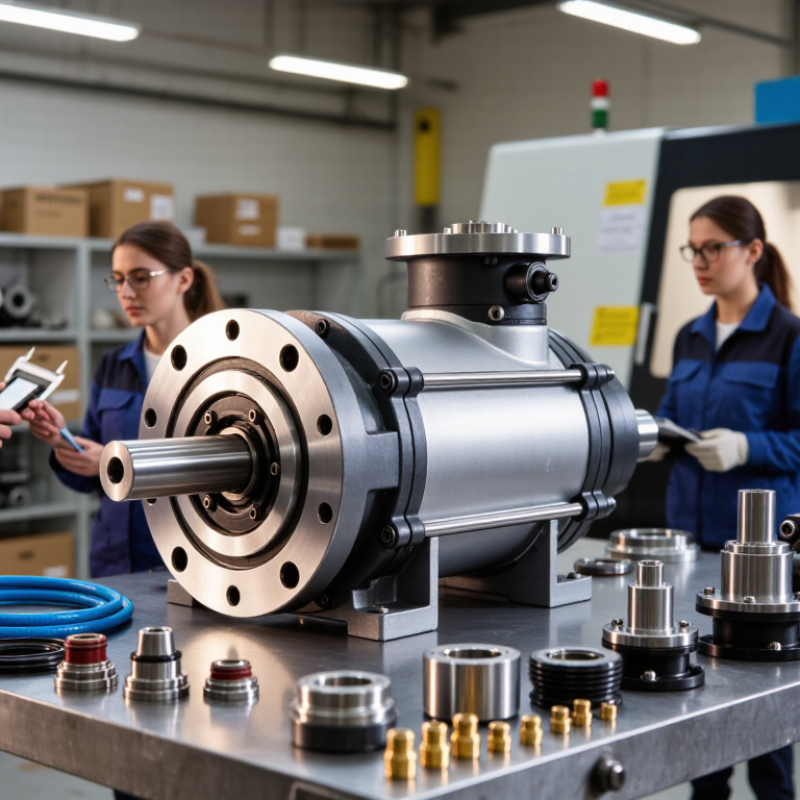
What Is a Hydraulic Internal Gear Pump?
A hydraulic internal gear pump converts shaft rotation into steady fluid flow. Inside, a smaller drive gear turns off-center within a larger ring gear. As the teeth separate, expanding spaces draw oil through the inlet. The oil moves around the housing in the gaps between the gears, then exits as the teeth mesh again. Many designs use a crescent-shaped divider to separate inlet and outlet zones. The principle is compact. Unlike a centrifugal pump, this positive-displacement design moves a nominal volume with each revolution, though leakage and oil condition affect actual output.
Internal gear pumps are often selected for quiet operation and for handling viscous fluids. They still need suitable inlet conditions, clean oil, and a speed matched to the application. Poor suction conditions can cause noise, heat, and premature wear. The U.S. Department of Energy’s Improving Pumping System Performance sourcebook estimates that pumping systems account for nearly 20% of global electricity demand; that figure covers pumping broadly, not hydraulic internal gear pumps alone. It underscores why system efficiency matters. In practice, a pump that looks correctly sized on paper can disappoint if the oil is too cold or the suction line is restrictive. That detail is easy to overlook.
China’s internal gear pump industry is structured across component suppliers, pump specialists, system integrators, and equipment makers. Upstream firms supply precision gears, shafts, seals, bearings, and cast housings. Pump manufacturers then machine, assemble, and test units for mobile equipment, industrial machinery, and lubrication systems. Small details matter: tooth clearance, surface finish, and oil temperature can shape noise and service life.
The market context is broader than internal gear pumps alone. Grand View Research’s Hydraulic Pump Market report estimates the global market at about USD 10.5 billion in 2023. That figure covers multiple pump types and regions, not China’s internal gear segment specifically. Still, it points to a sizable industrial base. In China, suppliers often serve both direct equipment makers and distributors, while larger engineering projects may require custom pressure, flow, or mounting configurations. Testing typically checks leakage, pressure stability, and operating noise. The structure is not perfectly tidy; some manufacturers design pumps, while others rely on external machining or component partners. That can improve flexibility, but it also makes quality control uneven. A buyer should examine test records and production consistency, not just catalog specifications.
A reliable evaluation begins with the pump’s intended duty, not a factory’s marketing claims. Share the required displacement, operating pressure, speed range, fluid viscosity, and temperature. A capable manufacturer should explain how these conditions affect efficiency, noise, and service life. Ask for performance curves and test records tied to the proposed model. Numbers matter. Check whether the test setup resembles your actual application, including inlet conditions and fluid grade. A curve without clear test conditions is difficult to compare.
Review manufacturing controls as carefully as product data. Ask how gear dimensions, surface finish, and housing clearances are inspected, and whether measurement equipment is calibrated. Request material specifications, inspection records, and traceability for critical components. Ask how cleanliness is controlled during assembly; small particles can damage close-running hydraulic parts. Look for clear guidance on installation, filtration, and maintenance, plus a practical process for handling technical questions. Ask for references from similar operating environments, where available. A polished brochure is not proof. Sample testing may reveal issues that documents miss, though one sample cannot establish long-term reliability. Keep that limitation in mind.
Suggested screening weights for comparing manufacturers. These are evaluation priorities, not audited scores or rankings of specific companies.
Prioritize verified operating performance and application suitability, then assess quality systems, service support, production capability, and technical documentation. Confirm specifications and certifications directly with each supplier.
China’s internal gear pump sector includes manufacturers focused on compact hydraulic units for machine tools, mobile equipment, and industrial power systems. Their profiles often differ in engineering depth, production scale, and testing capability. Some specialize in standard models, while others build pumps around customer-specified flow, pressure, and mounting dimensions. The distinction matters. A catalog range alone does not show how well a pump performs under sustained heat or variable loads.
When assessing a supplier, buyers can ask for pressure-flow curves, material details, and test records tied to the proposed model. A close look at the housing finish, shaft fit, and port layout can also reveal how carefully production is controlled. Ask how the pump behaves with the intended hydraulic fluid and operating temperature. These details are more useful than broad claims about efficiency. Not every manufacturer publishes the same level of evidence, and public information can be incomplete.
Chinese producers may offer practical customization and shorter communication paths for regional projects, but capabilities vary widely. A sample should be tested in the actual circuit, not judged only by a brochure. Check noise, leakage, and temperature after a realistic duty cycle. Small differences matter. Even a well-machined pump can disappoint if its speed range or inlet conditions do not match the system. Independent verification is wise, though it adds time and cost.
An internal gear pump should be compared under the conditions it will actually face. Share the target flow, operating pressure, speed, fluid viscosity, and temperature range with each supplier. A pump rated for one oil at room temperature may behave differently with a colder, thicker fluid. Ask for performance curves across your expected speed range, not just a maximum-flow figure. Numbers are not enough. Check how each manufacturer explains pressure ripple, noise, and efficiency, and whether its test conditions match your application.
Review the construction details, including housing material, shaft sealing, clearances, and options for fluid compatibility. Ask how the pump handles brief start-up periods and what filtration it requires; small particles can accelerate wear. Request inspection records, traceability details, and a sample test report. Ask who investigates failures and how quickly replacement parts are typically available. A polished catalogue can still leave gaps. I would compare the answers in a simple table, then clarify any vague claims in writing. It may feel overly cautious, but that extra question can reveal whether a supplier understands your duty cycle or is only quoting a standard model.
„Thanks to the LUVIR technology, the solder resist process could be switched directly from the previously used mask exposure to direct exposure. As an outstanding digital solution on the market, this technology has been able to demonstrate fast process times and superior quality on our certified conventional ink in production. This allowed us to fully digitize the solder mask process at low cost – without process or ink adjustments. An excellent benefit to our production in Rot am See.“
Ralf Göhringer (Head of Production WE Rot am See)
I would definitely recommend the Limata machine and team for a future company purchase
Michael Greenaway
Compunetics Inc.
“The Limata ldi has been amazing!! Best thing we did was buy this machine”
Richard Brady
GM
Circuitlabs
“Since 2019, we have been running the Limata X1000 LDI system (including LUVIR for solder mask imaging) in daily production as an addition to our current process with film. The machine was capable of properly exposing Taiyo PSR-4000 BN (DI) solder mask types on normal to high-copper boards using a new and unique direct imaging process. The machine operating interface is very user friendly which allowed for a quick technical training curve. The pre-registration processing reduced several seconds of production time at every print. Limata support and service staff is incomparable. They supported our team every step of the way at basically any time of the day or night, with literally, an immediate response time, customizing the software interface to best fit our Operations and needs.
We have exposed more than 8,000 prints since end of October, on various solder mask colors and some resist film panels. Limata, has proven to be very capable and innovative. They are a strong contender in the industry.
We have very much enjoyed this project, and working with the team!
Thank you Limata for the continued support and being a part of our growth.”
Bill Sezate
Vice President, GM
Summit Interconnect
As a replacement to our current contact exposure process with film, the LIMATA X2000 system including LUVIR-Technology was capable of properly exposing non-LDI solder mask types using a direct imaging process. The machine offers cutting edge software with a very intuitive operating interface which allowed for quick technician training curve. The dual drawer system combined with pre-registration processing reduced several seconds of production time at every machine cycle. Limata support and service staff is world class. They added software patches to keep production running at shortest possible response times, customized the software interface to best fit our in-house Operations system, and even wrote a step-by-step machine processing manual. As a result of the project, we have exposed more than 16,000 times on various product types and solder mask brands/colors. Limata, in a very short timeframe as a company, has definitely shown they are truly innovative and will be challenging the industry of direct imaging for the top spot.
Kevin Beattie
Process Engineer
TTM Technologies
Forest Grove Division
