Choosing the China best PCB system manufacturers for global buyers requires more than comparing factory prices. It demands evidence, technical understanding, and careful supplier verification. A reliable pcb system partner should explain its production process clearly, from material selection to final electrical testing. Buyers should examine certifications, inspection records, engineering capabilities, and experience with similar products. Factory visits, video audits, and sample reviews can reveal details that brochures often hide. Look closely.
A serious manufacturer should manage multilayer boards, flexible circuits, impedance control, surface finishes, and assembly requirements with consistent discipline. It should also communicate realistic lead times and disclose production limitations before contracts are signed. Traceability matters. Batch codes, inspection reports, and documented corrective actions support dependable purchasing decisions. However, no supplier is perfect, and polished presentations do not guarantee stable performance. That assumption can fail. Global buyers should request samples, verify test data independently, and assess after-sales responsiveness. Communication quality is especially important when technical specifications cross language and time-zone barriers. The best partnership develops through repeated evidence, not one attractive quotation. This guide examines China-based PCB system manufacturers through practical criteria, including engineering depth, quality control, production capacity, compliance awareness, and long-term reliability. It also recognizes an uncomfortable reality: the lowest initial price may create higher costs through delays, rework, or inconsistent batches. Careful evaluation protects both product quality and commercial trust.
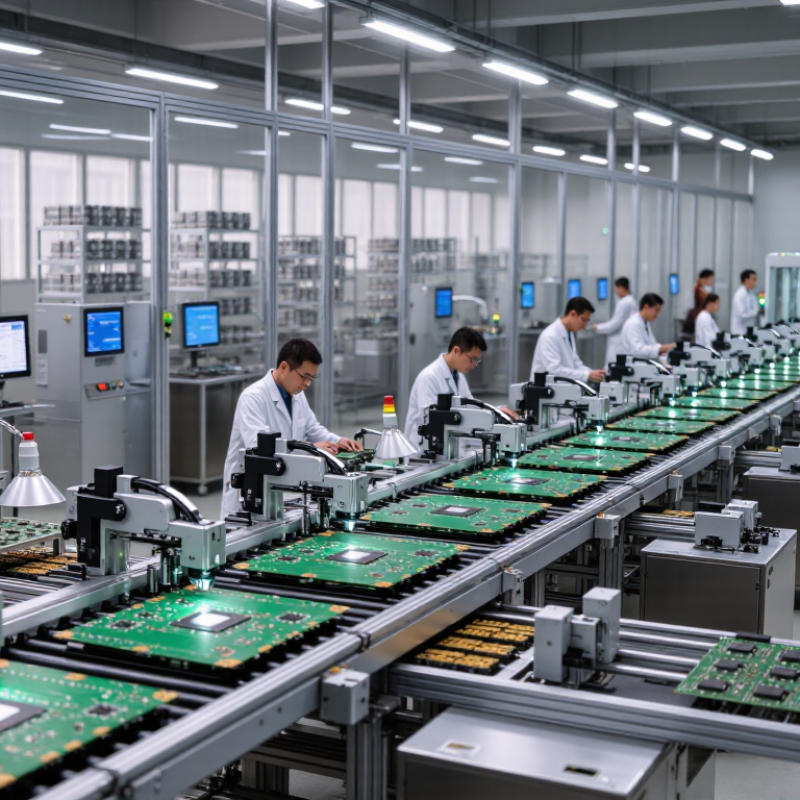
China Best PCB System Manufacturers for Global Buyers?
What Defines a PCB System Manufacturer in China?
A PCB system manufacturer does more than laminate boards and ship finished panels. It connects design review, material control, fabrication, assembly, testing, and delivery. This wider scope matters when a product includes fine-pitch components, controlled impedance, or several board revisions.
Experienced manufacturers review Gerber files, drill data, stackup drawings, and assembly instructions before production. They may question an unusually narrow trace or an unrealistic copper thickness. That conversation can prevent costly rework. It also shows practical engineering judgment.
Details reveal manufacturing maturity. A reliable facility records lot numbers, laminate types, solder paste conditions, and inspection results. Operators should use AOI, electrical testing, and X-ray inspection when the design requires them. Clear reports help global buyers trace a defect to a process stage.
Not just assembly.
A capable partner also supports DFM feedback, prototype builds, pilot runs, and stable volume production. It should explain tolerances in plain language, not hide behind technical terms. Certifications can support credibility, but certificates alone do not prove daily control.
Buyers should examine sample reports, change-control procedures, packaging methods, and response times. Ask how the factory handles a failed test or a late material shipment. The answer may be imperfect. That is acceptable if the process is honest, documented, and corrective.
A PCB system manufacturer in China is defined by coordinated capability, visible quality evidence, and dependable communication. Yet every supplier has limits. Matching those limits with the product’s risk is where careful sourcing begins.
China’s PCB system manufacturing industry is organized as a layered supply chain, not a single factory model. Material producers supply copper foil, laminates, solder mask, and specialty chemicals. Fabricators then convert these inputs into rigid, flexible, or high-density boards. Assembly companies add components, testing, and traceability services. Prismark’s recent industry analysis places China at roughly half of global PCB production value, showing the scale of this manufacturing network.
Regional specialization makes the system faster. The Yangtze River Delta supports precision fabrication and component access. The Pearl River Delta combines board production, assembly, tooling, and export logistics. Inland clusters often offer lower operating costs and growing technical capacity. IPC market reports also show stronger demand for multilayer, flexible, and high-density interconnect boards, especially in automotive, computing, and industrial electronics. These segments require controlled impedance, automated optical inspection, and documented process changes.
Global buyers should evaluate the whole chain. Ask where materials originate, where drilling occurs, and how final testing is recorded. ISO 9001 certification helps, but it does not replace process evidence. A factory may pass an audit and still struggle with sudden design changes. That gap deserves attention. China’s ecosystem is highly coordinated, yet supplier communication can remain uneven across regions. Experienced buyers usually approve samples, inspect production records, and verify electrical performance before scaling orders. IPC guidance supports this evidence-based approach, although real factory conditions can be less tidy than a report suggests.
| Industry Dimension | Typical Organization or Segment | Relevant Characteristics for Global Buyers | Common Verification Points |
|---|---|---|---|
| Industry Structure | Integrated supply chain | The sector generally includes material suppliers, PCB fabricators, surface-treatment providers, assembly factories, testing laboratories, logistics companies, and equipment-service firms. | Process ownership, outsourcing policy, approved suppliers, and production traceability. |
| Regional Organization | Pearl River Delta | The Shenzhen–Dongguan–Huizhou area is widely associated with dense electronics, PCB, component, tooling, and contract-manufacturing networks. | Factory location, supplier proximity, export experience, and delivery coordination. |
| Regional Organization | Yangtze River Delta | The Shanghai–Suzhou–Kunshan–Ningbo corridor has strong electronics, automotive, industrial, semiconductor, and advanced manufacturing ecosystems. | Automotive or industrial quality systems, engineering depth, and regional logistics access. |
| Regional Organization | Bohai Rim and coastal northern hubs | Northern coastal manufacturing centers support electronics, communications, industrial control, automotive, and research-oriented applications. | Port access, sector specialization, environmental controls, and customer-service coverage. |
| Product Category | Rigid printed circuit boards | Commonly used in consumer electronics, industrial equipment, communications products, automotive electronics, and control systems. | Layer count, board thickness, copper weight, minimum trace and spacing, and hole technology. |
| Product Category | Flexible and rigid-flex boards | Used where reduced weight, three-dimensional routing, repeated bending, or compact interconnection is required. | Bend radius, flex-cycle requirements, coverlay construction, and dynamic-flex testing. |
| Product Category | HDI and high-density interconnect boards | These boards use fine geometries and microvias to support compact electronic designs and higher interconnection density. | Laser-drilled microvias, sequential build-up capability, registration control, and cross-section reports. |
| Product Category | High-frequency and high-speed boards | Designed for radio-frequency, networking, radar, data transmission, and other applications where signal integrity is critical. | Controlled dielectric properties, impedance tolerance, material data sheets, and test coupons. |
| Manufacturing Flow | Design-for-manufacturing review | Engineering teams review Gerber or ODB++ files, drill data, stack-up, tolerances, materials, and panelization before production. | Document revision control, manufacturability feedback, and approved engineering changes. |
| Manufacturing Flow | Imaging, etching, drilling, and plating | Core fabrication stages form conductive patterns, plated through-holes, microvias, and multilayer interconnections. | In-process inspection, hole-wall quality, plating thickness, registration, and contamination control. |
| Manufacturing Flow | Surface finishing and final inspection | Common finishes include HASL, ENIG, immersion tin, immersion silver, and electroless nickel-based finishes selected according to application and soldering needs. | Finish thickness, solderability, cosmetic criteria, electrical testing, and acceptance standards. |
| Quality Framework | International management systems | Export-oriented factories commonly align their quality and environmental systems with internationally recognized requirements. | ISO 9001, ISO 14001, IATF 16949 where applicable, and valid audit documentation. |
| Compliance | Restricted substances and market access | Materials and processes may need to comply with regulations governing restricted substances, chemical management, and product-market requirements. | RoHS and REACH declarations, material composition data, and customer-specific compliance files. |
| Buyer Evaluation | Technical capability | The best supplier depends on board complexity, material requirements, annual volume, prototype needs, reliability targets, and end-market regulations. | Capability matrix, sample approval, first-article results, yield data, and process audit. |
| Buyer Evaluation | Commercial and logistics capability | Global buyers typically compare quotation transparency, tooling charges, minimum order quantities, lead times, packaging, shipping terms, and after-sales support. | Incoterms, production schedule, shipment records, packaging specification, and escalation process. |
| Best-Fit Supplier Model | Prototype, medium-volume, or mass-production specialist | Prototype-focused suppliers emphasize speed and engineering support, while volume-focused factories emphasize automation, process stability, capacity planning, and cost control. | Production capacity, equipment list, historical lead-time performance, quality records, and scale-up plan. |
When evaluating Chinese PCB system manufacturers, look beyond production capacity. Check their engineering depth, process control, and response speed. A capable supplier should manage multilayer boards, fine-pitch designs, impedance control, and high-density interconnects. Ask for process flow documents, inspection records, and sample quality reports. These details reveal more than impressive factory photographs.
Reliable manufacturers should operate traceable systems from material receiving to final shipment. Confirm how they handle incoming inspection, automated optical inspection, electrical testing, and defect analysis. Certifications matter, but practical evidence matters more. Request audit access, corrective-action records, and production samples matching your specifications. Communication is another capability. Engineers should explain design risks clearly, not simply promise delivery. In my experience, unclear technical replies often create expensive revisions later. No supplier is perfect. Even strong factories may struggle with sudden design changes or small trial orders.
Tips: Compare at least three suppliers using the same checklist. Review copper thickness, tolerance data, testing coverage, and packaging methods. Confirm whether production records remain available after delivery. Discuss capacity during peak seasons, not only normal weeks. A written quality agreement can prevent assumptions. Still, do not treat documents as proof by themselves. A factory may have polished procedures but inconsistent execution. Visit when possible, observe line discipline, and inspect how operators identify defective boards. Reliable partnerships grow from measurable controls, honest reporting, and steady technical dialogue.
Global buyers should compare PCB system manufacturers through evidence, not polished quotations. Prismark’s 2024 PCB industry report estimated global PCB revenues at about US$70 billion in 2023, showing a large but pressured market. This pressure can encourage cheaper materials, rushed testing, or vague delivery promises.
Quality begins with measurable controls. Ask for IPC-A-600 acceptance criteria, traceability records, solderability results, and microsection images from recent lots. For automotive projects, request IATF 16949 evidence when applicable. Compare defect rates using parts per million, not general claims. A factory may report strong yields, but without the inspection method, the number means little. I learned that documentation quality often predicts production discipline. It is not perfect evidence, though.
Tips: Build one comparison sheet. Record copper weight, layer count, laminate grade, impedance tolerance, test coverage, tooling fees, unit cost, and lead time. Separate prototype and volume pricing. Check whether delivery starts after order placement or after engineering approval. The difference can be several days. The World Bank’s 2023 Logistics Performance Index also shows why route reliability matters, not only factory location. Buyers should request three recent on-time delivery records and one corrective-action example. Cost remains important, but a low quote can become expensive after rework, customs delays, or missed product launches. Avoid choosing from a single sample. Production consistency needs repeated evidence.
This buyer scorecard uses a practical 100-point evaluation model for comparing PCB system suppliers. Quality and reliability receive the highest weighting, followed by total landed cost, delivery performance, and compliance. Buyers should adjust the weighting according to product complexity, volume, certification requirements, and delivery risk.
Before selecting a Chinese PCB system manufacturer, verify more than product photos and attractive quotations. Request the factory’s legal registration, quality certificates, and recent audit records. Check whether certificates match the actual production site. Ask about process controls for drilling, plating, solder mask, and final inspection. A reliable supplier should explain these steps clearly.
Inspect sample boards under practical conditions. Check hole alignment, copper thickness, surface finish, edge quality, and label durability. Request test reports, inspection standards, and batch traceability records. Ask how the factory handles nonconforming boards. Their answer often reveals more than a sales presentation. Do not rely only on a polished factory video.
Production capacity also needs careful checking. Confirm equipment ownership, shift schedules, lead times, and backup plans for critical materials. Review packaging methods, moisture protection, and shipping documentation. Speak with two or three recent customers, preferably from similar industries. Their feedback can expose delays or communication problems.
A low price may hide weak testing or unstable materials. That risk is easy to underestimate. Keep specifications, tolerances, payment terms, and corrective actions in written agreements. Include a pilot order before large-volume production. Even experienced buyers can miss small details, especially when technical terms are translated poorly. Recheck every drawing and approval sample.




„Thanks to the LUVIR technology, the solder resist process could be switched directly from the previously used mask exposure to direct exposure. As an outstanding digital solution on the market, this technology has been able to demonstrate fast process times and superior quality on our certified conventional ink in production. This allowed us to fully digitize the solder mask process at low cost – without process or ink adjustments. An excellent benefit to our production in Rot am See.“
Ralf Göhringer (Head of Production WE Rot am See)
I would definitely recommend the Limata machine and team for a future company purchase
Michael Greenaway
Compunetics Inc.
“The Limata ldi has been amazing!! Best thing we did was buy this machine”
Richard Brady
GM
Circuitlabs
“Since 2019, we have been running the Limata X1000 LDI system (including LUVIR for solder mask imaging) in daily production as an addition to our current process with film. The machine was capable of properly exposing Taiyo PSR-4000 BN (DI) solder mask types on normal to high-copper boards using a new and unique direct imaging process. The machine operating interface is very user friendly which allowed for a quick technical training curve. The pre-registration processing reduced several seconds of production time at every print. Limata support and service staff is incomparable. They supported our team every step of the way at basically any time of the day or night, with literally, an immediate response time, customizing the software interface to best fit our Operations and needs.
We have exposed more than 8,000 prints since end of October, on various solder mask colors and some resist film panels. Limata, has proven to be very capable and innovative. They are a strong contender in the industry.
We have very much enjoyed this project, and working with the team!
Thank you Limata for the continued support and being a part of our growth.”
Bill Sezate
Vice President, GM
Summit Interconnect
As a replacement to our current contact exposure process with film, the LIMATA X2000 system including LUVIR-Technology was capable of properly exposing non-LDI solder mask types using a direct imaging process. The machine offers cutting edge software with a very intuitive operating interface which allowed for quick technician training curve. The dual drawer system combined with pre-registration processing reduced several seconds of production time at every machine cycle. Limata support and service staff is world class. They added software patches to keep production running at shortest possible response times, customized the software interface to best fit our in-house Operations system, and even wrote a step-by-step machine processing manual. As a result of the project, we have exposed more than 16,000 times on various product types and solder mask brands/colors. Limata, in a very short timeframe as a company, has definitely shown they are truly innovative and will be challenging the industry of direct imaging for the top spot.
Kevin Beattie
Process Engineer
TTM Technologies
Forest Grove Division