Copper Nickel Alloy is valued for its resistance to seawater corrosion, dependable fabrication, and performance in demanding service environments. It appears in marine piping, heat exchangers, condensers, and desalination equipment. Common grades, such as 90/10 and 70/30, differ in composition and suitability, so the right choice depends on operating conditions—not just a product label.
This guide introduces ten suppliers with international reach and compares practical factors buyers can investigate: available grades, product forms, certifications, material traceability, technical support, and delivery capabilities. A polished website is not proof of consistent quality. Details matter. Buyers should request current mill test certificates, confirm dimensions and tolerances, and check whether a supplier can support the required specification and volume. Availability may also vary by region and market conditions.
The companies featured here offer a starting point for supplier research, not a universal ranking. Their strengths may differ, and information can change over time. A supplier suited to a shipbuilding project may not fit a small replacement order or a specialized heat exchanger. Compare the evidence carefully. Even a useful shortlist has limits. Confirm critical claims directly with each supplier, and evaluate samples or documentation where appropriate. That extra scrutiny takes effort, but it can prevent costly mismatches between the alloy ordered and the service environment.
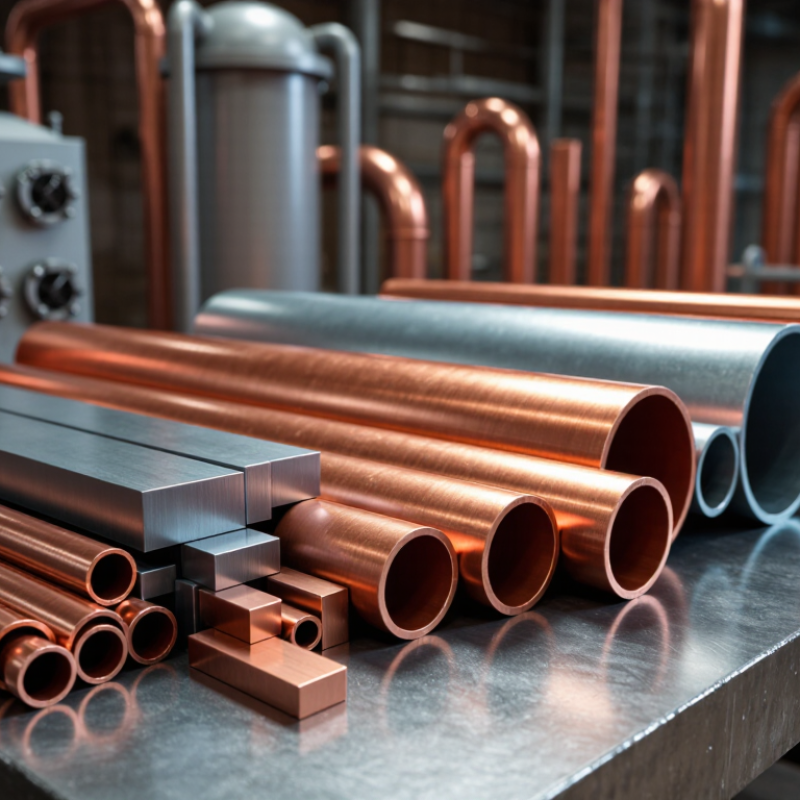
Copper-nickel alloys combine copper with nickel, usually alongside small amounts of iron and manganese. Common engineering grades include 90/10 and 70/30, referring to approximate copper-to-nickel proportions. The 90/10 grade offers useful corrosion resistance and is often selected for seawater piping. The 70/30 grade generally provides stronger resistance in demanding marine conditions, though its higher nickel content can affect cost and fabrication choices.
Small differences matter. Iron can improve resistance to flowing seawater, while manganese helps control properties during manufacture. Exact limits vary by grade specification, so buyers and engineers should check certified material data rather than rely on a shorthand label. It is tempting to treat grade names as interchangeable; that is a mistake.
These alloys are used in shipboard piping, heat-exchanger tubes, condensers, and desalination equipment. Their surfaces can develop a thin protective film, but that does not make every installation maintenance-free. Flow rate, temperature, water chemistry, and joining methods all influence service life. For example, a tube carrying fast-moving seawater may face different erosion risks from one in a low-flow system. Selection should match the operating conditions, not just the alloy family.
Evaluating copper-nickel alloy suppliers starts with verifying the exact grade, dimensions, and intended service. A seawater pipe and a decorative sheet need different evidence. The USGS Mineral Commodity Summaries 2024 estimated global nickel mine production at 3.6 million metric tons in 2023, up from 3.3 million in 2022. This market scale does not prove any supplier’s quality; it makes source traceability worth checking. Ask for heat-specific certificates, chemical composition, and records linking the tested material to the shipment. Small details matter.
Compare suppliers against the relevant specification, such as ASTM B466 for seamless copper-nickel pipe, then confirm the test scope and acceptance criteria. Request recent reports for tensile properties, dimensional checks, and positive material identification. For marine use, ask how corrosion performance is assessed and whether test conditions reflect your water temperature and flow. A polished certificate is not enough if its heat number cannot be matched to the bundle. Review production capacity, minimum order quantities, lead times, and packaging for your actual delivery schedule. A sample can help, but it may not represent a full production lot. Document unresolved gaps before approving a supplier, especially when certificates, labels, or test methods do not align.
Use these ten criteria to compare suppliers consistently. This is an evaluation framework, not a ranked list of named companies.
| No. | Evaluation criterion | What to verify | Why it matters | Useful evidence to request |
|---|---|---|---|---|
| 1 | Alloy grade and chemistry | Confirm the exact grade and chemical composition required. Common copper-nickel grades include UNS C70600, often called 90/10, and UNS C71500, often called 70/30. | These grades have different nominal nickel contents and are not interchangeable for every design or service condition. | Material test report showing the grade, heat or lot identification, and measured chemical analysis. |
| 2 | Product form and applicable standard | Match the specification to the product form, such as pipe, tube, plate, sheet, strip, rod, or bar. Confirm the applicable standard and its edition with the purchaser or engineer. | Requirements and test methods can differ by product form; a grade designation alone does not define every delivery requirement. | Quotation and inspection documents identifying the product form, dimensions, grade, and agreed specification. |
| 3 | Traceability | Check that material markings link the delivered product to its production heat or lot and supporting documents. | Traceability helps verify material identity and supports quality investigations and project records. | Sample certificates, marking photographs, packing lists, and a documented heat- or lot-tracking procedure. |
| 4 | Mechanical and dimensional conformity | Compare the offered dimensions, tolerances, and required mechanical properties with the purchase specification. | Product that is chemically correct may still be unsuitable if its dimensions or mechanical properties do not meet the design requirements. | Inspection reports, dimensional records, and test results required by the agreed specification. |
| 5 | Corrosion-service suitability | Review the intended environment, including seawater exposure, temperature, flow conditions, and the presence of deposits or pollutants. | Copper-nickel alloys are used in marine and seawater applications, but performance depends on service conditions, installation, and maintenance. | Relevant technical data and documented experience with comparable service conditions; obtain engineering review for critical applications. |
| 6 | Quality assurance and inspection | Ask how incoming materials, production, testing, nonconformities, and final inspection are controlled. | A clear quality process makes order requirements easier to verify and helps reduce the risk of undocumented substitutions. | Quality-system documentation, inspection and test plans, sample reports, and nonconformance procedures. |
| 7 | Manufacturing and sourcing transparency | Clarify whether the supplier manufactures the material, processes it, or distributes material made by another producer. | Knowing the supply-chain role helps establish who controls production records, testing, and change notifications. | Written disclosure of the production source and the parties responsible for certification and inspection. |
| 8 | Capacity and lead time | Confirm available sizes, quantities, production or processing capacity, and the delivery schedule for the specific order. | General product availability does not guarantee that the required grade, form, dimensions, and quantity are available on time. | Order-specific delivery schedule, stock confirmation where applicable, and written notice of schedule changes. |
| 9 | Packaging and export logistics | Check packaging, corrosion and handling protection, shipping marks, export documentation, and delivery terms. | Suitable packing and complete shipping records help protect material and maintain identification during transport. | Packing specification, sample shipping documents, and confirmation of the agreed delivery terms. |
| 10 | Commercial terms and after-sales support | Compare quotation validity, payment terms, warranty provisions, claims handling, and technical response arrangements. | Clear terms help resolve discrepancies and define responsibilities if delivered material does not meet the agreed requirements. | Written quotation, purchase terms, warranty or claims procedure, and a named technical contact role. |
Practical check: Evaluate each supplier against the same written specification and compare documentary evidence, not just quoted price or grade name. Confirm applicable standards and project requirements before placing an order.
To keep this brand-neutral, these are ten capability-based supplier profiles, not named companies or a ranking. Japanese strip mills often focus on thin, consistent sheet for heat exchangers. German specialty producers may emphasize precise chemistry and documented testing. Chinese integrated mills can offer broad product ranges. US tube makers commonly serve condenser and seawater systems.
Indian exporters may combine mill production with regional stockholding. Korean processors often supply precision strip and coil. Italian foundries can support custom cast components. UK marine suppliers may focus on corrosion-resistant fittings. Nordic distributors can provide traceable stock in smaller quantities. Southeast Asian fabricators may offer cut-to-size parts close to shipbuilding markets. Capabilities vary. Verify them directly.
The USGS Mineral Commodity Summaries 2025 estimates global nickel mine production at 3.7 million metric tons in 2024, with Indonesia producing 2.2 million. That is raw-material context, not a copper-nickel alloy market estimate.
For supplier comparisons, request chemistry certificates, heat numbers, dimensional tolerances, and relevant test results. For tube products, ASTM B111/B111M provides a useful specification reference. Ask how marine exposure and fabrication affect the proposed grade; a familiar designation alone is not enough. The details can be easy to overlook.
A useful comparison of copper-nickel alloy suppliers starts with the product range: tube, pipe, plate, fittings, bar, and forged components. Check whether the supplier can provide the exact grade, dimensions, and temper required. Manufacturing capability matters too. Ask about melting controls, forming, heat treatment, machining, and inspection methods such as ultrasonic testing. These details affect consistency, especially when seawater service demands reliable wall thickness and clean weld preparations.
Nickel supply conditions make traceability worth checking. The USGS Mineral Commodity Summaries 2024 estimated global nickel mine output at 3.6 million metric tons in 2023, including 1.8 million tons from Indonesia. This figure describes mined nickel, not finished alloy availability, but it highlights why buyers should request material certificates and heat-by-heat records. Compare certification scope, not just logos: ISO 9001 addresses quality management, while product conformity may require applicable ASTM specifications, such as ASTM B151/B151M for copper-nickel rod and bar. A certificate is not a guarantee. Verify that it covers the actual facility and product.
Tips: Request a sample inspection report, a traceability example, and the supplier’s stated testing limits. Check delivery history for your size range, not only standard stock. One easy-to-miss gap is subcontracted processing; ask who performs it and how records are retained. I would still compare lead times against a real purchase schedule, since catalog breadth alone can look more reassuring than it is.
Sourcing copper-nickel alloy requires more than comparing quotations. The U.S. Geological Survey’s Mineral Commodity Summaries 2025 estimates 2024 world mine production at about 23 million metric tons of copper and 3.7 million metric tons of nickel. These figures describe broad metal supply, not certified alloy availability. Still, they underline why buyers should verify the exact grade, product form, and delivery schedule rather than assume interchangeable stock.
Request a material test certificate tied to the specific heat or lot. Check that its reported chemistry matches the purchase specification, including limits for iron, manganese, and other relevant elements. Confirm dimensions, temper, and applicable product standard in writing. Small gaps matter. A certificate without traceable heat numbers is harder to verify. So is a quotation that names an alloy family but omits the precise grade.
Use positive material identification on delivery, but understand its limits. Handheld X-ray fluorescence can screen key elements such as copper and nickel; it may not establish every required element or property. For disputed results, arrange laboratory testing with a suitable method, such as optical emission spectroscopy for chemistry. Inspect markings and packaging before cutting or mixing stock. Keep samples, certificates, and inspection records together. Even careful checks cannot prevent every mismatch, and that deserves honest attention in any sourcing plan.
„Thanks to the LUVIR technology, the solder resist process could be switched directly from the previously used mask exposure to direct exposure. As an outstanding digital solution on the market, this technology has been able to demonstrate fast process times and superior quality on our certified conventional ink in production. This allowed us to fully digitize the solder mask process at low cost – without process or ink adjustments. An excellent benefit to our production in Rot am See.“
Ralf Göhringer (Head of Production WE Rot am See)
I would definitely recommend the Limata machine and team for a future company purchase
Michael Greenaway
Compunetics Inc.
“The Limata ldi has been amazing!! Best thing we did was buy this machine”
Richard Brady
GM
Circuitlabs
“Since 2019, we have been running the Limata X1000 LDI system (including LUVIR for solder mask imaging) in daily production as an addition to our current process with film. The machine was capable of properly exposing Taiyo PSR-4000 BN (DI) solder mask types on normal to high-copper boards using a new and unique direct imaging process. The machine operating interface is very user friendly which allowed for a quick technical training curve. The pre-registration processing reduced several seconds of production time at every print. Limata support and service staff is incomparable. They supported our team every step of the way at basically any time of the day or night, with literally, an immediate response time, customizing the software interface to best fit our Operations and needs.
We have exposed more than 8,000 prints since end of October, on various solder mask colors and some resist film panels. Limata, has proven to be very capable and innovative. They are a strong contender in the industry.
We have very much enjoyed this project, and working with the team!
Thank you Limata for the continued support and being a part of our growth.”
Bill Sezate
Vice President, GM
Summit Interconnect
As a replacement to our current contact exposure process with film, the LIMATA X2000 system including LUVIR-Technology was capable of properly exposing non-LDI solder mask types using a direct imaging process. The machine offers cutting edge software with a very intuitive operating interface which allowed for quick technician training curve. The dual drawer system combined with pre-registration processing reduced several seconds of production time at every machine cycle. Limata support and service staff is world class. They added software patches to keep production running at shortest possible response times, customized the software interface to best fit our in-house Operations system, and even wrote a step-by-step machine processing manual. As a result of the project, we have exposed more than 16,000 times on various product types and solder mask brands/colors. Limata, in a very short timeframe as a company, has definitely shown they are truly innovative and will be challenging the industry of direct imaging for the top spot.
Kevin Beattie
Process Engineer
TTM Technologies
Forest Grove Division
