Choosing among the top Decanter Centrifuges in 2026 takes more than comparing advertised capacity. The right machine must match the material, operating conditions, and separation target. A unit that performs well with steady, fine solids may struggle when feed consistency changes. Real plants see those changes. Sometimes daily.
This guide examines the factors that make a decanter centrifuge a practical choice: bowl size and speed, differential speed control, torque capacity, wear protection, energy use, and ease of maintenance. These details matter on the shop floor. For example, abrasive feed can shorten the life of scroll flights, while poor solids discharge may interrupt an otherwise stable process. Buyers should also check installation requirements, spare-parts access, service response, and documented performance under comparable conditions. A brochure alone is not enough.
Rather than treating one brand as the universal winner, the comparison should weigh machine design against the needs of each application. Manufacturer specifications, independent references, and trial results can help verify performance, though available data may not always be directly comparable. That limitation deserves attention. The best shortlist will depend on the feed, required throughput, separation quality, and total operating cost—not just purchase price. Use this overview to identify candidates, prepare questions for suppliers, and decide what evidence to request before making a final selection.
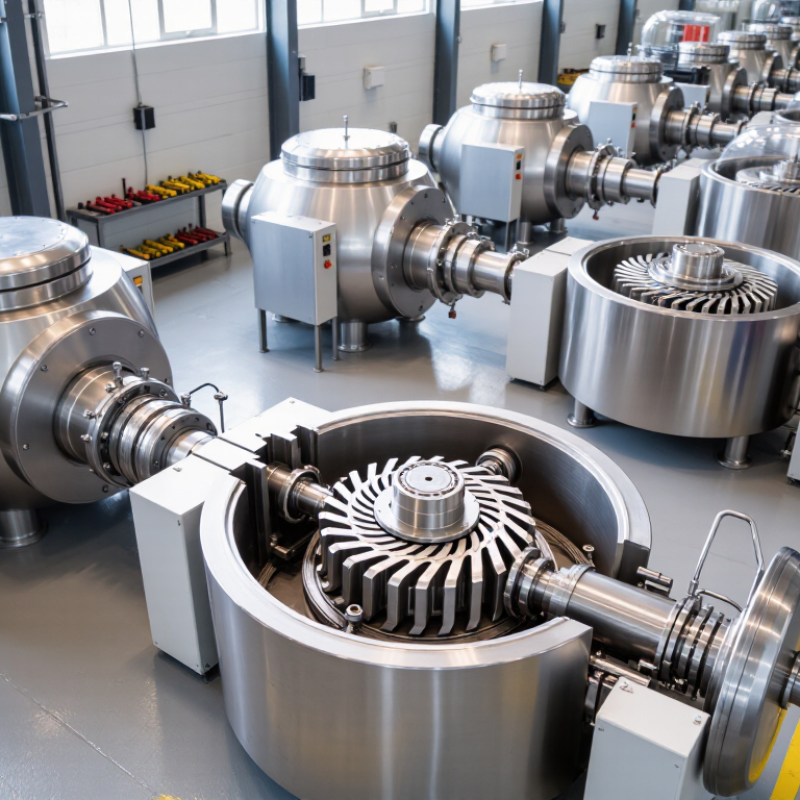
A decanter centrifuge separates suspended solids from liquid by spinning a mixture inside a horizontal bowl. Centrifugal force pushes denser particles toward the bowl wall, while the lighter liquid forms an inner layer. A screw conveyor turns at a slightly different speed from the bowl. It moves settled solids toward the conical end, where they leave through discharge ports. Clarified liquid exits from the opposite end, often across adjustable weirs.
That is the basic mechanism. The details matter. Feed rate, bowl speed, and the conveyor’s differential speed affect dryness, clarity, and throughput. For example, a wetter feed may require a slower feed rate or a different speed setting to reduce solids carryover. Operators monitor vibration, temperature, and torque because sudden changes can signal an imbalance or buildup. The machine does not separate every mixture equally well. Fine particles, changing feed composition, or poor conditioning can reduce performance, even when the equipment is correctly operated. That limitation is easy to underestimate. A useful selection starts with testing the actual feed, not relying only on a capacity figure. Cleaning access and wear-part maintenance also deserve attention; they are less visible than bowl speed, but they shape dependable daily operation.
A strong decanter centrifuge in 2026 is defined by how well it handles changing feed, not by maximum bowl speed alone. Look for adjustable differential speed and responsive torque control. These features help maintain solids dryness when flow or particle size shifts. Stable vibration monitoring can flag imbalance before it causes an unscheduled stop. Small changes matter.
Wear protection is another key distinction. Replaceable tiles or liners in high-impact zones can reduce maintenance time, especially with abrasive slurries. Check how easily operators can inspect the scroll, bearings, and discharge ports. Sealed lubrication points and accessible washdown areas also support reliable operation.
Energy use deserves scrutiny, too. A high-capacity machine may still perform poorly if it needs frequent throttling or produces wet cake. No single specification tells the whole story; results depend on feed testing and correct setup.
Tips: Request a trial using representative material, and record throughput, cake dryness, and power draw. Ask how quickly wear parts can be changed. Compare readings across several operating conditions, not one ideal run.
Decanter centrifuges differ mainly in how they separate liquid and solids. Two-phase models produce a clarified liquid and a damp solids cake. They are common in municipal wastewater treatment, mineral processing, and food production. At a treatment plant, operators may adjust bowl speed and feed rate as sludge thickens after heavy rain. Small changes can affect both cake dryness and throughput.
Three-phase decanters separate two liquids and solids in one continuous process. They suit applications such as recovering oil and water from industrial mixtures, or separating fats, water, and solids in food-processing streams. The right setup depends on differences in density and the amount of suspended material. It is not a magic fix. Feed composition can shift, and performance may need regular checking.
Industry-specific designs also vary in materials, sealing, and cleanability. Food and beverage plants often need smooth, washable surfaces and careful control of product temperature. Mining operations may prioritize abrasion-resistant parts because gritty slurry wears equipment quickly. Wastewater facilities, meanwhile, often focus on reliable operation across changing flows. A useful specification starts with actual feed samples, not just a target capacity. That detail is easy to overlook. Engineers should also compare energy use, maintenance access, and the solids cake quality required downstream.
| Decanter type | Separation produced | Industries and typical uses | Typical feed | Key selection considerations |
|---|---|---|---|---|
| Two-phase solid–liquid | Separates suspended solids from one liquid phase; produces a solids-rich cake and clarified liquid. | Municipal and industrial wastewater, mineral processing, food processing, and chemical production. | Slurries or suspensions containing settleable solids in a liquid. | Solids loading, particle size, cake dryness, liquid clarity, abrasion, and required throughput. |
| Three-phase liquid–liquid–solid | Separates solids and two immiscible liquid phases, typically a heavier and a lighter liquid. | Edible oil recovery, rendering, dairy by-product processing, and selected chemical or petrochemical processes. | Feeds containing solids plus two liquids with different densities that do not readily mix. | Density difference, viscosity, emulsion tendency, desired phase purity, and solids concentration. |
| Oil-recovery decanter | Recovers oil from a solids-containing feed; the process arrangement may separate two or three phases. | Olive oil, vegetable oil, fish oil, and other food or biomass oil extraction and recovery operations. | Oil-bearing mash, press liquor, or process streams containing water and suspended solids. | Oil yield, product quality, temperature sensitivity, feed variability, and cleanability requirements. |
| High-solids sludge dewatering | Concentrates suspended sludge into a dewatered cake while discharging a liquid centrate. | Municipal wastewater treatment, industrial effluent treatment, and sludge management. | Biological, chemical, or mixed sludge, often conditioned with polymer before separation. | Feed solids, polymer compatibility, cake handling, centrate quality, and operating cost. |
| Clarifying decanter | Removes fine suspended particles from a liquid, with solids discharged separately. | Beverage and food processing, fermentation, and process-liquid recovery. | A relatively low-solids liquid containing fine or settleable particles. | Required clarity, particle characteristics, product loss, hygienic design, and downstream filtration needs. |
| Wear-resistant mineral-processing decanter | Separates abrasive mineral solids from process water or other liquid streams. | Mining, mineral beneficiation, sand and aggregate processing, and tailings management. | Dense, abrasive slurries with variable particle sizes and solids concentrations. | Wear protection, solids conveyance, slurry density, maintenance access, and water-recovery targets. |
Decanter performance depends on feed properties, process conditions, and equipment configuration. Confirm separation targets with application-specific testing.
In 2026, leading decanter centrifuges are best compared by duty, not headline capacity. A high-throughput, large-bowl model may suit steady mineral or wastewater streams, while a compact unit can fit plants with limited floor space. Compare rated flow with the actual feed, including solids concentration and particle size. A brochure number alone can mislead.
For separation quality, examine bowl diameter and length, adjustable differential speed, torque reserve, and pond-depth settings. Higher bowl speed can improve clarification, but it may raise wear, energy use, and vibration sensitivity. A model with responsive controls can hold performance as feed conditions shift. Ask for test data using a representative sample, not clean water. Small detail.
Build and serviceability matter as much as separation figures. Check wetted-material specifications, replaceable wear protection, bearing access, guarding, and routine cleaning time. Compare motor efficiency, noise readings, and spare-part lead times under the same operating assumptions. Operators should verify start-up behavior and alarm logs during a site trial. Fit matters. Feed chemistry and maintenance habits can overturn a paper ranking, and those are easy to underestimate.
Choosing a decanter centrifuge starts with the material it must process, not a headline capacity figure. Check feed rate, solids concentration, particle size, and how much these vary during a normal shift. Then define the required cake dryness and liquid clarity. These targets can conflict, so ask suppliers to explain the operating trade-offs. A machine that performs well with a steady test feed may behave differently when the feed changes.
Tips: Request a trial using representative material. Record throughput, cake moisture, and centrate quality. Small details matter.
Review wear protection, bowl and conveyor materials, drive control, and access to parts that need routine inspection. Ask how operators can adjust speed and differential speed, and whether the controls show useful process data. Also compare energy use, noise, footprint, and maintenance time—not just purchase price. A compact layout may look ideal on paper, yet leave little room to remove components. That is easy to overlook. Confirm service support and spare-part availability for your location, and request references from similar applications. Specifications help narrow the field, but they do not replace a realistic test. I would also leave some room for uncertainty: feed properties can drift, and no quote captures every operating condition.
„Thanks to the LUVIR technology, the solder resist process could be switched directly from the previously used mask exposure to direct exposure. As an outstanding digital solution on the market, this technology has been able to demonstrate fast process times and superior quality on our certified conventional ink in production. This allowed us to fully digitize the solder mask process at low cost – without process or ink adjustments. An excellent benefit to our production in Rot am See.“
Ralf Göhringer (Head of Production WE Rot am See)
I would definitely recommend the Limata machine and team for a future company purchase
Michael Greenaway
Compunetics Inc.
“The Limata ldi has been amazing!! Best thing we did was buy this machine”
Richard Brady
GM
Circuitlabs
“Since 2019, we have been running the Limata X1000 LDI system (including LUVIR for solder mask imaging) in daily production as an addition to our current process with film. The machine was capable of properly exposing Taiyo PSR-4000 BN (DI) solder mask types on normal to high-copper boards using a new and unique direct imaging process. The machine operating interface is very user friendly which allowed for a quick technical training curve. The pre-registration processing reduced several seconds of production time at every print. Limata support and service staff is incomparable. They supported our team every step of the way at basically any time of the day or night, with literally, an immediate response time, customizing the software interface to best fit our Operations and needs.
We have exposed more than 8,000 prints since end of October, on various solder mask colors and some resist film panels. Limata, has proven to be very capable and innovative. They are a strong contender in the industry.
We have very much enjoyed this project, and working with the team!
Thank you Limata for the continued support and being a part of our growth.”
Bill Sezate
Vice President, GM
Summit Interconnect
As a replacement to our current contact exposure process with film, the LIMATA X2000 system including LUVIR-Technology was capable of properly exposing non-LDI solder mask types using a direct imaging process. The machine offers cutting edge software with a very intuitive operating interface which allowed for quick technician training curve. The dual drawer system combined with pre-registration processing reduced several seconds of production time at every machine cycle. Limata support and service staff is world class. They added software patches to keep production running at shortest possible response times, customized the software interface to best fit our in-house Operations system, and even wrote a step-by-step machine processing manual. As a result of the project, we have exposed more than 16,000 times on various product types and solder mask brands/colors. Limata, in a very short timeframe as a company, has definitely shown they are truly innovative and will be challenging the industry of direct imaging for the top spot.
Kevin Beattie
Process Engineer
TTM Technologies
Forest Grove Division
