As the demand for effective waterproofing solutions grows, the geomembrane welding machine has become vital. In 2026, selecting the right machine for specific projects requires careful consideration. This equipment's precision and durability play key roles in successful installations.
Many options flood the market, making the choice overwhelming. Factors like material compatibility, welding speed, and user-friendliness can significantly impact project outcomes. It’s essential to evaluate features such as heating methods and potential maintenance needs.
Attention to detail in selection is crucial. Not all machines are equal, and potential drawbacks may arise. Users often overlook specific functionalities crucial for their operations, leading to challenges. Investing time in research can mitigate mistakes, resulting in better project results.
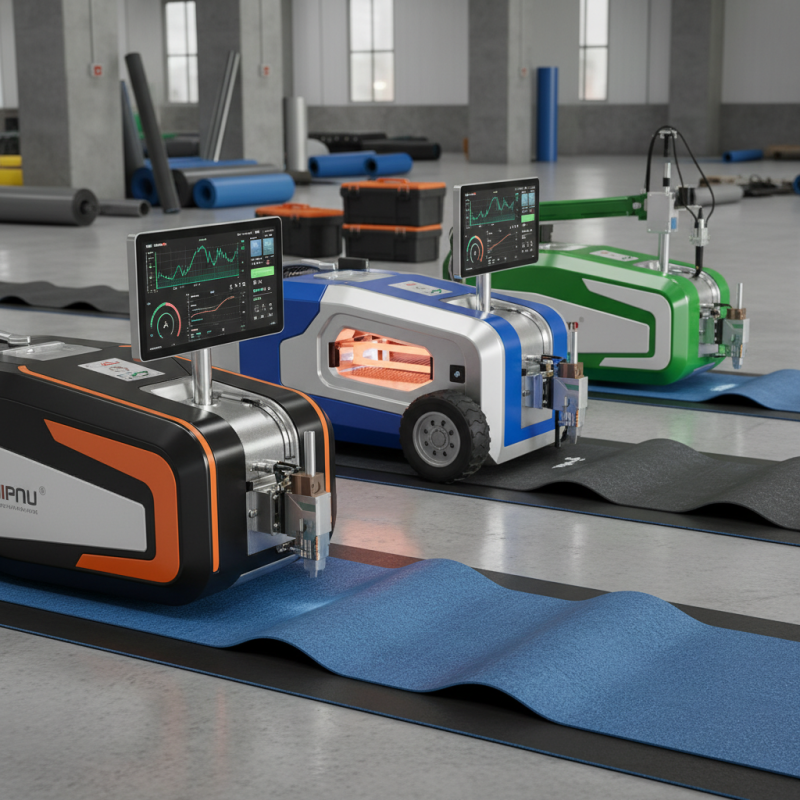
When choosing a geomembrane welding machine, several key features emerge as critical for optimal performance. An adjustable temperature control is essential. It ensures consistent heat application across various materials. This prevents damage and guarantees stronger seams. Pay attention to the welding speed options as well. Machines that allow adjustments can enhance efficiency on different job sites.
Another aspect to consider is the portability of the machine. Many projects occur in remote locations. A lightweight machine can significantly reduce transportation hassles. Battery operation is another feature that merits consideration. It provides flexibility for projects without easy access to power sources. It’s important to think about the durability of the machine as well. A robust design can withstand harsh working conditions.
While these features are important, they may not be enough. User experience sometimes reveals flaws. The learning curve for complex machines can be steep. Operators need time to master the controls. Additionally, some machines may lack adequate customer support. This can leave users in difficult situations during crucial projects. Reflecting on these factors can lead to better investment decisions.
When considering geomembrane welding machines in 2026, it's essential to focus on their capabilities. Various types of machines are available, each designed for specific tasks. There are hot wedge welders and extrusion welders, for instance. Each type has unique advantages and limitations. Recognizing these differences is vital for efficient project execution.
Several popular models stand out in the market this year. Some machines are lightweight and portable, making them ideal for smaller projects. Others are robust and designed for heavy-duty tasks. Users often praise their ease of use and reliability. However, many also highlight the learning curve required for optimal operation. It's important to read user reviews, as personal experiences provide valuable insights.
Price points vary significantly among models. While some are budget-friendly, others are more of an investment. Evaluating the cost versus long-term benefits is a challenge for many buyers. Features that seem attractive might not be necessary for your specific projects. It's wise to reflect on your needs before making a decision. Testing different machines can also reveal unexpected preferences.
The future of geomembrane welding machines is bright, with key technologies leading the way. Innovations in automation are crucial. Automated welding processes enhance precision and efficiency. They minimize human error, which often leads to costly mistakes. These machines are becoming faster while maintaining high-quality seams. The reduced time for project completion is appealing for many industries.
Energy efficiency is another vital consideration. New machines use less power without sacrificing performance. This not only lowers operational costs but also reduces the environmental footprint. Some machines even harness solar energy. Such advancements reflect a growing commitment to sustainability. However, choosing the right energy source often requires careful evaluation.
Additionally, user-friendly interfaces are revolutionizing operation. Simpler controls allow operators to adjust settings quickly. Yet, it is worth noting that a lack of training can lead to misuse. As technology advances, continuous education will become essential for users. Not every new feature is intuitive. It’s a constant learning process, and mistakes can still happen. Thus, investing in training programs is as crucial as investing in new machines.
When considering the purchase of geomembrane welding equipment, cost plays a crucial role. Prices can vary widely based on features, quality, and the technology used. Ensure you assess the long-term investment rather than just the upfront cost. A cheaper machine might save money initially, but higher operating costs could arise later.
Tips: Always compare specifications and performance features. This will help in understanding what you truly need versus what’s available. Consider potential maintenance costs as well. Some machines require more frequent servicing and parts replacement.
Another vital aspect to think about is the expected workload. If you overestimate your needs, you might overspend. However, underestimating could lead you to buy equipment that cannot keep up. Analyze your project demands accurately. It’s also helpful to consult industry peers who have experience with various welding machines. They can provide valuable insights that online research might not cover.
| Model | Type | Max Welding Width (mm) | Power (kW) | Weight (kg) | Price Range (USD) |
|---|---|---|---|---|---|
| Model A | Hot Air Welder | 800 | 3.5 | 15 | 1500 - 2000 |
| Model B | Extrusion Welder | 600 | 4.0 | 12 | 2500 - 3000 |
| Model C | Ultrasonic Welder | 400 | 2.5 | 10 | 1200 - 1800 |
| Model D | Hot Wedge Welder | 1000 | 5.0 | 18 | 3000 - 4000 |
Proper maintenance is crucial for welding machines. Keeping them in top shape can significantly extend their lifespan. Regular cleaning removes dirt and contaminants. A clean machine reduces wear and tear. Inspecting key components is essential too. Look for signs of corrosion or damage. Small issues can lead to bigger problems.
Here are some practical tips:
1. Always check the connections. Secure and clean connections prevent malfunctions.
2. Lubricate moving parts regularly. This reduces friction and enhances performance.
3. Store machines in a dry place. Moisture can cause serious damage over time.
Ignoring these tips can lead to costly repairs. Reflect on your maintenance habits. Are you doing enough? Regular checks might feel tedious, but they pay off in the long run. A little effort today ensures reliable performance tomorrow. Make maintenance a priority to avoid future headaches.
„Thanks to the LUVIR technology, the solder resist process could be switched directly from the previously used mask exposure to direct exposure. As an outstanding digital solution on the market, this technology has been able to demonstrate fast process times and superior quality on our certified conventional ink in production. This allowed us to fully digitize the solder mask process at low cost – without process or ink adjustments. An excellent benefit to our production in Rot am See.“
Ralf Göhringer (Head of Production WE Rot am See)
I would definitely recommend the Limata machine and team for a future company purchase
Michael Greenaway
Compunetics Inc.
“The Limata ldi has been amazing!! Best thing we did was buy this machine”
Richard Brady
GM
Circuitlabs
“Since 2019, we have been running the Limata X1000 LDI system (including LUVIR for solder mask imaging) in daily production as an addition to our current process with film. The machine was capable of properly exposing Taiyo PSR-4000 BN (DI) solder mask types on normal to high-copper boards using a new and unique direct imaging process. The machine operating interface is very user friendly which allowed for a quick technical training curve. The pre-registration processing reduced several seconds of production time at every print. Limata support and service staff is incomparable. They supported our team every step of the way at basically any time of the day or night, with literally, an immediate response time, customizing the software interface to best fit our Operations and needs.
We have exposed more than 8,000 prints since end of October, on various solder mask colors and some resist film panels. Limata, has proven to be very capable and innovative. They are a strong contender in the industry.
We have very much enjoyed this project, and working with the team!
Thank you Limata for the continued support and being a part of our growth.”
Bill Sezate
Vice President, GM
Summit Interconnect
As a replacement to our current contact exposure process with film, the LIMATA X2000 system including LUVIR-Technology was capable of properly exposing non-LDI solder mask types using a direct imaging process. The machine offers cutting edge software with a very intuitive operating interface which allowed for quick technician training curve. The dual drawer system combined with pre-registration processing reduced several seconds of production time at every machine cycle. Limata support and service staff is world class. They added software patches to keep production running at shortest possible response times, customized the software interface to best fit our in-house Operations system, and even wrote a step-by-step machine processing manual. As a result of the project, we have exposed more than 16,000 times on various product types and solder mask brands/colors. Limata, in a very short timeframe as a company, has definitely shown they are truly innovative and will be challenging the industry of direct imaging for the top spot.
Kevin Beattie
Process Engineer
TTM Technologies
Forest Grove Division
