The global construction equipment industry is entering a more demanding phase. Urban expansion, infrastructure renewal, and industrial flooring projects are increasing the need for consistent concrete production. According to Fortune Business Insights, the global concrete mixer market was valued at approximately USD 15.8 billion in 2023. The firm expects continued growth through 2032, supported by construction investment and equipment modernization. ResearchAndMarkets.com also identifies automation, energy efficiency, and higher batching accuracy as important market developments.
This is where a Concrete Intensive Mixer becomes commercially significant. Its high-shear mixing action can combine cement, aggregates, fibers, pigments, and additives more evenly. In practical production, that may mean fewer dry pockets inside a 1,000-liter batch. It can also support demanding products, including precast panels, paving blocks, refractory materials, and dry-mortar compounds. Small differences matter.
However, capacity figures alone do not identify the best manufacturer. Buyers should examine mixing intensity, liner durability, discharge design, motor configuration, dust control, and service availability. The Global Cement and Concrete Association continues to emphasize efficiency and lower-carbon production across the concrete value chain. Therefore, leading manufacturers increasingly develop systems that reduce waste, improve batch repeatability, and integrate digital monitoring.
Still, published market estimates are not perfectly comparable. Report methodologies, regional coverage, and product definitions often differ. This article evaluates Top Concrete Intensive Mixer Manufacturers Worldwide through practical performance, engineering capability, customization, reliability, and after-sales support. The assessment considers both established suppliers and specialized producers, while recognizing that a strong machine on paper may perform differently under local aggregates, moisture levels, and operating conditions.
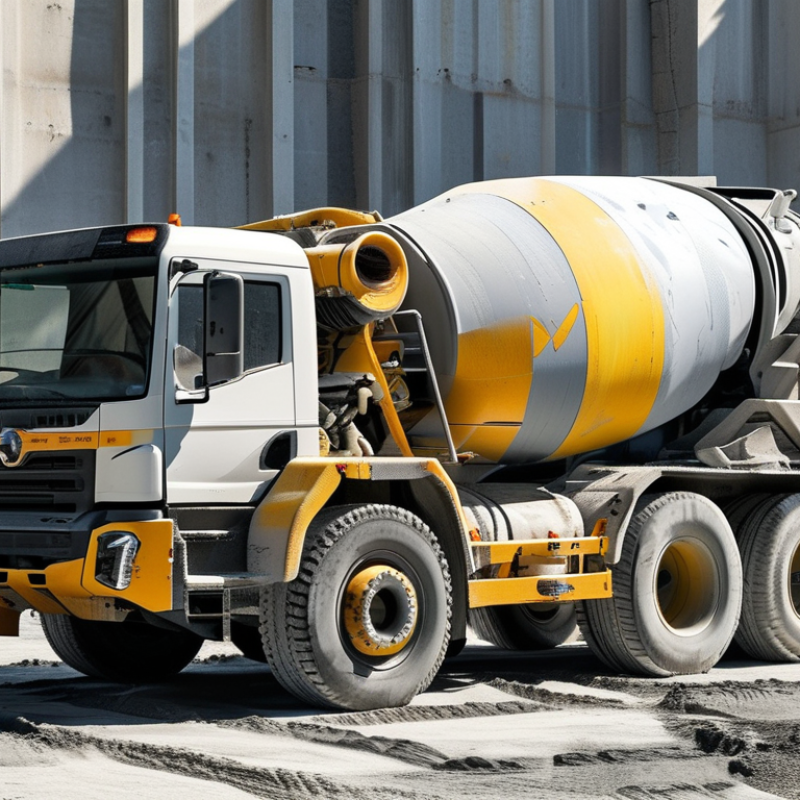
Intensive concrete mixers produce dense, consistent batches through forced mixing and high shear. They suit precast components, dry-cast products, repair materials, and demanding concrete blends. Available capacities usually range from 0.25 to 6 m³ per batch. Smaller 0.25–0.5 m³ units fit laboratories and small production lines. Medium 1–3 m³ mixers support regular precast work. Larger 4–6 m³ models serve continuous industrial operations.
The mixer’s internal tools must distribute cement, aggregates, water, and additives evenly. A 1 m³ batch may look manageable, yet moisture changes can affect workability quickly. Mixing time depends on the recipe, aggregate shape, and target slump. Operators should inspect discharge uniformity instead of trusting timer settings alone. I have seen well-sized mixers perform poorly because loading sequences were inconsistent. Capacity is useful, but it never tells the whole story. Maintenance access matters too. Worn paddles can create pale, unmixed streaks near the discharge gate.
Tips: Match batch size to daily output, not maximum rated volume. Keep practical filling below the limit when recipes contain heavy aggregates. Check moisture before dosing water. Record mixing time, energy use, and discharge quality during trials. A small test batch may reveal problems earlier. Also, ask whether the mixer handles your binder content and aggregate size. Specifications can appear precise, but field conditions remain less predictable.
Global leaders in concrete intensive mixing are judged by measurable performance, not brochure language. The five manufacturers highlighted in this category reflect different strengths in planetary mixing, twin-shaft design, automation, and customized batching systems. Their equipment serves precast plants, infrastructure projects, and demanding ready-mix operations. According to the International Energy Agency’s 2023 cement report, cement production creates about 7% of global carbon dioxide emissions. That figure increases pressure on mixer suppliers to reduce waste, energy use, and rejected batches.
Field experience shows that mixing quality depends on more than motor power. Engineers should examine discharge speed, blade wear, moisture control, cleaning access, and spare-parts support. The Global Concrete Mixer Market analysis published by IMARC Group reports continued market growth through 2032, driven by urban construction and infrastructure investment. Yet market forecasts are not guarantees. Local labor skills, aggregate shape, and maintenance discipline can change results quickly. I have seen high-specification equipment underperform when operators ignored calibration. That weakness deserves honest attention.
Tip: Request a trial batch using your actual aggregate, cement, and target slump. Record cycle time, power consumption, and uniformity. Ask for independently documented test conditions. ISO 9001 certification can support process reliability, but it cannot replace site verification. A practical audit should also inspect emergency controls, guarding, noise exposure, and cleaning procedures before purchase.
This representative structural-concrete mix contains approximately 300 kg of cement, 180 kg of water, 700 kg of fine aggregate, and 1,100 kg of coarse aggregate per cubic metre. Actual proportions vary according to strength, workability, aggregate grading, and local standards.
When evaluating top concrete intensive mixer manufacturers worldwide, rpm and cycle time reveal more than catalog capacity. A 20–60 rpm operating range supports controlled shear across different aggregate sizes. Higher speed can improve dispersion, but it may also increase heat, wear, and power demand.
A 30–90-second mixing cycle is a practical performance window for many industrial formulations. ACI 304R guidance identifies mixing time as a key factor in achieving uniform concrete, while EN 12350-5 testing emphasizes consistent flow measurement after mixing.
Industry surveys from the Global Cement and Concrete Association continue to highlight consistency and resource efficiency as major production priorities. These findings support testing cycle duration against slump, density, and compressive strength, rather than accepting a single factory setting.
Speed is not quality. A mixer running at 60 rpm may produce uneven material if the moisture level changes. In field trials, operators should record torque, batch temperature, discharge appearance, and cleaning time. The 30-second cycle can suit fluid, well-graded mixes. Dense or fiber-reinforced batches may need 60–90 seconds. However, longer mixing does not automatically improve strength. That assumption needs challenging. Reported results can also vary with blade geometry, loading sequence, and cement chemistry. A reliable comparison therefore uses identical recipes, measured water content, and repeated batches. Performance claims become credible only when test data reflects real production conditions.
Top Concrete Intensive Mixer Manufacturers Worldwide
Concrete production depends on more than mixing speed. The Global Cement and Concrete Association estimates that the world uses about 14 billion cubic metres of concrete each year. This scale makes consistent batching, moisture control, and traceable maintenance essential. EN 206 defines performance, production, and conformity requirements for concrete in European markets. ASTM C94 supports ready-mixed concrete requirements in the United States. A capable mixer manufacturer should explain how its equipment supports both frameworks, rather than treating certificates as decoration.
CE marking requires a manufacturer’s declaration of conformity under applicable European legislation. It is not a general quality award. For mixers, relevant machinery safety, electrical, and documentation duties must be reviewed carefully. ISO 9001 focuses on the quality management system, not guaranteed concrete strength. The ISO Survey has recorded more than one million ISO 9001 certificates worldwide, showing broad adoption, but certification alone cannot replace factory experience. This distinction is easy to miss.
Tips: Ask for batch uniformity results, calibration records, wear-part service intervals, and risk assessments. Request test data under wet, dry, and high-fines conditions. Check whether EN 206 or ASTM C94 support is documented for your market. A practical warning: published capacity may not equal usable output. Operators should verify discharge time, cleaning access, and actual moisture correction. Some specifications remain unclear. That deserves a second review.
„Thanks to the LUVIR technology, the solder resist process could be switched directly from the previously used mask exposure to direct exposure. As an outstanding digital solution on the market, this technology has been able to demonstrate fast process times and superior quality on our certified conventional ink in production. This allowed us to fully digitize the solder mask process at low cost – without process or ink adjustments. An excellent benefit to our production in Rot am See.“
Ralf Göhringer (Head of Production WE Rot am See)
I would definitely recommend the Limata machine and team for a future company purchase
Michael Greenaway
Compunetics Inc.
“The Limata ldi has been amazing!! Best thing we did was buy this machine”
Richard Brady
GM
Circuitlabs
“Since 2019, we have been running the Limata X1000 LDI system (including LUVIR for solder mask imaging) in daily production as an addition to our current process with film. The machine was capable of properly exposing Taiyo PSR-4000 BN (DI) solder mask types on normal to high-copper boards using a new and unique direct imaging process. The machine operating interface is very user friendly which allowed for a quick technical training curve. The pre-registration processing reduced several seconds of production time at every print. Limata support and service staff is incomparable. They supported our team every step of the way at basically any time of the day or night, with literally, an immediate response time, customizing the software interface to best fit our Operations and needs.
We have exposed more than 8,000 prints since end of October, on various solder mask colors and some resist film panels. Limata, has proven to be very capable and innovative. They are a strong contender in the industry.
We have very much enjoyed this project, and working with the team!
Thank you Limata for the continued support and being a part of our growth.”
Bill Sezate
Vice President, GM
Summit Interconnect
As a replacement to our current contact exposure process with film, the LIMATA X2000 system including LUVIR-Technology was capable of properly exposing non-LDI solder mask types using a direct imaging process. The machine offers cutting edge software with a very intuitive operating interface which allowed for quick technician training curve. The dual drawer system combined with pre-registration processing reduced several seconds of production time at every machine cycle. Limata support and service staff is world class. They added software patches to keep production running at shortest possible response times, customized the software interface to best fit our in-house Operations system, and even wrote a step-by-step machine processing manual. As a result of the project, we have exposed more than 16,000 times on various product types and solder mask brands/colors. Limata, in a very short timeframe as a company, has definitely shown they are truly innovative and will be challenging the industry of direct imaging for the top spot.
Kevin Beattie
Process Engineer
TTM Technologies
Forest Grove Division
