Heat Shrink Wire Terminals help protect electrical connections from moisture, abrasion, and vibration. For global buyers, the challenge is choosing products that perform consistently across different wire sizes, installation conditions, and supply chains. A terminal may look robust on a catalog page. Its seal, conductor grip, and tubing recovery matter more in use.
Electrical-contact specialist Peter G. Slade, editor of Electrical Contacts: Principles and Applications, emphasizes the importance of reliable contact design. The following sentence is a paraphrase of that broader principle, not a verified direct quotation: “A dependable connection starts with sound contact design and controlled installation.” That distinction matters. Buyers deserve clear evidence, not invented quotations.
This Top 10 guide compares Heat Shrink Wire Terminals by practical selection factors: wire-gauge range, insulation material, adhesive lining, temperature rating, crimp compatibility, and available certifications. Look closely at the small details. A visible adhesive seal can help indicate proper recovery, while an undersized terminal may compromise the crimp. Ask suppliers for current datasheets and sample parts. Check whether product specifications match your actual wire and tooling.
The ranking is a starting point, not a substitute for testing. Real assemblies can behave differently. Some details are easy to overlook. Evaluate samples under your own operating conditions before committing to volume orders.
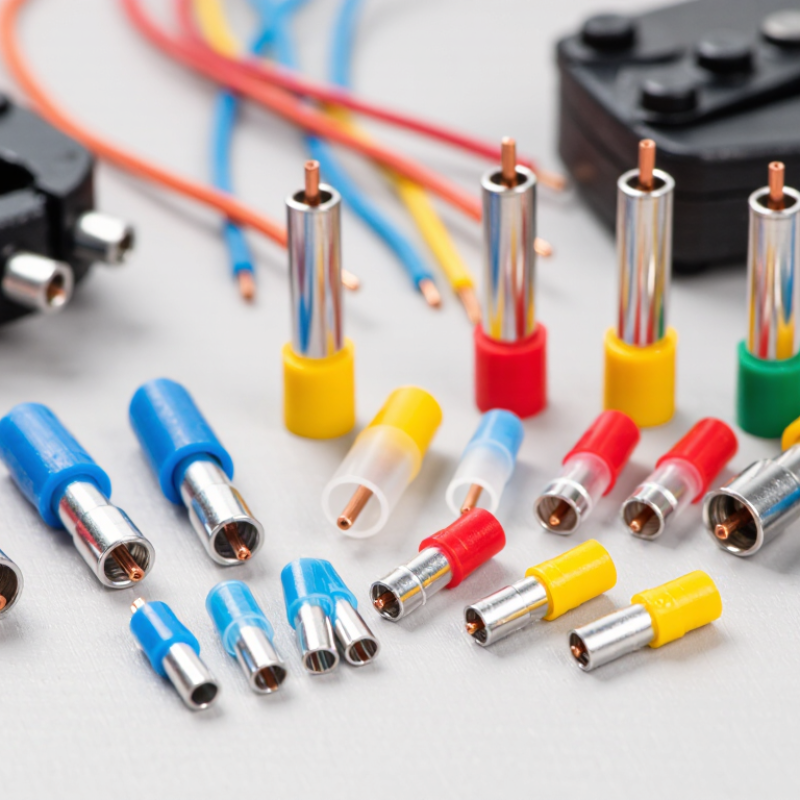
Heat-shrink wire terminals are crimp connectors with a metal barrel and a heat-recoverable insulating sleeve. The barrel grips the stripped conductor, creating the electrical and mechanical connection. The sleeve is not the connection itself. It shrinks around the barrel and wire insulation when heated. Adhesive-lined versions also soften an inner sealant, helping limit moisture and contaminant entry when fitted correctly.
Installation matters. Strip the wire to the specified length, insert it fully, then crimp with a compatible tool and die. Apply controlled heat until the sleeve conforms; avoid scorching the insulation. Too little heat may leave gaps, while too much can damage the wire.
NFPA’s Electrical Fires in U.S. Homes report estimated 46,700 home structure fires annually involving electrical failure or malfunction during 2015–2019. That figure covers many electrical systems, not terminals alone.
A polished sleeve can be misleading: check the crimp, conductor size, and product temperature rating rather than judging by appearance. Adhesive does not make every connection waterproof.
For global buyers comparing heat shrink wire terminals, material choice affects crimp stability, corrosion resistance, and long-term sealing. Many terminals use copper barrels, while tin plating can help limit oxidation in humid environments. The heat-shrink sleeve is commonly made from polyolefin; adhesive-lined versions add a seal around the wire insulation. Small details matter. Check that the barrel fits the conductor size and that the sleeve shrinks evenly without splitting.
Sealing claims need careful reading. A waterproof description alone does not confirm an ingress rating. Ask for the stated IP rating, test method, and installation conditions, including required heating tools and shrink temperature. A visible adhesive bead at each end can indicate melt flow, but it is not proof of a tested seal. I may be overcautious here; labels can make performance sound simpler than it is.
Compare operating temperature and voltage ratings against the actual circuit, not just the product category. Ratings vary by terminal design, wire insulation, and test standard. A sleeve that looks fully recovered may still have a weak crimp underneath, so inspect sample joints for pull strength and insulation coverage. For a top-ten shortlist, favor products with traceable test data, clear conductor ranges, and consistent dimensions across samples.
Heat-shrink wire terminals vary in contact shape, not just color or insulation. A ring terminal forms a closed loop around a stud, making it useful where vibration could loosen an open connection. A fork terminal slips beneath a screw without fully removing it, though it needs enough clearance to stay secure. Fit matters. Match the barrel to the wire size and the stud to the hardware.
For joining wires end to end, a butt splice encloses both stripped ends; a step-down splice accepts different wire sizes. Male and female quick-disconnect terminals pair for removable connections, while bullet terminals offer a compact, inline alternative. A pin terminal gathers fine strands for a screw clamp. Hook terminals catch beneath a post, and blade terminals suit compatible flat receptacles. Flag terminals turn the connection sideways where space is tight.
The sleeve shrinks around the barrel when heated, helping resist moisture and strain, but it cannot fix a weak crimp. Use a crimping tool suited to the terminal, then apply controlled heat until the tubing conforms without scorching. I have seen selection based on shape alone lead to poor fit. Check the wire range, insulation temperature rating, and equipment requirements before choosing; similar-looking terminals are not always interchangeable.
Across automotive systems, heat-shrink wire terminals protect crimped connections from splash, vibration, and road grime. OICA reported 93.5 million motor vehicles produced worldwide in 2023, showing the scale of wiring exposed to demanding conditions. The International Energy Agency also recorded nearly 14 million electric-car sales that year. In these vehicles, technicians must consider cable size, current load, temperature, and the terminal’s sealing performance—not just its appearance.
Marine installations face a different challenge. UNCTAD reports that shipping carries over 80% of world trade by volume, while onboard wiring encounters salt, humidity, and confined spaces. Salt finds weak points. Adhesive-lined heat-shrink tubing can help seal a properly crimped joint, but it cannot fix loose strands or the wrong terminal size. A practical check: inspect the crimp, then heat the sleeve evenly until it conforms without scorching.
Industrial panels and building electrical systems need reliable connections during maintenance and operation. Choose terminals by conductor material, wire gauge, insulation temperature rating, and expected exposure. Confirm compatibility with the specified crimping tool. A seal may look complete and still conceal a poor crimp; visual checks alone are imperfect. The cited production and trade figures describe system scale, not terminal failure rates, so they should not be treated as proof that one terminal design suits every application.
Global purchasing starts with evidence, not a catalogue photo. Grand View Research estimated the broader electrical-connectors market at USD 84.7 billion in 2023. That scale reflects diverse applications, but it does not make terminals interchangeable. Check the applicable product standard and request the supplier’s test reports. UL 486A-486B may apply to wire connectors; verify whether a specific terminal is covered before treating compliance as established. Small distinction. It matters.
Compatibility is often decided at the workbench. Match conductor size in both AWG and square millimetres, then confirm strand type, stud diameter, barrel design, and insulation temperature rating. A terminal marked for 2.5 mm² may not suit every wire construction at that nominal size. Ask for crimp-tool specifications and pull-test results for the actual wire-terminal combination. Heat-shrink tubing should recover evenly, seal the insulation, and leave no exposed conductor near the barrel. Check the finished assembly, not just the component.
Supplier selection needs traceability. Request batch identification, material declarations, dimensional inspection records, and samples from production—not only engineering stock. For damp or corrosive environments, ask how sealing and corrosion resistance were tested, and under what conditions. Compare lead times and minimum order quantities against realistic demand. I would not rank a supplier by price alone; that is easy to do, and easy to regret. Even a tidy datasheet can leave gaps. Verify the crimp process yourself before approving a large order.
„Thanks to the LUVIR technology, the solder resist process could be switched directly from the previously used mask exposure to direct exposure. As an outstanding digital solution on the market, this technology has been able to demonstrate fast process times and superior quality on our certified conventional ink in production. This allowed us to fully digitize the solder mask process at low cost – without process or ink adjustments. An excellent benefit to our production in Rot am See.“
Ralf Göhringer (Head of Production WE Rot am See)
I would definitely recommend the Limata machine and team for a future company purchase
Michael Greenaway
Compunetics Inc.
“The Limata ldi has been amazing!! Best thing we did was buy this machine”
Richard Brady
GM
Circuitlabs
“Since 2019, we have been running the Limata X1000 LDI system (including LUVIR for solder mask imaging) in daily production as an addition to our current process with film. The machine was capable of properly exposing Taiyo PSR-4000 BN (DI) solder mask types on normal to high-copper boards using a new and unique direct imaging process. The machine operating interface is very user friendly which allowed for a quick technical training curve. The pre-registration processing reduced several seconds of production time at every print. Limata support and service staff is incomparable. They supported our team every step of the way at basically any time of the day or night, with literally, an immediate response time, customizing the software interface to best fit our Operations and needs.
We have exposed more than 8,000 prints since end of October, on various solder mask colors and some resist film panels. Limata, has proven to be very capable and innovative. They are a strong contender in the industry.
We have very much enjoyed this project, and working with the team!
Thank you Limata for the continued support and being a part of our growth.”
Bill Sezate
Vice President, GM
Summit Interconnect
As a replacement to our current contact exposure process with film, the LIMATA X2000 system including LUVIR-Technology was capable of properly exposing non-LDI solder mask types using a direct imaging process. The machine offers cutting edge software with a very intuitive operating interface which allowed for quick technician training curve. The dual drawer system combined with pre-registration processing reduced several seconds of production time at every machine cycle. Limata support and service staff is world class. They added software patches to keep production running at shortest possible response times, customized the software interface to best fit our in-house Operations system, and even wrote a step-by-step machine processing manual. As a result of the project, we have exposed more than 16,000 times on various product types and solder mask brands/colors. Limata, in a very short timeframe as a company, has definitely shown they are truly innovative and will be challenging the industry of direct imaging for the top spot.
Kevin Beattie
Process Engineer
TTM Technologies
Forest Grove Division
