In the competitive landscape of fasteners, Hexagon Hex Socket Head Screws stand out for their reliability and versatility. These screws are essential in various industries, ranging from automotive to aerospace. Their unique design allows for superior torque and load handling, making them a preferred choice for engineers.
As global buyers assess their options for 2026, understanding the nuances of Hexagon Hex Socket Head Screws is crucial. Each screw’s grade, material, and coating play a significant role in performance. Knowledgeable purchasing decisions can lead to enhanced durability in applications. However, not all screws are created equal. Buyers must remain vigilant and conduct thorough research to avoid inferior products.
The demand for high-quality Hexagon Hex Socket Head Screws will continue to rise. Yet, challenges remain in sourcing and quality assurance. It is essential for buyers to foster relationships with reputable manufacturers. This ensures that they obtain products that meet strict industry standards and align with their specific needs. Investing time in learning about these screws can lead to lasting improvements in project outcomes.
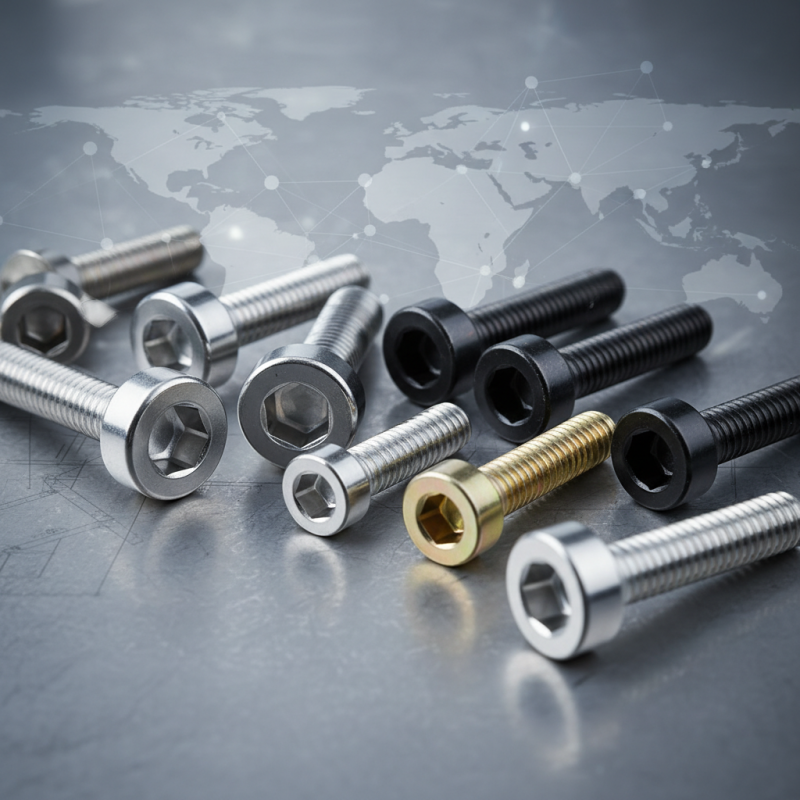
Hexagon hex socket head screws are essential in various applications. Their design allows for efficient torque transfer and better grip than standard screws. The hexagonal shape accommodates tools easily, making installation and removal straightforward. These screws often come in different materials, such as stainless steel and alloy steel, tailored to specific needs.
These fasteners are widely used in machinery, automotive, and construction sectors. Their versatility makes them popular among engineers and manufacturers. However, selecting the right screw can be challenging. Buyers should consider factors like tensile strength and corrosion resistance. Overlooking these details could lead to premature failure in critical applications.
Quality assurance is vital before making a purchase. Not all screws are created equal, and variations can exist even within the same category. Ensuring that the right specifications meet industry standards requires diligence. It is essential to verify suppliers and seek out those with a solid reputation in the market. Investing time to understand these elements pays off in the long run.
Hex socket head screws, also known as Allen screws, are essential in various industries. These screws feature a hexagonal socket that allows for increased torque application and reduced slipping during installation. According to recent data, the market for hex socket screws is expected to grow significantly, driven by industrial expansion and the increasing demand for robust fastening solutions.
One key specification of hex socket screws is their long-term durability. They are often made from carbon steel, stainless steel, or alloy steel, offering various grades based on tensile strength. For instance, ASTM A574 specifications highlight screws that achieve a tensile strength of at least 170,000 psi, providing durability in demanding applications. In addition, their ability to function effectively in tight spaces makes them ideal for machinery, automotive, and construction applications.
Yet, despite their advantages, some common issues arise with hex socket screws. Over-torquing can lead to stripping or breakage, which compromises structural integrity. Additionally, it’s crucial to select the right size and drive tool to avoid cam-out. A report from the Fastener Quality Act highlights the importance of adhering to proper installation techniques to ensure safety and performance. Attention to these details can prevent costly repairs and enhance operational efficiency.
The global market for hexagon hex socket head screws is growing rapidly. Industry reports indicate a projected compound annual growth rate (CAGR) of 5% from 2021 to 2026. This reflects increasing demand across various sectors, including automotive, electronics, and machinery.
Several manufacturers are emerging as key players. These companies prioritize quality, material sourcing, and advanced production techniques. Recent surveys show that 70% of buyers value quality assurance in their purchasing decisions. However, there is still a persistent issue with consistency in product specifications. Discrepancies can arise during manufacturing, leading to challenges in supply chain management.
Leading brands invest heavily in technology and research. They focus on computer-aided design and inspection systems to enhance accuracy. However, not all companies adapt swiftly to industry demands. A study found that 30% of manufacturers struggle with adopting innovative practices. This highlights an opportunity for improvement in the industry. Addressing these gaps could significantly enhance product reliability for global buyers.
Hexagon hex socket head screws are essential in various industries, from automotive to aerospace. Their design allows for increased torque application, making them ideal for high-stress applications. According to a recent industry report, the demand for these fasteners is projected to grow by 5% annually through 2026. This growth signals a robust market favoring durability and reliability.
One interesting aspect is their versatility. Hexagon hex socket head screws are used in machinery, furniture, and electronics. They are essential in assembling components with high precision. Their use in the automotive industry is particularly notable, as they are often employed in engine assembly and structural applications. However, sourcing quality screws remains a challenge. Issues with counterfeit products sometimes compromise safety and performance.
Despite their widespread usage, some manufacturers still struggle with standardization. Variations in material quality can affect performance. In practice, this means buyers must be vigilant when selecting suppliers. Industry standards continuously evolve, yet inconsistencies can occur. It’s crucial for buyers to prioritize quality assurance and follow best practices in procurement.
When selecting hex socket head screws for your projects, consider your specific needs carefully. The right material will play a crucial role. Stainless steel is corrosion-resistant and suitable for outdoor applications. On the other hand, carbon steel offers strength but may require coatings for protection. Make sure to evaluate your environment before making a decision.
Tips: Always check the screw's strength rating. This helps ensure you use the right fastener for your application. Additionally, consider the thread type—fine threads provide better tension in materials, while coarse threads are effective in softer materials.
It's important to remember the dimensioning. Measure the lengths and diameters accurately. Oversized or undersized screws could lead to performance issues. Even a small miscalculation can result in a less secure fit. Being meticulous now can save you time and resources later.
„Thanks to the LUVIR technology, the solder resist process could be switched directly from the previously used mask exposure to direct exposure. As an outstanding digital solution on the market, this technology has been able to demonstrate fast process times and superior quality on our certified conventional ink in production. This allowed us to fully digitize the solder mask process at low cost – without process or ink adjustments. An excellent benefit to our production in Rot am See.“
Ralf Göhringer (Head of Production WE Rot am See)
I would definitely recommend the Limata machine and team for a future company purchase
Michael Greenaway
Compunetics Inc.
“The Limata ldi has been amazing!! Best thing we did was buy this machine”
Richard Brady
GM
Circuitlabs
“Since 2019, we have been running the Limata X1000 LDI system (including LUVIR for solder mask imaging) in daily production as an addition to our current process with film. The machine was capable of properly exposing Taiyo PSR-4000 BN (DI) solder mask types on normal to high-copper boards using a new and unique direct imaging process. The machine operating interface is very user friendly which allowed for a quick technical training curve. The pre-registration processing reduced several seconds of production time at every print. Limata support and service staff is incomparable. They supported our team every step of the way at basically any time of the day or night, with literally, an immediate response time, customizing the software interface to best fit our Operations and needs.
We have exposed more than 8,000 prints since end of October, on various solder mask colors and some resist film panels. Limata, has proven to be very capable and innovative. They are a strong contender in the industry.
We have very much enjoyed this project, and working with the team!
Thank you Limata for the continued support and being a part of our growth.”
Bill Sezate
Vice President, GM
Summit Interconnect
As a replacement to our current contact exposure process with film, the LIMATA X2000 system including LUVIR-Technology was capable of properly exposing non-LDI solder mask types using a direct imaging process. The machine offers cutting edge software with a very intuitive operating interface which allowed for quick technician training curve. The dual drawer system combined with pre-registration processing reduced several seconds of production time at every machine cycle. Limata support and service staff is world class. They added software patches to keep production running at shortest possible response times, customized the software interface to best fit our in-house Operations system, and even wrote a step-by-step machine processing manual. As a result of the project, we have exposed more than 16,000 times on various product types and solder mask brands/colors. Limata, in a very short timeframe as a company, has definitely shown they are truly innovative and will be challenging the industry of direct imaging for the top spot.
Kevin Beattie
Process Engineer
TTM Technologies
Forest Grove Division
