Solar systems are becoming more varied, and their controllers must manage more than sunlight. The International Energy Agency’s Renewables 2024 report forecasts nearly 5,500 gigawatts of new renewable capacity between 2024 and 2030, with solar providing almost 80% of the increase. IEA Executive Director Fatih Birol called this period “the biggest boom in renewable energy in history.” That growth makes dependable energy conversion and battery charging increasingly important.
A Hybrid Solar Charge Controller can combine solar charging with other power sources, often within a broader inverter or storage system. But product labels are not always consistent. Buyers should check the actual wiring diagram, supported battery chemistries, solar input limits, charging current, and compatibility with generators or the grid. A bright screen cannot compensate for a controller that mismatches a battery bank. Nor does a long feature list prove reliable operation.
This guide compares leading options for 2026 through practical specifications and documented capabilities. It considers MPPT performance, system voltage, monitoring, protection features, warranty terms, and installation needs. Where manufacturers provide limited test data, that limitation matters. It deserves scrutiny. Real-world performance depends on panel conditions, temperature, battery settings, and system design—not a headline efficiency figure alone. The best choice may be less obvious than a ranking suggests. Readers should verify current manuals and regional product support before purchasing.
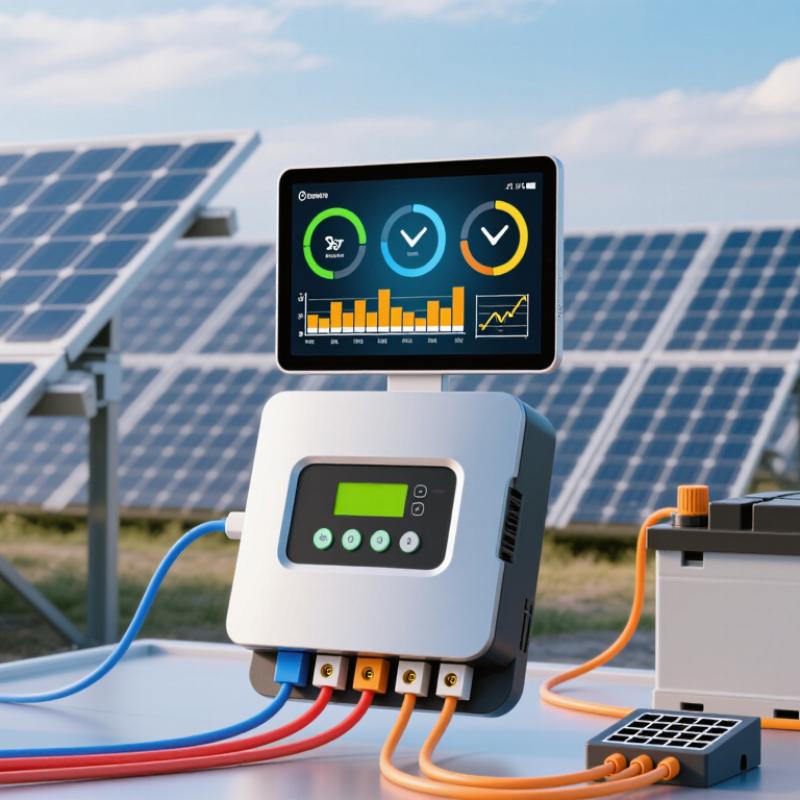
A hybrid solar charge controller coordinates power from rooftop panels, batteries, and, in some systems, the grid or a backup generator. Its MPPT function adjusts the panels’ electrical operating point as sunlight changes, helping extract available energy without simply sending every watt to a battery. It also manages charging limits and load priorities. On a cloudy afternoon, for example, the controller may reduce battery charging while keeping essential lights and communications powered. Small settings matter.
The scale of solar growth makes this coordination increasingly relevant. The International Energy Agency’s Renewables 2024 report says solar PV represented about three-quarters of renewable capacity additions in 2023. NREL’s 2024 Annual Technology Baseline uses roughly 85% round-trip efficiency for utility-scale lithium-ion battery storage; that is a system benchmark, not a promise about any household controller. A controller cannot recover energy lost through conversion, wiring, heat, or poor settings. Nor will every hybrid system handle grid input the same way. Check battery voltage, chemistry, current limits, and temperature protections against the system specifications. Real installations can still behave imperfectly during fast cloud changes, so monitoring actual charge data is wiser than trusting a neat design estimate.
A hybrid solar charge controller helps coordinate energy from panels, a battery bank, and the utility grid. It measures solar production and battery conditions, then manages where available power goes. In many systems, solar serves active household loads first, while surplus energy charges the battery. Some designs combine the controller and inverter; others use separate equipment. That distinction matters. The exact power flow depends on system wiring, equipment limits, and configuration, so “hybrid” does not guarantee identical behavior across models.
When clouds reduce panel output, the system may draw from the battery or use grid power, depending on its settings and available capacity. A homeowner might reserve battery energy for evening outages, for example, rather than spending it during a brief afternoon dip. Small details count: battery chemistry, charge limits, grid-charge permissions, and load priorities must match the equipment manuals. A setting that looks efficient on a screen can shorten battery life if configured poorly. Not every setup is intuitive. Review operating data over several days, and have a qualified installer verify wiring, protection devices, and commissioning settings.
This illustrative 24-hour dispatch profile shows solar supplying more of the load during daylight, while stored battery energy can support evening demand. Grid imports fill remaining demand when solar and battery output are insufficient. Values are scenario data, not product rankings or field measurements; actual dispatch depends on system settings, weather, load, and battery state of charge.
“Top” depends on the system. A cabin with one battery bank has different needs from a home with grid backup. The IEA’s Renewables 2024 report projects nearly 5,500 GW of renewable capacity additions worldwide from 2024 to 2030, with solar PV accounting for almost 80%. That growth makes careful equipment matching important—but it does not make every hybrid controller suitable for every installation.
Compare the controller’s battery voltage and maximum charging current with your array and battery specifications. Check whether its charging profile supports your battery chemistry, and whether temperature compensation can be disabled when required. MPPT tracking, inverter compatibility, grid or generator input, and clear fault alerts also matter. Look for continuous output ratings, not just brief peak figures. A tidy spec sheet can still hide an awkward limitation. Confirm wiring limits and installation guidance before purchase.
Tips: Size for real conditions, not ideal sunlight. Leave headroom for cold-weather voltage rise, and check the manufacturer’s limits. Ask how the unit behaves when the grid fails. The IEA forecast describes market growth, not controller quality; independent testing and the exact datasheet should guide your final comparison.
Hybrid solar charge controllers differ most in how they manage energy, not in their display screens. Some combine solar charging with battery-to-load control; others coordinate with an inverter, grid supply, or backup generator. Check the wiring diagram carefully. “Hybrid” is not used consistently across product specifications.
MPPT models can adjust the solar array’s operating point as sunlight changes, which helps when clouds pass or panel temperatures rise. PWM models are simpler and may suit small, closely matched arrays, but they can leave some panel capacity unused. A controller’s voltage and current limits matter just as much as its charging method. A sunny roof can push an undersized unit beyond its rated input.
Battery support is another key difference. Look for explicit settings for the battery chemistry, charging voltage, and temperature compensation; generic presets may not fit every battery. Some units also offer remote monitoring, while others rely on a small local screen. Useful, but not essential. Check whether essential loads remain powered during an outage, and confirm that the controller can communicate with the rest of the system. Specifications can look reassuring on paper; real installations still depend on cable sizing, ventilation, and careful setup. There is no perfect match for every home. That part is easy to overlook.
Choosing a hybrid solar charge controller starts with the battery, not the sales specifications. Confirm the battery’s voltage and chemistry, then check the charging limits recommended by its manufacturer. A controller that cannot match those settings may reduce battery life or leave capacity unused. Small details matter.
Next, compare the controller’s maximum PV input voltage and charging current with your array. Calculate the panels’ open-circuit voltage for cold conditions, since voltage can rise as temperatures fall. Allow a suitable safety margin. Also check whether the controller works with your inverter and supports the way you plan to use grid or generator charging. Hybrid systems vary; the word “hybrid” does not guarantee identical functions.
Think about daily loads, future panel additions, and where the equipment will sit. A dusty shed, a hot utility room, and an outdoor cabinet create different cooling and enclosure needs. Monitoring can help reveal low charging or unexpected battery draw, but useful data cannot fix poor sizing. Check the manual. A common mistake is choosing extra capacity without checking compatibility. I would rather verify the wiring diagram twice than discover that a feature exists only under a different system configuration. Compare warranty terms, technical support, and installation requirements alongside efficiency.
„Thanks to the LUVIR technology, the solder resist process could be switched directly from the previously used mask exposure to direct exposure. As an outstanding digital solution on the market, this technology has been able to demonstrate fast process times and superior quality on our certified conventional ink in production. This allowed us to fully digitize the solder mask process at low cost – without process or ink adjustments. An excellent benefit to our production in Rot am See.“
Ralf Göhringer (Head of Production WE Rot am See)
I would definitely recommend the Limata machine and team for a future company purchase
Michael Greenaway
Compunetics Inc.
“The Limata ldi has been amazing!! Best thing we did was buy this machine”
Richard Brady
GM
Circuitlabs
“Since 2019, we have been running the Limata X1000 LDI system (including LUVIR for solder mask imaging) in daily production as an addition to our current process with film. The machine was capable of properly exposing Taiyo PSR-4000 BN (DI) solder mask types on normal to high-copper boards using a new and unique direct imaging process. The machine operating interface is very user friendly which allowed for a quick technical training curve. The pre-registration processing reduced several seconds of production time at every print. Limata support and service staff is incomparable. They supported our team every step of the way at basically any time of the day or night, with literally, an immediate response time, customizing the software interface to best fit our Operations and needs.
We have exposed more than 8,000 prints since end of October, on various solder mask colors and some resist film panels. Limata, has proven to be very capable and innovative. They are a strong contender in the industry.
We have very much enjoyed this project, and working with the team!
Thank you Limata for the continued support and being a part of our growth.”
Bill Sezate
Vice President, GM
Summit Interconnect
As a replacement to our current contact exposure process with film, the LIMATA X2000 system including LUVIR-Technology was capable of properly exposing non-LDI solder mask types using a direct imaging process. The machine offers cutting edge software with a very intuitive operating interface which allowed for quick technician training curve. The dual drawer system combined with pre-registration processing reduced several seconds of production time at every machine cycle. Limata support and service staff is world class. They added software patches to keep production running at shortest possible response times, customized the software interface to best fit our in-house Operations system, and even wrote a step-by-step machine processing manual. As a result of the project, we have exposed more than 16,000 times on various product types and solder mask brands/colors. Limata, in a very short timeframe as a company, has definitely shown they are truly innovative and will be challenging the industry of direct imaging for the top spot.
Kevin Beattie
Process Engineer
TTM Technologies
Forest Grove Division
