Hydraulic Truck Cranes are essential in modern construction. They combine powerful lifting abilities with advanced technology. These cranes are versatile and can handle various tasks with ease.
Understanding the features of Hydraulic Truck Cranes is crucial for operators and contractors. Key aspects include load capacity, boom reach, and stability. Each feature can impact performance significantly. Choosing the right crane can be challenging, as not all models are identical.
While Hydraulic Truck Cranes excel in many areas, flaws can still exist. Some models may not operate optimally under certain conditions. It's vital to evaluate equipment carefully before making a decision. Recognizing these strengths and weaknesses ensures successful project execution and safety.
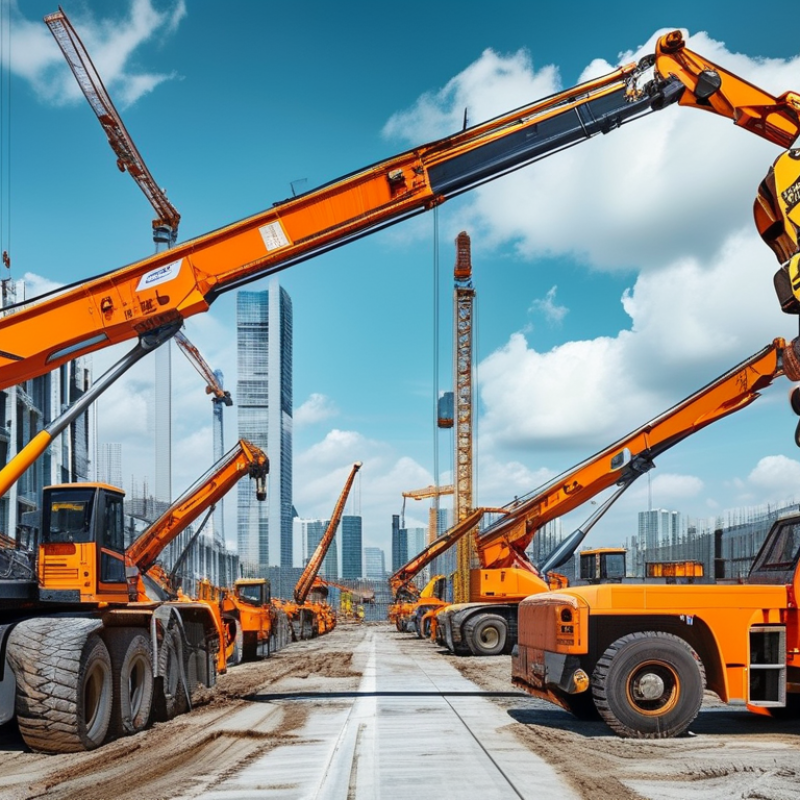
Hydraulic truck cranes are vital in construction and heavy lifting. Understanding their key components helps optimize their usage. The main parts of a hydraulic truck crane include the boom, hydraulic system, and outrigger. Each part plays a significant role in lifting and stability.
The boom is the crane's arm, which extends to lift heavy loads. According to industry reports, booms can typically reach heights of 200 feet or more. This impressive reach allows for lifting capabilities in challenging environments. The hydraulic system powers the boom and other components. It employs hydraulic fluid to create force, enabling precise movements. Many cranes utilize multi-stage hydraulic cylinders to increase lifting power.
Outriggers are essential for stability. They spread out from the crane's body to prevent tipping. Poorly set outriggers can cause accidents, making proper setup critical. Here’s a tip: always check the outrigger placement before any lift. Regular inspections can ensure they function correctly. Keeping hydraulic fluids at optimum levels is equally important. It prevents overheating and potential equipment failure. Ensuring these components work effectively contributes to safer operations.
Hydraulic mechanisms have transformed truck cranes, enhancing their efficiency and versatility. These systems use fluid power to lift and move heavy loads, offering superior strength. The ability to control lifting speed allows operators to position loads precisely. This is crucial on construction sites where accuracy matters.
Using hydraulic systems can lead to significant safety improvements. They minimize the risk of mechanical failure. Traditional cranes often rely on cables and pulleys, which can snap under pressure. Hydraulic components, when maintained properly, tend to be more reliable. Regular inspections ensure that the fluid levels remain optimal, which is essential for the system's performance.
However, adopting hydraulic technology comes with challenges. The initial costs can be higher than traditional systems. Operators need training to handle these advanced cranes effectively. Moreover, hydraulic fluid leaks can pose environmental risks. Awareness and preventive measures are essential. Balancing these advantages and drawbacks is essential for any operation considering a hydraulic truck crane.
Hydraulic truck cranes play a vital role in various industries, and safety features are paramount. One critical aspect is the load moment indicator (LMI). This system alerts operators when the load approaches the crane's capacity. According to industry reports, cranes equipped with LMI reduce accidents by up to 30%. However, not all cranes have this feature, leading to potential risks during operation.
Another essential safety feature is the anti-two-block system. This prevents the crane's hook block from coming into contact with the boom. Studies indicate that this feature has significantly decreased incidents related to boom damage. Unfortunately, operators sometimes neglect to check whether their cranes are equipped with this technology. Regular maintenance and inspections are crucial yet often overlooked factors contributing to overall crane safety.
Moreover, proper operator training cannot be overstated. An expert report highlighted that poorly trained operators are a leading cause of crane accidents. A robust training program can improve safety and operational efficiency. However, many companies still rely on outdated training methods that may not address current challenges. Investing in up-to-date safety features and thorough training is essential for reducing risks in hydraulic truck crane operations.
| Feature | Description | Safety Feature |
|---|---|---|
| Load Monitoring System | Monitors the weight of the load to prevent overloading. | Yes |
| Boom Angle Indicator | Shows the angle of the boom to ensure safe configurations. | Yes |
| Anti-Two Block Device | Prevents the hook from contacting the boom, avoiding accidents. | Yes |
| Outrigger Support System | Provides stability when the crane is operational. | Yes |
| Emergency Stop Mechanism | Allows for immediate cessation of operations in emergencies. | Yes |
| Crane Stability Monitoring | Monitors the stability of the crane during operations. | Yes |
When considering hydraulic truck cranes, understanding their performance capabilities is crucial. Load capacity and reach are among the most significant features. The load capacity indicates how much weight a crane can lift safely. Many models can lift from a few tons to over a hundred tons. Operators must assess this based on project needs.
Reach is equally important. It defines how far the crane can extend its boom while maintaining stability. Longer reach allows for access to hard-to-reach areas. However, exceeding the recommended reach can jeopardize safety. Always check load charts before operation.
**Tips:** Always prioritize safety when choosing a crane. Ensure that the crane's specifications match your project requirements. Inspect the crane regularly to prevent accidents. Remember, a highly capable crane still needs an experienced operator to maximize its potential.
Hydraulic truck cranes are essential for heavy lifting. To ensure they work efficiently, regular maintenance is crucial. Start with checking the hydraulic fluid levels. Low fluid can cause overheating and decreased performance. Ensure you use the correct type for your model. Regularly inspect hoses and fittings for any leaks. A small leak can lead to bigger problems down the line.
Cleaning the crane is another vital task. Dirt and grime can build up on the moving parts, causing wear. This can lead to equipment failure if not addressed. Check the electrical systems periodically, too. Worn-out cables can create safety hazards. Replacing them on time can prevent accidents. Daily inspections help catch issues early. It’s easy to overlook small signs but neglecting them can be costly.
Lastly, maintaining the boom is critical. Inspect it for structural integrity. Any cracks or dents can compromise its strength. Proper lubrication of joints enhances movement and extends the crane’s lifespan. Remember, a well-maintained crane not only performs better but also keeps operators safe. Regular maintenance may take time, but it avoids serious incidents later.
„Thanks to the LUVIR technology, the solder resist process could be switched directly from the previously used mask exposure to direct exposure. As an outstanding digital solution on the market, this technology has been able to demonstrate fast process times and superior quality on our certified conventional ink in production. This allowed us to fully digitize the solder mask process at low cost – without process or ink adjustments. An excellent benefit to our production in Rot am See.“
Ralf Göhringer (Head of Production WE Rot am See)
I would definitely recommend the Limata machine and team for a future company purchase
Michael Greenaway
Compunetics Inc.
“The Limata ldi has been amazing!! Best thing we did was buy this machine”
Richard Brady
GM
Circuitlabs
“Since 2019, we have been running the Limata X1000 LDI system (including LUVIR for solder mask imaging) in daily production as an addition to our current process with film. The machine was capable of properly exposing Taiyo PSR-4000 BN (DI) solder mask types on normal to high-copper boards using a new and unique direct imaging process. The machine operating interface is very user friendly which allowed for a quick technical training curve. The pre-registration processing reduced several seconds of production time at every print. Limata support and service staff is incomparable. They supported our team every step of the way at basically any time of the day or night, with literally, an immediate response time, customizing the software interface to best fit our Operations and needs.
We have exposed more than 8,000 prints since end of October, on various solder mask colors and some resist film panels. Limata, has proven to be very capable and innovative. They are a strong contender in the industry.
We have very much enjoyed this project, and working with the team!
Thank you Limata for the continued support and being a part of our growth.”
Bill Sezate
Vice President, GM
Summit Interconnect
As a replacement to our current contact exposure process with film, the LIMATA X2000 system including LUVIR-Technology was capable of properly exposing non-LDI solder mask types using a direct imaging process. The machine offers cutting edge software with a very intuitive operating interface which allowed for quick technician training curve. The dual drawer system combined with pre-registration processing reduced several seconds of production time at every machine cycle. Limata support and service staff is world class. They added software patches to keep production running at shortest possible response times, customized the software interface to best fit our in-house Operations system, and even wrote a step-by-step machine processing manual. As a result of the project, we have exposed more than 16,000 times on various product types and solder mask brands/colors. Limata, in a very short timeframe as a company, has definitely shown they are truly innovative and will be challenging the industry of direct imaging for the top spot.
Kevin Beattie
Process Engineer
TTM Technologies
Forest Grove Division
