Keeping an industrial coding line running can depend on a small component arriving at the right time. For global buyers, choosing Imaje Spare Parts suppliers involves more than comparing prices. Compatibility matters: check the equipment model, serial details, and part number before ordering. A familiar listing may still refer to a different revision. That detail is easy to miss. Depending on the machine, buyers may need printheads, filters, pumps, belts, or other service items. Verify the exact requirement against equipment documentation or with a qualified technician.
This guide compares suppliers using practical criteria, including product identification, stock visibility, stated lead times, warranty terms, and technical support. It also considers clear communication, protective packaging, and useful documentation. Ask whether parts are original, refurbished, or compatible alternatives, and request written specifications when relevant. Claims alone are not proof. Review supplier policies and references, and consider a low-risk order when testing a new source. No single supplier suits every plant. Urgent delivery, regional service coverage, and long-term cost can point in different directions. A ranking is only a starting point; purchasing decisions can be messier than any list suggests.
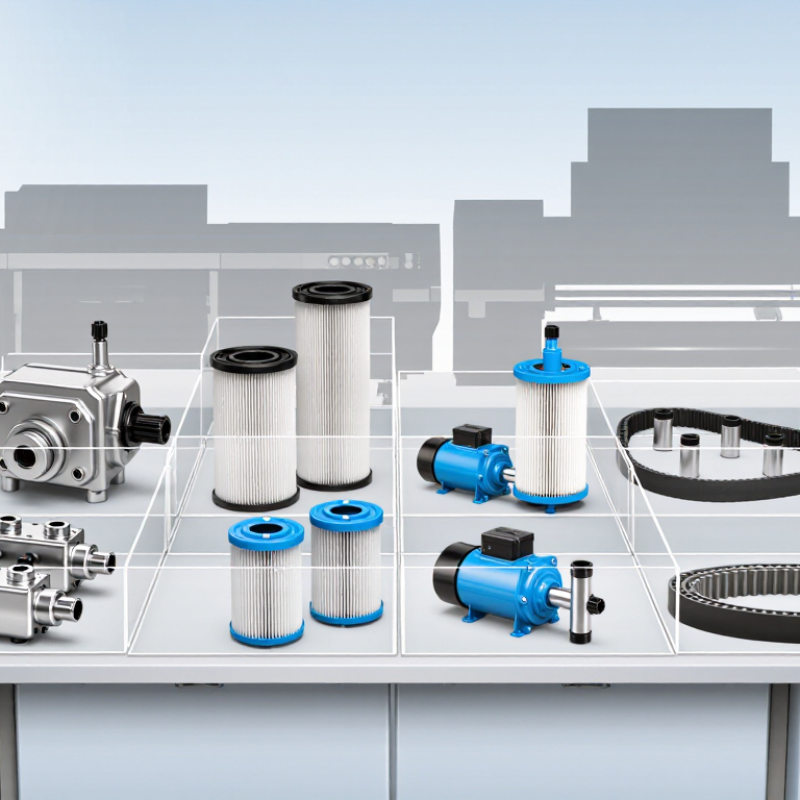
Industrial printers rely on compatible spare parts to keep codes sharp and production moving. A printhead, ink filter, pump, or sensor can affect print quality and machine stability. When a filter becomes clogged, ink flow may turn uneven, leaving faint characters on cartons. Small defects matter. They can make batch codes difficult to read.
Selecting parts requires more than matching a product name. Check the printer model, component specifications, and operating conditions before ordering. A technician can compare the removed part with its replacement and inspect seals, connectors, and fit. Keep clean parts sealed until installation; dust and moisture can cause trouble. Genuine-looking packaging alone proves little, so request traceable specifications and clear warranty terms. In practice, even a correct part may not fix a fault caused by dried ink or poor settings. That possibility deserves a second look. Regular checks and accurate service records help buyers spot wear early and reduce avoidable downtime.
Reliable coding and marking systems depend on compatible, well-maintained parts. Common replacement categories include printheads, ink cartridges, filters, pumps, valves, and tubing. Each plays a distinct role. A clogged filter can restrict ink flow, while worn tubing may cause leaks or uneven delivery. Printheads need careful handling; dried residue can affect print quality.
Other useful parts include sensors, encoder wheels, control boards, and conveyor belts. Sensors help trigger printing at the correct position. Encoder wheels track product movement, so wear can create spacing errors on cartons or bottles. Before ordering, check the equipment model, part number, connector type, and operating conditions. A part that looks right may still be incompatible. I have seen this detail overlooked, and it can delay a repair.
Tips: Keep a small stock of high-wear items, such as filters and tubing. Store ink-related components as instructed, and record replacement dates. Verify suppliers can provide clear specifications and traceable product details. Do not replace parts by guesswork; some symptoms have several possible causes. A maintenance log helps, though it will not explain every failure.
| Spare Part Category | Typical Components | Common System Type | Function | Common Replacement Indicators | Supplier Route and Verification Checks |
|---|---|---|---|---|---|
| Printhead components | Nozzle, charge electrode, deflection plates, gutter, printhead seals | Continuous inkjet (CIJ) | Forms, charges, directs, and recovers ink droplets for printing. | Persistent print-quality defects, damaged components, leakage, or unsuccessful cleaning and alignment. | Use a qualified coding-equipment parts specialist or service channel. Confirm the exact printer model, printhead revision, and part number. |
| Ink circuit components | Ink or makeup pumps, valves, dampers, pressure regulators | Primarily CIJ | Moves and regulates fluids through the printer’s circulation system. | Repeated pressure or flow alarms, inconsistent circulation, leaks, or a pump that fails to operate as specified. | Ask for the part number, operating specifications, and return terms. Confirm fluid and seal compatibility before ordering. |
| Filters | Ink filters, makeup filters, air filters, filter housings | CIJ and other systems with filtered fluid or air paths | Helps capture contaminants and protect downstream components. | Scheduled service interval reached, restricted flow, visible contamination, or a filter-related service alert. | Check dimensions, filtration specification, media compatibility, and whether the item is supplied individually or as a service kit. |
| Fluid-path tubing and seals | Tubing, umbilical lines, O-rings, gaskets, fittings | CIJ and other fluid-based coding systems | Carries ink or cleaning fluids and seals joints against leakage. | Cracking, hardening, swelling, seepage, loose connections, or visible chemical deterioration. | Verify material, dimensions, pressure rating, and chemical compatibility. Do not assume visually similar tubing is interchangeable. |
| Sensors and detection components | Level, pressure, temperature, product-detection, and encoder sensors | CIJ, laser, thermal-transfer, and other line-marking setups, depending on configuration | Monitors printer conditions or synchronizes marking with product movement. | Intermittent detection, implausible readings, missed marks, or a sensor fault that remains after wiring and setup checks. | Match output type, connector, sensing range, mounting, and electrical ratings to the existing installation. |
| Electronic and power components | Power supplies, control boards, interface boards, display assemblies | Multiple coding and marking technologies | Provides power, control, communication, and operator-interface functions. | Failure to start, recurring electronic faults, damaged connectors, or loss of a specific control or display function. | Confirm hardware revision, firmware or configuration requirements, voltage ratings, and warranty coverage. Use qualified technicians for installation. |
| Laser system service parts | Exhaust filters, scanner-related components, protective windows, safety interlock parts | Laser marking systems | Supports beam delivery, fume extraction, and safe operation, depending on the component. | Reduced extraction, damaged or contaminated protective windows, scan faults, or an interlock fault. | Source safety-critical parts through a qualified service provider. Verify the laser configuration and follow applicable laser-safety procedures. |
| Thermal-transfer marking parts | Thermal printhead, platen roller, drive belt, ribbon sensor | Thermal-transfer overprinting (TTO) | Transfers a printed image from ribbon onto packaging material. | Missing or uneven print, worn roller surface, ribbon-tracking problems, or printhead damage. | Check print width, mounting, connector, roller dimensions, and machine configuration. Request clear condition and warranty details for refurbished parts. |
Compatibility note: Part availability and interchangeability depend on the exact printer model, configuration, and revision. Confirm the equipment identification details and part number with the supplier before purchase.
When assessing a supplier for industrial coding and marking spare parts in 2026, begin with fit, not price. Give the supplier the machine model, serial range, and exact part number, then request written confirmation of compatibility. Ask for clear photos of connectors, seals, and wear surfaces; a vague catalog image is not enough. Reliable sellers can explain material grade, production batch, stock status, and realistic dispatch time. Check whether the quoted item is new, refurbished, or an equivalent replacement. These categories are not interchangeable. Keep the answer in writing.
Quality claims need evidence. Request inspection records, sample availability, packaging details, and warranty terms before placing a larger order. For a printhead, pump, sensor, or valve, ask how the component is tested and what failure signs the supplier checks. Compare response quality as well as cost: a useful technical reply should address your actual machine and operating conditions, not repeat a sales script. Even good records cannot guarantee a perfect fit; verify a trial part on your line.
Suggested evaluation weighting: Use these buyer-defined percentages to structure supplier comparisons, not as market-survey results. Verify parts authenticity and documentation, compatibility, availability, warranty terms, technical support, and cost transparency for each purchase.
Choosing replacement parts for industrial coding equipment starts with the exact machine configuration, not a broad compatibility claim. Record the model and serial number, printhead type, connector shape, hose diameter, and software version before requesting a quote. Small details matter. A valve may look identical yet use a different seal material or electrical connection. Ask the supplier to verify the part number against a service manual or clear equipment photos, then keep that confirmation with your purchase records.
Quality checks should go beyond a polished listing. Request material specifications, batch traceability, inspection results, and packaging that protects parts from dust and impact. For components that contact ink or solvent, confirm fluid compatibility in writing; a seal that swells can cause leaks and downtime. If documents are incomplete, pause and ask. It is easy to treat “fits” as proof, though that word can hide important limits.
Before ordering, check return terms, warranty coverage, response hours, and whether technicians can help troubleshoot installation. Ask how they can assess a fault using photos, error codes, and measurements. Store seals and filters under the supplier’s recommended conditions, and check any stated shelf life before buying extra stock. Save the support contact and dispatch estimate beside the maintenance log.
Global sourcing of coding-and-marking printer parts depends on more than price. Buyers should confirm the exact machine model, part revision, connector layout, and operating conditions before requesting quotes. A printhead that looks identical may have a different pin configuration. Small mismatch, costly delay. Ask suppliers for clear photographs, dimensional drawings, and written compatibility confirmation. For critical components, compare warranty terms and tested service life, not just unit cost.
Shipping also shapes purchasing decisions. UNCTAD’s Review of Maritime Transport 2024 reports that over 80% of world trade by volume moves by sea, making port congestion and transit variability important risks for international buyers. Request separate production and shipping lead times, and check whether the quote includes export packaging and tracking. Keep a small buffer for frequently replaced items, especially when a line cannot run without them. These checks help, though they cannot prevent every delay.
Tips: Send the supplier the equipment model, part number, photos, and destination postal code together. Confirm stock status in writing, and ask how the part was tested. Keep one approved sample or reference photo on file. Procurement records are easy to neglect; that is often where avoidable confusion begins.
„Thanks to the LUVIR technology, the solder resist process could be switched directly from the previously used mask exposure to direct exposure. As an outstanding digital solution on the market, this technology has been able to demonstrate fast process times and superior quality on our certified conventional ink in production. This allowed us to fully digitize the solder mask process at low cost – without process or ink adjustments. An excellent benefit to our production in Rot am See.“
Ralf Göhringer (Head of Production WE Rot am See)
I would definitely recommend the Limata machine and team for a future company purchase
Michael Greenaway
Compunetics Inc.
“The Limata ldi has been amazing!! Best thing we did was buy this machine”
Richard Brady
GM
Circuitlabs
“Since 2019, we have been running the Limata X1000 LDI system (including LUVIR for solder mask imaging) in daily production as an addition to our current process with film. The machine was capable of properly exposing Taiyo PSR-4000 BN (DI) solder mask types on normal to high-copper boards using a new and unique direct imaging process. The machine operating interface is very user friendly which allowed for a quick technical training curve. The pre-registration processing reduced several seconds of production time at every print. Limata support and service staff is incomparable. They supported our team every step of the way at basically any time of the day or night, with literally, an immediate response time, customizing the software interface to best fit our Operations and needs.
We have exposed more than 8,000 prints since end of October, on various solder mask colors and some resist film panels. Limata, has proven to be very capable and innovative. They are a strong contender in the industry.
We have very much enjoyed this project, and working with the team!
Thank you Limata for the continued support and being a part of our growth.”
Bill Sezate
Vice President, GM
Summit Interconnect
As a replacement to our current contact exposure process with film, the LIMATA X2000 system including LUVIR-Technology was capable of properly exposing non-LDI solder mask types using a direct imaging process. The machine offers cutting edge software with a very intuitive operating interface which allowed for quick technician training curve. The dual drawer system combined with pre-registration processing reduced several seconds of production time at every machine cycle. Limata support and service staff is world class. They added software patches to keep production running at shortest possible response times, customized the software interface to best fit our in-house Operations system, and even wrote a step-by-step machine processing manual. As a result of the project, we have exposed more than 16,000 times on various product types and solder mask brands/colors. Limata, in a very short timeframe as a company, has definitely shown they are truly innovative and will be challenging the industry of direct imaging for the top spot.
Kevin Beattie
Process Engineer
TTM Technologies
Forest Grove Division
