Choosing a reliable Laser Dielectric Film supplier is not simply a matter of comparing prices or browsing product catalogs. Performance depends on the coating design, substrate, wavelength range, and intended operating conditions. A film used in a high-energy laser system may need different optical properties from one used for precision measurement. Small variations matter. A shift in reflectance or coating thickness can affect system alignment and efficiency.
This guide explores how to assess suppliers through practical, verifiable criteria. Buyers should review optical specifications, test methods, coating uniformity, damage-threshold data, and batch traceability. Ask for measurement reports tied to the actual product, not only general company capabilities. Sample evaluation can reveal issues that a datasheet misses, such as handling marks, edge defects, or inconsistent performance across a coated surface. Details count.
The phrase “top supplier” also needs care. The best choice depends on project requirements, order volume, customization needs, and communication quality. A supplier with broad catalog coverage may not be the right partner for a specialized design. Likewise, an attractive quotation does not confirm long-term reliability. It is worth comparing several qualified manufacturers and checking whether their stated tolerances match your application. Some information may remain difficult to verify without direct testing. This overview offers a grounded starting point, rather than a universal ranking, for identifying Laser Dielectric Film suppliers and asking better questions before placing an order.
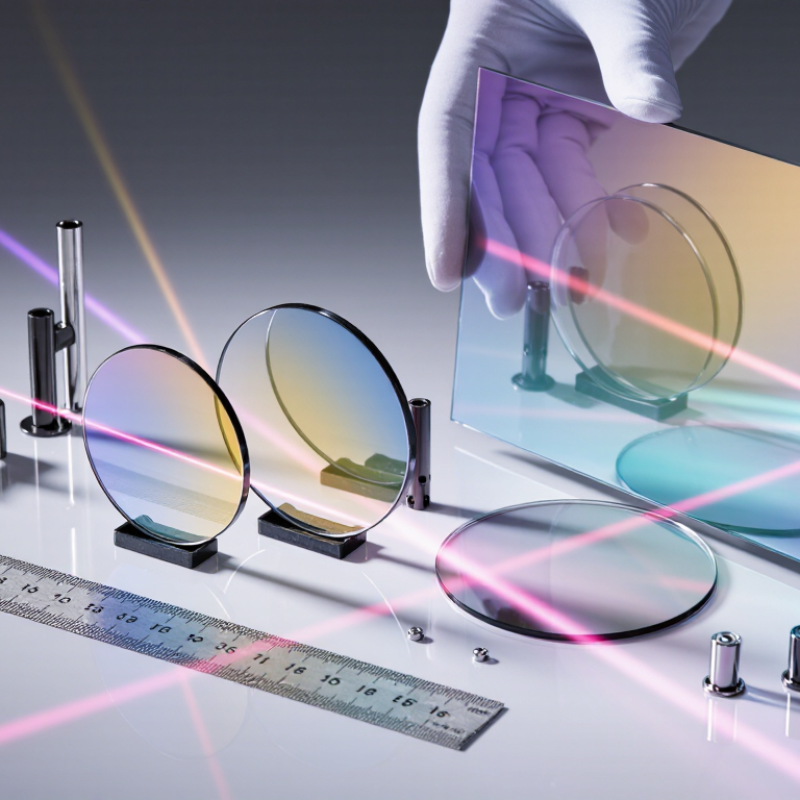
Laser dielectric films are microscopic optical coatings placed on glass or other substrates. They contain alternating layers with high and low refractive indices. Each layer is often designed to be one-quarter wavelength thick at the target laser wavelength. Reflections from many layer boundaries then reinforce one another, producing high reflectance at selected wavelengths. For a transmission coating, the stack instead reduces reflection and lets the chosen light pass. Simple in principle.
Performance depends on wavelength, angle, polarization, and layer thickness. A coating optimized for a 1,064-nanometre laser may respond differently when the beam enters at an angle. Surface dust, pinholes, or heating can also lower its laser-damage threshold. This is why testing matters, not just a reflectance figure. Fortune Business Insights estimated the global laser technology market at US$20.47 billion in 2023, projecting an 8.7% compound annual growth rate from 2024 to 2032 (Laser Technology Market, 2024). That growth points to expanding use of laser optics, but it does not guarantee coating quality. Buyers should check test wavelength, pulse duration, and damage-test conditions. A published number without those details can mislead.
Key Applications and Performance Requirements for Laser Dielectric Films
Laser dielectric films support high-reflection mirrors, antireflection windows, beam splitters, and wavelength-selective optics. In a laser cavity, a mirror coating must reflect the intended wavelength while limiting absorption and scatter. Even slight losses can create unwanted heat during continuous operation. Beam splitters need controlled transmission and reflection, not just a high reflectance figure.
Performance depends on the laser wavelength, pulse duration, incidence angle, and polarization. A high damage threshold matters, but test conditions must match real use. Coatings also need consistent layer thickness, smooth surfaces, and strong adhesion to the substrate. Temperature changes, humidity, and repeated cleaning may affect service life. Measurements from a sample coupon can differ from results on a finished optic. That limitation deserves attention.
Tips: Share the operating wavelength, power or fluence, pulse width, and beam size when assessing suppliers. Ask for test methods and inspection records, not only headline specifications. Small details matter. Check performance in the assembled optical path whenever possible.
China’s laser dielectric film supplier landscape includes coating specialists, precision-optics manufacturers, and integrated photonics producers. Their products typically use multilayer coatings to reflect or transmit selected wavelengths. Supplier capabilities vary: some offer custom designs, while others focus on standard mirrors, windows, or beam-splitting optics.
MarketsandMarkets estimated the global laser technology market at US$20.3 billion in 2023 and projected US$31.7 billion by 2028, a 9.3% compound annual growth rate. This is not a film-market figure, but it signals expanding demand for laser components. When assessing suppliers, compare the specified wavelength, incidence angle, polarization, coating uniformity, and laser-induced damage threshold. Ask for test conditions; numbers without them can mislead. Supplier claims are not always directly comparable.
Tips: Request a sample coating and a test report for your operating wavelength and pulse conditions. Check batch consistency, not just a single impressive result. A polished datasheet helps, but real application testing matters more.
Choosing a Chinese laser dielectric film manufacturer takes more than comparing quoted prices. A polished datasheet is not enough. Ask for spectral curves at your operating wavelength, incidence angle, and polarization. Check whether the stated reflectance or transmission comes from measured samples, not only design software. A few percentage points can matter in a high-power optical path.
Review damage-threshold data carefully. The test wavelength, pulse duration, beam size, and test method should match your application as closely as possible. Ask how coating thickness and uniformity are monitored across a production batch. Request sample records, inspection criteria, and details on substrate preparation. Under angled light, pinholes, haze, or edge defects may become easier to spot. They are small, but not always harmless.
Talk with the engineering team about thermal cycling, humidity, cleaning, and packaging. Their answers should be specific, not vague promises. Compare samples from separate batches when consistency matters. Also check whether lead times and inspection reports are realistic. I would not judge a supplier from one successful prototype; that can be misleading. Even careful evaluations have limits, since test conditions rarely reproduce every detail of a working system. A good manufacturer should explain those gaps openly and help define practical acceptance criteria.
Suggested evaluation weighting for comparing suppliers. These are planning weights, not measured market data or ratings of any company.
Prioritize optical performance and laser damage resistance, then verify consistency through test reports and production-quality records. Confirm that specifications match the intended wavelength, pulse duration, and operating conditions.
Choosing a laser dielectric film supplier in China starts with the optical job, not a catalog headline. Specify the wavelength range, angle of incidence, polarization, substrate, and acceptable loss before comparing quotations. A coating that performs well at 532 nm may not suit a 1064 nm system. Small details matter.
Request recent transmission and reflection curves, coating-thickness data, and test conditions for each sample. Check whether the supplier can trace a delivered roll or sheet to its production batch. For quality control, compare measurements across several points, not just the center. Inspect adhesion and surface defects under consistent lighting. If performance is critical, verify samples through an independent laboratory. A neat datasheet is not enough.
Ask how the supplier controls coating uniformity, handles rejected batches, and protects film during packing and transport. Arrange a small trial order before committing to production quantities. The paperwork may look complete, yet a single sample cannot reveal every batch variation. I would treat that as a real sourcing risk, not a minor formality. Clear specifications and recorded inspection results make supplier comparisons more reliable.
„Thanks to the LUVIR technology, the solder resist process could be switched directly from the previously used mask exposure to direct exposure. As an outstanding digital solution on the market, this technology has been able to demonstrate fast process times and superior quality on our certified conventional ink in production. This allowed us to fully digitize the solder mask process at low cost – without process or ink adjustments. An excellent benefit to our production in Rot am See.“
Ralf Göhringer (Head of Production WE Rot am See)
I would definitely recommend the Limata machine and team for a future company purchase
Michael Greenaway
Compunetics Inc.
“The Limata ldi has been amazing!! Best thing we did was buy this machine”
Richard Brady
GM
Circuitlabs
“Since 2019, we have been running the Limata X1000 LDI system (including LUVIR for solder mask imaging) in daily production as an addition to our current process with film. The machine was capable of properly exposing Taiyo PSR-4000 BN (DI) solder mask types on normal to high-copper boards using a new and unique direct imaging process. The machine operating interface is very user friendly which allowed for a quick technical training curve. The pre-registration processing reduced several seconds of production time at every print. Limata support and service staff is incomparable. They supported our team every step of the way at basically any time of the day or night, with literally, an immediate response time, customizing the software interface to best fit our Operations and needs.
We have exposed more than 8,000 prints since end of October, on various solder mask colors and some resist film panels. Limata, has proven to be very capable and innovative. They are a strong contender in the industry.
We have very much enjoyed this project, and working with the team!
Thank you Limata for the continued support and being a part of our growth.”
Bill Sezate
Vice President, GM
Summit Interconnect
As a replacement to our current contact exposure process with film, the LIMATA X2000 system including LUVIR-Technology was capable of properly exposing non-LDI solder mask types using a direct imaging process. The machine offers cutting edge software with a very intuitive operating interface which allowed for quick technician training curve. The dual drawer system combined with pre-registration processing reduced several seconds of production time at every machine cycle. Limata support and service staff is world class. They added software patches to keep production running at shortest possible response times, customized the software interface to best fit our in-house Operations system, and even wrote a step-by-step machine processing manual. As a result of the project, we have exposed more than 16,000 times on various product types and solder mask brands/colors. Limata, in a very short timeframe as a company, has definitely shown they are truly innovative and will be challenging the industry of direct imaging for the top spot.
Kevin Beattie
Process Engineer
TTM Technologies
Forest Grove Division
