China’s LED strip lighting sector is broad, fast-moving, and difficult to judge from product photos alone. This guide examines the manufacturers behind the listings, not just their polished catalogs. It considers production experience, product range, customization, quality control, and export support. Those details matter when a strip must fit a narrow aluminum channel, hold a steady color, or run for long hours without visible brightness shifts.
LED researcher E. Fred Schubert’s published work on LEDs supports a useful principle: semiconductor design and operating conditions shape performance. For buyers, that principle reaches beyond the LED chip. Check the strip’s voltage, power per meter, copper weight, adhesive, cut points, and thermal requirements. Ask for test data and samples, too. A sample glowing evenly on a workbench is encouraging, but it does not prove long-term reliability.
No shortlist is perfect. Supplier strengths vary, and product specifications can change between batches. This overview compares leading Chinese manufacturers by the evidence buyers can verify, while noting where further checks make sense. It is designed to help importers, lighting brands, and project teams ask sharper questions before requesting a quote. The aim is practical clarity—not a promise that one factory suits every project.
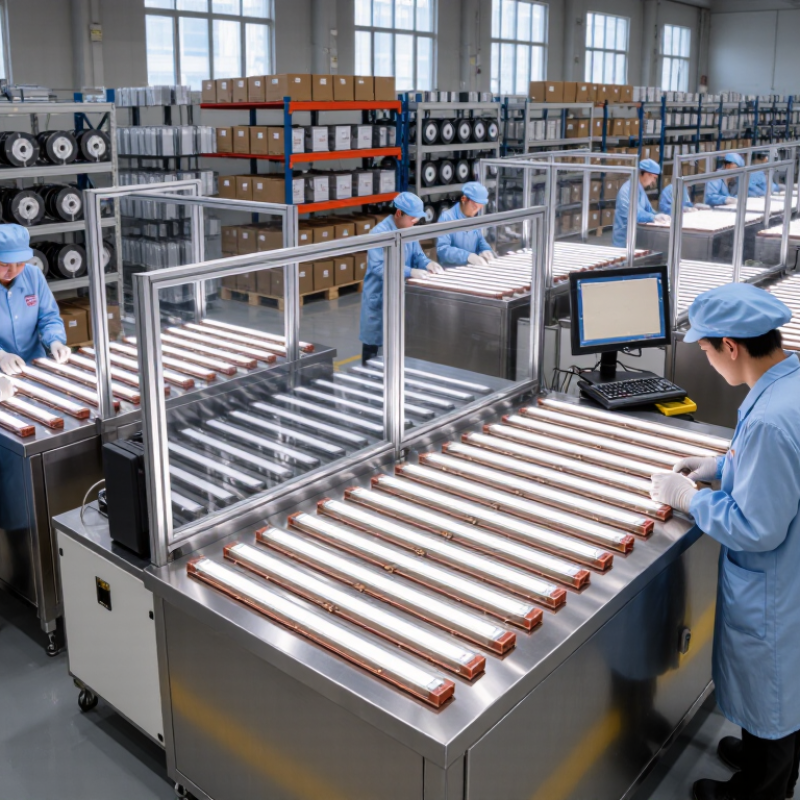
China’s LED strip lighting industry sits within a broad electronics and lighting supply chain. Manufacturers can source LED packages, flexible circuit boards, drivers, connectors, and aluminum profiles from nearby suppliers. This concentration supports fast sampling and customization. It also makes supplier quality checks essential. A strip may look uniform on a workbench, yet show uneven brightness after several meters of installation.
The International Energy Agency’s Energy Efficiency 2023 report says LEDs reached about 50% of global lighting sales in 2022, up from 5% in 2013. That figure describes lighting overall, not LED strips alone. The distinction matters. Public trade datasets also tend to group lighting products, so they rarely reveal strip-specific factory output. Small details matter. Buyers and engineers commonly assess color consistency, voltage drop, heat management, adhesive performance, and batch traceability. These tests help explain why two visually similar samples can perform differently in a cabinet or ceiling channel.
Production ranges from basic cut-to-length products to addressable strips with integrated controls. Factories often serve both domestic projects and export orders, adapting lengths, color temperatures, and packaging to customer specifications. The picture is not perfect: customization can complicate inventory control, while low-cost designs may leave little margin for thermal testing. A careful review of test records and sample performance is more useful than a catalogue claim alone.
A technical snapshot of nominal DC input-voltage options commonly found in LED strip product specifications. These values describe product configurations, not market share or sales volume.
LED strips are designed for a specified supply voltage. Always match the power supply to the strip’s rated input voltage.
A strong LED strip manufacturer is defined by repeatable quality, not a polished catalogue. When evaluating suppliers in China, ask how they control LED binning, color consistency, and brightness across production batches. Request test reports with measured values, not just claims. Check whether the strip’s circuit board thickness and copper weight suit its intended current and installation length. Heat matters. Poor thermal design can shorten LED life, even when the first sample looks bright.
Review practical evidence from the factory. Ask for aging-test procedures, inspection records, and clear details about adhesive, connectors, and moisture protection. If the strip is rated for wet locations, confirm how that rating was tested and what the enclosure actually protects. Good manufacturers can explain tolerances and provide samples that match later orders. Compare those samples under the same power supply and lighting conditions. Small differences become obvious. No scorecard is perfect.
Reliable communication is another useful measure. Can the supplier answer technical questions directly, share realistic lead times, and document changes to materials or specifications? A factory visit or independent production audit may reveal how incoming components and finished reels are handled. Still, paperwork alone does not prove consistent performance. Test samples over several hours, inspect solder joints, and note any color shift or uneven brightness. A careful buyer may need to revisit assumptions after the first production run.
China’s notable LED strip lighting manufacturers vary widely in their strengths. Some focus on flexible production runs, while others specialize in high-volume orders or demanding color consistency. A useful comparison starts with the strip itself: check the LED spacing, copper circuit thickness, adhesive backing, and whether the stated voltage matches the intended installation. Details matter.
A supplier’s sample can look bright on a workbench yet behave differently inside a warm display cabinet. Ask how the manufacturer checks color variation between production batches and manages heat during extended operation. Request clear specifications for brightness, color temperature, reel length, and water-resistance rating; verify supporting test documents rather than relying on labels alone. Production capacity matters, but communication about tolerances and lead times matters too. I would not judge a factory from one attractive sample—though sample testing can still miss issues that appear after longer use. Compare multiple units, inspect solder joints, and ask what quality checks occur before packaging. These steps help buyers distinguish capable manufacturers from suppliers whose claims are difficult to confirm.
This table is a practical, brand-neutral comparison guide—not a ranked list of companies. Product specifications vary by model, so verify them in the manufacturer’s datasheet and test reports.
| Evaluation Dimension | Relevant Product Fact | What to Check with a Manufacturer | Why It Matters |
|---|---|---|---|
| Strip construction | Flexible LED strips may use discrete LED packages or COB construction. COB designs can provide a more continuous-looking light line, depending on the product and installation. | Request construction details, LED density, photos of the illuminated strip, and a sample for visual assessment. | Construction affects appearance, flexibility, heat management, and suitability for visible or concealed installations. |
| Operating voltage | 12 V DC and 24 V DC are common LED strip formats. The correct supply voltage is determined by the specific product specification. | Confirm rated voltage, power per metre, maximum recommended run length, and compatible power-supply requirements. | Using the specified voltage and planning power injection appropriately helps reduce voltage-drop and performance issues. |
| Cutting intervals | Cut points are set by the strip’s electrical circuit design; there is no single cut interval that applies to all LED strips. | Check the marked cut locations and the cut length stated for the exact model. | Matching the cut interval to the installation dimensions helps avoid damaging the circuit or wasting material. |
| Ingress protection | IP ratings classify protection against solids and water under defined test conditions. For example, IP65 indicates dust-tight protection and protection against water jets; it does not mean the product is suitable for immersion. | Request the full IP rating and the relevant test documentation for the finished strip and connectors. | Protection can differ between the strip, connectors, cut ends, and installed assembly. |
| Color rendering | Color-rendering performance should be checked using the stated CRI or Ra value for the specific model; it should not be inferred from the product category alone. | Request the datasheet value and, where color accuracy is important, supporting test information. | Higher color fidelity can be important for retail displays, hospitality spaces, and other applications where material colors must appear natural. |
| Color and control options | LED strips are available in single-color, tunable-white, and color-changing configurations. Their control methods and compatibility vary by model. | Confirm channel configuration, controller requirements, dimming method, and compatibility with the intended control system. | Checking compatibility before purchase helps avoid mismatched strips, controllers, and power supplies. |
| Thermal and electrical data | Power consumption and operating conditions are product-specific. Installation conditions can affect heat dissipation and service life. | Review rated power per metre, recommended mounting surface, operating-temperature range, and installation instructions. | Appropriate thermal management and correctly sized electrical components support reliable operation. |
| Quality documentation | Certificates and test reports apply to defined products, configurations, and markets; a general statement does not establish that every model is covered. | Check that documents identify the relevant model and destination market, and verify them with the issuing body where appropriate. | Product-specific documentation supports compliance checks and reduces uncertainty when comparing suppliers. |
| Customization and production capability | Available options—such as strip length, PCB width, LED configuration, packaging, and connectors—depend on the supplier and product design. | Ask for written confirmation of customization limits, sample lead time, minimum order quantity, and production lead time. | Clear production terms help determine whether a supplier can meet project requirements and delivery schedules. |
| Warranty and after-sales support | Warranty coverage and duration are supplier- and product-specific and should be defined in writing. | Confirm warranty terms, claim procedure, required installation records, and technical-support arrangements. | Documented support terms make it easier to address defects or performance concerns after installation. |
China’s LED strip manufacturers produce flexible strips for coves, cabinets, signs, and outdoor outlines. Common options include single-color, tunable-white, and RGB or addressable strips. They differ in voltage, LED density, circuit width, and protection level. These details affect brightness, cutting intervals, heat, and installation. A dense strip can create a smoother line of light, but it may need better heat management. Small details matter.
Manufacturing capabilities often include circuit-board layout, LED placement, soldering, silicone or resin coating, and reel packaging. More capable factories can adjust strip length, color temperature, connector position, and adhesive backing for a project. Ask for samples and test them with the intended power supply. Check color consistency, brightness along the full reel, and whether cut marks match the installation plan. In practical evaluations, a short sample can look even while a longer run shows visible color shifts. That is easy to miss. Also request clear information about water resistance and operating conditions; a coating alone does not prove a strip suits every outdoor setting. Specifications can be inconsistent between suppliers, so compare the actual product data with sample results.
For a retail display, consistent color across shelves may matter more than maximum brightness. For a hotel corridor, long operating hours and easy maintenance deserve closer attention. Compare LED strip lighting suppliers against the actual installation, not a general product list. Check voltage, wattage per meter, color temperature, color-rendering data, and cutting intervals. For long runs, ask how the supplier addresses voltage drop and whether the design needs power feeds at both ends. In damp or dusty areas, confirm the protection rating and how sealed connections are handled. Details matter.
Ask for a sample reel and relevant test documentation before approving a large order. A datasheet can look complete, yet it may not show how the strip performs inside your chosen channel or diffuser. Test a short section with the intended power supply, then inspect brightness, color consistency, and heat after several hours. Some details get missed. Compare suppliers on more than price: review production lead times, minimum order quantities, quality checks, warranty terms, and how quickly technical questions receive clear answers. For custom lengths or connectors, request a written specification and a pre-shipment inspection plan. No comparison is perfect; small pilot orders can reveal problems that polished product sheets cannot.
„Thanks to the LUVIR technology, the solder resist process could be switched directly from the previously used mask exposure to direct exposure. As an outstanding digital solution on the market, this technology has been able to demonstrate fast process times and superior quality on our certified conventional ink in production. This allowed us to fully digitize the solder mask process at low cost – without process or ink adjustments. An excellent benefit to our production in Rot am See.“
Ralf Göhringer (Head of Production WE Rot am See)
I would definitely recommend the Limata machine and team for a future company purchase
Michael Greenaway
Compunetics Inc.
“The Limata ldi has been amazing!! Best thing we did was buy this machine”
Richard Brady
GM
Circuitlabs
“Since 2019, we have been running the Limata X1000 LDI system (including LUVIR for solder mask imaging) in daily production as an addition to our current process with film. The machine was capable of properly exposing Taiyo PSR-4000 BN (DI) solder mask types on normal to high-copper boards using a new and unique direct imaging process. The machine operating interface is very user friendly which allowed for a quick technical training curve. The pre-registration processing reduced several seconds of production time at every print. Limata support and service staff is incomparable. They supported our team every step of the way at basically any time of the day or night, with literally, an immediate response time, customizing the software interface to best fit our Operations and needs.
We have exposed more than 8,000 prints since end of October, on various solder mask colors and some resist film panels. Limata, has proven to be very capable and innovative. They are a strong contender in the industry.
We have very much enjoyed this project, and working with the team!
Thank you Limata for the continued support and being a part of our growth.”
Bill Sezate
Vice President, GM
Summit Interconnect
As a replacement to our current contact exposure process with film, the LIMATA X2000 system including LUVIR-Technology was capable of properly exposing non-LDI solder mask types using a direct imaging process. The machine offers cutting edge software with a very intuitive operating interface which allowed for quick technician training curve. The dual drawer system combined with pre-registration processing reduced several seconds of production time at every machine cycle. Limata support and service staff is world class. They added software patches to keep production running at shortest possible response times, customized the software interface to best fit our in-house Operations system, and even wrote a step-by-step machine processing manual. As a result of the project, we have exposed more than 16,000 times on various product types and solder mask brands/colors. Limata, in a very short timeframe as a company, has definitely shown they are truly innovative and will be challenging the industry of direct imaging for the top spot.
Kevin Beattie
Process Engineer
TTM Technologies
Forest Grove Division
