Choosing a reliable Niobium Plate supplier requires more than comparing a price per kilogram. Buyers must examine material grade, thickness tolerance, surface condition, test documentation, and delivery reliability. A low quotation may exclude machining, inspection, packaging, or export costs. That omission can change the final budget quickly.
In practical sourcing, niobium plates are often purchased for aerospace components, chemical equipment, superconducting research, and specialized industrial applications. Each sector may require different purity levels and mechanical properties. Suppliers should clearly identify whether they offer commercially pure niobium or a specific niobium alloy. They should also provide mill certificates, dimensional reports, and traceability records. These details make a quotation more useful and easier to verify.
Prices can vary with plate size, order volume, production method, and market conditions. Small custom orders may carry higher processing costs. Large standard plates may offer better unit pricing, but they can increase storage and freight expenses. Delivery time matters too. A supplier with an attractive price is not always the best choice if production schedules remain unclear.
Ask for a complete quotation.
This guide compares leading Niobium Plate suppliers and explains the factors behind their pricing. It also considers technical support, minimum order quantities, quality controls, and after-sales communication. Some supplier information may change over time. That limitation deserves attention. Buyers should confirm current prices, certifications, and shipping terms directly before placing an order. A careful comparison reduces surprises and supports a more defensible purchasing decision.
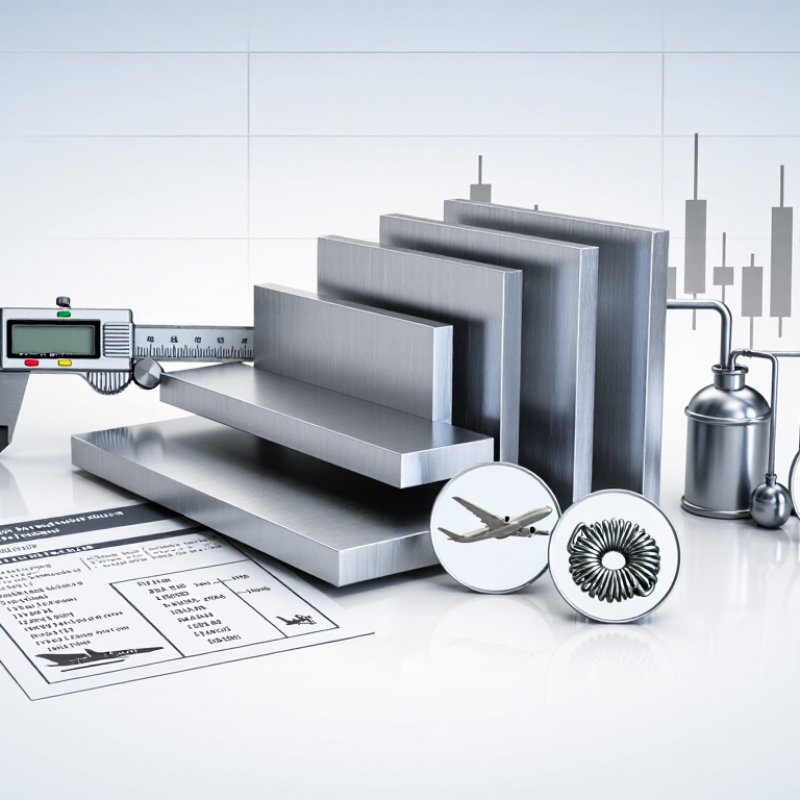
Niobium plate is a flat, corrosion-resistant product made from niobium or niobium alloys. It usually appears as thin sheet, cut plate, or machined components. The metal has a melting point near 2,477°C and remains stable in highly corrosive environments. That combination makes it valuable, but rarely economical for ordinary construction.
Its main uses include chemical-processing equipment, aerospace components, nuclear systems, and superconducting magnets. In chemical plants, niobium plate can line vessels exposed to strong acids.
In hospitals and research facilities, niobium-based superconducting materials support high-field magnetic equipment. The U.S. Geological Survey’s Mineral Commodity Summaries 2025 reported approximately 99,000 metric tons of niobium mine production worldwide in 2024, measured by niobium content. Brazil supplied about 92,000 tons, while Canada contributed roughly 7,000 tons. These figures describe raw material, not finished plate.
Prices vary sharply. Thickness, purity, alloy grade, surface finish, cutting tolerance, and inspection documents all affect a quotation.
Small plates may cost far more per kilogram than bulk orders. Current market reports often provide concentrate or ferroalloy values, not transparent plate prices. That gap matters.
Buyers should request mill certificates, ultrasonic-test details, dimensional tolerances, and delivery terms from several qualified suppliers. A low quote may hide machining, certification, or shipping costs.
It is easy to compare numbers badly.
Leading niobium plate suppliers should prove more than production capacity. They should provide traceable heat numbers, mill test certificates, and clear manufacturing records. ASTM B393 covers niobium and niobium alloy sheet, plate, and foil. Ask whether the supplier can meet its chemistry, dimensions, and mechanical requirements.
The USGS Mineral Commodity Summaries 2025 reports global niobium mine production near 100,000 metric tons in 2024. Production remains highly concentrated in one major region. This concentration makes supply continuity, inventory location, and delivery planning important. Request the material’s country of origin, available thicknesses, and realistic lead time. A supplier with engineering support can also explain vacuum melting, cold rolling, annealing, and surface finishing. Those details often reveal practical experience.
Price comparisons need technical context. Plate prices change with purity, alloy grade, thickness, order size, testing, and machining. A low quote can still be wrong. Compare identical specifications, not attractive numbers. Include freight, inspection, packaging, and minimum order quantities. My own screening can overvalue neat paperwork, especially when certificates look complete. Independent chemical analysis may expose that weakness. The supplier should accept reasonable verification and explain any deviation without vague language. Reports such as the USGS data help assess market risk, while ASTM requirements help test product reliability. Ask for recent production references, but verify them carefully.
Buyers comparing niobium plate suppliers should begin with grade, not price. ASTM B393 covers niobium and niobium-alloy plate, sheet, and strip. Ask for the exact UNS designation, chemical limits, tensile properties, and heat-treatment condition. Common comparisons include commercially pure niobium and zirconium-containing grades. They are not interchangeable in high-temperature or corrosive service. Small chemistry differences can affect forming behavior.
Size details matter just as much. Record thickness, width, length, flatness, edge condition, and dimensional tolerances. A 2 mm plate cut to 1,000 × 2,000 mm needs a different quotation from a precision-machined blank. Surface finish and grain direction also deserve attention. Request mill test reports, traceability, and independent inspection when the application is critical. Missing paperwork is a warning sign.
Price signals need careful interpretation. The USGS Mineral Commodity Summaries 2024 and World Mining Data 2024 identify Brazil as the dominant source of mined niobium. However, those reports mainly describe upstream supply, not finished plate prices. Supplier quotes also reflect conversion yield, machining, minimum order quantity, certification, freight, and delivery time. Compare prices per usable kilogram, not merely per quoted kilogram. A low offer may hide high scrap or loose tolerances. I would also request two sample quotations with identical specifications. Otherwise, the comparison remains imperfect.
Niobium plate prices depend heavily on purity, grade, thickness, and production difficulty. High-purity material usually costs more because it requires tighter process control and cleaner manufacturing conditions. A 1-millimeter plate is not priced like a 20-millimeter plate. Size matters too. Larger plates may require specialized rolling equipment and more careful surface inspection.
Market quotations also reflect niobium raw-material costs, order quantity, machining, and delivery time. A small custom order often carries higher unit costs than a larger production batch. Cutting, polishing, drilling, and heat treatment add separate charges. Tight thickness tolerances can raise the price again. Even packaging matters when plates need moisture protection, reinforced crates, or international freight. A low quote may exclude testing or shipping.
Reliable suppliers should provide material certificates, chemical composition, dimensional reports, and traceability records. Buyers should check whether testing follows an accepted technical standard. Supplier experience with vacuum processing, high-temperature service, or corrosive environments can reduce costly mistakes. Still, documents are not everything. I have seen specifications look complete while surface condition remained unclear. Requesting sample photos, inspection details, and a pre-shipment report is sensible. Prices should be compared line by line, not by the headline figure alone. Availability can also change quickly. A technically suitable plate may become impractical when its lead time disrupts fabrication schedules.
Top Niobium Plate Suppliers and Prices?
How to Select a Supplier and Request an Accurate Quote
Selecting a niobium plate supplier requires more than comparing the lowest price. Review the supplier’s production experience, material traceability, and quality-control process. Ask whether the plate is commercially pure niobium or a specified alloy. Confirm the required grade, thickness, width, length, and surface finish. Small differences can change the final cost.
Request inspection reports, chemical composition data, mechanical test results, and dimensional tolerances. A dependable supplier should explain how each document supports your application. Also ask about cutting accuracy, packaging, lead time, and export preparation. Prices may depend on raw material costs, order volume, machining, and delivery distance.
Tips: Send a detailed drawing with your inquiry. State the operating temperature and service environment. Request separate prices for material, cutting, testing, packaging, and freight. Compare quotations line by line, not only by total value. A low quote may exclude inspection or shipping fees.
Keep communication precise. A supplier who asks useful technical questions may be more reliable than one who replies instantly with a vague figure. Still, documents are not proof of perfection. Review them carefully, and allow time for independent verification. Even experienced buyers can overlook a tolerance or an incorrect unit. That mistake can become expensive.
The chart shows indicative niobium plate price levels by thickness. Values are planning benchmarks in USD per kilogram for commercially pure niobium plate, excluding tooling, testing, freight, duties, and taxes. Actual quotations depend on grade, dimensions, order quantity, surface finish, certification, and delivery requirements.
When requesting a quote, provide the required ASTM specification, grade, thickness and tolerance, plate dimensions, quantity, surface condition, inspection documents, delivery location, and target delivery date. Comparing equivalent specifications is essential because a lower unit price may exclude testing, certification, or logistics.
„Thanks to the LUVIR technology, the solder resist process could be switched directly from the previously used mask exposure to direct exposure. As an outstanding digital solution on the market, this technology has been able to demonstrate fast process times and superior quality on our certified conventional ink in production. This allowed us to fully digitize the solder mask process at low cost – without process or ink adjustments. An excellent benefit to our production in Rot am See.“
Ralf Göhringer (Head of Production WE Rot am See)
I would definitely recommend the Limata machine and team for a future company purchase
Michael Greenaway
Compunetics Inc.
“The Limata ldi has been amazing!! Best thing we did was buy this machine”
Richard Brady
GM
Circuitlabs
“Since 2019, we have been running the Limata X1000 LDI system (including LUVIR for solder mask imaging) in daily production as an addition to our current process with film. The machine was capable of properly exposing Taiyo PSR-4000 BN (DI) solder mask types on normal to high-copper boards using a new and unique direct imaging process. The machine operating interface is very user friendly which allowed for a quick technical training curve. The pre-registration processing reduced several seconds of production time at every print. Limata support and service staff is incomparable. They supported our team every step of the way at basically any time of the day or night, with literally, an immediate response time, customizing the software interface to best fit our Operations and needs.
We have exposed more than 8,000 prints since end of October, on various solder mask colors and some resist film panels. Limata, has proven to be very capable and innovative. They are a strong contender in the industry.
We have very much enjoyed this project, and working with the team!
Thank you Limata for the continued support and being a part of our growth.”
Bill Sezate
Vice President, GM
Summit Interconnect
As a replacement to our current contact exposure process with film, the LIMATA X2000 system including LUVIR-Technology was capable of properly exposing non-LDI solder mask types using a direct imaging process. The machine offers cutting edge software with a very intuitive operating interface which allowed for quick technician training curve. The dual drawer system combined with pre-registration processing reduced several seconds of production time at every machine cycle. Limata support and service staff is world class. They added software patches to keep production running at shortest possible response times, customized the software interface to best fit our in-house Operations system, and even wrote a step-by-step machine processing manual. As a result of the project, we have exposed more than 16,000 times on various product types and solder mask brands/colors. Limata, in a very short timeframe as a company, has definitely shown they are truly innovative and will be challenging the industry of direct imaging for the top spot.
Kevin Beattie
Process Engineer
TTM Technologies
Forest Grove Division
