Parchment Paper remains a practical material for baking, food wrapping, steaming, and industrial release applications. Its value is visible in small details: clean sheet release, stable folding, and fewer burnt edges. Yet global buyers face uneven product descriptions, coating claims, and supplier data. A polished catalogue does not always prove dependable performance.
Industry reports show why this category deserves closer review. Smithers’ The Future of Global Packaging to 2028 identifies sustainability, material efficiency, and regulatory pressure as major packaging priorities. Grand View Research also reports continued growth across the global food packaging market, supported by convenience foods and changing consumption habits. These reports do not isolate every parchment grade, however. That limitation matters.
This guide presents the Top 10 Parchment Paper Manufacturers for Global Buyers through practical purchasing criteria. The review considers manufacturing experience, paper weight, silicone coating consistency, heat resistance, food-contact documentation, converting capacity, and export reliability. It also examines whether suppliers provide traceable specifications instead of vague “eco-friendly” language. Small differences matter. A 5-millimeter curl can disrupt an automated packing line.
Buyer expectations are not identical. A bakery may need pre-cut sheets, while a food processor may require jumbo rolls. Some buyers prioritize chlorine-free fiber, recycled packaging, or compostability claims. Those claims need evidence, not attractive wording. Certifications, test reports, and batch controls should support them. This introduction is not a perfect ranking, because supplier performance can vary by region and contract. It is a structured starting point for more careful decisions.
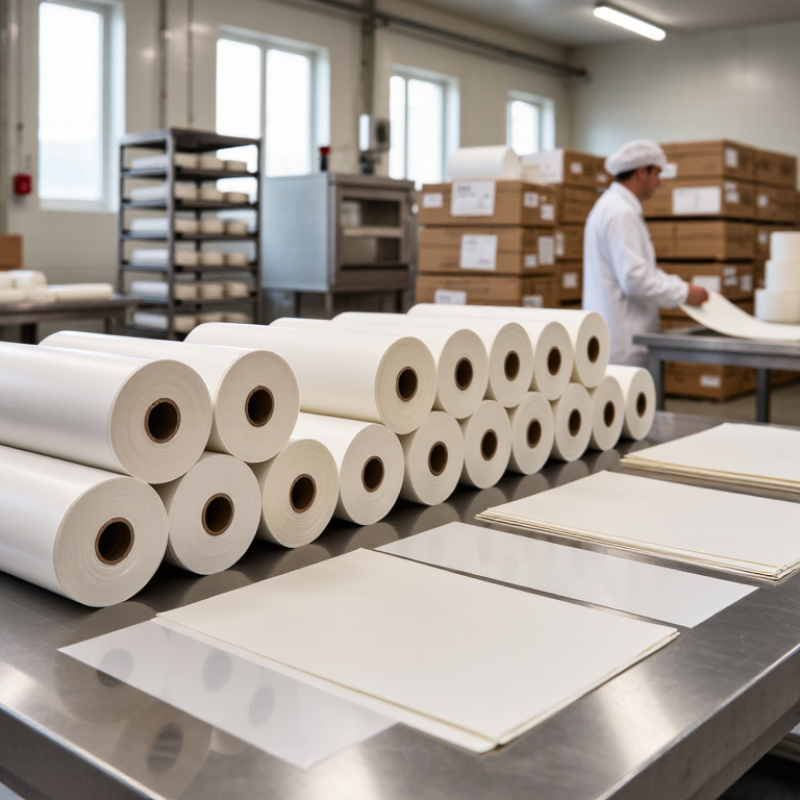
Parchment paper is made for controlled contact with food, heat, and moisture. Its main types include bleached white paper, natural brown paper, sheets, and rolls. Silicone-coated grades provide reliable release during baking, while uncoated grades suit wrapping and dry-food applications. Thickness, coating uniformity, grease resistance, and heat tolerance can vary considerably between suppliers.
In practical purchasing reviews, buyers should test paper with oily pastries, wet dough, and repeated oven cycles. A sheet that releases cookies easily may still tear under heavier bread dough. That detail is often missed. Check basis weight, roll dimensions, core size, packaging protection, and food-contact documentation before placing large orders. Small samples reveal more than attractive product photos.
Global demand is supported by bakeries, food processors, restaurants, and household cooking. Europe and North America generally emphasize traceability, recycling claims, and consistent baking performance. Asian and Middle Eastern markets also show strong demand for flexible rolls and portion-sized sheets. Export buyers should consider humidity during sea transport, because damp packaging can reduce flatness and handling strength. Local regulations differ, so technical files must be reviewed for each destination. I would not rely on a single laboratory report forever; coatings, suppliers, and production conditions can change.
When evaluating parchment paper manufacturers, begin with measurable product performance, not attractive catalogs. In purchasing trials, I compare basis weight, sheet thickness, coating uniformity, and release performance. A reliable sample should resist grease without tearing during folding. It should also tolerate the buyer’s stated baking temperature and contact time. Ask for technical data, food-contact declarations, and recent test reports. A confident supplier explains limitations clearly.
Manufacturing consistency matters as much as initial quality. Request samples from different production batches, then test them under identical conditions. Check curl, odor, discoloration, and sticking after cooling. Small differences can disrupt automated packing lines. Batch traceability is essential. Look for printed lot codes, retained samples, and documented inspection procedures. Factory audits can reveal storage problems, poor humidity control, or weak packaging practices.
Sustainability claims need careful verification. Review fiber sources, coating materials, recyclability guidance, and certification scope. Do not accept vague environmental language. Ask who performs the testing and when it was completed. Delivery reliability also deserves evidence, including lead times, pallet protection, export documents, and backup capacity. My own evaluation process is not perfect; laboratory results may miss issues seen during long production runs. For this reason, a controlled factory trial remains valuable. A supplier that welcomes difficult questions often proves more dependable than one offering the lowest quotation. Reliability is demonstrated over repeated orders, not promised in one meeting.
Buyer evaluation framework based on the practical factors that most affect parchment paper performance, compliance, supply reliability, and long-term procurement value. Weights total 100%.
Food-contact compliance and grease resistance receive the highest weighting because they directly influence product safety and end-use performance. Consistency, temperature resistance, sustainability documentation, converting capability, and delivery reliability support broader global purchasing decisions.
Top 10 Parchment Paper Manufacturers for Global Buyers
Global buyers need parchment paper manufacturers that perform consistently across kitchens, bakeries, and industrial food lines. This guide compares ten strong suppliers through practical buying criteria. I examine coating uniformity, basis weight, roll strength, packaging, and export experience. Small details matter. A sheet that curls near 220°C can slow production and waste dough. Reliable manufacturers provide food-contact documents, migration test results, and clear storage instructions. They should also explain whether the paper is silicone-treated, unbleached, compostable, or suitable for repeated baking cycles.
The strongest manufacturers often offer different widths, sheet sizes, and custom packaging options. They can provide samples before a full container order. That matters. Buyers should test release performance with oily pastries, sticky caramel, and frozen dough. Do not judge quality from appearance alone. Measure tear resistance, oven stability, and residue after baking. A supplier with a formal quality system may still experience batch variation. My scoring is not flawless. Ask for lot codes, inspection records, and a clear corrective-action process.
For global sourcing, compare minimum order quantities, lead times, pallet dimensions, and humidity protection. A low unit price can become expensive after port delays or damaged cartons. Regional warehouses may reduce replenishment risks, but local stock does not guarantee technical support. Check response times. Request certificates from current production, not an old sales file. Leave room for independent testing before signing a long-term agreement.
Top 10 Parchment Paper Manufacturers for Global Buyers
When comparing the top ten parchment paper manufacturers, buyers should examine product range, certifications, and production capabilities. Reliable suppliers usually offer unbleached and bleached paper, pre-cut sheets, rolls, baking liners, and custom sizes. Common weights range from 35 to 60 gsm. Some factories also provide double-sided silicone coating for easier release.
Certification details deserve careful checking. Food-contact declarations should match the destination market and the actual product grade. Useful evidence may include ISO 9001 quality management, FSC certification for responsible forestry, and laboratory reports for migration, heat resistance, and silicone safety. Ask for current documents, batch references, and testing dates. A certificate alone is not proof.
Production capacity affects delivery reliability. Look for automated coating lines, controlled curing ovens, clean converting areas, and inspection systems for pinholes, wrinkles, coating gaps, and uneven cutting. A capable manufacturer should explain monthly output, minimum order quantities, core sizes, packaging options, and sample procedures. Some suppliers can produce private-label cartons and moisture-resistant export packaging.
Details matter. A roll that curls after storage can slow a busy bakery. A sheet cut two millimeters short may create waste. I have found that factory visits and trial orders reveal more than polished brochures. Still, even trial samples have limits; humidity, oven type, and storage conditions can change performance. Buyers should record these variables before approving mass production.
Choosing the right parchment paper supplier depends heavily on your target region.
A supplier serving Europe may understand local food-contact documentation, while an Asian supplier may offer stronger production capacity or faster access to nearby mills. These advantages should be verified, not assumed.
From practical sourcing experience, I check coating uniformity, heat resistance, roll tension, and packaging protection.
Ask for recent test reports, production samples, and batch records. A reliable supplier should explain fiber sources, silicone treatment, moisture control, and storage conditions clearly.
Regional climate also matters. Humid ports can damage poorly sealed cartons. Dry warehouses may increase paper curling. Small details become expensive problems.
I once accepted attractive pricing before checking pallet stability. That decision created unnecessary handling work. A perfect checklist does not exist.
Tips:
Compare at least three suppliers within your target region. Request samples from different batches. Confirm minimum order quantities, lead times, export documents, and after-sales response times. Check whether their testing matches your market’s requirements. Do not judge quality from appearance alone. A smooth sheet can still tear near the fold. Keep written specifications, and review them before every purchase order.
„Thanks to the LUVIR technology, the solder resist process could be switched directly from the previously used mask exposure to direct exposure. As an outstanding digital solution on the market, this technology has been able to demonstrate fast process times and superior quality on our certified conventional ink in production. This allowed us to fully digitize the solder mask process at low cost – without process or ink adjustments. An excellent benefit to our production in Rot am See.“
Ralf Göhringer (Head of Production WE Rot am See)
I would definitely recommend the Limata machine and team for a future company purchase
Michael Greenaway
Compunetics Inc.
“The Limata ldi has been amazing!! Best thing we did was buy this machine”
Richard Brady
GM
Circuitlabs
“Since 2019, we have been running the Limata X1000 LDI system (including LUVIR for solder mask imaging) in daily production as an addition to our current process with film. The machine was capable of properly exposing Taiyo PSR-4000 BN (DI) solder mask types on normal to high-copper boards using a new and unique direct imaging process. The machine operating interface is very user friendly which allowed for a quick technical training curve. The pre-registration processing reduced several seconds of production time at every print. Limata support and service staff is incomparable. They supported our team every step of the way at basically any time of the day or night, with literally, an immediate response time, customizing the software interface to best fit our Operations and needs.
We have exposed more than 8,000 prints since end of October, on various solder mask colors and some resist film panels. Limata, has proven to be very capable and innovative. They are a strong contender in the industry.
We have very much enjoyed this project, and working with the team!
Thank you Limata for the continued support and being a part of our growth.”
Bill Sezate
Vice President, GM
Summit Interconnect
As a replacement to our current contact exposure process with film, the LIMATA X2000 system including LUVIR-Technology was capable of properly exposing non-LDI solder mask types using a direct imaging process. The machine offers cutting edge software with a very intuitive operating interface which allowed for quick technician training curve. The dual drawer system combined with pre-registration processing reduced several seconds of production time at every machine cycle. Limata support and service staff is world class. They added software patches to keep production running at shortest possible response times, customized the software interface to best fit our in-house Operations system, and even wrote a step-by-step machine processing manual. As a result of the project, we have exposed more than 16,000 times on various product types and solder mask brands/colors. Limata, in a very short timeframe as a company, has definitely shown they are truly innovative and will be challenging the industry of direct imaging for the top spot.
Kevin Beattie
Process Engineer
TTM Technologies
Forest Grove Division
